

Jade City
2,403-word summary 11 min read 560 pages in the book
- First published
- 2017
- Publisher
- Orbit
- Pages
- 560
- ISBN
- 9780316440882
- Series
- The Green Bone Saga (#1)
Reading options
What's inside (10 sections)
I picked up Jade City because I was tired of epic fantasy that takes place in a make-believe version of medieval Europe. Fonda Lee set this 2017 Orbit novel on an island called Kekon, in a world with cars, banks, drug trafficking, and family businesses that behave a lot like criminal syndicates. It is the first book in The Green Bone Saga, and it won the 2018 World Fantasy Award for Best Novel. What I did not expect was how much of the book is about accounting, succession, and the quiet humiliation of a family watching its old certainties drain away.
An island where the stone is power
Kekon is the only place in the world where jade is found, and jade is not merely decoration. Worn against the skin, it enhances strength, speed, and reflex, but only for people who have both the right inheritance and years of training in six disciplines. The book calls the people who can do this Green Bones. Those who cannot are called stone-eyes, and the term is an insult as much as a description.
Lee builds the rules of this power carefully, and she treats it more like a technology than a gift. The aboriginal Abukei population is completely immune to jade, while outsiders are too sensitive to use it safely. Only the Kekonese, with mixed ancestry, have the resistance and sensitivity to wear jade for a long time. A drug called SN1, known on the street as shine, can raise a person's tolerance. That detail matters later, and it is also the clearest sign of Lee's approach: she has said she treats the magic in a science-fictional way, as a resource that shapes trade and politics.
I liked this system immediately. It is not a power that arrives through destiny, and it is not a power that anyone can simply learn. It sits somewhere in between, which means a person's body can be both an advantage and a trap. The book returns to that idea whenever someone puts on more jade than they can comfortably handle. The stone helps, until it starts to cost you something.
Two clans and a family business
The story takes place a generation after the Many Nations War, a conflict that resembles World War II in its broad outlines. A liberation movement called the One Mountain Society drove out foreign occupiers, then broke apart into rival clans. The two that matter here are the Mountain clan, led by the Ayt family, and No Peak, led by the Kaul family. The Mountain is isolationist and suspicious of outside influence. No Peak is internationalist, willing to do business with foreigners.
Each clan has three named roles. The Pillar is the head, the Horn leads the street fighters, and the Weather Man handles business and money. In No Peak, Kaul Lan is the Pillar, his brother Hilo is the Horn, and Doru is the Weather Man. Their grandfather Kaul Sen still looms over the family, and his approval carries weight even though he has stepped back. This arrangement gives the book a sturdy engine. Every decision about war or peace is also a decision about who gets to be heard at the table.
What makes the setup feel fresh is that the clans behave like old money families and like gangs at the same time. They hold districts, collect loyalty, settle disputes through ritual duels, and worry constantly about respect. Lee never explains the system in one block of exposition. Instead, you learn it by watching a conversation go wrong or watching someone decide whether to wear jade to a meeting. By the time the real conflict starts, the stakes already feel personal.
A robbery in the Twice Lucky
The opening scene is small and almost funny. Two would-be thieves, Bero and his Abukei accomplice Sampa, try to steal jade from a No Peak Fist and are caught almost at once. They are dragged in front of Hilo, the Horn, who questions them while his brother Lan watches. This is the first time the reader sees the brothers together, and the contrast is immediate. Hilo wants to believe the Mountain clan is squeezing No Peak territory and using young people like Bero to do it. Doru, the Weather Man, argues for a peaceful reading of the same facts.
Lan listens to both men and then asks his grandfather for permission to replace Doru. Kaul Sen refuses, and that refusal is one of the quiet turning points of the book. It means Lan cannot simply reshuffle his own leadership. He has to work with people he distrusts, and his frustration starts to push him toward riskier choices.
Lan's sister Shae comes home from studying abroad around the same time. She declines any role in clan business and refuses to put on her jade, which makes the family's disappointment plain. She is the character I found most compelling early on, because she can see the appeal of the old ways and the cost of them at the same time. Her refusal to wear the stone is not a rejection of her family. It is a rejection of what wearing the stone has required of the people around her.
Anden, the adopted cousin
The Mountain clan kidnaps Emery Anden, the adopted cousin of Lan, Hilo, and Shae. Ayt Mada, the Mountain Pillar, offers him a place in her clan, which is her way of signaling that the two families might unify. The gesture is courteous and threatening at once. Anden comes home safely, but the offer hangs over No Peak afterward, and Lan starts to move.
He proposes a new law meant to stop any single clan from gaining control of the Kekon Jade Alliance, the body that manages the island's jade trade. He also sends Shae to audit the Alliance's accounts. These are not battlefield moves. They are the moves of someone trying to strangle a rival through procedure, and they show how comfortable this book is with power that works through paperwork. Lan is not a stupid man, but he is a proud one, and the pride leads him to believe he can control the response he provokes.
The Mountain tries to kill Hilo soon after. Lan answers with a duel against a Mountain clan member, and he wins. The duel is one of the strongest action scenes in the book, partly because Lee has spent so long explaining what jade can do. Every strike feels like it has a rule behind it, and the rules make the violence more tense rather than less. Afterward, Hilo asks permission to marry his girlfriend Wen, who is a stone-eye from a disreputable family. Lan consents, though he clearly dislikes the match. That reluctance says a great deal about how much old prejudice still runs through a family that presents itself as modern.
The drug and the mistake
Lan is injured in the duel, and the injury creates a problem he cannot admit to. A Pillar who looks weak invites a challenge, so he wears extra jade even though his body cannot take it. He arranges for Anden to bring him packages of shine, the drug that raises jade tolerance. Anden realizes what he is carrying and begs Lan to stop. Lan does not stop, and Anden does not tell Shae what he has seen.
This is the part of the book where Lee's patient setup pays off. The drug was introduced early as a piece of street medicine, almost an aside. Now it becomes the thing that undermines a powerful man from inside his own body. The secrecy around it is also painful, because Anden is a young man who wants to be loyal to family and honest with the person he loves. He chooses loyalty, and the choice eats at him. It is a small, quiet kind of tragedy tucked inside a story full of public violence.
Shae's audit turns up evidence that someone is skimming jade from the Alliance. Either Doru does not know and is incompetent, or he knows and is allowing it. Lan's solution is to send Doru overseas and tell allies on the Royal Council that jade production will be suspended. It is a drastic move, and it makes enemies faster than it makes security. I found this stretch of the novel absorbing even when the politics got dense. The book trusts you to follow a chain of administrative decisions, and the tension comes from watching people choose bad options because the good ones are no longer available to them.
A pillar lost at sea
The Mountain tells Bero to attack a gentleman's club that Lan frequents. Lan is there when it happens, and because of the shine he has been taking, he misjudges the amount of jade he is wearing. He takes an overdose at exactly the wrong moment. When Bero attacks, Lan falls into the sea and drowns.
The death lands hard because the book has made Lan so unlikeable in small ways and so understandable in large ones. He was proud, controlling, and often wrong, but he was also trying to hold a family and a clan together after a war that left no clear map. His death is not a grand battlefield moment. It is a mistake in a club, brought on by a drug he was ashamed to need. That choice of ending feels deliberately unglamorous, and it made the rest of the book hurt more.
Shae decides to rejoin the clan and put on her jade. She persuades Hilo, now the Pillar, to strike back at the Mountain, and he appoints her as his Weather Man. Doru is arrested and placed under house arrest. The new arrangement is promising and uncomfortable at the same time. Shae has spent the whole book resisting the role she now accepts, and she takes it because the alternative is watching her family lose. Hilo, who was the Horn, now has to think like the man who holds the whole structure up. Neither of them seems entirely ready.
War, and a graduation
Shae and Hilo accuse Ayt Mada of skimming jade from the Alliance and selling it to foreign nations. Ayt arranges a meeting on neutral ground and tries to talk Shae into betraying No Peak. Shae refuses. Wen, meanwhile, asks Shae to make her a spy without Hilo knowing, and Shae sends her to a foreign military base with a shipment of jade worth millions. This restores the supply that Lan's suspension cut off, and it gives Wen a kind of purpose the book had not allowed her before.
Doru defects to the Mountain. Hilo marries Wen, then asks Anden to drive him into Mountain territory, where he expects to be killed. Instead, Hilo and Anden manage to kill Gont Asch, the Mountain's Horn. The fight leaves Anden in a coma, and when he wakes he learns that the loss of their Horn has badly hurt the Mountain and given No Peak a temporary advantage. He returns to the academy for his graduation, and when he is presented with his jade, he says he does not want to be a Green Bone. He does not want a life of violence. Hilo publicly rebukes him.
That final refusal is the moral center of the novel, and it is deliberately complicated. Anden has done real violence in this book. He has also watched what violence does to the people who practice it, from Lan's secret drug use to Hilo's willingness to walk into a fight he expects to lose. His refusal is not cowardice, and the book knows it. Hilo's rebuke is not simple cruelty either, because a Pillar cannot let a public rejection of the clan's central bargain go unanswered. Lee refuses to tell you who is right, which is the most honest thing she could have done.
In the last scene, Bero visits Lan's grave under cover of darkness. He is still looking for jade, and in the former Pillar's coffin he finds a generous supply. It is a bleak, almost joke-like closing image, and it brings the book back to where it started: a young person chasing the stone that gives power to people who already have it.
What I think the book gets right
The world-building is the main event, and it deserves the praise it received. Kekon feels like a place with a history rather than a backdrop, and the jade system touches everything from medicine to trade law to family pride. Lee has said she wanted to write an epic fantasy outside medieval Europe, and the result borrows from Hong Kong crime films and family sagas without feeling like a costume piece. Kirkus called the setting an analog of mid twentieth century Hong Kong and noted the heavy debt to The Godfather. Both descriptions are fair, though the book does enough on its own that the comparisons feel like signposts rather than verdicts.
The criticism I would make is that the cast is large and the early chapters ask you to track a lot of names before the story settles. Doru's role in particular is hard to read at first, and the political maneuvering around the Alliance takes patience. There is also a question about how much room the women in the family get to be people rather than symbols. Shae is excellent, and Wen grows into her own plot, but Ayt Mada is mostly defined by her ambition and her coldness. For a book about power and inheritance, that imbalance is noticeable.
Still, this is a strong opening novel. It won the World Fantasy Award and the Aurora Award, and it was a finalist for the Nebula, and those honors make sense once you have lived in Kekon for a few hundred pages. The sequel, Jade War, arrived in 2019 and Jade Legacy in 2021, and it is easy to see why Lee had more to say. The questions this book raises about family duty, public honor, and the personal cost of power do not resolve neatly. Anden's refusal at the graduation is the clearest example. He is offered the thing his family has fought and killed for, and he says no. The book does not celebrate him for it or punish him for it. It simply lets the choice stand, and that restraint is what made me want to keep reading.
FAQ
Is Jade City part of a series?
Yes, it is book one of The Green Bone Saga, followed by Jade War in 2019 and Jade Legacy in 2021. Lee also released a prequel novella and a collection of short stories set in the same world.
What kind of fantasy is this book?
It is an epic fantasy set on the island of Kekon in a world with cars, banks, and corporate politics rather than medieval trappings. Fonda Lee treats jade as a controlled resource that shapes trade, medicine, and war.
Did Jade City win any awards?
It won the 2018 World Fantasy Award for Best Novel and the 2018 Aurora Award for Best Novel. It was also a finalist for the 2017 Nebula Award for Best Novel.
Similar books
More from The Green Bone Saga first, then related titles.
This Kingdom Will Not Kill Me
A grocery delivery driver wakes in a fantasy capital she knows from an unfinished trilogy, only to discover she cannot die.
2,339-word summary · 10 min read
Temple of the Winds
In Sword of Truth book four, a magical plague sweeps the Midlands and prophecy demands that Richard enter the Temple of the Winds, but only through an…
2,962-word summary · 13 min read
Kushiel's Dart
Born with a scarlet mote in her eye, Phèdre nó Delaunay is sold into servitude, trained as a courtesan and spy, then thrown into a conspiracy that threatens…
2,789-word summary · 12 min read
Golden Fool
FitzChivalry Farseer returns to Buckkeep as a servant and a grieving Skillmaster, teaching Prince Dutiful while court intrigue, the Piebalds and a…
2,583-word summary · 11 min read
Fool's Fate
Prince Dutiful must kill a dragon to secure his betrothal, and FitzChivalry Farseer is caught between the Fool and Chade over Icefyre's fate.
2,247-word summary · 10 min read
Blood of the Fold
In Sword of Truth book three, Richard Rahl takes command of Aydindril while a zealot army and an emperor who walks in dreams threaten everything he loves.
2,321-word summary · 10 min read
The Lady of the Lake
Ciri is trapped by the Aen Elle while Geralt winters in Toussaint, and the Witcher saga closes with the siege of Stygga and a fog-bound farewell.
2,445-word summary · 11 min read

Ptolemy's Gate
Nathaniel and a weakened Bartimaeus face a possession plot in Stroud's dark final Bartimaeus novel.
2,328-word summary · 10 min read
Blood Song
Anthony Ryan's Blood Song follows Vaelin Al Sorna from the Sixth Order's brutal training to the war that earns him the name Hope-Killer, in the first Raven's…
2,479-word summary · 11 min read

The Blinding Knife
Kip trains to join the Blackguard while the Prism hides his true identity, loses his colors, and fights a war against a rogue drafter who wants to birth a god.
2,049-word summary · 9 min read
Magician's Gambit
Garion and his companions cross haunted Maragor and the caves beneath Rak Cthol to recover the Orb of Aldur.
2,391-word summary · 11 min read
Homeland
Drizzt Do'Urden is born into the cruel drow city of Menzoberranzan, where his father teaches him to fight and to doubt everything his family believes.
2,303-word summary · 10 min read
Enchanters' End Game
Garion marches toward Torak while Ce'Nedra leads the West's army in the final Belgariad volume, where prophecy and war meet.
2,557-word summary · 11 min read

The Queen of the Tearling
Nineteen-year-old Kelsea leaves the woods to take her throne, ends a shipment of human captives, and draws the Red Queen's revenge.
2,357-word summary · 10 min read
Fool's Errand
FitzChivalry Farseer has lived in exile for fifteen years. When Prince Dutiful vanishes before his betrothal, Fitz returns to Buckkeep to find him, with a wolf…
2,606-word summary · 12 min read
The Sword of Shannara
A young half-Elf and a company of companions set out to recover a magic sword before the Warlock Lord destroys the Four Lands.
2,474-word summary · 11 min read
Magician: Apprentice
An orphan kitchen boy and a smith's son grow up in a frontier castle just as invaders from another world open a rift and begin a war that will change both of…
2,114-word summary · 9 min read
The Tower of the Swallow
Ciri flees as a bandit while Geralt gathers allies to find her.
2,580-word summary · 11 min read

The Emperor's Soul
Forger Shai must stamp a new soul for the dying emperor in 100 days.
2,313-word summary · 10 min read
Shadow's Edge
Kylar fakes death as a king killer while Vi hunts him for the Godking.
2,245-word summary · 10 min read
Pawn of Prophecy
Farm boy Garion learns sorcerers watch him as an old Orb wakes.
2,331-word summary · 10 min read
New Spring
Moiraine and Lan hunt the newborn Dragon before the Black Ajah finds him.
2,475-word summary · 11 min read
Furies of Calderon
Furyless Tavi defends Calderon Valley when the Marat return and lords scheme.
2,587-word summary · 11 min read
Stone of Tears
After the veil tears, Richard seeks training from the Sisters while Kahlan holds a fracturing Midlands and Zedd hunts the missing Stone.
2,483-word summary · 11 min read
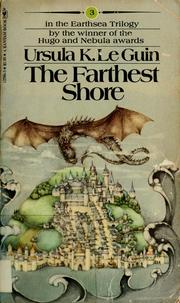
The Farthest Shore
Archmage Ged and Prince Arren sail to the far west to stop Cob, whose bid for endless life drains magic across Earthsea in Le Guin's sad 1972 third volume.
2,800-word summary · 12 min read
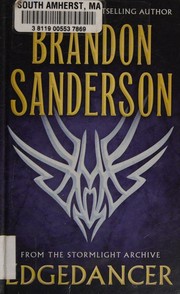
Edgedancer
Hungry street thief Lift and her vine-like friend Wyndle cross the Herald Nale in Tashikk when a child emperor shows Radiant signs and she refuses to step…
2,328-word summary · 10 min read
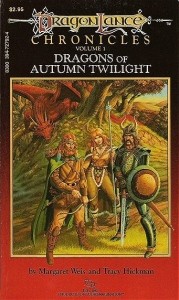
Dragons of Autumn Twilight
Old friends reunite at the Inn of the Last Home, guard a glowing Blue Crystal Staff, face black dragon Khisanth, and free slaves at Pax Tharkas in this 1984…
2,803-word summary · 12 min read
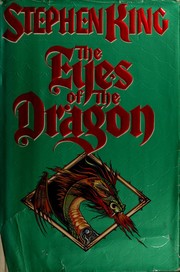
The Eyes of the Dragon
In the kingdom of Delain, a jailed prince and his younger brother face a magician whose long plot for the throne turns on a napkin clue.
2,018-word summary · 9 min read
The City of Brass
Cairo con artist Nahri summons djinn Dara and is drawn to Daevabad where Ali questions pureblood rule.
1,993-word summary · 9 min read
The Black Prism
Dying Prism Gavin Guile hides a secret son while war brews over color magic in the Seven Satrapies.
2,169-word summary · 10 min read