
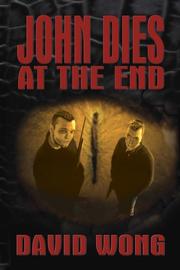
John Dies at the End
2,382-word summary 11 min read 376 pages in the book
- First published
- 2007
- Publisher
- Permuted Press
- Pages
- 376
- ISBN
- 9780978970765
- Series
- John Dies at the End (#1)
Reading options
What's inside (8 sections)
I read this book because a friend described it as the strangest thing he had ever finished, which is the kind of recommendation that either ruins a book or makes it essential. What I found was a 376-page paperback from Permuted Press, published in 2007 under the name David Wong, that reads like two different books taking turns. One of them is a genuinely creepy story about demons and other dimensions. The other is a pair of twenty-something slackers making jokes in a Denny's parking lot. I could not decide which half I liked more, and I finished it in about two days.
The odd thing is that both halves are by the same writer. David Wong is the pen name of Jason Pargin, who later published under his real name. The novel began as a web serial in 2001, became an edited ebook in 2004, and finally reached print in 2007. A hardcover from Thomas Dunne Books followed in 2009. Knowing that history explains a lot about the shape of the thing. It has the loose, digressive energy of writing that was once posted a piece at a time for free, and it also has the confidence of a book that discovered an audience before anyone asked it to behave like a novel.
Don Coscarelli turned it into a film in 2012, and I had seen that before I read the book. The movie is strange in its own right, but it cannot reproduce what Dave's voice does on the page. That is the main argument for reading the novel even if you already know the plot. The book is mostly Dave talking, and his rhythm is the whole experience.
A narrator who admits he is mostly honest
The story reaches us through an interview. David, usually called Dave, sits in a restaurant with a reporter named Arnie Blondestone and starts telling him how he and his best friend John became the kind of people who investigate strange things. Dave warns early on that he has been mostly honest. That word "mostly" is doing a lot of work. Everything afterward passes through a narrator who is sarcastic, self-conscious, and quite happy to admit that he does not understand what he saw.
That choice matters more than I expected. In most horror novels the narrator tells you what happened and trusts you to be frightened. Here Dave keeps undercutting his own scares with a joke, and the jokes make the scary moments harder to dismiss. A book this silly should not be able to make a shadow in a hallway feel dangerous. Wong gets away with it because Dave sounds like a real person who was actually there and is still a little baffled by it.
Dave is a slacker working at a video rental store in an unnamed Midwestern town the novel calls Undisclosed. John is his oldest friend, frequently high, and usually the reason Dave has to go somewhere he does not want to go. Their investigations are less a profession than a habit. Things find them, and when things find them, John is generally the one who answered the door.
Undisclosed is never mapped out, and Wong does not bother with descriptions of streets or weather. What comes through instead is the dullness of the place, the sense that nothing much is supposed to happen there. That makes the invasion feel that much more wrong. A town this ordinary should not have a door to another universe in its mall.
The party, the magician, and the drug called soy sauce
The main story starts at a party where John is playing with his band, Three Arm Sally. Dave leaves early after a confrontation with an amateur magician who seems to have actual supernatural powers. The man is unsettling in the way that only a person who might be able to do something real can be unsettling. Dave goes home with an Irish Setter named Molly, a dog that appears to have chosen him and refuses to be returned to the people who owned her.
Later that night John calls and asks Dave to come save him from something in his apartment. Dave arrives and fights off a creature he cannot see, which becomes a pattern. Over and over, John sees the monster and Dave has to trust him while swinging at empty air. They go to a Denny's afterward, where John explains that he took a drug called soy sauce. The magician from the party gave it to him. John shows Dave a syringe, Dave pockets it, and then accidentally injects himself. That single clumsy mistake is the hinge of the whole book.
The party also brings in the rest of the group that will matter later. Jennifer Lopez, Big Jim Sullivan, and Fred Chu are all there, and Jim's dog tags turn out to belong to Molly. Dave has had a crush on Jennifer since high school, which the book mentions in passing and then picks up again between the two main storylines. These people are not elaborate characters, but they give the early chaos weight. When the party turns into a list of dead and missing names, the reader has at least a few faces attached to them.
The drug does not give them powers so much as it lets them see what is already there. Wong is careful about this. The world was always full of the things Dave and John start noticing. Soy sauce only removes the blur. That is a better idea than it first sounds, and it gives the book a genuine dread underneath the jokes. Nobody created the monsters. People just usually cannot see them.
A dead man on the phone
Detective Lawrence Appleton tells Dave that everyone from the party is dead or missing except him. It turns out not to be true, but Dave does not know that yet. While Appleton is interrogating him, word comes that John has died in the other room. Appleton leaves Dave alone, and then the phone rings. It is John, telling Dave to get out of custody during the chaos that follows his own flatlining. Dave escapes, fights a demon disguised as a police officer, and follows the voice on the phone to the trailer of Robert Marley, the man who supplied the drug.
Inside, a television shows the last moments of Marley, who bursts into a swarm of wingless bugs about the size and color of grains of rice. The bugs fly into another person from the party and take him over. Appleton shows up next, determined to burn the town clean of whatever has infected it. He shoots Dave in the chest with a defective bullet, leaves him for dead, and drives off. Molly rescues him by driving his own car through a wall, which is one of the most absurd sentences I have ever read with a straight face.
Then Molly starts speaking in John's voice and tells Dave to go to Las Vegas and find a man named Albert Marconi. The possessed partygoer calls himself Shitload, because there are a great many creatures sharing his body. Dave survives being shot several times, gets kidnapped, and wakes up in the back of a liquor truck with John and other survivors. They are headed for the Luxor Hotel. This stretch of the book moves very fast, and Wong is right to keep it moving. If you stop to think about whether an Irish Setter can drive, the spell breaks.
Appleton reappears and saves the group from Shitload, then explodes into the white bugs himself, forcing Dave to kill and burn one of the people he just rescued. It is a brutal bit of business, and it arrives in the middle of a comedy routine. That tonal collision is the book's signature move.
Appleton has one of the stranger arcs in the book. He starts as a detective trying to work out what happened at the party and ends as a man trying to purge an evil he believes has taken hold of his town. Dave keeps thinking he resembles a famous actor and keeps getting the name wrong, which is a running joke that undercuts a character who is genuinely unnerving. The joke and the menace sit side by side, and neither cancels the other. That balance is hard to sustain, and Wong holds it for most of the novel.
The Luxor and the doorway
At the Luxor the story finally becomes the cosmic horror novel it has been threatening to be. There are scorpion creatures the size of dogs, wearing little wigs, and a portal that opens onto what appears to be Hell. Shadow People come through it. Marconi, a former priest who lectures on paranormal subjects, manages to close the portal. Dave and John go home and try to resume ordinary lives, which is difficult after you have watched the world open up.
A year later they are still finding the same phenomena. Dave alone is haunted by messages from something calling itself Korrok, who seems to be arranging much of it. Dave and John are called to the home of Big Jim Sullivan, a party survivor, to look into the disappearance of Jim's sister Amy, who vanished from behind a locked door and then turned up again. The locked room detail is one of the best hooks in the book, and Wong does not let it sit still.
Amy is missing her left hand after the accident that killed her parents, and she becomes a quieter presence in Dave's life after this. She and Dave eventually date, which the book reports in its usual offhand way. I found that thread more interesting than I expected. The cosmic stakes are enormous, but the private lives keep going, and Wong never lets the big stuff erase the small stuff.
They take more soy sauce, build a bomb, and watch Molly eat it. That is a fair sample of the book's sense of humor. Following the Shadow Men to an abandoned mall, the two of them are pulled into another dimension, where Korrok's followers explain that their god wants to conquer every possible universe for consumption and amusement. Dave and John are told they have become the door through which the invasion will come. They run, and the bomb goes off behind them.
The explanation of Korrok is deliberately hard to pin down. The novel gives him many forms and treats him as both a physical thing and a metaphor. Some readers will find that satisfying. Others will feel that the book is dodging the work of making a real villain. I landed somewhere in the middle. A god who wants to eat all realities is funny and frightening in equal measure, and the vagueness suits a story told by a narrator who admits he is mostly honest.
The interview was never real
The last twist reframes the whole novel. Arnie refuses to believe Dave's story even after being shown one of the creatures. Then Arnie mentions a moment from his reporting days when a police officer used a racial slur, and Dave realizes that Arnie, whom he has been seeing as a white man, must be a ghost. The real Arnie is dead in the trunk of the rental car. The interviewer panics and disappears. Everything Dave has been telling is a confession to a listener who was never alive.
I admire the cold nerve of that ending. It makes the frame story retroactively strange and explains why Arnie keeps pushing Dave to go on. It also raises a question the book does not fully answer, which is how much of what Dave said actually happened. In an epilogue, Dave and John find another doorway with a paramilitary group on the other side who insist the two friends are chosen ones. They decline, and a group of teenagers goes through instead and saves that dimension. The book ends with two men walking away from a job they do not want.
What holds up and what does not
The strongest reviews of this book make the same point in different ways. The Guardian compared it to Philip K. Dick, Kurt Vonnegut, and Hunter S. Thompson and called it unputdownable. Publishers Weekly praised its handling of fear. Kirkus called the writing clunky while admitting that the funny parts are laugh-out-loud funny. A reviewer named Bryan Gatchell made the sharpest observation, which is that the best moment has nothing to do with either horror or comedy. It is a brief account of a violent incident from Dave's high school years, and for a few paragraphs the book stops being an internet joke and becomes genuinely good.
I agree with the clunky charge. Sentences run long, the same joke gets stretched past its usefulness, and the plot has more endings than it needs. The slang dates the book, and one stretch involving a racial slur and a ghost is played for a laugh that has aged awkwardly. There is also a real question about whether the constant undercutting weakens the horror. A monster is less frightening when the narrator is comparing it to something from a fast food mural.
Still, I would recommend it to a reader who likes their horror with a lot of noise and a little heart. The friendship between Dave and John is the part I remember most. John is a disaster and Dave keeps showing up, and neither of them ever becomes a hero in the usual sense. They are two men in over their heads who cannot stop answering the phone. That is a small, stubborn kind of loyalty, and it survives every dimension the book throws them into.
I would keep it away from anyone who wants tidy plotting or restrained prose. The novel sprawls, repeats itself, and sometimes dares itself to go one step further. Sequels followed in 2012, 2017, and 2022, with a fifth announced for 2026, so the mess did not stop here. For me the mess is part of the appeal. This is a book that began online, and it never lost the feeling of someone telling a story late at night because the people listening kept asking what happened next.
FAQ
Who wrote John Dies at the End?
Jason Pargin wrote it under the pen name David Wong. The Permuted Press paperback came out in 2007, and Thomas Dunne Books published a hardcover in 2009.
Is John Dies at the End the first book in a series?
Yes, it is book one. It is followed by This Book Is Full of Spiders, What the Hell Did I Just Read, and If This Book Exists, You're in the Wrong Universe.
What is soy sauce in the novel?
It is a drug that lets Dave and John see supernatural creatures that are normally invisible. John gets it from the magician Robert Marley at the party that starts the story.
Similar books
More from John Dies at the End first, then related titles.
Lullaby
A reporter discovers that a poem in a children's book kills anyone who hears it, and his attempt to destroy every copy turns into a road trip through grief,…
2,147-word summary · 10 min read
The Pelican Child
Twelve short stories by Joy Williams, where talking dogs, bleak comedy, and the nearness of death mark a late-career stylist at work.
2,415-word summary · 11 min read
Diary
A waitress writes to her comatose husband from an island where hidden messages in walls hint at a repeating plan.
2,042-word summary · 9 min read
Witchcraft for Wayward Girls
In 1970 Florida, a girl sent to a maternity home for unwed mothers finds a spellbook, and the real horror turns out to be what the adults do to her and her…
2,077-word summary · 9 min read

White Hot Kiss
Layla is half Warden, half demon, and one kiss from her steals a soul. A demon prince warns that Hell is hunting her, and she must choose between the clan that…
2,299-word summary · 10 min read
Wake Up and Open Your Eyes
A Brooklyn father drives to Richmond to find his parents lost in a cable news trance, in Chapman's splatterpunk horror about possession spread through…
2,381-word summary · 11 min read
The Staircase in the Woods
Twenty-five years after a friend vanished at the top of a staircase in the woods, four estranged adults are summoned back to climb another one.
2,023-word summary · 9 min read
The Darkest Night
A woman who hears the voices of the past meets an immortal warrior who dies every night in Gena Showalter's first Lords of the Underworld novel, a dark…
3,483-word summary · 15 min read
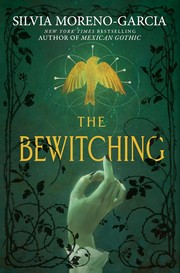
The Bewitching
A gothic horror novel that moves between 1908 Mexico and 1998 Massachusetts as an old family curse and a folkloric bewitchment repeat across three timelines.
2,332-word summary · 10 min read
Nightmares and Dreamscapes
King's 1993 collection runs from a man buried alive in a Cadillac to a town of dead rock stars, mixing horror, science fiction and dark humor across 816 pages.
3,232-word summary · 14 min read
Ghost Story
Four elderly friends who trade ghost stories every week find their tales coming true after a fifth member dies in this 1979 horror novel.
2,461-word summary · 11 min read
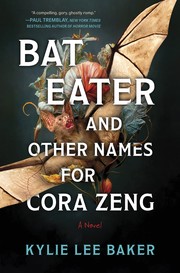
Bat Eater and Other Names for Cora Zeng
A Chinese American crime scene cleaner in pandemic-era New York is haunted by her sister's racist killing and a string of deaths among East Asian women.
2,014-word summary · 9 min read
Wolf Worm
An illustrator hired to draw parasites in 1899 North Carolina finds her employer's locked shed holds something far worse than insects.
2,404-word summary · 11 min read
The Strain
A silent Boeing 777 lands at JFK with almost everyone aboard dead, and a CDC team finds an old vampire war following it into New York.
2,272-word summary · 10 min read
The Regulators
A suburban Ohio street turns into a violent Western set in this Richard Bachman novel, a mirror to Desperation in which an autistic boy hosts a creature called…
2,259-word summary · 10 min read
Sleeping Beauties
In a West Virginia town, a strange sickness puts every woman to sleep inside a cocoon, and the men left behind must decide what to do.
2,337-word summary · 10 min read
The Tale of the Body Thief
Lestat trades bodies with a psychic thief for one day of mortality and ends up trapped, sick, and hunting his own vampire body.
2,069-word summary · 9 min read
The Only Good Indians
Four Blackfeet men who killed a pregnant elk are hunted by her spirit a decade later, and the only person who can end the cycle is a teenage girl who was not…
2,010-word summary · 9 min read
Lisey's Story
Two years after her novelist husband dies, Lisey Landon follows a trail of clues into his childhood and the other world that made him a writer.
1,998-word summary · 9 min read
Rosencrantz and Guildenstern Are Dead
Stoppard's 1966 play retells Hamlet from the wings, where two minor courtiers wait, joke, and walk toward a death they cannot see.
2,021-word summary · 9 min read
Chainsaw Man, Vol. 1: Dog and Chainsaw
A broke teenage devil hunter and his chainsaw dog get a second life, a government leash, and a fight that stops mid-swing in Fujimoto's horror comedy.
2,584-word summary · 11 min read
Locke & Key, Vol. 1: Welcome to Lovecraft
After their father is murdered, the Locke children move into a haunted family estate where keys unlock doors to ghosts, other places, and dangerous secrets.
2,019-word summary · 9 min read
Everything's Eventual: 14 Dark Tales
Fourteen Stephen King stories shuffled by the deal of a card deck, from the haunted room of 1408 to quiet tales of grief that sting as much as the monsters.
2,000-word summary · 9 min read
This Present Darkness
A pastor and reporter face demons over Ashton while angels answer prayer.
2,384-word summary · 11 min read

If It Bleeds
Holly Gibney faces an outsider plus three more tales of dread.
2,219-word summary · 10 min read
Haunted
Writers lock in for three months and trade worse stories as food runs out.
2,576-word summary · 11 min read
Four Past Midnight
Four novellas about a plane lost in time, a writer haunted, and horrors small and large.
2,584-word summary · 11 min read
The Call of Cthulhu and Other Weird Stories
Seventeen tales from Dagon to Innsmouth, led by Cthulhu, the Colour, and the Whisperer, in S. T. Joshi careful Penguin edition with notes and corrected texts.
2,593-word summary · 12 min read
The Call of Cthulhu
A professor's papers link a sculptor's dreams, a Louisiana cult raid, and a sailor's voyage to a sleeping god under the sea.
2,530-word summary · 11 min read
Horns
Accused of killing Merrin Williams, Ig Perrish wakes with horns that force strangers to confess their darkest sins.
2,264-word summary · 10 min read