
Reading options
What's inside (9 sections)
The book opens in the worst possible place to begin, which is a motel room in Panama City, Florida. A man named Donald Wanderley is there with a little girl in a soiled pink dress, and the arrangement looks badly wrong. He is anxious and tormented, watching her with an intensity that reads like guilt, while she sits calm and detached, almost as if none of it concerns her. He says her name is Angie. Then the novel steps back a year and starts over in upstate New York, and you spend the next several hundred pages earning your way back to that room. This is a 1979 horror novel from Coward, McCann and Geoghegan, 483 pages in the first edition hardcover, and it is far more interested in the act of storytelling than in the usual business of scaring you.
Four old men and a private ritual
Milburn is a small town in upstate New York, somewhere east of Binghamton, and it is home to four men in their seventies who have been meeting once a week for half a century. They call themselves the Chowder Society. There is John Jaffrey, a doctor; Lewis Benedikt, a retired businessman; Sears James, an attorney; and Ricky Hawthorne, another attorney and James's partner, a man whose formal first name is Frederick. Every week they gather and tell one another stories. Some are true, some are invented, and all of them are meant to be frightening. It is a hobby, a way of passing the time for men whose lives have grown quiet. Straub treats the ritual with real affection, the way you might describe an old card game that has been played so long the rules have become a kind of family language.
The group used to have five members. The fifth was Edward Wanderley, who died the year before the main action begins, at a party held at Jaffrey's house in honor of a visiting actress named Ann-Veronica Moore. His death was strange enough to unsettle the survivors, and in its aftermath all four men began having terrible nightmares. They took to telling ghost stories partly, it seems, to keep the nightmares at bay. The arrangement is one of the best things in the book, because it gives the horror a social shape. These are not isolated victims wandering a haunted house. They are respectable older men who have made a pact to look fear in the face together, every week, over and over, until one of the stories turns out to be real.
I want to linger on that setup for a moment, because the first stretch of the novel is largely these men sitting in rooms and talking. On paper it sounds static. In practice Straub makes the telling feel like an event. He gives each of the old men a distinct voice and a distinct memory, and he lets the conversation wander the way real conversation does, into digressions and old grievances and the small rivalries of people who have known one another for decades. By the time the supernatural intrusions begin, you have spent enough time in that circle to care who survives them.
The story Sears tells
The novel moves by letting each man tell his tale, and the first full one comes from Sears. He describes a teaching job he took in a rural community when he was young, before he decided on law. There he became fascinated by one of his students, a disturbed boy named Fenny Bate. Fenny and his sister were orphans, shunned by the town, and Sears eventually learned that the children had been abused by their older brother Gregory, who was already dead by then. The brother, Sears came to believe, had come back in the form of a threatening young man who was hanging around the school. Sears tried to save Fenny. He failed. Fenny died, and at the end of the school year Sears left the community and went on to become a lawyer, carrying the story with him.
What makes the chapter land is the next morning. Sears and Ricky are called to see a client, a farmer who has found livestock mutilated in a field, and the violence of that discovery sits right beside the story Sears told the night before. That juxtaposition is the book's main engine. A story is told, and then the world outside the room produces a fact that matches it. Straub repeats the pattern with increasing force, so that you start to dread the moment after each telling, waiting to see what the town will produce to confirm it. The farmer's field is the first and smallest of these confirmations, and it is enough to make the men stop treating their meetings as a game. Around the same time, a beautiful young woman named Anna Mostyn takes a room at the town hotel and a job at Sears and Ricky's firm. She claims to be the niece of a former resident named Eva Galli, and the name alone makes the four men uneasy. Sears admits to Ricky that the story he told was not fiction at all. They are scared, all of them, and they decide to write to Edward's nephew, Donald Wanderley, who has written a novel about the occult and might have the research skills to help. Before Donald can arrive, Jaffrey kills himself by jumping off a bridge.
What Donald brought with him
Donald shows up as Jaffrey's funeral is ending, and the three survivors ask him to investigate whatever he thinks is worth investigating. His reasons for taking the job are personal. Years earlier, his brother David died under mysterious circumstances, and Donald wrote his horror novel to work out what had happened. He tells the others the true sequence of events, and this becomes another story inside the story. At Berkeley, where he had landed a teaching post on the strength of his first book, he fell in with a graduate student named Alma Mobley. At first they were inseparable and there was talk of marriage. Then the details around her began to bother him. Alma had a sinister drug-dealing acquaintance named Greg Benton, who was the guardian of a disabled younger brother. She spoke of friends in a cult connected to the Manson family and claimed to be in regular contact with the spirit of a dead lover named Tasker Martin.
Donald kept finding reasons to avoid her. His work suffered. Then Alma vanished, and when he looked into her past, almost everything she had told him came apart. She had said she was the daughter of a wealthy New Orleans artist named Robert Mobley, but Robert Mobley had sons and no daughter. A few months later David called to say that he and Alma were engaged and that he wanted his brother to make peace with her. Donald tried to warn him. David would not listen, and soon after he was dead. Knocking on the door of the Chowder Society, Donald is a man who has already been through this once and never understood it.
The story nobody wanted to tell
Not long after Donald arrives, Lewis Benedikt is murdered in a nearby stretch of woods, and the remaining men decide it is time to tell the worst story they know. Fifty years earlier, a young woman named Eva Galli moved into Milburn. She was in her early twenties, and all five of the young men fell in love with her, though the love was strictly platonic. One night in 1929, shortly after the stock market crash, Eva came to see them and was not herself. She made aggressive sexual advances and belittled them. There was a struggle, she fell and struck her head, and the men believed her dead. They put her body in a car and drove it out to a deep pond to hide it. At the last moment the body disappeared from inside the car, and the men saw a lynx watching them from the opposite bank.
Donald starts doing the research they hired him for and reaches a conclusion that sounds absurd until the evidence keeps piling up behind it. He thinks they are dealing with a manitou, a shape-shifting creature. Eva Galli, Alma Mobley, Anna Mostyn, and Ann-Veronica Moore, the actress from the party where Edward died, are all the same being, and it has come back to punish the Chowder Society for what they did in 1929. Sears recognizes Greg Benton and his disabled brother as Gregory and Fenny Bate from his schooldays, which means they belong to the same supernatural family. In tape recordings left by Edward, parts even he never listened to, Eva speaks directly to the survivors. She says she belongs to an ancient race of beings and is old enough to remember the first humans in this country. That is the moment the book stops being a mystery about a dead girl and becomes something older and angrier.
Florence de Peyser and the people she made
The survivors gain an unlikely ally in Peter Barnes, a young man whose mother was killed by Fenny and Gregory. Before they die, the two brothers explain themselves. They were ordinary human beings once, granted new life and powers by a woman named Florence de Peyser, whom Alma had mentioned as her aunt. Eva, it turns out, is also subservient to Florence, which opens up the unnerving possibility that all of this is being managed from somewhere else. Sears is ambushed and killed in his car, and the survivors understand that the reanimated Gregory and Fenny are working for Eva now. In a movie theater, the brothers attack Peter, Donald, and Ricky. Both are killed in the fight, and Donald realizes that for all their otherworldly strength, these creatures can be destroyed. The survivors track Eva down and defeat her, but she gets away by taking another shape. This is where I found the book both thrilling and a little slippery. Every time the men seem to corner the truth, it slips sideways into another story, another identity, another layer.
Peter Barnes is the one figure who keeps the ending from being purely a story about aging men. He is young, he has a grievance of his own, and he has lost a mother to the creatures the old men once thought of as characters in a tale. His presence widens the book. The Chowder Society started as four friends keeping one another company, and by the end they are fighting a battle that will outlast them, with someone else's son standing beside them. The movie theater fight, where Gregory and Fenny are finally destroyed, has a grim physicality that the earlier, more literary chapters had been holding at arm's length.
The girl in the park
With the immediate threat broken, Ricky leaves Milburn for a long vacation with his wife and Peter gets ready for college. Donald stays and keeps watch, because he has worked out that Eva will most likely return as a child. He watches the children in a local park and notices a girl named Angie whom the other children avoid. Convinced he has found her, he invites Angie to come with him, and the novel folds back on itself to the motel in Panama City where it began. In Florida, Eva emerges from the girl's body and tries to twist Donald's mind. He resists. When she attempts to escape in the form of a wasp, he kills her, and the book ends with him preparing to travel to San Francisco to hunt down Florence de Peyser. There is no tidy settlement of every thread here. The men who started out telling stories have survived, but the thing behind the stories is still out there, and Donald has become the one who goes looking for it.
What I kept thinking about afterward
Straub has said the idea came from rereading Hawthorne and James and then reading Lovecraft, Bierce, and Edith Wharton's ghost stories, along with Stephen King's 'Salem's Lot, because he wanted to understand his own tradition. The first notion was simply a group of old men telling one another stories, and he set himself the formal challenge of linking them. You can feel that craft in the structure. The book is built out of nested stories, each one ostensibly told by somebody who lived it, and the pleasure is in watching the frames close around one another.
The reception was mixed, and I understand why. The New York Times complained about the length and complexity while admitting the eerie set-pieces work. Kirkus called it an overlong, lukewarm chiller with some superb moments. Stephen King praised it as the best supernatural novel to appear in the wake of the books that started the seventies horror wave, and Benjamin Percy described Straub as a modern-day Henry James with sharper teeth, writing literary horror with elegant sentences and believable people. I land closer to King than to Kirkus, though the critics have a point about the girth. There are long stretches where the book seems to generate another story just when you think it is ready to finish, and the density can be exhausting. But the exhaustion is part of the design. These men tell stories because the alternative is to sit alone with what they did, and a novel that makes you feel the weight of all that telling is doing something right.
There is also a joke running through the book about the writer's trade. Donald makes his living inventing the very things that are now hunting him, and he is hired precisely because he has spent years researching the occult for fiction. Straub seems to be asking whether a lifetime of telling stories gives you any protection when the stories become true, or whether it merely trains you to recognize the shape of the next one. I do not think the novel settles that, but the question gives the nested structure a purpose beyond cleverness.
It was adapted into a 1981 film directed by John Irvin, with Fred Astaire, Melvyn Douglas, Douglas Fairbanks Jr., and John Houseman, though the movie dropped Lewis Benedikt from the group. The novel also reached farther than I expected. Ricky Hawthorne turns up in Floating Dragon, and Milburn appears in Koko. The video game F.E.A.R. named its character Alma Wade after Alma Mobley. Those echoes are a measure of how much this book seeped into the culture of horror. Reading it now, the slow accumulation matters more than any single scare. It is a book about the things people bury, and about the fact that a story told often enough can start to breathe on its own.
FAQ
What is the Chowder Society in Ghost Story?
It is the weekly storytelling club of four elderly Milburn men, once five, whose meetings are disrupted when their friend Edward dies and the stories start coming true.
Is Ghost Story based on real events?
No. Straub built it from classic American and European supernatural fiction he reread, including Hawthorne, James, Lovecraft, Bierce, Wharton, and Stephen King's 'Salem's Lot.
Was Ghost Story made into a movie?
Yes. John Irvin directed a 1981 adaptation starring Fred Astaire and Melvyn Douglas, though it left out the character Lewis Benedikt.
Similar books
Through the Woods
Five horror comics in which sisters vanish into the snow, a bride finds a secret in the walls, and a walk through the woods turns fatal.
2,513-word summary · 11 min read
The Staircase in the Woods
Twenty-five years after a friend vanished at the top of a staircase in the woods, four estranged adults are summoned back to climb another one.
2,023-word summary · 9 min read
The Bewitching
A gothic horror novel that moves between 1908 Mexico and 1998 Massachusetts as an old family curse and a folkloric bewitchment repeat across three timelines.
2,332-word summary · 10 min read
Bat Eater and Other Names for Cora Zeng
A Chinese American crime scene cleaner in pandemic-era New York is haunted by her sister's racist killing and a string of deaths among East Asian women.
2,014-word summary · 9 min read
Wolf Worm
An illustrator hired to draw parasites in 1899 North Carolina finds her employer's locked shed holds something far worse than insects.
2,404-word summary · 11 min read
The Tale of the Body Thief
Lestat trades bodies with a psychic thief for one day of mortality and ends up trapped, sick, and hunting his own vampire body.
2,069-word summary · 9 min read
Her Fearful Symmetry
Twins Julia and Valentina inherit a London flat above Highgate Cemetery from an aunt they never met, then find a ghost in it and a family secret.
2,057-word summary · 9 min read
The Wasp Factory
Iain Banks's 1984 debut follows Frank Cauldhame, an isolated sixteen-year-old on a Scottish island, as his brother's escape and a family secret unravel his…
2,248-word summary · 10 min read
Everything's Eventual: 14 Dark Tales
Fourteen Stephen King stories shuffled by the deal of a card deck, from the haunted room of 1408 to quiet tales of grief that sting as much as the monsters.
2,000-word summary · 9 min read
The Amityville Horror
The Lutz family flees 112 Ocean Avenue after 28 days of cold spots, voices, and flies, following DeFeo murders.
2,088-word summary · 9 min read
Later
Boy Jamie Conklin sees dead people who must answer truthfully, pulling him into NYPD cases and a drug crew's greed.
2,009-word summary · 9 min read
Gallant
Mute Olivia Prior returns to Gallant manor where ghouls walk and a shadow Recommends.
2,081-word summary · 9 min read
Heart-Shaped Box
A washed-up rock star buys a haunted suit online and must face the vengeful ghost attached to it.
2,980-word summary · 13 min read
John Dies at the End
Two slacker friends, a drug called soy sauce, and a portal to something that wants every universe.
2,382-word summary · 11 min read
Forever Odd
Six months after Stormy's death, Odd Thomas tracks a kidnapped friend to a decaying hotel and faces a cultist who wants his gift.
2,308-word summary · 10 min read
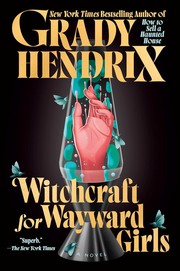
Witchcraft for Wayward Girls
In 1970 Florida, a girl sent to a maternity home for unwed mothers finds a spellbook, and the real horror turns out to be what the adults do to her and her…
2,077-word summary · 9 min read
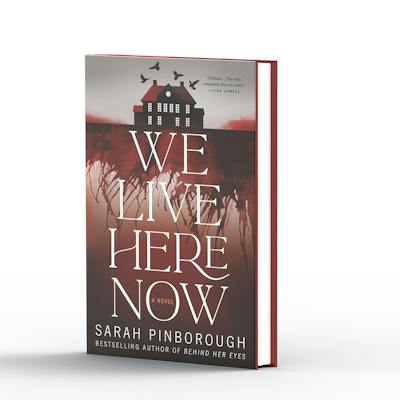
We Live Here Now
After a near-fatal fall, a woman moves with her husband to a remote Dartmoor house where strange events happen only when she is alone, and a raven watches from…
2,016-word summary · 9 min read
Wake Up and Open Your Eyes
A Brooklyn father drives to Richmond to find his parents lost in a cable news trance, in Chapman's splatterpunk horror about possession spread through…
2,381-word summary · 11 min read
The Winter People
A century-old ritual for calling back the dead connects a Vermont farmhouse, a girl who came back from the well and a modern investigation into a…
2,037-word summary · 9 min read
The Salt King
Sent back to the salt-mining town he fled, a Jesuit priest investigates miracles that turn pilgrims into pillars of salt. Pulley adds a slow-burning queer…
2,214-word summary · 10 min read

The Cask of Amontillado
A drunken nobleman follows a friend into his family catacombs to taste a cask of amontillado. Poe's 1846 tale turns a wine joke into one of literature's most…
2,916-word summary · 13 min read
The Buffalo Hunter Hunter
A 1912 diary found in a Montana parsonage recounts a Blackfeet man's unraveling after a dying creature's blood turns him undead, in a novel of history and…
2,731-word summary · 12 min read
Nightmares and Dreamscapes
King's 1993 collection runs from a man buried alive in a Cadillac to a town of dead rock stars, mixing horror, science fiction and dark humor across 816 pages.
3,232-word summary · 14 min read
Night Pleasures
An accountant is kidnapped by a soul-stealing Daimon and handcuffed to a two-thousand-year-old Dark-Hunter, beginning a romance that forces him to want…
2,039-word summary · 9 min read

Marina
A fifteen-year-old boarder in 1979 Barcelona follows a singing voice into a ruined mansion and finds a girl, a watch, and a mystery the city has kept buried…
2,352-word summary · 10 min read
Alchemised
A memory-wiped alchemist wakes a prisoner of the regime that won Paladia's civil war, and her captor is the former rival who wants what remains inside her head.
2,596-word summary · 12 min read
The Unknown
A struggling actress joins an isolated film shoot about five women who vanished on a Vermont island in 1926, and the staged haunting turns deeply personal.
2,424-word summary · 11 min read
The Strain
A silent Boeing 777 lands at JFK with almost everyone aboard dead, and a CDC team finds an old vampire war following it into New York.
2,272-word summary · 10 min read
The Regulators
A suburban Ohio street turns into a violent Western set in this Richard Bachman novel, a mirror to Desperation in which an autistic boy hosts a creature called…
2,259-word summary · 10 min read
Sleeping Beauties
In a West Virginia town, a strange sickness puts every woman to sleep inside a cocoon, and the men left behind must decide what to do.
2,337-word summary · 10 min read