
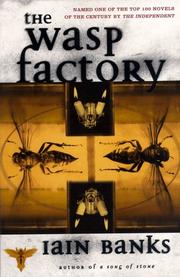
Reading options
What's inside (7 sections)
I read The Wasp Factory in two sittings, which is the wrong way to read it and also the only way I could manage. It is short, fast, and so tightly voiced that putting it down feels like leaving a room where someone has been talking without blinking for an hour. Iain Banks published it in 1984, his first novel, with Macmillan, and the edition I have runs 184 pages. It arrived with a reputation for extremity, and the reputation is earned. A narrator who is sixteen, nearly seventeen, confesses to killing three children, describes rituals built from animal remains, and treats the whole thing as ordinary. The book is not supernatural horror. It is a first-person account of a closed world, and the horror comes from how reasonable the narrator makes his own cruelty sound.
This is a summary with spoilers, including the ending and the twist. It also needs a warning. The novel contains graphic violence against animals, child murder, sexual material involving young people, ableist language, and a reveal that uses gender identity as a shock. It is not for readers who need a likeable narrator or a moral rescue. I think it is worth reading, but I would not hand it to someone without saying what is inside.
The island and its religion
Frank Cauldhame lives with his father, Angus, on a small island off the coast of Scotland. The island is connected to the mainland by a bridge, but Frank is still cut off. He has no birth certificate, no school record, and almost no contact with the town beyond the occasional trip for supplies or a drink with his friend Jamie. Angus has homeschooled him and handled his medical care. Frank is nearly seventeen and has never lived anywhere else. The island is his whole geography, and he has made it sacred.
His religion is a private system of signs. Around the island he keeps Sacrifice Poles, wooden posts crowned with the skulls and bodies of animals he has killed. He believes the poles guard the island and let him see through the eyes of birds. In an old bunker he keeps the skull of Old Saul, the family dog, along with other relics. In the loft he has built the Wasp Factory, the book's central object: a large old clock face set inside a glass case, with twelve chambers behind the numerals. Each chamber offers a different death. Frank puts a wasp into the center and watches which way it goes. The death it chooses becomes an answer to whatever question he has asked. The Factory is not magic. It is a machine for producing meaning, and Frank needs meaning badly enough to accept whatever it gives him.
His father spends most of his time in a locked study on the first floor. Frank has never seen inside. Angus is tall, thin, and remote, with a delicate face and a limp. He is intelligent and evasive, and he lies to Frank for reasons that seem to amuse him. He also keeps a cellar full of old cordite, which will matter later. The house is full of odd rules and old smells. Frank's narration makes it feel normal, which is part of the trick. He describes his father's quirks and his own rituals in the same flat tone, as if a shrine made of animal skulls and a locked room were ordinary features of family life.
The three deaths
Before he was ten, Frank killed three children. The first was his cousin Blyth, who had burned Frank and Eric's pet rabbits with a flamethrower. Frank killed him with an adder. The second was his younger half-brother, Paul. Paul was born on the day Old Saul died, and Frank believed the dog's spirit had moved into the boy. He killed Paul when Paul was five and Frank was eight. The third was his cousin Esmerelda, killed the following year because Frank felt the balance had tipped too far toward male victims and he needed to kill a girl. He describes these deaths without remorse, but not without detail. He remembers what he was thinking and how the deaths happened. The effect is not shocking in the usual way. It is unsettling because the voice is so calm.
The story Frank tells about himself begins with Old Saul. When Frank was three, the dog attacked him and, according to the family story, tore off his genitals. Frank's mother, Agnes, had returned to the island to give birth to Paul, and the attack happened while she was there. She left two days later, running over Angus's leg with her motorcycle when he tried to stop her. Frank blames her for the attack, for Paul, for his father's limp, for much of what went wrong. He hates women with a hatred that is obviously a wound dressed as philosophy. He also hates the sea, which keeps destroying the dams and forts he builds. His misogyny is not presented as correct. It is presented as the engine of his violence, and the novel lets us see how much energy he spends keeping it running.
Frank's only friend is Jamie, a dwarf who lives in town. They drink together, play Space Invaders in a pub, and talk about Eric. Jamie is one of the few people who talks back to Frank, and the friendship is surprisingly warm. It also shows how isolated Frank is. Jamie can move between the island and the town; Frank cannot. Frank loves his older brother, Eric, more than anyone. Eric was the bright, sensitive one, the medical student, the brother who played with Frank and protected him. Eric is also in a mental hospital, and news of his escape is what sets the plot in motion.
What happened to Eric
Eric's breakdown is the novel's other wound. He was studying medicine and working at a hospital when he was asked to feed a severely disabled infant. The child had a metal plate over its head because the skull had not formed properly. One night Eric noticed something wrong and lifted the plate. Maggots had gotten under it and were eating the child's brain. He was found screaming, and the child was on the floor with a spoon in its head. The image is grotesque, and Banks gives it to us plainly. Eric was sedated, sent back to school, and then fell apart. He drank, missed classes, set his books on fire, came home, and began setting dogs on fire. He also tried to feed maggots and worms to local children. The police arrested him, and he was committed.
Frank interprets Eric's dog burning through his own mythology. Old Saul hurt Frank, so Eric is taking revenge on dogs. Frank also believes he can reach Eric through Old Saul's skull, and he tries. The novel alternates between Frank's present-day preparations and Eric's phone calls from payphones around Scotland. Eric is moving closer. He is lucid enough to travel and use phones, and unstable enough to rage at Frank for accusing him of burning dogs, which he both denies and has done. Frank is excited and afraid. He loves his brother, and he knows what Eric is capable of.
The middle of the book is full of Frank's patrols, his memories, and his rituals. He builds dams, plays war games with toy soldiers and real explosives, and visits the Bomb Circle and the Snake Park. He kills animals for the Poles. He consults the Wasp Factory. He drinks with Jamie. He thinks about his mother, about Eric, about the dog, about the sea. The plot is thin in the ordinary sense, but the voice is so complete that the days feel full. Banks is good at the physical texture of the island: the wind, the mud, the gulls, the smell of cordite in the cellar. He is also good at the way a child can build a whole theology out of a few accidents and a lot of fear.
The return and the study
Eric's return is announced by a burned dog. Frank finds the animal and knows the waiting is almost over. Angus starts drinking. One night he forgets to hide the keys to his study. Frank gets in. He finds boxes of male hormone drugs, a box of tampons, and a specimen jar containing what looks like his own genitals. He concludes that his father is a woman. He confronts Angus at knifepoint and makes him undress, and discovers that his father is male. At that moment Eric arrives.
Eric is carrying an axe and a torch. He sets fire to sheep and tries to get into the cellar to reach the cordite, planning to blow up the house. Frank stops him, and Eric runs off into the night. Then Angus explains. Frank was born a girl named Frances. The dog attack did happen, but the damage was minor. There was no castration. The genitals in the jar were made of wax, planted as evidence in case Frank ever asked questions. Angus had been feeding Frank male hormones since childhood and raising him as a boy. The experiment was partly an attempt to see whether gender could be imposed, and partly a way to make a household with no female influence. Frank's entire identity, including the wound that justified his violence, was a story his father invented.
The revelation lands hard because it changes the past and the meaning of everything Frank has done. The Wasp Factory, the Sacrifice Poles, the murders, the hatred of women: all of it was built on a lie. Frank is not a boy who lost his manhood. Frances was born female and raised as a boy by a man who wanted to control the terms of the experiment. The novel's last pages are quieter than the climax. Frank finds Eric asleep and sits with him. Eric has come home for his brother. In the morning Frances greets him as his sister. The book ends with the possibility of leaving the island, not with a plan.
The machinery of the book
The Wasp Factory is a novel about systems that create meaning out of nothing. Frank's clock is one. His father's experiment is another. The family's story about the dog is a third. Each system explains everything and explains nothing. Frank's violence is not random; it is ritual, and ritual is how he keeps the chaos of his life at a distance. The novel's structure mirrors that. Short chapters, repeated routines, phone calls that mark time, memories that arrive when Frank needs them. The effect is claustrophobic in the best way. We are inside a mind that has organized itself around a wound, and we watch the organization collapse.
The book is also funnier than its reputation suggests. Frank's voice is dry, superior, and often absurd. He sneers at the town, at his father, at women, at the sea, and at himself without noticing. Some of the humor is black enough to make you uncomfortable for laughing. That is intentional. Banks is not asking us to approve of Frank. He is asking us to spend time with a person who has turned himself into a small god, and to feel how boring and frightened that god actually is.
The criticism is easy to make. The violence against animals is relentless, and some of it exists to shock rather than to reveal. The twist depends on the idea that discovering you are female is the ultimate horror, which is a dated and potentially harmful move, even if the book is also satirizing the arbitrary nature of gender. The father's motive is thin: he is a misogynist with a laboratory, and the novel does not give him enough psychology to make the experiment feel real. Jamie's dwarfism is used for texture and jokes in ways that have not aged well. The ending, after the revelation, is rushed. We get a few quiet pages and then the book stops. I wanted more aftermath, more of Frances deciding what to do with the life she has been handed.
None of that cancels the book for me. It is a debut, and it has the raw, uneven energy of a writer testing what he can get away with. The voice is the achievement. Frank is repellent, and he is also recognizably a teenager: grandiose, lonely, certain, and terrified of being seen. The relationship with Eric gives the novel a beating heart. Eric is a victim who has become dangerous, and Frank's love for him is the one emotion that does not feel manufactured. When Frank sits with Eric at the end, the book earns a moment of tenderness without forgiving anyone.
Who should avoid it? Anyone who cannot read graphic animal cruelty, child murder, or sexual material involving a minor. Anyone who wants a clear moral framework or a narrator to root for. Anyone who will be hurt by the novel's treatment of gender and disability. Who might like it? Readers of gothic fiction, unreliable narrators, Scottish fiction, and books that are more interested in voice than in plot. If you liked the cold intelligence of something like Crime and Punishment but wanted less redemption and more black comedy, this is in that neighborhood, though it is much shorter and much nastier. It is not a book I would call wise. It is a book that gets under the skin, and it stays there.
FAQ
How old is Frank in The Wasp Factory?
Frank is sixteen, nearly seventeen, and has lived on the island his whole life.
Does The Wasp Factory have a twist ending?
Yes. Frank learns that the castration story was false, that he was born a girl named Frances, and that his father raised him as a boy.
Is The Wasp Factory suitable for younger readers?
No. It includes graphic animal cruelty, child murder, sexual material involving minors and a gender reveal used as shock, so it is best for mature readers.
Similar books
The Haunting of Hill House
Eleanor joins a ghost study at Hill House, bonds fast with Theodora, and feels the house single her out by name.
2,712-word summary · 12 min read
What Moves the Dead
Alex Easton arrives at the Usher house to find Madeline dying, the tarn full of fungus, and the local hares refusing to stay dead.
2,586-word summary · 11 min read
The Tale of the Body Thief
Lestat trades bodies with a psychic thief for one day of mortality and ends up trapped, sick, and hunting his own vampire body.
2,069-word summary · 9 min read

Lisey's Story
Two years after her novelist husband dies, Lisey Landon follows a trail of clues into his childhood and the other world that made him a writer.
1,998-word summary · 9 min read
Authority
The new director of the Southern Reach takes over an agency that is hiding the truth about Area X, and the building starts to change around him.
2,029-word summary · 9 min read
Night Film
A disgraced journalist investigates the death of a reclusive horror director's daughter, following a red coat through hospitals, secret clubs, and a family…
2,690-word summary · 12 min read
A Head Full of Ghosts
A broke Massachusetts family lets a reality TV crew film their daughter's exorcism, and fifteen years later the only survivor tries to explain what really…
2,588-word summary · 12 min read
Everything's Eventual: 14 Dark Tales
Fourteen Stephen King stories shuffled by the deal of a card deck, from the haunted room of 1408 to quiet tales of grief that sting as much as the monsters.
2,000-word summary · 9 min read
Haunted
Writers lock in for three months and trade worse stories as food runs out.
2,576-word summary · 11 min read
Hannibal
Lecter hides in Florence while Starling and Verger close in from both sides.
2,590-word summary · 12 min read
Let the Right One In
A bullied boy in 1981 Blackeberg befriends the strange child next door, where love and hunger grow side by side.
2,546-word summary · 11 min read
The Witching Hour
A San Francisco surgeon inherits a haunted New Orleans house where a spirit has courted her witches for centuries, until a Christmas Eve birth gives it living…
2,953-word summary · 13 min read
Gallant
Mute Olivia Prior returns to Gallant manor where ghouls walk and a shadow Recommends.
2,081-word summary · 9 min read
Carmilla
Lonely Laura in Styria befriends beautiful Carmilla, whose night visits bring dreams, bites, and ancestral dread.
2,158-word summary · 10 min read
House of Leaves
Danielewski's 2000 debut about a house larger inside than outside, told through film analysis, footnotes, and a troubled annotator. Strange, demanding, and…
2,693-word summary · 12 min read
The Vampire Lestat
Lestat tells his own tale from French village to rock star, waking ancient ones who hate questions.
1,916-word summary · 9 min read
Flowers in the Attic
Four children locked in a grandmother attic learn their mother traded them for an inheritance.
2,052-word summary · 9 min read
Different Seasons
Four novellas: prison hope, a boy and an old Nazi, kids chasing a body, and a club that grants wishes with teeth.
1,974-word summary · 9 min read
We Have Always Lived in the Castle
Merricat guards sister Constance after arsenic deaths, until cousin Charles invades and fire frees them.
3,011-word summary · 13 min read
The Tell-Tale Heart and Other Writings
Mad narrators, Dupin puzzles, mournful poems, and Pym in one Bantam collection.
2,333-word summary · 10 min read
The Historian
A daughter traces her father's search for Dracula through letters and archives across Europe.
3,237-word summary · 14 min read

The Complete Works of Edgar Allan Poe
The full Poe shelf in one volume: mad narrators, rotting houses, Dupin, and the Raven.
2,183-word summary · 10 min read
American Psycho
Patrick Bateman hides violent urges behind suits and reservations in Ellis's 1991 satire of 1980s Manhattan wealth, brands, and moral blankness.
2,837-word summary · 13 min read
Mexican Gothic
In 1950 Mexico, glamorous Noemi Taboada leaves Mexico City for High Place after a desperate letter, to rescue cousin Catalina from the chilling Doyles and…
2,523-word summary · 11 min read
The Strange Case of Dr. Jekyll and Mr. Hyde
A London lawyer traces a violent stranger to his respectable friend in Stevenson's 1886 tale of two selves.
2,286-word summary · 10 min read
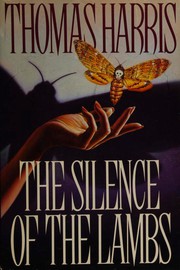
The Silence of the Lambs
Clarice Starling seeks Hannibal Lecter's help to catch Buffalo Bill before Catherine Martin runs out of time.
2,616-word summary · 12 min read
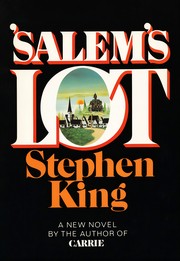
'Salem's Lot
A writer returns to Jerusalem's Lot as an old house fills with vampires.
2,046-word summary · 9 min read
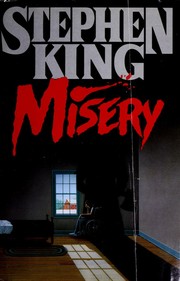
Misery
A novelist crashes in Colorado snow and wakes in the home of his self-declared number one fan, who will not let him leave.
2,744-word summary · 12 min read
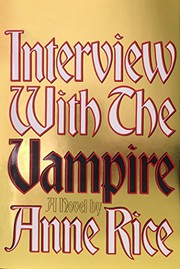
Interview with the Vampire
Louis tells a reporter how Lestat made him and how Claudia doomed them all in New Orleans and Paris.
2,195-word summary · 10 min read
The Picture of Dorian Gray
Dorian Gray retold: Basil paints, Henry talks, wish holds youth while canvas bears years.
2,061-word summary · 9 min read