
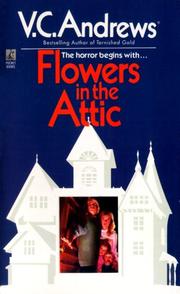
Flowers in the Attic
2,052-word summary 9 min read 416 pages in the book
- First published
- 1979
- Publisher
- Pages
- 416
- ISBN
- 9780671729417
- Series
- Dollanganger (#1)
Reading options
What's inside (12 sections)
I read Flowers in the Attic as a teen under covers with a flashlight, which is the correct and slightly cursed way. V.C. Andrews published it with Pocket Books in 1979, a 416 page gothic novel with ISBN 9780671729417. Four children hidden in a grandmother attic after their father dies learn their mother traded them for an inheritance. Cathy, Chris, and twins Cory and Carrie live on doughnuts, books, and each other for years while their mother visits less and their grandmother punishes more. It is lurid, addictive, and genuinely sad underneath the scandal. Incest, poison, and faith used as a whip. Handle with care and context.
Corrine Dollanganger opens the story with a car crash and a lie. Her husband died. She has no money. She will take her four children to her wealthy parents in Virginia, whom she married against by eloping with her half uncle. The children do not know that last part. They know Foxworth Hall is huge and their grandmother Olivia is cold as stone. Olivia meets them with a speech about sin and measures. The children are sins made flesh. They will live in one bedroom and the attic, hidden from a grandfather who must never know they exist, until Corrine inherits. Days become weeks. Weeks become years. Corrine visits with gifts and excuses. The money always needs one more signature.
Attic life
Andrews writes confinement with claustrophobic skill. The bedroom with four beds. The attic with trunks, a rocking horse, and paper flowers the children make to brighten rafters. Lessons at a desk with Chris teaching. Baths in shifts. Meals left like offerings. Olivia enforces rules with hunger, whippings, and Bible verses about impurity. She cuts Cathy hair after Chris touches it. She burns Chris books. She starves them for days when they steal food. Yet the children adapt the way children do. They build routines. Schoolwork. Exercise. Stories. Carrie collects small things. Cory gets sicker. Cathy dances. Chris builds models. Their love for each other deepens into dependence that will cross lines. Andrews shows how isolation warps normal development without excusing what follows. Locked children grow toward each other because no one else is allowed near.
Cathy narration carries the book with voice that swings between childish and prematurely old. She loves her mother fiercely and doubts her constantly. Why do visits shrink. Why does Corrine smell of perfume and money rather than home. Why does Christmas bring dolls but no rescue. Cathy puberty arrives in the attic with no guidance except Chris, who watches her change with brother eyes that learn wrong hungers. Their relationship turns sexual in scenes that disturbed generations of readers. Andrews presents it as both inevitable in confinement and damaging. They feel shame after. They pray wrong prayers. Modern readers should know this content before opening. Sibling incest is described without graphic detail but with emotional weight that lingers. It is not titillation so much as tragedy about boundaries removed by adults. Still, it harms to read for many. Take the warning seriously.
Corrine and Olivia
Corrine is one of gothic great villains because she believes her own excuses. Blonde, beautiful, grieving theatrically, she marries young, loses, and chooses money over children with rationalizations about future rescue. Her visits thin as she rejoins society. She dances at parties while her children eat crumbs. By the end she has a new husband, a lawyer, and a plan to inherit by letting the twins die quietly. Andrews lets her be pitiable once. A scene where Corrine cries at the attic door and almost enters. Then the door stays shut. Pity curdles into judgment that the book never softens. Mothers who abandon for comfort earn no mercy here. That harshness reflects Cathy point of view more than author fairness, but it sticks.
Olivia is worse and more interesting. Huge, plain, devout in a punishing key, she starves children while quoting scripture about adultery. Her backstory, filled in later books, explains without excusing. Married to a man who desired his own stepdaughter, hardened by betrayal, Olivia sees sin in every young body. She is cruel on principle, which makes her predictable and therefore survivable. Do not steal. Do not touch. Do not ask. The children learn her rules faster than Corrine promises. Readers who grew up with religious punishment will find Olivia horribly familiar. Faith as whip. Love as test you fail by existing. Andrews, who wrote from a wheelchair with her own mother close, understood houses where belief confines.
Doughnuts and escape
The poison plot drives the last third. The twins sicken on powdered doughnuts that Olivia brings as treats. Cory dies after eating many. Carrie nearly follows. Chris discovers arsenic on a doughnut and connects Corrine new inheritance to murder by neglect. The children plan escape with money saved from selling crafts and from Chris wooden models. They leave at dawn with little Carrie carried, cross a yard that feels like a country, and catch a bus to Florida with coins counted twice. That flight is the book release after hundreds of pages of airless rooms. Sunlight hurts. Bus seats feel huge. Freedom tastes like fear as much as joy. They have survived by becoming each other world. Outside has no place for that bond.
The ending refuses comfort. Three children arrive in Florida with no plan beyond each other. Cathy vows revenge on Corrine at a wedding she crashes in the sequel hook. Chris holds Carrie while looking back at roads. No adults help in ways that matter. A bus driver is kind. That is all. Andrews trusts young readers to sit with injustice rather than resolving it with rescue. The attic stays standing in Virginia with paper flowers fading. Someone else will clean it without knowing. That image closes the book better than any trial could. Evidence of childhood in dust. Proof that locked doors eventually open from inside when children grow strong enough to turn keys.
Chris as parent
Chris role as substitute parent needs honest discussion because the book makes a child do adult work. Twelve at arrival, Chris teaches lessons, rations food, tends Carrie fevers, and plans escape with maps drawn from memory. He parents because Corrine abdicated and Olivia punishes. That burden warps his bond with Cathy. They share baths for practicality that becomes intimacy without guidance. Chris knows it is wrong and cannot stop because no other closeness exists. Andrews presents his confusion with sympathy that never excuses adults who caused it. Blame sits upstairs with the mother and grandmother, not in the attic between children. Readers should keep that address in mind when judging scenes that disturb. Children in cages grow toward each other. Adults who built cages answer for the shape of that growth. Chris carries both care and shame into Florida. Both will shape the man he becomes in sequels. Watch him there with pity rather than judgment. He parented before puberty. No one should have to.
Carrie and Cory
The twins anchor the book emotional stakes because they are young enough to believe rescue comes soon. Cory, quieter, fades first under poor food and grief. Carrie, fiercer, steals moments of joy that keep all four going. Donuts shared. Stories acted. A mouse adopted and hidden. Their smallness makes Olivia cruelty starkest. Starving teenagers is abuse. Starving five year olds is murder by schedule. Cory death from arsenic devastates precisely because he never understood why doors stayed shut. Carrie survival into escape carries his share of childhood. She clings to Chris and Cathy with a grip that will shape her troubled future in sequels. Remember the twins when the plot turns lurid. They are the reason the attic matters beyond scandal. Innocents grew thin in dust while adults danced below. That image convicts better than any trial the series later stages.
What works and what strains
What works is pace and voice. At 416 pages of short chapters, the book moves fast for its era. Cathy present tense urgency pulls even when nothing happens for stretches. Attic routines fascinate because details are exact. How to wash with little water. How to teach twins with one book. How to make flowers from paper that last longer than hope. Horror builds through deprivation rather than monsters. Hunger. Cold. Haircuts as punishment. Those small cruelties hurt more than ghosts would. Andrews knew houses can haunt without spirits. Locked doors suffice.
The strain is repetition and exploitation edges. Corrine excuses circle. Olivia sermons repeat. Twins sicken in slow motion that some will find cruel to read. The incest, though not graphic, is central enough that the book cannot be recommended lightly. Later books retcon parentage to soften it, which tells you even the saga flinched. Modern readers also notice race and class blind spots. Servants appear briefly. Money solves escapes that poverty would not. Still, the core about children surviving adult greed holds. Read it as gothic excess with a real wound inside. Do not read it for parenting models. No one here parents except Chris, a child himself, and his care breaks rules that should never have needed breaking.
Who it is for
Read it if you like gothic family horror, or want to understand why this book sold millions despite disgust. It opens the Dollanganger series, so expect setup and fury rather than closure. Content notes are heavy. Child confinement and starvation, whipping and religious abuse, sibling incest with emotional detail, child death by poisoning, and maternal abandonment. Adult book despite teen protagonists. Not for young teens. Read with support and context about abuse resources.
I finished angry at Corrine and sad for everyone else, which is the intended aftertaste. Cathy dancing in the attic with paper flowers around her head stays with me more than any scandal. A girl making beauty where adults made prison. That image redeems the lurid pages around it without excusing them. Flowers in the Attic endures because it understands locked rooms literally and otherwise. Families keep attics. Secrets live in them. Children grow toward light through cracks. Open the door sooner than Corrine did. The air outside, though frightening, beats doughnuts dusted with death. Keep the paper flowers. Throw away the lock.
Series note
Dollanganger order is Flowers in the Attic, Petals on the Wind, If There Be Thorns, Seeds of Yesterday, Garden of Shadows prequel. Read in order. Each reframes the last. Flowers works alone as horror. Sequels turn it into saga with courtrooms, marriages, and more fires. Continue only if you want revenge more than closure.
The grandfather who must not know
The dying grandfather in the house below deserves a note because his absence rules everything. Old, sick, rich, and cruel by reputation, he must never learn the children exist or Corrine loses inheritance. That rule shapes attic life more than Olivia whip. Whisper. Do not run. Stay from windows. The children imagine him as ogre and savior at once. If he knew, would he forgive. If he saw, would he pay. He dies without knowing, which renders their suffering pointless in plot terms and meaningful in theme. Adults built a prison around a dying man vanity. When he passes, Corrine has no reason to free them quickly and every reason to finish them quietly. Money outlives its excuse. Greed continues on habit. That is the book coldest insight. Systems persist after reasons die. Locks stay locked because keys are forgotten, not because treasure remains.
Paper flowers
The paper flowers Cathy makes deserve a closing image because they outlast the poison. Cut from bags and colored with crayons, strung around the attic to fake a garden, they fade but never die. Real flowers in the yard bloom and rot. Paper ones stay. When the children flee, they leave the flowers hanging for whoever cleans. That abandonment hurts more than the flight thrills. Childhood craft left as evidence. Someone will sweep paper petals and wonder. Andrews understood that survivors leave decorations in prisons. Carvings. Drawings. Songs. Beauty made where none was allowed proves life persisted. Keep the flowers in mind when judging the lurid rest. A girl who decorates a cage has not surrendered. She is practicing for a home she has never seen. Florida will need flowers too. She will know how to make them from nothing.
FAQ
When was Flowers in the Attic published?
Pocket Books published it in 1979. The mass market edition runs 416 pages and the ISBN is 9780671729417.
Who are the main characters?
Cathy, Chris, twins Cory and Carrie, their mother Corrine, and grandmother Olivia.
Is it part of a series?
Yes. It is book one in the Dollanganger series, followed by Petals on the Wind.
Similar books
More from Dollanganger first, then related titles.
Her Fearful Symmetry
Twins Julia and Valentina inherit a London flat above Highgate Cemetery from an aunt they never met, then find a ghost in it and a family secret.
2,057-word summary · 9 min read
What Moves the Dead
Alex Easton arrives at the Usher house to find Madeline dying, the tarn full of fungus, and the local hares refusing to stay dead.
2,586-word summary · 11 min read
The Tale of the Body Thief
Lestat trades bodies with a psychic thief for one day of mortality and ends up trapped, sick, and hunting his own vampire body.
2,069-word summary · 9 min read

Night Film
A disgraced journalist investigates the death of a reclusive horror director's daughter, following a red coat through hospitals, secret clubs, and a family…
2,690-word summary · 12 min read
The House We Grew Up In
The Bird family of the Cotswolds breaks apart after a suicide and spends twenty years not talking about what happened.
2,198-word summary · 10 min read
The Wasp Factory
Iain Banks's 1984 debut follows Frank Cauldhame, an isolated sixteen-year-old on a Scottish island, as his brother's escape and a family secret unravel his…
2,248-word summary · 10 min read
The Witching Hour
A San Francisco surgeon inherits a haunted New Orleans house where a spirit has courted her witches for centuries, until a Christmas Eve birth gives it living…
2,953-word summary · 13 min read
The Lake House
Detective Sadie reopens 1933 Edevane baby vanishing tied to writer Alice.
2,055-word summary · 9 min read
Gallant
Mute Olivia Prior returns to Gallant manor where ghouls walk and a shadow Recommends.
2,081-word summary · 9 min read
Carmilla
Lonely Laura in Styria befriends beautiful Carmilla, whose night visits bring dreams, bites, and ancestral dread.
2,158-word summary · 10 min read
The Miserable Mill
Sent to work at the Lucky Smells Lumbermill, the Baudelaires face harsh labor, strange hypnotism, and a familiar villain in a new disguise.
2,662-word summary · 12 min read
The Death of Mrs. Westaway
Broke tarot reader Hal claims a Cornish inheritance and finds attic locks and lies.
3,313-word summary · 15 min read
The Vampire Lestat
Lestat tells his own tale from French village to rock star, waking ancient ones who hate questions.
1,916-word summary · 9 min read
The Forgotten Garden
A Brisbane woman traces a century old abandonment from an English country house to a Cornish cove and a hidden author.
2,056-word summary · 9 min read
We Have Always Lived in the Castle
Merricat guards sister Constance after arsenic deaths, until cousin Charles invades and fire frees them.
3,011-word summary · 13 min read
The Tell-Tale Heart and Other Writings
Mad narrators, Dupin puzzles, mournful poems, and Pym in one Bantam collection.
2,333-word summary · 10 min read
Home Before Dark
Maggie renovates haunted Baneberry Hall her father made famous.
2,017-word summary · 9 min read
The Thirteenth Tale
A dying novelist tells her true story at last to a bookseller's daughter, and the mystery of the Angelfield twins comes into the open.
2,928-word summary · 13 min read
The Historian
A daughter traces her father's search for Dracula through letters and archives across Europe.
3,237-word summary · 14 min read
The Haunting of Hill House
Eleanor joins a ghost study at Hill House, bonds fast with Theodora, and feels the house single her out by name.
2,712-word summary · 12 min read

The Complete Works of Edgar Allan Poe
The full Poe shelf in one volume: mad narrators, rotting houses, Dupin, and the Raven.
2,183-word summary · 10 min read
Mexican Gothic
In 1950 Mexico, glamorous Noemi Taboada leaves Mexico City for High Place after a desperate letter, to rescue cousin Catalina from the chilling Doyles and…
2,523-word summary · 11 min read
The Strange Case of Dr. Jekyll and Mr. Hyde
A London lawyer traces a violent stranger to his respectable friend in Stevenson's 1886 tale of two selves.
2,286-word summary · 10 min read
'Salem's Lot
A writer returns to Jerusalem's Lot as an old house fills with vampires.
2,046-word summary · 9 min read

Interview with the Vampire
Louis tells a reporter how Lestat made him and how Claudia doomed them all in New Orleans and Paris.
2,195-word summary · 10 min read
The Picture of Dorian Gray
Dorian Gray retold: Basil paints, Henry talks, wish holds youth while canvas bears years.
2,061-word summary · 9 min read
Miss Peregrine's Home for Peculiar Children
Jacob Portman finds his grandfather dead in the woods, follows a cryptic letter to a ruined orphanage in Wales, and meets children living inside a repeating…
2,331-word summary · 10 min read
Frankenstein
Frankenstein retold: Victor builds, the creature wakes, Arctic letters, demand and refusal.
1,901-word summary · 8 min read
Dracula
Count Dracula sails for England in letters and diaries, and Van Helsing leads the hunt to stop him.
2,860-word summary · 13 min read

The Only Good Indians
Four Blackfeet men who killed a pregnant elk are hunted by her spirit a decade later, and the only person who can end the cycle is a teenage girl who was not…
2,010-word summary · 9 min read