
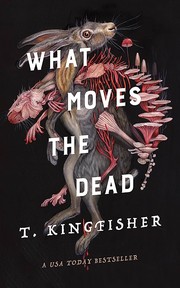
What Moves the Dead
2,586-word summary 11 min read 176 pages in the book
- First published
- 2022
- Publisher
- Tor Nightfire
- Pages
- 176
- ISBN
- 9781250830784
- Series
- Sworn Soldier (#1)
Reading options
What's inside (8 sections)
A hare with a bullet in its skull should not be able to crawl. Alex Easton shoots one on the Usher property, walks over to pick it up, and the animal drags itself forward on its front legs, sits up, and stares at kan. That is the moment T. Kingfisher's 2022 novella stops being a gloomy house party and becomes something worse. The bullet did not miss. The hare is simply no longer the thing doing the moving.
The setup is borrowed from Edgar Allan Poe. Easton, a retired lieutenant from the fictional country of Gallacia, has been summoned to the Usher house in Ruravia by a letter from kan childhood friend Madeline. She is dying. Her twin brother Roderick is not the young officer Easton remembers from the war; he is thin, jumpy, and half-convinced the house is eating him. The house sits at the edge of a tarn, a small mountain lake, and the whole place is damp and moldering. What Moves the Dead was published by Tor Nightfire in 2022, runs 176 pages, and is the first of the Sworn Soldier books. It is short enough to read in a night, which is either an invitation or a warning.
Kingfisher tells the story in Easton's first person, and the voice is the best thing in the book. Easton is a sworn soldier, a Gallacian institution with its own pronouns: ka and kan, used for soldiers regardless of the sex they were born. The novel does not stop to teach a lesson about this. It simply uses the pronouns and lets Easton explain the custom when it becomes relevant, usually with the dryness of someone who has answered the question too many times. Easton has tinnitus from a gun that once went off under kan pillow, a horse named Hob, and a batman named Angus who is convinced mushrooms are a sign of the devil. Ka is not imaginative. Ka trusts what ka can see, which is exactly the wrong temperament for the house of Usher.
On the way in, Easton stops at the tarn and finds a cluster of mushrooms growing out of the stone, their gills the color of severed muscle. The horse refuses to drink. A woman with a sketchbook and a stick appears and warns kan off; she is Eugenia Potter, an English illustrator and mycologist who is documenting the local fungi and hopes to name one after herself. She taps the mushroom with her stick and it releases a stench bad enough to make the point. Potter is practical, unimpressed by Gothic atmosphere, and the only person in the book who knows what she is looking at. The reader will be glad she is around.
The Ushers
The house is worse inside than out. The wallpaper is peeling, the books in the library have rotted to pulp, and there are no rats, which Easton notices and files away. Roderick greets kan with surprise that borders on accusation and takes kan to Madeline. She is skeletal, her lips and nail beds blue, her arms covered in a fine white down that looks like the hair on a newborn animal. An American doctor named James Denton is staying in the house. He has been trying to keep her alive and cannot say what is wrong with her. He is fairly sure she has catalepsy, a trance state that can mimic death, and anemia, but those are descriptions, not a diagnosis. Roderick refuses to move her. He is afraid the journey would kill her, and he may be right, though not for the reasons he thinks.
Madeline is the emotional center of the book even when she is off the page. Easton has known her since they were children. Ka remembers a fishing trip, a version of Madeline who was difficult and funny and alive, and that memory sits next to the woman in the chair like a second body. Madeline knows she is dying. She tells Easton she does not have much time, and she refuses to leave the house. She says she likes to go down to the lake to confess her sins. It is a line that sounds like a joke until you find out what the lake is.
The local hares are the first real warning. They do not run from people. They stand in the grass and watch, and when they move, they drag themselves in a way that looks like a man climbing a cliff on flat ground. The villagers call them witch-hares. Angus, who arrives soon after with Easton's luggage and a head full of folklore, refuses to hunt on the property. He does agree to fish, and the fish he catches are full of a slimy felt that turns out to be fungus. Easton buys a cow from a farmer and shoots it, then pretends to Roderick that ka mistook it for a deer. It is the funniest scene in the book and a neat piece of characterization: Easton would rather look foolish than be thanked for charity.
Bad nights
At night, someone walks the halls. Easton follows a white shape and finds Madeline sleepwalking, her gait stiff and wrong, her voice not quite her own. She says something about "too many," counts to ten, and complains that breathing is hard. When Easton takes her arm, ka leaves a handprint in the white down. The book repeats this beat a few times, and each time it adds a detail: the tarn glows with a pulsing light, Madeline's maid is missing from her room, Roderick hears worms in the walls, and Denton admits that Madeline nearly drowned in the tarn and was pulled out after hours. She should have died. She did not.
The repetition is deliberate, and for a while it works. Gothic horror runs on the same corridor walked at the same hour with one more door open. Kingfisher is good at the small physical details that make a house feel ill: the smell of the wallpaper, the way the books dissolve in your hands, the way a bad smell can be a warning. Easton's tinnitus is a clever piece of characterization, too. Ka has a literal ringing in kan ears that gets worse at the worst moments, which makes the quiet house feel less quiet and gives kan a very human limit.
Then Madeline dies in the night after a cataleptic fit. Roderick reports it. Denton confirms it. The body goes into the family crypt under the house, behind a barred door. Easton, drunk on livrit and grief, lets Angus put kan to bed. That night, Easton goes down to the crypt alone. Madeline's neck is broken.
It is a terrific turn. The murder mystery arrives at the exact moment the supernatural story should be taking over, and for a few chapters the book lets you wonder whether the real monster is Roderick. Easton suspects him, then Denton, then Roderick again. The answer is not a mystery in the usual sense. Denton eventually admits that Roderick killed her, believing the thing inside his sister had to be stopped, and Denton helped him cover it up because Roderick is dying too and because Madeline was already gone in a way that medicine could not name. The broken neck is horrible, but it is not the worst thing in the crypt. When Easton brings Potter down to examine the body, Madeline is gone. The shroud is on the floor, and the white hairs on it are not hair. They are hyphae, the threads of a fungus.
The dead hare
The autopsy is the set piece the book is remembered for. Angus finds a dead hare by the tarn. Denton lays it on the dining table, and Potter tells everyone to cover their faces in case of spores. Inside, the hare is packed with dark red fungus; its lungs are full of white, cottony stuff. Then the carcass starts to move. Potter pins it with her umbrella. Easton cuts off its head. The head keeps going, dragging itself across the table by its teeth. They burn the body, the tablecloth, and the tools.
The scene is gross in exactly the right way, and it changes the stakes. This is not a haunting, and it is not a disease in any ordinary sense. The fungus is using the dead animal the way a person uses a puppet. Once you have seen that, every hare in the book becomes a threat, and every character who has eaten the fish or drunk the water becomes a question mark. Potter's calm during the autopsy is the driest comedy in the book, and also the most frightening thing about her. She is not brave because she does not understand. She is brave because she does.
The rest of the book is a race to understand the tarn before it understands them. Potter confirms that the fungus can grow inside a living person, that the white down on Madeline was a symptom, and that the tarn is the source. Easton sends Angus and Potter away to get help, partly because Potter is the only expert and partly because ka wants at least one person out of the house. Then Denton tells kan the rest. Madeline nearly drowned in the tarn. Roderick thought she was dead and had her put in the crypt; she woke up speaking in a voice that was not hers. The fungus had her. The death in the bed was not the first one. She says later that she has been dead for a month.
What the tarn wants
They find Madeline in Roderick's bedroom, sitting on the bed while he sleeps. Her neck hangs at an angle that should make her a corpse, and her fingers are dark. She is not breathing. She talks anyway. This is where Kingfisher gives Madeline the agency Poe never gave her. She is not a ghost and not a puppet. She is lucid, patient, and making an argument.
She says the tarn filled her lungs to save her. It has been learning from her. It learned to see and hear from the animals and to speak from her and from Alice, the maid who helped teach it before she killed herself by jumping from the roof. Madeline speaks of Alice with a casual contempt that is more unsettling than grief. The fungus is a child, in her version of the story. It needs a teacher. Her body is wearing out. She wants Easton to take over.
Easton refuses. Ka cannot give the thing a home in kan body, not when it has already eaten Madeline from the inside. Madeline turns the knife: Easton is helping Roderick, who murdered her. Why is it loyalty to sit with the brother and not the sister? Easton has no good answer. That shame is the most interesting emotion in the book, because it is not a monster's weakness or a hero's doubt. It is the ordinary guilt of loving two people who have become each other's worst thing.
Ka gets out of the room, and ka and Denton barricade the door. Madeline pushes against it and begs. Roderick says he can hear her, but that it is not her. Then he makes the choice Poe's Roderick never gets to make. He sends the servants away, tells Easton and Denton to go, and sets the house on fire with himself and Madeline inside.
The house burns
The house burns for two days. Easton and Denton stand guard to keep anyone from putting it out. That detail is grim and practical, and it says more about Easton than any speech could. Afterward, Easton sleeps for eighteen hours at the inn and wakes to the problem of the tarn. If the fungus is in the water, killing the house is not enough. Potter and Angus return with a wagonload of sulfur, which Potter knows is used against fungus. They dump 1,200 pounds of it into the tarn. The water glows, flares, dims, and goes dark. Aaron, one of the Usher servants, agrees to watch the lake and shoot and burn any animal that comes near it.
The ending is not a clean victory. Easton and Denton do not know whether they have inhaled spores. The hares are still out there. The tarn is dead, or seems to be. Kingfisher resists the urge to give the survivors a medal or a speech. They get an inn room, a wagonload of sulfur, and a servant willing to keep watch. The last page is quiet in a way that feels earned.
What works, and what stalls
What Moves the Dead is at its best when it is specific. The mushroom that smells like a wound, the handprint in the white down, the hare's head dragging itself by its teeth, the 1,200 pounds of sulfur: these images stay. Kingfisher is also very good at the comedy of people trying to be polite in a house that is clearly wrong. Potter pinning a reanimated hare with her umbrella is a better character introduction than a page of backstory. Easton's narration is dry enough to keep the horror from turning into melodrama, and the relationship between Easton and Madeline has real weight. The final conversation works because Madeline is not a monster. She is a person making a terrible case for something that loves her.
The middle is where the book drags. Easton hears a noise, follows Madeline, takes her back to bed, rides out, sees a hare, talks to Potter, and does it again. The repetition builds dread, but it also feels like the novella is marking time until the autopsy. Denton is the weakest major character; he exists to withhold the murder and supply medical exposition, and his confession is more plot mechanism than revelation. The fictional countries are a lot of scaffolding for a 176-page story. The pronoun system is interesting and gives Easton a history, but Ruravia's politics and the Ushers' place in it never matter much. And the ending explains a great deal in one long conversation. Madeline's speech is compelling, but the tarn's intelligence is asserted more than dramatized. We are told it is learning, not shown enough of it thinking.
None of that ruins the book. It just means the book is a particular pleasure rather than a universal one. If you want a faithful, ambiguous Poe retelling, this is not that; Kingfisher explains the ghosts, and the explanation is a fungus. If you want a fast, jump-scare horror novel, this is slower and stranger than that. If you are squeamish about animal dissection, mushrooms growing in lungs, or a corpse with a broken neck walking around, you should skip it. If you like Gothic atmosphere, dry narration, and body horror that is more unsettling than gory, it is a very good way to spend an evening. Some reviews have called it a feminist reworking of Poe, and there is truth in that, but its real subject is smaller and sadder: what people do to keep someone they love from leaving, and what happens when the thing that keeps them is not love.
The last thing I think about is not the fire. It is Easton's hand coming away from Madeline's arm covered in white hairs, and the moment of ordinary tenderness before ka understands what ka is looking at. The house of Usher is gone, the tarn is dead, and that handprint is still there.
FAQ
Is What Moves the Dead part of a series?
Yes. It is the first book in the Sworn Soldier series, and the sequel, What Feasts at Night, was published in 2024. Both books follow Alex Easton and Angus, though the second one moves the story to Gallacia.
Is it a retelling of Poe The Fall of the House of Usher?
Yes. It keeps the dying Usher twins, the decaying house, and the tarn, but replaces Poe's ambiguity with a fungal infection and gives Madeline a voice and a plan. You do not need to know the original story to follow it.
Is What Moves the Dead suitable for younger readers?
It is adult horror, not YA. The book includes animal dissection, body horror, a reanimated corpse, and a suicide, so it is a poor fit for younger or very squeamish readers, though it is creepy rather than graphically violent.
Similar books
More from Sworn Soldier first, then related titles.

Night Film
A disgraced journalist investigates the death of a reclusive horror director's daughter, following a red coat through hospitals, secret clubs, and a family…
2,690-word summary · 12 min read
We Have Always Lived in the Castle
Merricat guards sister Constance after arsenic deaths, until cousin Charles invades and fire frees them.
3,011-word summary · 13 min read
The Historian
A daughter traces her father's search for Dracula through letters and archives across Europe.
3,237-word summary · 14 min read
Mexican Gothic
In 1950 Mexico, glamorous Noemi Taboada leaves Mexico City for High Place after a desperate letter, to rescue cousin Catalina from the chilling Doyles and…
2,523-word summary · 11 min read
The Strange Case of Dr. Jekyll and Mr. Hyde
A London lawyer traces a violent stranger to his respectable friend in Stevenson's 1886 tale of two selves.
2,286-word summary · 10 min read
Miss Peregrine's Home for Peculiar Children
Jacob Portman finds his grandfather dead in the woods, follows a cryptic letter to a ruined orphanage in Wales, and meets children living inside a repeating…
2,331-word summary · 10 min read
The Tale of the Body Thief
Lestat trades bodies with a psychic thief for one day of mortality and ends up trapped, sick, and hunting his own vampire body.
2,069-word summary · 9 min read

Anatomy: A Love Story
In 1817 Edinburgh, a noblewoman who wants to be a surgeon disguises herself to study anatomy and falls for the grave robber who supplies her with bodies.
2,031-word summary · 9 min read
Authority
The new director of the Southern Reach takes over an agency that is hiding the truth about Area X, and the building starts to change around him.
2,029-word summary · 9 min read
Once Upon a River
A wounded man stumbles into a riverside inn carrying what appears to be a drowned child who is not quite dead, and the story braids the guesses of everyone who…
2,173-word summary · 10 min read
The Moonstone
A cursed yellow diamond vanishes on the night of a birthday party, and eight witnesses tell what they saw.
2,603-word summary · 12 min read
Circus of the Damned
A rogue master vampire arrives in St. Louis and Anita Blake is caught in an undead turf war, with a science teacher in the crossfire.
2,757-word summary · 12 min read
Locke & Key, Vol. 1: Welcome to Lovecraft
After their father is murdered, the Locke children move into a haunted family estate where keys unlock doors to ghosts, other places, and dangerous secrets.
2,019-word summary · 9 min read
House of Salt and Sorrows
Annaleigh Thaumas investigates her sister's death in a cursed island manor where the balls are illusions and the sea god is always listening.
2,025-word summary · 9 min read

The Wasp Factory
Iain Banks's 1984 debut follows Frank Cauldhame, an isolated sixteen-year-old on a Scottish island, as his brother's escape and a family secret unravel his…
2,248-word summary · 10 min read
Galatea
The statue brought to life narrates her own story: a jealous sculptor, a locked hospital room, a daughter to protect, and one last plan to escape.
1,972-word summary · 9 min read
Death Comes to Pemberley
P.D. James drops a murder onto the Pemberley estate and sends Wickham to trial, reading Austen's most famous marriage through the machinery of Georgian justice.
2,318-word summary · 10 min read
The Prisoner of Heaven
Fermin Christmas past returns with a stranger and a prison debt.
2,388-word summary · 11 min read
The Last House on Needless Street
A lonely man, a cat and a mysterious neighbor pull you into a house full of buried trauma.
2,627-word summary · 12 min read
The Chalk Man
Childhood chalk codes lead to a murder that follows friends thirty years later.
2,350-word summary · 10 min read
Relic
A museum beast kills during an exhibition while an agent investigates.
2,066-word summary · 9 min read
Four Past Midnight
Four novellas about a plane lost in time, a writer haunted, and horrors small and large.
2,584-word summary · 11 min read
The Broken Girls
A journalist revisits her sister's murder while a restored boarding school gives up a girl missing since 1950.
2,579-word summary · 11 min read
The Witching Hour
A San Francisco surgeon inherits a haunted New Orleans house where a spirit has courted her witches for centuries, until a Christmas Eve birth gives it living…
2,953-word summary · 13 min read
The Hostile Hospital
The Baudelaires hide in half-built Heimlich Hospital, uncover a thirteen-page file hinting a parent survived, and flee Olaf's surgery trap through fire.
2,658-word summary · 12 min read
The Grim Grotto
Snicket eleventh Baudelaire book, Sept 2004 HarperCollins, 323 pages: the Queequeg crew, Gorgonian Grotto fungus, Fiona choice, and Sunny wasabi cure that…
2,789-word summary · 12 min read

Belladonna
Poison-immune orphan Signa Farrow hunts a gothic killer at Thorn Grove with Death as ally and suitor, while cousin Blythe fades and her ghost mother asks for…
2,868-word summary · 13 min read

The Villa
Two friends house-sit a haunted Italian villa tied to a 1974 rock murder while their own bond frays.
2,243-word summary · 10 min read
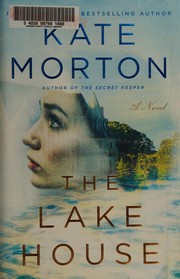
The Lake House
Detective Sadie reopens 1933 Edevane baby vanishing tied to writer Alice.
2,055-word summary · 9 min read
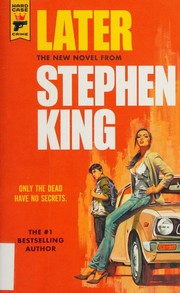
Later
Boy Jamie Conklin sees dead people who must answer truthfully, pulling him into NYPD cases and a drug crew's greed.
2,009-word summary · 9 min read