
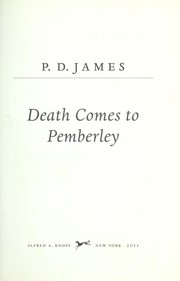
Death Comes to Pemberley
2,318-word summary 10 min read 291 pages in the book
- First published
- 2011
- Publisher
- Alfred A. Knopf
- Pages
- 291
- ISBN
- 9780307959850
Reading options
What's inside (8 sections)
There is something quietly mischievous about a great crime writer moving into someone else's novel. P.D. James, born in 1920, spent half a century making the English murder story respectable again, chiefly through the patient work of Adam Dalgliesh, her detective poet. Then, in her nineties, she did a thing nobody had asked for: she wrote a sequel to Pride and Prejudice with a corpse in it. Death Comes to Pemberley, published in 2011 and acknowledged in its author's note as an affectionate pastiche, was her final novel, and it is the book of a craftswoman who has nothing left to prove and is doing exactly as she pleases. She was ninety-one when it appeared, and it carries the confidence of a writer who has stopped worrying about anyone's expectations. It first appeared from Faber & Faber in London and Alfred A. Knopf in New York; the page count and ISBN on this page belong to the Knopf hardcover.
The story begins in October 1803, six years after the marriages that end Pride and Prejudice. Fitzwilliam Darcy and Elizabeth are settled at Pemberley, the house they have made a home. Georgiana has grown up. Colonel Fitzwilliam, now Viscount Hartlep, comes and goes. The Bingleys live nearby, the Bennets are within reach, and the annual autumn ball in memory of Darcy's mother is about to fill the house. Then, on the eve of the ball, a chaise comes racing up the drive, with Lydia inside shrieking that her husband is dead in the woods. The world of Austen's novel is knotted into the shape of a murder, and the knot never comes undone.
The Darcys of Pemberley
James has no interest in revising Austen, and her first hundred pages are happiest when they are simply continuing her. Elizabeth runs Pemberley with the same quick sense she once applied to judging character; Darcy has relaxed into a husband who can be teased, and the marriage that Austen left at the church door has become a working partnership of respect and mild exasperation. The estate around them is a small government: tenants, servants, harvests, calls paid and returned, and James clearly enjoys the business of it. Readers who wanted more of that ordinary happiness from Pride and Prejudice get it here in generous helpings, which is part of why the darkness that follows lands as hard as it does.
The other inheritance James takes seriously is Lydia's marriage. Austen ends Pride and Prejudice with a joke: the youngest Bennet sister married to the man who nearly ruined her, settled on Wickham's charm and Darcy's money. James begins her novel by showing the bill. Lydia has no home of her own, no money, and a husband who has resigned his commission with no plan for what comes next; her arrival at Pemberley is less a visit than an occupation. It is a sharp, fair-minded reading of one of Austen's least examined endings, and it gives the murder everything it needs: a family with secrets, a scoundrel with a history, and a house full of guests who will spend the next year being questioned.
The Body in the Wood
The reader should know the rules of this book early, because they explain both its pleasures and its frustrations. The narration belongs to Darcy, not Elizabeth. James writes his interior life with real sympathy: here is a man of duty who has spent his lifetime managing other people's catastrophes, and now the worst one has arrived on his own land, wearing his least favorite name. The countryside, the marriage, the servants, the church, the carriage roads: the texture of 1803 is assembled with a museum keeper's care, and for a hundred pages the book is a genuine pleasure.
The night itself is a small classic. Wickham and Captain Martin Denny had been traveling in the chaise with Lydia, on their way to Pemberley for the ball. Denny ordered the driver to stop, jumped down, and ran into the woodland; Wickham followed, trying to stop him; the coachman, hearing shots, raised the alarm. When Darcy and Colonel Fitzwilliam reach the wood, Denny is a bloodstained corpse, killed not by gunfire but by a blunt instrument, and Wickham is beside him, still not sober, saying that the death is his fault. The ball becomes an afterthought. The house, which spent days preparing for a celebration, spends the night holding candles and answering questions.
The evidence assembles itself quickly and mostly points one way. Wickham had resigned his commission without any sound profession or settled home for his wife, and Denny had thought his plan to leave Lydia at Pemberley for the night both inconsiderate and inconvenient for Elizabeth. An innkeeper's wife reports Denny saying that Wickham was selfish, did not understand how women feel, and had been deceitful from start to finish. The coachman heard Denny say he would not go along with Mr. Wickham any more. Then there is the biography everyone in England already knows: the favorite of old Mr. Darcy, the seducer, the gambler, the man who once tried to elope with Georgiana. The book is very good at showing how a reputation works like evidence. Nobody needs to frame Wickham; he has been framed by his own past. When he is arrested, the Darcy family's instinct is not only horror but dread, because his name is stitched to theirs.
A Family Under Suspicion
James uses the murder to do what Austen only hinted at: show what a family's standing costs when it is genuinely threatened. Elizabeth and Darcy hold the household together, manage Georgiana, field callers, and keep the servants from gossip. Darcy is a magistrate, but he is also a party to the case, which means he must stand aside from the investigation and watch other men do slow, clumsy, necessary work. It is a humiliation and a schooling, and James takes real pleasure in the procedures: the taking of statements, the inquest, the committal for trial, the waiting that is the true weather of legal trouble for the rich.
Elizabeth, unfortunately, fades during this stretch, and it is the book's most noticeable flaw. The central section belongs to Darcy's brooding and to the machinery of the law, and Pemberley's mistress is often reduced to managing guests and soothing relations. There is a reason for it: James wanted to write inside Darcy's particular brand of guardedness. But readers who came for Elizabeth Bennet will notice her absence the way you notice a missing instrument in an orchestra.
Other threads continue regardless. Georgiana has reached an age when suitors are a topic, and her future is one of the currents running beneath the criminal one. Colonel Fitzwilliam, promoted by inheritance and wealth, is no longer quite the charming soldier of the original. The Bingleys drift through in cameos, faithful to their originals. And over everything hangs the assizes and the question of whether Wickham, for the first time in his lucky, disastrous life, is going to pay.
The Trial
The trial is the centerpiece, and James writes it with the authority of a novelist who has studied the courtroom the way a geologist studies stone. There are the assizes, the charges, the formality, the packed galleries, the family's shame sitting day after day in the gallery for a man they have spent a lifetime regretting. Wickham's defense is not clever, exactly, but it has the stubborn shape of truth: he says he came upon Denny already dying, fired the dead man's own weapon at a figure he thought he saw slipping away through the trees, and told his wife a confused story because he was too ashamed to do anything else. The jury hears it all, and convicts him.
And then, as if the book had grown tired of suspense, the solution arrives by post. A written deposition is delivered from a dying man named William Bidwell, who has one week to live. He had left his sickbed, seized a poker, and struck the man he took for the soldier who had interfered with his sister Louisa. After he knocked him down, he saw him fall backwards and strike his head fatally on a stone. The man was Captain Denny. He was the wrong soldier, as the dying often are. The deposition arrives after the jury has already returned its verdict of guilty. Wickham receives a royal pardon, and the law delivers, for once, the exact mercy it usually reserves for the comfortable.
Critics from the first reviews have pointed out, fairly, that this is a solution from nowhere. The book's defenders answer, also fairly, that the arrival is thematically apt: in this story the past does not prosecute the guilty, it simply reaches out and cuffs the nearest shoulder. The reader can decide which argument to buy. I found myself thinking of the old tradition of endings in which a letter explains everything, and understanding James's decision while still feeling the click of stage machinery below the floorboards.
Underneath the mechanics, James is writing about rank, the one subject Austen and the courtroom share completely. The assizes are a theater of class: who is believed, who is pitied, who is allowed to go on being respectable. A gentleman's reputation counts for more than a servant's word, and a dying man's honest deposition, delivered too late, outweighs a month of rumor. Wickham, who has spent his life exploiting the difference between his manners and his morals, is finally saved by a system that prizes the first. James underlines none of this. She builds the courthouse from the ground up and lets the reader walk into it.
The Backstory
Every good murder has a history, and this one gets its history late, after the verdict, when James unwinds the whole coil. Louisa Bidwell, it turns out, had a child by Wickham, a boy called Georgie. The disgraced Mrs. Younge, of all people, was to have raised him on a small sum of thirty pounds provided by Colonel Fitzwilliam, who owed Wickham a favor from the Irish campaign. Louisa learned only later who the father really was, and she was not the only person who had reason to protect her. That is why a confession out of a farmhouse sickroom can reach across a whole trial and overturn a conviction.
The ending does not leave a single thread hanging. The boy is adopted by Mr and Mrs Robert Martin, respectable farmers whom Emma readers will know as Harriet Smith's married name, and is baptized John, in the hope that his father will never find him. Louisa marries Joseph Billings, the butler at Highmarten, the home of Jane and Charles Bingley, which ties the scandal neatly to the neighboring estate. Wickham and Lydia sail for America, financed once again by the benevolence of Darcy, and the breach between the two men is repaired by money and distance exactly the way a Jane Austen novel would never dare. The discovery that a novelist in her nineties could write an epilogue so efficiently, and with such a straight face, is its own quiet entertainment.
The Verdict on Pemberley
As a piece of craftsmanship, the novel is often superb. James assembles the legal and social machinery of 1803 with the care her detectives bring to a crime scene, and the result is one of the most convincing portraits of Georgian England written by a modern hand. Her ear for Austenian sentences is good without being slavish, and Darcy's interior voice is a genuine invention. The best pages, the ones that will matter if this book lasts, imagine why a man like Darcy would love the world of procedure: rules are the only thing standing between civilization and the Wickhams.
As a murder mystery, it is less convincing. The murderer is found, the confession is convenient, and the amateur detection that fills most stories of this type is replaced by waiting. The exposition accumulates like sediment, especially in the middle section, and some chapters of the trial read more like a transcript than a drama, which is faithful to real trials and not always kind to readers. Then there is the Austen question: readers of Pride and Prejudice who want Mrs. Bennet's nerves and Elizabeth's sparkle will get both in rationed doses, and readers of mysteries may find the crime slow and the solution borrowed. It is worth remembering how many books of this kind fail on both counts; the failures here are of proportion, not of competence. Newspaper reviews were generally favorable, many of them enthusiastically so, with the New York Times foremost in the United States, and the novel sold steadily enough to guarantee a second life.
That second life came three years after publication, when BBC One turned the novel into a three-part serial written by Juliette Towhidi and broadcast over three nights from 26 December 2013, with Matthew Rhys as Darcy, Anna Maxwell Martin as Elizabeth, Jenna Coleman as the unhappy Lydia, and Matthew Goode as a Wickham who has aged exactly the way the novel requires. Watching it, I understood what the book wants to be: a fireside story of rules and consequences, told by someone who spent a lifetime believing that both apply to everyone, even the Darcys, and especially the Wickhams. A stage version reached Guildford in 2025, which suggests the story's afterlife is not finished. If you come to it as a Darcy admirer or a James reader, it will reward you. If you come demanding a great mystery or a second Pride and Prejudice, it will not. Those are, in the end, two different books, and the one James wrote knows perfectly well which it is. The Austen sequel industry has grown noisier since 2011, and this contribution still stands out for its restraint: she borrows Austen's people, gives them a crime worthy of them, and then lets them go.
FAQ
Is Death Comes to Pemberley a sequel to Pride and Prejudice?
Yes. It is set in October 1803, six years after the marriages that end Pride and Prejudice, and follows several of Austen's characters into a murder investigation at Pemberley.
When was Death Comes to Pemberley published?
It was published in 2011 by Faber & Faber in the United Kingdom and Alfred A. Knopf in the United States. The 291-page count and ISBN on this page come from the Knopf hardcover.
Was Death Comes to Pemberley adapted for television?
Yes. BBC One aired a three-part adaptation over three nights starting 26 December 2013, starring Matthew Rhys as Darcy, Anna Maxwell Martin as Elizabeth, and Matthew Goode as Wickham.
Similar books
The Art Forger
A disgraced Boston painter agrees to copy a Degas stolen from the Gardner Museum, then begins to suspect the original she is copying is itself a forgery.
2,117-word summary · 9 min read
The Black Dahlia
James Ellroy builds a fiction around the real Black Dahlia murder, following two Los Angeles cops whose partnership and obsessions destroy them.
2,533-word summary · 11 min read
Only Time Will Tell
A Bristol dockworker's son wins a scholarship, falls in love with the daughter of the family that owns the shipyard, and learns that his father's death was not…
2,082-word summary · 9 min read
The Redbreast
Harry Hole chases an ageing sniper through modern Oslo while two Norwegian volunteers on the Eastern Front carry a fifty-year-old betrayal toward a royal…
2,453-word summary · 11 min read
Fingersmith
A thief plots to cheat an heiress, then the scheme flips twice in Victorian London.
2,532-word summary · 11 min read

Maisie Dobbs
A maid turned war nurse opens a London inquiry agency in 1929 and traces a quiet case to a refuge for shattered soldiers.
2,382-word summary · 11 min read
The Secret Keeper
A girl watches her mother kill a stranger in 1961; fifty years later she digs into her mother wartime London past.
2,262-word summary · 10 min read
Shutter Island
A U.S. marshal hunts a missing patient on a locked asylum island in 1954, where every clue turns back on him.
2,761-word summary · 12 min read

What She Knew
Rachel lets her eight-year-old son run ahead in a Bristol park, and the nine-day search turns her into a suspect in the public eye.
2,952-word summary · 13 min read
What Moves the Dead
Alex Easton arrives at the Usher house to find Madeline dying, the tarn full of fungus, and the local hares refusing to stay dead.
2,586-word summary · 11 min read

The Beach House
A young valet is beaten to death at a Hamptons party, and his law-student brother spends a year building a case against the family that covered it up.
2,049-word summary · 9 min read

Six Years
A professor who promised to forget the woman he loved sees her husband's obituary and discovers that the wedding, the marriage, and the woman herself may never…
2,076-word summary · 9 min read
How the Light Gets In
Gamache investigates the murder of the last Ouellet quintuplet while the Sûreté he served is dismantled from inside by the man who took his protégé.
2,279-word summary · 10 min read
Bury Your Dead
Recovering from a failed raid that killed his officers, Gamache investigates a murder in a Quebec City library while Beauvoir reopens a case in Three Pines.
2,022-word summary · 9 min read

Anatomy: A Love Story
In 1817 Edinburgh, a noblewoman who wants to be a surgeon disguises herself to study anatomy and falls for the grave robber who supplies her with bodies.
2,031-word summary · 9 min read
The Trespasser
A Dublin Murder Squad detective investigates a staged dinner-party killing and finds a cover-up that reaches into her own department.
2,051-word summary · 9 min read

The Shadow Sister
Star D'Apliese steps out of her sister's shadow and follows a bookshop clue into the Edwardian life of Flora MacNichol, a woman who gave up love for duty.
2,260-word summary · 10 min read

Rules of Prey
Minneapolis detective Lucas Davenport hunts a killer who leaves a new rule at every scene and treats murder as a game of wits.
1,914-word summary · 9 min read
The Late Show
Exiled to the LAPD night shift after accusing her supervisor, Renée Ballard keeps two cases that were meant to be handed off at dawn: a brutal assault and a…
2,563-word summary · 11 min read
The Boleyn Inheritance
Three women narrate Henry VIII's fourth and fifth marriages: a foreign bride who survives, a teenage queen who does not, and the widow who opens the door.
2,391-word summary · 11 min read
Finger Lickin' Fifteen
Lula sees a celebrity chef decapitated and talks Stephanie into entering a barbecue contest to lure the killers, while Ranger hires her to find a security leak…
2,248-word summary · 10 min read

4th of July
Lindsay Boxer shoots two armed teenagers in self-defense, faces a wrongful-death trial, and spends her leave chasing a string of throat-slashing murders in…
2,192-word summary · 10 min read
The Camel Club
Four Washington misfits witness a murder on Roosevelt Island and stumble into a conspiracy that reaches the Oval Office, with a hostage president and a nuclear…
2,354-word summary · 10 min read

61 Hours
A bus crash strands Jack Reacher in a snowbound South Dakota town where a drug gang, a corrupt police force, and a single witness are on a collision course.
2,227-word summary · 10 min read
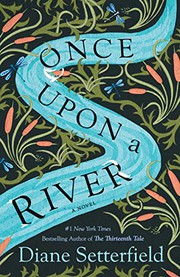
Once Upon a River
A wounded man stumbles into a riverside inn carrying what appears to be a drowned child who is not quite dead, and the story braids the guesses of everyone who…
2,173-word summary · 10 min read
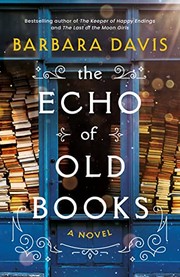
The Echo of Old Books
Barbara Davis's 2023 novel sends a rare-book dealer in 1984 New Hampshire hunting for the authors of two unpublished volumes that tell opposite sides of one…
2,491-word summary · 11 min read
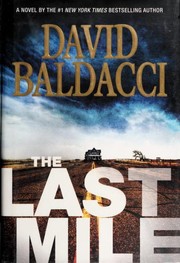
The Last Mile
Melvin Mars is hours from execution for his parents' murder when another man confesses, and FBI cold case detective Amos Decker goes looking for the trap.
2,746-word summary · 12 min read

Still Missing
A realtor is abducted at a Vancouver Island open house and held for more than a year. Told through therapy sessions, the novel follows her escape and the hunt…
2,466-word summary · 11 min read
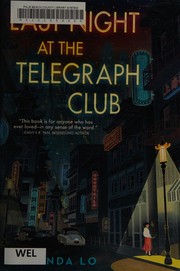
Last Night at the Telegraph Club
The 2021 National Book Award winner follows Lily Hu, a Chinese American teenager in 1954 San Francisco, as she falls for Kath and learns what it costs to be…
2,336-word summary · 10 min read
Fearless Fourteen
Bounty hunter Stephanie Plum babysits a teenager, guards a fading singer, and hunts nine stolen million dollars under her boyfriend's basement.
2,466-word summary · 11 min read