
Reading options
What's inside (8 sections)
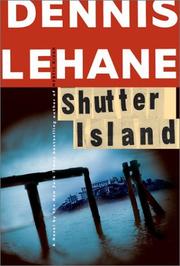
I picked up Shutter Island because a friend kept telling me the ending would make me want to start over from page one. I had seen the film years ago and remembered the shape of the twist, or thought I did, and I figured the book would feel pointless. It did not. Reading it felt different from watching it, slower and damper and stranger, and by the middle I was doubting things I had been sure about. William Morrow published it in 2003, and the first hardcover runs 336 pages, so it is a fairly compact thriller for how much it packs in.
The setup is simple on purpose. It is the summer of 1954. U.S. Marshal Teddy Daniels and his new partner Chuck Aule take a ferry to Shutter Island, off the coast near Boston, where Ashecliffe Hospital houses men judged criminally insane. A patient named Rachel Solando has vanished from a locked room. She was committed after drowning her three children, and she left behind a scrap of paper with a code on it. Teddy has paperwork that says he is there to find her. He also has private reasons. He believes a man named Andrew Laeddis is held on the island, the man who set the fire that killed Teddy's wife Dolores, and he wants to face him. A hurricane is moving toward the coast. Nobody on staff seems in a hurry.
What I liked right away is how physical the book feels. Lehane spends time on the ferry, the queasy crossing, the walls and gates, the smell of salt and disinfectant, the way orderlies watch the marshals without quite staring. Teddy carries a gun at first and then gives it up, because you cannot walk around a locked ward armed. That small detail matters. From that point on he has a notebook, a partner, and his own head, and none of the three is fully steady. Chuck is funny in a dry way and keeps the early chapters loose. Their back and forth reminded me of two guys trying to stay normal inside a place built to make you feel watched.
The ferry ride in
Teddy narrates most of the story, and he is tired before he ever reaches the dock. He served in the war and helped liberate Dachau, and those memories sit close under everything he does. He dreams about his wife. He wakes with headaches. He tells himself the island is a job and a chance to settle a score with Laeddis at the same time.
Chuck is the newer man, transferred in, easy with jokes, quick to notice when staff answers do not line up. On the ferry they talk about what Ashecliffe is famous for. It has a reputation as a serious hospital trying new methods, run by Dr. John Cawley, a polite man who believes troubled minds can be treated rather than simply locked away. There is also Dr. Naehring, German born, colder, fond of blunt talk about violence and human nature. Around them are guards, nurses, and orderlies who seem trained to say very little.
The storm matters here in a practical way. The island depends on the ferry and on generators and routine. Once the wind rises, schedules slip, lights fail, fences hold or do not, and the marshals cannot leave. Lehane uses that the way old mysteries use snowed in country houses. It is not decoration. It traps everyone together and gives the staff a reason to say no to the requests Teddy keeps making.
One more thing lands early. Teddy has been seasick and tense since the crossing, and he keeps taking cigarettes from Chuck and rubbing his temples. At the time it reads as nerves and old pain. Later it reads differently, and that shift is the whole trick of the book.
Ashecliffe and the missing woman
Rachel Solando's room is the first puzzle. It was locked from the outside. Her shoes are gone. The staff found her bed made in a way that suggests planning, and the code she left behind points to someone hidden on the island. The official count says the hospital holds sixty six patients. The note asks about a sixty seventh.
Teddy interviews the staff with Chuck taking notes. Dr. Cawley is calm and open, or seems to be. He shows them files. He admits Rachel was dangerous and intelligent, a war widow who never accepted what she did to her children and who still speaks to them as if they are alive. He says she slipped past orderlies during a group movement and reached the cliffs or the woods. The search parties found footprints that stopped at the water. Nobody can explain the bare feet or the locked door.
Teddy pushes for records and gets partial answers. He wants the intake files for Laeddis. He wants to see personnel logs. Cawley gives him some of this and holds back the rest, citing patient privacy and order. That refusal feeds Teddy's suspicion. Chuck notices it too. They start to wonder whether Rachel's escape is the real story or a cover for something the hospital does not want seen.
The interviews with other patients add pressure rather than clarity. One woman writes in a notebook and will not speak. A man in the dayroom cries when asked about Rachel. Small details repeat in ways that feel staged, though Teddy cannot prove it. A guard mentions Ward C, the older building for the most dangerous men, and changes the subject. A nurse warns Teddy, in a quiet aside, to watch what he drinks and eats. At night the generators groan and the wind pulls at the shutters, and Teddy dreams of Dolores standing in water, speaking to him, wet hair across her face.
I found this stretch the most enjoyable on a second look. Every odd answer has two readings. Either the staff is hiding an ugly program, or they are managing a fragile man with great care. Lehane does not tip his hand. He lets both ideas sit side by side.
Ward C, the lighthouse, and the codes
By the middle of the book Teddy is convinced Ashecliffe is doing secret work. He has heard talk about brain surgery, drugs, and behavior programs funded through Cold War channels. Naehring's blunt lectures about men and violence sound to him like permission for cruelty. The lighthouse on the far point becomes fixed in his mind as the place where it happens. It is fenced, guarded, and officially described as a treatment building or storage site depending on who Teddy asks. The answers change. That change bothers him more than any single rumor.
The codes keep him moving. Rachel's note leads him to think about names as anagrams and about the number four. He and Chuck spend real time rearranging letters, testing ideas, checking patient lists against staff lists. Some of this will feel slow if you want constant action. I liked it because it shows how Teddy thinks. He is a marshal, used to files and names, and he trusts paper. Paper is exactly what the island gives him, in small measured doses.
Then Chuck vanishes. They are near the cliffs in heavy wind, Chuck climbs down a little way to look at something, and when Teddy looks again he is gone. Searchers find no body. The staff says Chuck may have been hurt and carried inside, or may have left the path and fallen. Teddy refuses both answers. From here he is alone, wet, short on sleep, and more certain that the island took his partner to keep him quiet.
He reaches Ward C during the storm and the sequence that follows is the roughest in the book. The power is out. Cells are dark. Men shout through doors. Teddy meets George Noyce, a repeat patient with a beaten face, who tells him he is in over his head and should take the deal he will soon be offered and go home. Noyce says Laeddis is real and close, and also says things that sound like warnings about Teddy himself. Teddy leaves more shaken than helped.
When he finally fights his way to the lighthouse, soaked and cut up, he expects machines and files and proof. What he finds is a plain room, a table, and Dr. Cawley waiting with another man he knows as Chuck, now dressed and speaking like a doctor. That is the turn the whole book has been walking toward. It lands hard even when you know it is coming, because Lehane stages it as exhaustion rather than shock. Teddy can barely stand. The storm has dropped. The room is quiet. Cawley starts talking, and the story reverses.
Teddy comes apart
To explain the reveal I have to describe Teddy's private grief, which the book feeds out in dreams and flashes until it becomes the main thread. Dolores Chanal, his wife, died in a fire. In Teddy's version, Andrew Laeddis set that fire, and Teddy has carried the need to face Laeddis the way some people carry a badge. He pictures Laeddis clearly. He rehearses what he will say. Chuck listens and does not argue, which at first reads as loyalty and later reads as clinical patience.
The dreams get worse as the storm builds. Dolores appears holding a child, or standing in a lake, her belly cut in a way Teddy cannot face. He wakes sick. His head pounds. He decides the staff is drugging him, slipping something into his food or cigarettes, because that would explain the nausea and the soft edges around his thoughts. He stops eating. He smokes more. He ties his strange symptoms to a plot instead of to withdrawal or grief.
Dolores keeps telling him in dreams to let go, or to look closer, depending on the night. He cannot do either. He also keeps returning to Dachau, to the frozen bodies stacked by the rails, to the revenge killings by other soldiers that he watched and partly joined. Those passages are brief and plain, and they carry the moral weight of the book. Teddy saw what happens when wounded men decide the rules no longer apply, and he has been afraid of that coldness in himself ever since.
There is a much quoted closing exchange in the film version about living as a monster or dying as a good man. The book earns the same idea without leaning on one line. The question grows out of everything Teddy has seen, in the war and on the island. If a man did a terrible thing, or failed to stop one, what should be done with him. Lock him up. Cut into his brain. Let him pretend to be someone else. Or let him choose an ending while he still knows his own name.
I want to be careful here because this is where summaries can flatten the book into a trick. The dreams are not decoration. They are Teddy telling himself the truth in a form he can stand. A wife in water. Children who are never named in daylight. A man called Laeddis who keeps changing shape. Once you finish, the early chapters look less like an investigation and more like a man circling the one room he does not want to enter.
What actually happened on the island
Cawley's account, backed by files and by the man Teddy knew as Chuck, goes like this. There is no Marshal Chuck Aule. There is Dr. Lester Sheehan, posing as a partner. There is no missing Rachel Solando in the sense Teddy believes. The notes, the code, the staged interviews, even Noyce's beating, were part of a large role play built around Teddy over several days, with the storm giving the staff cover to keep it going. The goal was to let Teddy act out his story to its end and then meet the facts while lucid.
The facts are plain and awful. Teddy is Andrew Laeddis, a former marshal. His wife Dolores drowned their three children while he failed to see how ill she had become. When he came home and found what she had done, he shot her. After that his mind split the memory apart. He became Teddy Daniels in his own telling, a man whose wife was killed by someone else, a man with a clear enemy and a badge that made him the hunter rather than the patient. Ashecliffe took him in as Andrew Laeddis, patient sixty seven, violent at times, lost most of the time.
Cawley says the role play was a last attempt before surgery. The board favored a new procedure on the brain that would calm Laeddis but leave him altered. Cawley favored talk and experiment, and he argued that if Laeddis could hold the truth for more than a day, the hospital could work with him. Sheehan went along at personal risk. The staff played their parts. The lighthouse meeting was meant to be the moment when fantasy ran out of rooms.
Whether it worked is the final question. The next morning Laeddis sits on the steps with Sheehan, calm, almost himself. He speaks of the choice before him in a way that suggests he remembers everything. Then he walks with orderlies toward the lighthouse, where the procedure waits. Readers argue about whether he has relapsed or whether he goes in lucid, choosing a smaller death over a life he cannot face. The book does not settle it with a speech. It shows him standing, nodding to Sheehan, and going.
That refusal to settle it is why the book lasts. If Cawley is right, the island staged a cruel kind of care, manipulation in the service of healing. If Laeddis slips back, the whole effort failed and the surgery is mercy. If he goes in sane, the surgery is punishment he selects for himself. The files support Cawley's version, and the codes resolve neatly once you see them, but Lehane leaves enough room for doubt that you close the book still testing both readings.
What works and what strains
The strongest parts are pace, place, and control of information. Lehane wrote this as a tribute to old Gothic stories and pulp films, and it shows in the storm, the locked rooms, the cliff paths, the kindly doctor who may be a villain. He keeps the sentences short when Teddy moves and lets them loosen in dreams. The 1954 setting does real work. With no phones, no computers, and no quick backup, every request for a file takes time, and time lets doubt grow. The research into postwar psychiatry, from talk therapy to surgery to drugs, feels grounded without turning into a lecture.
The fair criticisms matter too. Some readers will feel cheated by the scale of the role play, and I get that. A hospital could not stage this in real life without half the staff quitting and the state stepping in. You have to accept the premise the way you accept a stage play, that everyone agreed to act for days to save one man. If you need strict realism, the middle will annoy you.
Teddy's voice can also wear thin. He repeats his theories, circles the same clues, and mistakes stubbornness for method. That is the point, since he is ill, but it still makes two or three stretches feel longer than they are. A few minor patients blur together. Dolores exists mostly as a dream figure rather than a full person, which fits Teddy's fractured memory but leaves her thin on the page.
I still recommend it, with one note on how to read it. Go slow in the first hundred pages and trust the small odd notes. The unlocked details, the cigarettes, the headaches, the changing answers about the lighthouse, the way Chuck watches Teddy when Teddy is not looking. On a first read they feel like texture. On a second read they feel like a record. That is rare in this kind of thriller, and it is why people press the book on friends even after the film gave away the shape of the turn.
If you want plot alone, the film from 2010 covers the shape. If you want the damp air, the files, the dreams, and the slow reversal where hunter and patient trade places, the book is the better way in. Just do not expect comfort at the end. Expect a man on steps in morning light, orderlies waiting, and a choice that stays with you after you shut the cover.
FAQ
When was Shutter Island published?
William Morrow published it in 2003. The first hardcover runs 336 pages and the ISBN is 9780688163174.
Is Shutter Island part of a series?
No. It stands alone, separate from the Kenzie and Gennaro books and from Mystic River.
Who are the main characters?
Marshal Teddy Daniels and his partner Chuck Aule, plus Dr. Cawley and the staff and patients of Ashecliffe Hospital.
Similar books

The Redbreast
Harry Hole chases an ageing sniper through modern Oslo while two Norwegian volunteers on the Eastern Front carry a fifty-year-old betrayal toward a royal…
2,453-word summary · 11 min read

Mystic River
Three Boston friends reunite when one daughter is murdered.
2,230-word summary · 10 min read

What She Knew
Rachel lets her eight-year-old son run ahead in a Bristol park, and the nine-day search turns her into a suspect in the public eye.
2,952-word summary · 13 min read

The Beach House
A young valet is beaten to death at a Hamptons party, and his law-student brother spends a year building a case against the family that covered it up.
2,049-word summary · 9 min read

The Art Forger
A disgraced Boston painter agrees to copy a Degas stolen from the Gardner Museum, then begins to suspect the original she is copying is itself a forgery.
2,117-word summary · 9 min read

Six Years
A professor who promised to forget the woman he loved sees her husband's obituary and discovers that the wedding, the marriage, and the woman herself may never…
2,076-word summary · 9 min read

The Trespasser
A Dublin Murder Squad detective investigates a staged dinner-party killing and finds a cover-up that reaches into her own department.
2,051-word summary · 9 min read

Rules of Prey
Minneapolis detective Lucas Davenport hunts a killer who leaves a new rule at every scene and treats murder as a game of wits.
1,914-word summary · 9 min read

The Late Show
Exiled to the LAPD night shift after accusing her supervisor, Renée Ballard keeps two cases that were meant to be handed off at dawn: a brutal assault and a…
2,563-word summary · 11 min read

The Black Dahlia
James Ellroy builds a fiction around the real Black Dahlia murder, following two Los Angeles cops whose partnership and obsessions destroy them.
2,533-word summary · 11 min read

4th of July
Lindsay Boxer shoots two armed teenagers in self-defense, faces a wrongful-death trial, and spends her leave chasing a string of throat-slashing murders in…
2,192-word summary · 10 min read

The Camel Club
Four Washington misfits witness a murder on Roosevelt Island and stumble into a conspiracy that reaches the Oval Office, with a hostage president and a nuclear…
2,354-word summary · 10 min read

61 Hours
A bus crash strands Jack Reacher in a snowbound South Dakota town where a drug gang, a corrupt police force, and a single witness are on a collision course.
2,227-word summary · 10 min read
The Last Mile
Melvin Mars is hours from execution for his parents' murder when another man confesses, and FBI cold case detective Amos Decker goes looking for the trap.
2,746-word summary · 12 min read

Still Missing
A realtor is abducted at a Vancouver Island open house and held for more than a year. Told through therapy sessions, the novel follows her escape and the hunt…
2,466-word summary · 11 min read

Bad Luck and Trouble
A deposit of $1,030 summons Jack Reacher back to his old army unit, which is being picked off one name at a time.
2,366-word summary · 11 min read

3rd Degree
The third Women's Murder Club novel follows a San Francisco terror cell and a three-day killing schedule, and it costs the club a member.
2,685-word summary · 12 min read

Worth Dying For
Reacher stops for one night in rural Nebraska and finds a family that runs the county, a missing girl and a shipment worth killing for.
2,021-word summary · 9 min read

Say You're Sorry
A widowed prosecutor defends the teenager accused of killing her babysitter, uncovering a small town's secrets and a killer hiding in plain sight.
2,116-word summary · 9 min read
Finlay Donovan Knocks 'Em Dead
Someone has put a contract on Finlay Donovan's ex-husband, and the novelist and her nanny have to find the hitman before the school pickup.
1,990-word summary · 9 min read

Echo Burning
Reacher hitches a ride with a Texas woman who wants her abusive husband killed, then has to prove she did not murder him when he comes home.
2,209-word summary · 10 min read
The Survivors
Kieran Elliott returns to Evelyn Bay twelve years after a storm killed his brother, and a young woman's murder forces the town to face what it has concealed.
2,571-word summary · 11 min read

Girl, Forgotten
A rookie US marshal guards a judge with a stalker and ends up reopening the 1982 prom-night murder of the judge's pregnant daughter.
2,111-word summary · 9 min read
Death Comes to Pemberley
P.D. James drops a murder onto the Pemberley estate and sends Wickham to trial, reading Austen's most famous marriage through the machinery of Georgian justice.
2,318-word summary · 10 min read

The Woods
Twenty years after two teenagers were murdered and two vanished at summer camp, prosecutor Paul Copeland identifies a fresh corpse as one of the missing.
2,490-word summary · 11 min read

The Poet
A crime reporter investigates his twin brother's apparent suicide and uncovers a killer who leaves Edgar Allan Poe quotes behind, in the novel that took…
2,020-word summary · 9 min read

The Boy from the Woods
Wilde, found feral in a New Jersey forest in 1986, hunts for a missing teenager while a senator's secrets tear a wealthy town apart.
2,270-word summary · 10 min read

Razorblade Tears
Two ex-con fathers, one Black and one white, hunt their murdered sons' killers in a Richmond that never gave the boys a fair shake.
2,880-word summary · 13 min read

Broken Harbor
A family is found slaughtered in a half-built Dublin estate where no one broke in, and star detective Scorcher Kennedy must explain the holes in the walls.
2,308-word summary · 10 min read
Without Fail
Reacher is asked to test vice presidential security by planning to kill.
2,084-word summary · 9 min read