
Reading options
What's inside (8 sections)
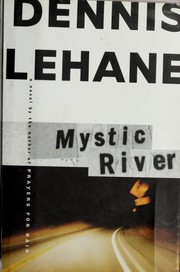
I picked up Mystic River because I had seen the Clint Eastwood film years ago and remembered the faces more than the plot. What I did not remember was how much of the book lives in the neighborhood itself. This is East Buckingham, a working class pocket of Boston where everyone knows whose kid you are. The murder at the center is awful, but the book is really about what happens when three boys who shared one bad afternoon grow into men who cannot escape it.
The setup is simple and it lands hard. When they are eleven, Sean Devine, Jimmy Marcus, and Dave Boyle are playing on the street when a car pulls up with two men pretending to be police. The men scold them for writing their names in wet cement and order Dave into the car. Dave is gone for four days. He escapes from a basement where those men kept him and hurt him, and he walks home changed. Everyone in the neighborhood knows something terrible happened, and nobody talks about it straight. That silence follows all three of them for the next twenty five years. Sean becomes a state police detective. Jimmy goes to prison for robbery, comes out, and tries to go straight running a corner store. Dave stays in the Flats, married with a son, working odd jobs, still flinching at things other people do not notice.
The Flats and the car that took Dave
The opening stretch is my favorite part of the book, even though it hurts to read. Lehane spends time on the boys before the abduction so you feel the loss. Sean is the sharp one, the son of a factory worker who sees police work as a way out. Jimmy is the wild one, already running small cons at eleven, loyal and quick to swing. Dave is the soft one, the follower, the kid who laughs a beat too late because he wants to belong. They are writing their names in the cement because Jimmy dares them to. It is such a plain kid thing. Then the car stops.
What makes this section work is how Lehane handles the adults. Nobody is a villain exactly, but plenty of people fail Dave. The mothers on the street watch and do nothing because the men flash something that looks like a badge. Dave's mother later clings to the story of his escape as proof he is strong, which keeps her from seeing how broken he is. Sean's father tells him to keep quiet and stay out of it. Jimmy's family closes ranks. You get the sense that the whole neighborhood decided to file the event away and move on, which is why it festers. Dave comes back with stories about escaping, about a vampire and running through woods, and the other kids do not know what to believe. He wants his old spot back on the street and it is gone.
I should say the abduction scenes are brief and not graphic in the way you might fear. Lehane focuses on the after. Dave wets the bed. He cannot stand closed doors. As an adult he still hears a kind of static in his head when he feels trapped. He tells himself stories where he fought back harder than he did, and you can see him believing them because the truth is too small and too sad. He got away by luck more than courage, and he has punished himself for that ever since.
Sean, Jimmy, and Dave as grown men
Twenty five years later the three are barely in touch, which feels true to how childhood friendships thin out. Sean Devine is now a detective with the Massachusetts State Police, assigned to homicide. He is good at the job in a tired way. He notices shoes and hands and the order of beer cans on a table. His marriage has fallen apart. His wife Lauren left while pregnant and now calls him but refuses to speak, breathing on the line or playing music, and he talks into the silence. It sounds strange on paper and Lehane makes it ache. Sean keeps working because work gives him a shape when home does not.
Jimmy Marcus did two years in prison for armed robbery and came out determined to be a legit guy. He runs a corner store, married to Annabeth, raising three daughters. Katie, his nineteen year old from his first marriage, is his pride. She is bright and restless and about to leave for Las Vegas with her boyfriend Bobby O'Donnell, which Jimmy hates. Jimmy still carries himself like a man who could hurt you. Neighbors respect him and fear him in equal measure. He also keeps a buried part of himself that knows how to make a problem disappear.
Dave Boyle is the one who stayed stuck. He married Celeste, a good woman who loves him but does not fully trust his moods. They have a son, Michael. Dave drinks too much and stays out late. He still hangs around the edges of Jimmy's circle because Celeste is Annabeth's cousin. Dave tells long stories at the bar that go nowhere. He tries to be normal and overshoots, which makes it worse.
The night Katie dies
Katie Marcus is found dead in a park in East Buckingham, beaten and shot, her body left by the fence near the old drive in. She had gone out the night before to celebrate. Lehane does not rush this. He shows the last day from several angles. Katie at work, joking with customers. Katie counting cash for Vegas. Katie getting into a car with men she knows from the neighborhood, thinking she is safe because she recognizes them.
Sean catches the case with his partner Whitey Powers. Whitey is older, blunt, funny in a grim way. Their scenes together give the book air. They walk the crime scene, they note the blood pattern, the drag marks, the missing shoe. The medical examiner talk is plain and upsetting. Katie fought. There is skin under her nails. It is not gory for shock. It is careful, which somehow lands harder.
At the same time Dave comes home that night covered in blood with a story that does not hold. He tells Celeste he was mugged, that he fought a guy off and cut his hand on a bottle. Then he changes details. He was at the bar. He left early. He walked. He drove. Celeste listens and feels sick because she can see him building the lie as he speaks. Dave's hand is cut badly. His shirt is soaked. He throws clothes away. In the morning he acts hungover and overly cheerful with Michael, which frightens Celeste more than the blood did. She calls the police tip line without telling Dave, and hates herself for it. This is where the book turns from a sad crime story into something tighter. You know Dave is hiding something. You do not know if it is murder.
Two investigations at once
What I liked about the middle is that Lehane runs two tracks and both feel real. Sean and Whitey do actual police work. They pull phone records, they lean on Bobby O'Donnell and his friends, they trace the gun. Bobby is a loudmouth with a weak alibi. The cops also look at an ex con named Just Ray Harris, who lives near the park. That thread is grim and it goes somewhere unexpected.
Jimmy runs his own search. He cannot sit still while his daughter lies in the morgue. He sends his brother in law and old friends to ask questions, to scare kids, to find out who was in the car. He still thinks like a criminal in the way he reads people. He assumes Dave is acting strange because Dave knows something. Jimmy remembers Dave as the weak kid from the street and slots him back into that role without effort. There is a scene where Jimmy corners Dave at the store and hugs him, and Dave stiffens, and you can feel twenty five years collapse into ten seconds. Jimmy is grieving and he needs a target. Dave, bloody and twitchy and lying about that night, gives him one.
Sean sees it happening and tries to slow it down. He and Jimmy were friends once. Now they stand on opposite sides of police tape. Annabeth backs her husband completely, which matters later. Lehane does not paint Jimmy as a monster. He paints him as a father whose love has curdled into ownership. Katie was his proof he had changed. Losing her pulls the old Jimmy up out of the floorboards.
The police work has nice texture if you like procedure. Sean checks the time Katie left the bar, the route she would walk, the cars seen near the park. They find that Katie was shot with a gun tied to a liquor store robbery years back, which points toward neighborhood punks rather than a stranger. Bit by bit the official case moves toward Bobby and the Harris boys, while Jimmy moves toward Dave.
What Dave did that night and what it cost
I will not spoil every beat, but you need to know the shape of Dave's night because the book hinges on it. Dave was out drinking and saw something he should have reported. He followed a car with a man and a child prostitute inside, and he beat the man nearly to death in a parking lot. The blood on him is mostly that man's. He also cut his hand badly in the fight. It was violent and confused and, in his mind, tied to his own past. He saw a kid being taken and snapped. He did not call the police because he panicked and because his record of lying made him sure no one would believe the good part.
The sad part is that Dave did a brave thing and then ruined it by lying. If he had called Sean that night, his story would have checked out. Instead he hid clothes and changed his story three times, and Celeste told the cops she doubted him, and Jimmy heard all of it through the neighborhood wire. Dave wanders the last third of the book like a man already convicted. Lehane writes this without excusing Dave. Dave is pitiable and also careless with the truth in ways that put his family at risk.
Celeste is the quiet heart here. She loves Dave but she cannot protect him from what she suspects. She tells Sean she thinks Dave killed Katie. She does it crying, saying she wants to be wrong. Later, when the facts shift, her guilt is terrible to read. Lehane is fair to her. She acted on what she knew, and what she knew looked damning.
The confrontation between Jimmy and Dave is the scene everyone remembers from the film, and the book version is longer and worse. Jimmy gets Dave drunk on the back porch, talks about old times, about Katie, about fathers and sons. Dave realizes too late where it is going. What follows is brutal and quick. Lehane does not linger on gore. He lingers on Jimmy's face after, the way he tells himself he did what a father had to do.
The ending and why it sits uneasy
The actual killers turn out to be who Sean was building toward. Bobby O'Donnell and the Harris brothers, drunk and showing off with a gun, gave Katie a ride and turned on her when a joke went bad. It was not planned. That is part of the point. Sean arrests them with a sense of flatness rather than triumph. Justice, in the legal sense, is done. It fixes nothing.
Jimmy learns this after he has already killed Dave. He stands in the street during the parade, watching Sean, and Sean knows. Annabeth tells Jimmy he did what he had to do, that kings have to do hard things. It is a chilling speech, part love and part myth making. Jimmy holds his baby and waves at the crowd. Dave is gone into the Mystic River, and life goes on as if the water closed over nothing.
That is why the book has stayed argued about. Some readers find the ending perfect, bleak the way real cover ups are bleak. Others find it staged, with Jimmy too protected and Sean too passive. I land in the middle. I believed Sean's tired choice to let it sit for now. I also thought the last fifty pages drag a bit. Lehane spells out the theme of the past repeating in dialogue that already played clearly in action. One reminder would have done.
Still, I recommend it if you can handle heavy crime fiction. The three leads are distinct and fully drawn. The police detail feels lived in. And the central question stays with you. How much of who we are was fixed at eleven, on a street with wet cement and a strange car? Sean got out by badge and distance. Jimmy got out by prison and will. Dave never got out at all. Read it slowly. Take breaks after the hard chapters. When you finish, the Eastwood film is worth a watch for the acting, though it trims the neighborhood texture that makes the novel sing.
FAQ
Who are the three main men in Mystic River?
Sean Devine is the state police detective on the case, Jimmy Marcus is the ex con father of the victim, and Dave Boyle is their childhood friend whose bloody return home that night makes him a suspect.
Who actually killed Katie Marcus?
Bobby O'Donnell and the Harris brothers gave Katie a ride while drunk and turned on her. Jimmy learns this only after he has already killed Dave for a crime Dave did not commit.
Is there a film version of Mystic River?
Yes, Clint Eastwood directed the 2003 film with Sean Penn, Tim Robbins, and Kevin Bacon. It follows the book closely but trims much of the neighborhood backstory.
Similar books
Keep It in the Family
Mia and Finn renovate a long empty house and find seven children hidden in the attic.
2,270-word summary · 10 min read

We Begin at the End
Thirteen-year-old Duchess Day Radley shields her little brother Robin after their mother dies, as freed killer Vincent King returns and sick chief Walk tries…
2,956-word summary · 13 min read
Long Bright River
Philadelphia officer Mickey patrols Kensington amid the opioid crisis, hunts a killer of vulnerable women, and searches for her missing addict sister Kacey…
2,986-word summary · 13 min read
What Lies Between Us
Nina keeps mother Maggie locked upstairs for years, trading lies about sisters and deaths that unravel fast.
2,062-word summary · 9 min read
The Chain
Rachel must kidnap another child to save kidnapped Kylie, entering a chain where parents pass crime forward.
2,021-word summary · 9 min read
Pieces of Her
After her mother kills a mall shooter with shocking skill, Andy Oliver uncovers a hidden 1980s past of radicals and wealth.
2,791-word summary · 12 min read
The Life We Bury
A college junior interviews a dying convict for class and reopens a 30-year-old murder case in Minnesota.
2,708-word summary · 12 min read
The Family Remains
Lucy returns to London as bones on the Thames reopen the Chelsea mansion deaths.
2,304-word summary · 10 min read
Little Secrets
A mother missing a son finds her husband cheating and handles both herself.
2,008-word summary · 9 min read
Watching You
A new wife in Bristol fixates on a charismatic neighbor while a teen boy logs every move before a murder.
2,363-word summary · 11 min read
The Good Daughter
Twenty eight years after a home invasion shattered her family, a lawyer witnesses a school shooting that reopens old wounds.
2,505-word summary · 11 min read
Wrong Place Wrong Time
Jen sees her son Todd kill a stranger, then wakes the day before, slipping back in time to stop the murder.
2,522-word summary · 11 min read
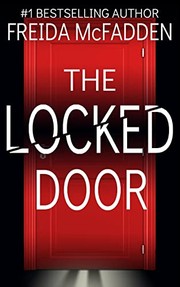
The Locked Door
Surgeon Nora Davis hides serial killer father while patients die.
2,465-word summary · 11 min read
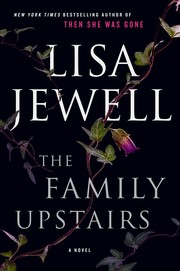
The Family Upstairs
Libby Jones inherits a Chelsea mansion and a past tied to a cult house, two runaways, and a baby left waiting.
3,300-word summary · 15 min read
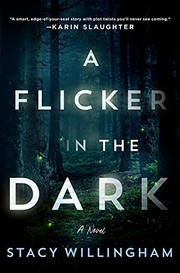
A Flicker in the Dark
Psychologist Chloe Davis faces copycat disappearances in Baton Rouge twenty years after her father confessed to murders.
3,074-word summary · 14 min read
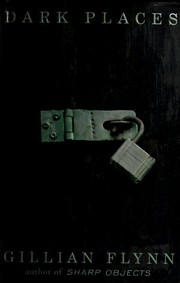
Dark Places
Libby Day, sole survivor of family murders, is paid to rethink her testimony.
1,910-word summary · 8 min read
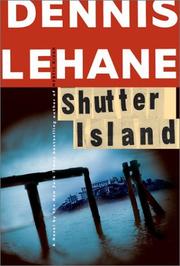
Shutter Island
A U.S. marshal hunts a missing patient on a locked asylum island in 1954, where every clue turns back on him.
2,761-word summary · 12 min read

What She Knew
Rachel lets her eight-year-old son run ahead in a Bristol park, and the nine-day search turns her into a suspect in the public eye.
2,952-word summary · 13 min read

The Beach House
A young valet is beaten to death at a Hamptons party, and his law-student brother spends a year building a case against the family that covered it up.
2,049-word summary · 9 min read
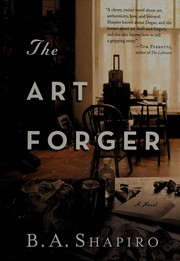
The Art Forger
A disgraced Boston painter agrees to copy a Degas stolen from the Gardner Museum, then begins to suspect the original she is copying is itself a forgery.
2,117-word summary · 9 min read

Six Years
A professor who promised to forget the woman he loved sees her husband's obituary and discovers that the wedding, the marriage, and the woman herself may never…
2,076-word summary · 9 min read

The Trespasser
A Dublin Murder Squad detective investigates a staged dinner-party killing and finds a cover-up that reaches into her own department.
2,051-word summary · 9 min read

Rules of Prey
Minneapolis detective Lucas Davenport hunts a killer who leaves a new rule at every scene and treats murder as a game of wits.
1,914-word summary · 9 min read

The Late Show
Exiled to the LAPD night shift after accusing her supervisor, Renée Ballard keeps two cases that were meant to be handed off at dawn: a brutal assault and a…
2,563-word summary · 11 min read

4th of July
Lindsay Boxer shoots two armed teenagers in self-defense, faces a wrongful-death trial, and spends her leave chasing a string of throat-slashing murders in…
2,192-word summary · 10 min read
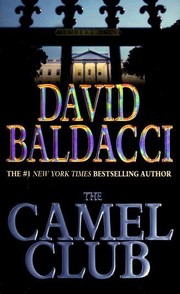
The Camel Club
Four Washington misfits witness a murder on Roosevelt Island and stumble into a conspiracy that reaches the Oval Office, with a hostage president and a nuclear…
2,354-word summary · 10 min read

61 Hours
A bus crash strands Jack Reacher in a snowbound South Dakota town where a drug gang, a corrupt police force, and a single witness are on a collision course.
2,227-word summary · 10 min read
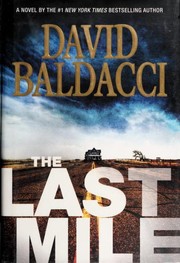
The Last Mile
Melvin Mars is hours from execution for his parents' murder when another man confesses, and FBI cold case detective Amos Decker goes looking for the trap.
2,746-word summary · 12 min read

Still Missing
A realtor is abducted at a Vancouver Island open house and held for more than a year. Told through therapy sessions, the novel follows her escape and the hunt…
2,466-word summary · 11 min read

Bad Luck and Trouble
A deposit of $1,030 summons Jack Reacher back to his old army unit, which is being picked off one name at a time.
2,366-word summary · 11 min read