
Reading options
What's inside (8 sections)
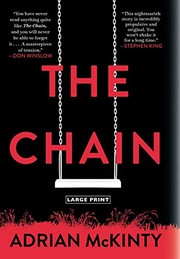
I read The Chain in two sittings with the porch light on, which tells you how fast it moves. Adrian McKinty's 2019 thriller starts with every parent's nightmare. Rachel's daughter Kylie is taken, and to get her back Rachel must kidnap another child and pass the nightmare forward. It is high concept executed with procedural grit and surprising heart.
Rachel and the call
Rachel is divorced, in treatment for cancer that may return, working hard to stay normal for eleven year old Kylie. Ex husband Marty has a new girlfriend Ginger who tries too hard. Money is tight. Health is fragile. Then the call on a Massachusetts morning that sounds like static and turns into instructions. Kylie taken from a bus stop. Pay ransom fast. Then kidnap another child to keep her alive. Tell no one or she dies. You are now part of The Chain.
McKinty writes the first hours with terrible clarity. Rachel vomits, calls the number back, hears Kylie's voice for seconds. She empties savings, borrows from her brother in law Pete, a veteran with steady hands, and pays through drops that feel designed by someone who studied police. She expects release after payment. Instead comes the second order. Take a child. The Chain only continues if victims become criminals. Refuse and Kylie dies. Report and Kylie dies. That bind is the book's engine and it never loosens.
Pete matters immediately. Ex marine, divorced, handy with cars and guns, loyal to Rachel beyond what divorce papers say. He does not lecture. He drives, watches, asks what she needs. Their slow rekindling happens through shared crime rather than talk. Making lists of playgrounds, following buses, arguing about which child is least watched and hating themselves for ranking. McKinty refuses to make this fun. Every surveillance scene includes self disgust that keeps readers from enjoying stalking as puzzle.
What hooked me is Rachel's illness as more than backstory. Chemo brain fogs memory at the worst moment. A nosebleed during a drop threatens to leave DNA. Fear of recurrence makes her reckless in a specific way. If I may die anyway, she thinks, let me spend life for Kylie now. That logic makes extreme choices believable without turning her into superhero. She is a sick mother doing math no one should do.
Toby, Amelia, and the wrong kid
Rachel and Pete settle on Toby Dunleavy, a boy with routine and lax pickup, but grab his sister Amelia instead when schedules shift. Amelia, allergic to peanuts and quick to cry, needs care they are unprepared to give. A Rice Krispie snack triggers reaction. Rachel, a nurse by training? No, she is not medical, but cancer taught her to read labels and stay calm. She jabs an EpiPen borrowed from Kylie's bag, holds the girl while she shakes, and weeps because kindness to a victim she stole feels obscene.
Calling Amelia's parents Mike and Helen to demand they continue the Chain is the book's moral low point by design. Rachel reads the script shaking, hears a mother scream, and wants to hang up and die. But Kylie's proof of life photo arrives with today's paper, and she finishes. Pete watches the house to ensure compliance while hating himself. When Mike and Helen kidnap the next child, Kylie is released on a roadside, thin and silent. Reunion is not joyful. Kylie flinches from touch. Rachel smells jail on herself though she never entered.
McKinty handles the kids with care. Kylie, Amelia, Toby are not props. They notice license plates, remember voices, trade information in whispers when guards leave. Amelia tells Kylie about Rachel's gentleness during the allergic scare, which later helps Kylie trust her mother again. Details like blankets, snacks, and bathroom breaks ground the horror in childcare logistics. Kidnappers must feed, clean, and soothe while threatening. That domestic evil disturbs more than torture scenes would.
A fair note is coincidence. Wrong kid taken, allergic reaction survived, parents comply fast. Thrillers need luck, but two conveniences close together strained me. McKinty earns back trust through consequences. Amelia's parents comply but report secretly. Pete's truck is caught on camera. Rachel's cancer returns as stress trigger. Luck has bills that come due in later chapters. Nothing free, which fits a book about chains.
Olly, Margaret, and how it started
Flashbacks reveal the Chain as idea turned monster by twins Olly and Margaret, abused by a father, ignored by a stepmother who killed herself after they killed a younger brother. As teens they kidnapped to pay student loans, discovering victims will do anything and police struggle when no one reports. They built rules, apps, and fund skimming, then recruited others through dark web forums that promised money forice? No, for participation. The origin is squalid rather than grand. No ideology, just resentment and greed that learned organization.
Ginger as Margaret is the book's best hidden turn. Introduced as Marty's bland girlfriend who bakes and asks about Kylie, she watches the house for the twins while performing concern. McKinty plants clues fairly. Ginger knows details never told, appears when calls come, discourages police with hugs. Reread, her kindness reads as surveillance. First read, most will miss, which is proper for a thriller that respects readers. No cheat, just misdirection through normalcy.
Erik, a tech who built tracking for the Chain and wants out, gives Rachel and Pete an app to find founders before he is killed. The app chapters add techno chase without turning into hacker magic. Phones ping, batteries die, signals bounce off towers that reveal towns not houses. Rachel learns enough to narrow to a farmhouse but must still knock on doors like a salesperson while armed. Technology helps but does not solve, which keeps tension human.
The twins' motive beyond money is control. Having been powerless under a father, they now script parents' worst days. They keep ledgers of who complied, who broke, who paid extra. Margaret, as Ginger, enjoys playing savior to Marty while holding his daughter's life in her phone. Olly enjoys lecturing victims about economics of crime. Both believe they invented a perfect system because no one reports a crime that frees their own child. That logic holds until Rachel, who has little left to lose to illness and guilt, decides to break profit by breaking silence.
Final house and what breaks
The finale gathers at the twins' farmhouse with Marty, Kylie, Kylie's friend Stuart, and Ginger's mask off. Olly agrees to free all if Rachel leaves, lying with calm that Rachel reads through a mother's ear for false reassurance. Kylie, who has grown hard in captivity, shoots Olly when he moves. Rachel fights Ginger with broken glass, both women screaming about daughters real and imagined. Pete arrives with police called despite threats, choosing to risk Kylie to end the Chain for all. It works, barely. Victims are freed across states as phones ping with release orders. News covers the miracle without understanding cost.
Aftermath avoids easy healing. Rachel faces charges though prosecutors hesitate to try a mother forced to kidnap. Pete faces similar with veteran sympathy. Kylie needs therapy and hates cameras. Marty and Ginger's betrayal ends his new relationship in disgust. Amelia's family sues and also thanks. Rachel learns she is pregnant, a detail that could feel tacked on but reads as fragile hope after bodily betrayal by cancer and crime. McKinty does not promise health. He promises continuation with scars.
McKinty's own story adds poignancy. Evicted, driving Uber, ready to quit writing until Don Winslow helped him to an agent and a loan that became this book. He wrote about desperate parents while fearing homelessness himself. That pressure shows in pages that never waste time. At 512 pages it moves like 300. If you want a thriller that respects procedure and punishes sentimentality while still loving its people, start here. It will make you check your kid's bus stop and then, better, hug them without turning love into surveillance. Chains break when someone refuses to pass them on, even at cost. Rachel pays and the book honors the bill.
Pete, Marty, and Ginger
Pete, Rachel's brother in law, carries the book's quiet heroism without speeches. Veteran with steady hands and a bad back, divorced and lonely, he shows up with tools and stays through crime because family means showing up. He drives surveillance for hours without complaint, holds Amelia during allergic panic while Rachel drives, and takes a beating from the twins' enforcers to buy time. His rekindled love with Rachel grows through shared guilt rather than rescue. Two people who did terrible things to save a child learning to touch without flinching. McKinty writes male care as action rather than declaration, which suits a man who distrusts words after war briefings lied.
Marty, Rachel's ex, provides a useful foil of well meaning uselessness. Present for birthdays, absent for fevers, quick to call police against Rachel's warning because procedure feels safer than crime. His new girlfriend Ginger manipulates his decency into surveillance. He vouches for her to Rachel, brings her to family dinners, defends her when Pete doubts. When Ginger is revealed as Margaret, Marty shatters in ways that evoke pity more than scorn. He loved a woman who used his daughter as lever. His failure was not malice but inattention to discomfort he dismissed as jealousy. Many readers will recognize that dismissal in their own blended families.
Ginger as Margaret is written fairly for a monster. Abused as child with twin Olly, forced to kill a brother, raised by a system that paid for silence, she built the Chain as both income and revenge on parents who fail. She mothers Kylie gently while holding her hostage, bakes cookies while checking locks, tells bedtime stories with threats underneath. That doubleness disturbs more than cackling villainy because it mirrors how real abusers parent. McKinty gives her one human beat. Love for Olly that survives even as they use each other. Twins who survived by clinging cannot stop clinging even while drowning. Pity does not excuse, but it explains enough to haunt after the glass shard fight ends her.
Cops, press, and aftermath money
Police work in The Chain frustrates by design because victims cannot report without killing their own. Detectives notice patterns of ransom withdrawals and switched children but lack complainants to open cases. When Rachel finally calls after Kylie is free, she brings Pete's notes, Erik's app data, and locations of other victims still held. Law enforcement moves fast once given permission, raiding farmhouses and freeing kids in multiple states. McKinty respects procedure here. Warrants sought, Amber alerts weighed against Chain threats, FBI negotiators arguing with local chiefs about risk. The system works when fed information it was starved of by design. The critique is not that cops are useless, but that a crime designed to prevent reporting defeats systems built on reports.
Press coverage after adds another chain of exploitation. News trucks camp outside Rachel's rental, helicopters film Kylie walking with a blanket, commentators debate whether parents who kidnapped to save are heroes or felons. Rachel and Pete give one interview to free remaining victims by publicizing the app backdoor, then refuse more to protect kids from cameras. Donations arrive with strings. Lawyers offer free help for book rights. The twins' past abuse becomes headline that flattens into excuse or condemnation depending on outlet. McKinty, who lived media frenzy after his own success, writes this coda with weary accuracy. Surviving crime is only first rescue. Surviving coverage is second.
Money aftermath lingers without easy charity. Ransoms paid are gone into Chain accounts seized slowly. Medical bills for Rachel's cancer, Pete's beating injuries, and Kylie's therapy mount. Fundraisers help but humiliate. Rachel returns to work part time while healing, Pete drives extra shifts, Marty pays child support late. The pregnant coda promises expenses as well as hope. McKinty refuses windfall endings where crime pays victims through books and movies within the story. Characters discuss selling rights and decide to wait until kids are grown to decide. That restraint honors real families who must budget trauma alongside groceries. Chains of debt outlast chains of crime.
FAQ
When was The Chain published?
Mulholland Books published the US hardcover on July 9, 2019. It runs 512 pages. The UK Orion edition came the same year.
Is The Chain part of a series?
No. It is a standalone thriller about a chain letter kidnapping ring.
How does the chain work?
Rachel pays ransom, then with Pete kidnaps Amelia by mistake, freeing Kylie only when the next parents comply.
Similar books
Keep It in the Family
Mia and Finn renovate a long empty house and find seven children hidden in the attic.
2,270-word summary · 10 min read
What Lies Between Us
Nina keeps mother Maggie locked upstairs for years, trading lies about sisters and deaths that unravel fast.
2,062-word summary · 9 min read
Pieces of Her
After her mother kills a mall shooter with shocking skill, Andy Oliver uncovers a hidden 1980s past of radicals and wealth.
2,791-word summary · 12 min read
The Family Remains
Lucy returns to London as bones on the Thames reopen the Chelsea mansion deaths.
2,304-word summary · 10 min read
Watching You
A new wife in Bristol fixates on a charismatic neighbor while a teen boy logs every move before a murder.
2,363-word summary · 11 min read
The Good Daughter
Twenty eight years after a home invasion shattered her family, a lawyer witnesses a school shooting that reopens old wounds.
2,505-word summary · 11 min read
The Locked Door
Surgeon Nora Davis hides serial killer father while patients die.
2,465-word summary · 11 min read
The Family Upstairs
Libby Jones inherits a Chelsea mansion and a past tied to a cult house, two runaways, and a baby left waiting.
3,300-word summary · 15 min read
A Flicker in the Dark
Psychologist Chloe Davis faces copycat disappearances in Baton Rouge twenty years after her father confessed to murders.
3,074-word summary · 14 min read

What She Knew
Rachel lets her eight-year-old son run ahead in a Bristol park, and the nine-day search turns her into a suspect in the public eye.
2,952-word summary · 13 min read

The Beach House
A young valet is beaten to death at a Hamptons party, and his law-student brother spends a year building a case against the family that covered it up.
2,049-word summary · 9 min read

Six Years
A professor who promised to forget the woman he loved sees her husband's obituary and discovers that the wedding, the marriage, and the woman herself may never…
2,076-word summary · 9 min read

Rules of Prey
Minneapolis detective Lucas Davenport hunts a killer who leaves a new rule at every scene and treats murder as a game of wits.
1,914-word summary · 9 min read

4th of July
Lindsay Boxer shoots two armed teenagers in self-defense, faces a wrongful-death trial, and spends her leave chasing a string of throat-slashing murders in…
2,192-word summary · 10 min read

61 Hours
A bus crash strands Jack Reacher in a snowbound South Dakota town where a drug gang, a corrupt police force, and a single witness are on a collision course.
2,227-word summary · 10 min read

Still Missing
A realtor is abducted at a Vancouver Island open house and held for more than a year. Told through therapy sessions, the novel follows her escape and the hunt…
2,466-word summary · 11 min read

Bad Luck and Trouble
A deposit of $1,030 summons Jack Reacher back to his old army unit, which is being picked off one name at a time.
2,366-word summary · 11 min read

3rd Degree
The third Women's Murder Club novel follows a San Francisco terror cell and a three-day killing schedule, and it costs the club a member.
2,685-word summary · 12 min read

Worth Dying For
Reacher stops for one night in rural Nebraska and finds a family that runs the county, a missing girl and a shipment worth killing for.
2,021-word summary · 9 min read
The Best of Friends
Three lifelong friends discover their teenage sons were hiding more than anyone knew after a night that leaves one dead, one in a coma and one silent.
2,040-word summary · 9 min read

Say You're Sorry
A widowed prosecutor defends the teenager accused of killing her babysitter, uncovering a small town's secrets and a killer hiding in plain sight.
2,116-word summary · 9 min read

Echo Burning
Reacher hitches a ride with a Texas woman who wants her abusive husband killed, then has to prove she did not murder him when he comes home.
2,209-word summary · 10 min read

Girl, Forgotten
A rookie US marshal guards a judge with a stalker and ends up reopening the 1982 prom-night murder of the judge's pregnant daughter.
2,111-word summary · 9 min read

The Woods
Twenty years after two teenagers were murdered and two vanished at summer camp, prosecutor Paul Copeland identifies a fresh corpse as one of the missing.
2,490-word summary · 11 min read

The Boy from the Woods
Wilde, found feral in a New Jersey forest in 1986, hunts for a missing teenager while a senator's secrets tear a wealthy town apart.
2,270-word summary · 10 min read

Without Fail
Reacher is asked to test vice presidential security by planning to kill.
2,084-word summary · 9 min read

Things We Do in the Dark
A comedian kills her husband, then a podcaster digs up her teen murder past.
2,427-word summary · 11 min read

The Widow
A widow of a suspected criminal faces reporters and police while hiding what her marriage really cost.
2,599-word summary · 12 min read
The Reappearance of Rachel Price
Bel films a doc when her missing mother walks back after years.
2,254-word summary · 10 min read
The Racketeer
A jailed lawyer trades a judge murder secret for freedom and revenge.
2,434-word summary · 11 min read