
Reading options
What's inside (8 sections)
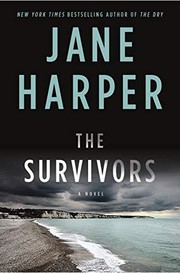
I read The Survivors during a stretch of gray afternoons, which turned out to be the right weather for it. Jane Harper's fourth novel came out in 2020, and the Flatiron Books edition I used runs 374 pages under ISBN 9781250232427. After The Dry, I expected another closed farming town and a detective with a dry wit. This book gives you a coastal town instead, a cold sea, and a man who has spent twelve years trying not to come home. The result is slower and sadder than her first novel, and for long stretches it is very good.
Kieran Elliott arrives in Evelyn Bay, Tasmania, with his partner Mia and their three month old daughter Audrey. Kieran's father Brian has dementia and has begun wandering at night. His mother Verity is trying to move Brian into assisted living, and the house is full of the paperwork and arguments that go with that decision. Kieran has not been back for three years. He knows the town will remember him, and he knows why.
Evelyn Bay is the kind of place where the tourist season pays for the winter and where everyone can tell you which family owns which stretch of beach. There is a pub, a caravan park, a diving business, and a set of sea caves that draw visitors at low tide. The caves are beautiful in photographs. They are also dangerous, and the novel never lets you forget it. Water fills them fast. The tide can turn a familiar route into a trap.
A town that keeps its own account
The Elliotts are not the only family with a story about the storm. Twelve years before the novel opens, a huge weather system hit Evelyn Bay. Kieran's older brother Finn and Finn's friend Toby Gilroy died that day. They had gone into the water to rescue Kieran and Olivia Birch from the caves. Kieran survived. Olivia survived. Finn and Toby did not. On the same day, Olivia's fourteen year old sister Gabby disappeared. Her purple backpack washed up later. Her body never did.
That coincidence is the wound the town has built itself around. Some people treat Kieran as a survivor. Others treat him as the boy who lived because two better swimmers went in after him. He carries his own version of the charge, and it is harsher than anything the town says aloud. He remembers the water, the noise, the confusion of being pulled out. He remembers being alive when Finn was not. Harper makes that guilt physical. It shows up in the way Kieran hesitates before he enters a room, and in the way he watches his parents age.
His old friends are still there. Ash is a landscaper now and Olivia's partner. Olivia lives with the loss of her sister in a way that has become part of her daily routine. Sean Gilroy runs the diving business that Finn and Toby started. He also mentors Toby's son Liam, a young man with a sharp edge and a clear grudge against Kieran. Liam was a child when his father died. He has grown up on the town's version of events, and Kieran's return gives him someone to blame in person.
Then there is the online forum. EBOCH, which stands for the East Bay Online Community Hub, is the local noticeboard for lost dogs, road closures, and opinions. It is also where the old story gets retold and polished. People post memories. People correct each other. People hint at things they would never say to a face. Harper uses those threads well. A small town does not need a newspaper to keep a legend alive. It only needs a comment box and enough time.
The reunion and the body on the sand
The night before the murder, Kieran and Mia go to the pub. It is meant to be a low key reunion with Ash, Olivia, Sean, and the old group. Bronte Laidler is there too. She is Olivia's roommate and an art student, and she has come to Evelyn Bay for the summer to work on a project about Gabby's disappearance. Bronte is curious in the way that outsiders can be curious, asking questions that locals have learned to leave alone. She takes photographs. She carries a camera and a laptop. She is friendly, persistent, and a little careless about whose memories she is handling.
The next morning Olivia finds Bronte dead on the beach. The body is in the water at the edge of the sand, and the scene is wrong in ways that take time to name. Bronte's camera and laptop are missing. There is no obvious story that fits. Sergeant Chris Renn is the local officer, and Detective Sue Pendlebury arrives from Hobart to take charge. They begin with the people Bronte spent the night with, which means they begin with Kieran and his friends.
The investigation runs alongside Kieran's own return home. A white car nearly runs him and Mia off the road. Brian has been getting out of the house at night, and no one can say where he goes. Kieran starts looking through his parents' things for clues about his father's wandering and finds instead the old texture of his family's life. A true crime writer named George Barlin is in town researching the storm for a book. He is polite, well informed, and entirely too interested in Gabby. The forum fills with speculation. Every new detail becomes a small test of loyalty.
Pendlebury is the most interesting new presence in the book. She is patient with Kieran without being soft, and she keeps asking why he is so sure the past and the present are separate. The two of them make a credible pair, though Harper is less interested in procedure than in the pressure that procedure puts on old friendships. Kieran is not a detective. He is a witness, a suspect in the town's imagination, and a son who has come home at the worst possible time.
Harper withholds the shape of the case and lets the reader feel the way a small community closes ranks. People offer Kieran sympathy and then watch him from across the street. Olivia is grieving her roommate and her sister at once. Ash tries to hold the group together. Sean is helpful in a way that feels slightly too controlled. Liam says the things other people only think.
The storm, the caves, and the girl who vanished
The heart of the book is the storm, and Harper returns to it in pieces. Finn and Toby were experienced in the water. They knew the caves. They went in because Kieran and Olivia were in trouble, and they did not come out. The town made them heroes, which is a hard thing for a family to live beside. It also made Kieran the boy who was saved, a role he never asked for and cannot escape.
Gabby's disappearance has always sat beside that rescue without quite fitting it. She was last seen near the water. Her backpack was found later. There was a search, a funeral without a body, and years of speculation. Trish Birch, Gabby's mother, has lived with the not knowing. Olivia has lived with the sister who was lost on the same day her boyfriend's brother died. The two losses have been braided together so tightly that the town barely distinguishes them.
Kieran begins to pull at the braid. He talks to Pendlebury about the timing of the rescue. The phone records do not match the story the town has accepted. He also learns that Gabby's backpack was found on Finn and Toby's boat, a detail the police kept quiet. That fact changes the geography of the case. If Gabby was on the boat, she may have been near the caves. She may have been with someone the town has never suspected.
The revelation arrives in stages, and that is both the novel's strength and its weakness. It is strong because Harper lets the past feel murky. Memory in Evelyn Bay is not a clean record. It is a set of stories that people have agreed to tell. It is weak because some of the new information depends on convenient timing and on people volunteering details at exactly the right moment. The book wants the reader to mistrust the town's story, but it also needs the plot to keep moving toward the caves.
What holds the middle together is the treatment of grief. Verity is exhausted by Brian's decline and still loves him. Kieran's guilt is not a single dramatic confession but a habit of mind. Olivia's anger has nowhere clean to go. Trish has built a life around a question no one can answer. Harper is good at showing how long grief lasts after the flowers die. She is less interested in the mystery as a puzzle than in the mystery as a thing people use to avoid talking about what they have lost.
The names carved into the rock
The final movement takes Kieran into the caves. He has been drawn there throughout the book, first as a survivor and then as an investigator. The caves are the one place where the official story and his own memory meet. At low tide they are a tourist attraction. At high tide they are a series of dark rooms with no easy exit.
Inside, Kieran finds names carved into the rock. The names matter because they place Gabby in the cave with someone. They also place Bronte there years later, photographing what she found. The past and the present are literally written on the same wall. Harper has been building toward this image, and it lands.
Sean is already in the caves when Kieran confronts him. The tide is coming in. Sean does not deny what he has done. He explains the day of the storm. He took Gabby into the caves to look for Olivia. They carved their names together. He kissed her. She rejected him. He was humiliated, and he left her to find her own way out. She did not make it. The water rose, and she drowned.
That confession is the engine of the ending. It is not a story about a monstrous stranger. It is a story about a boy who could not bear a moment of shame and a girl who paid for it with her life. Sean has spent twelve years being the brother of a hero while carrying the secret of a death he caused. When Bronte photographed the names, she threatened to expose him. He went to her cottage, lured her to the beach, strangled her, and put her body in the ocean. He was in the cave to remove the evidence when Kieran found him.
The confrontation is tense and physical. Water rises around them. Kieran has to get out. Sean does not. He walks deeper into the flooded cave and disappears into the darkness. Harper does not give him a clean death or a courtroom. He is simply gone, swallowed by the place where he left Gabby. Kieran escapes because he hears Mia calling him from outside. That detail is important. He is saved again, but this time he chooses to move toward the voice instead of staying in the dark.
What the water leaves behind
The aftermath is quieter than the climax. Trish finally has an answer about her daughter. That answer does not bring Gabby back, and it does not make the town whole. It does give Trish a place to put her grief. Kieran decides to stay in Evelyn Bay, at least for now. He helps his parents deal with Brian's care. He tries to repair things with Mia, who has been patient and frightened and is not willing to pretend the last weeks did not happen.
The title works on more than one level. The dead are the obvious survivors in the sense that they are the ones the town remembers. But the novel is really about the people who remain. Kieran survives the storm and then has to live with it. Olivia survives and loses her sister anyway. Trish survives her daughter. Sean survives his crime for twelve years and then loses himself in the water. The town survives by telling a story that is easier than the truth.
I finished the book thinking about how much of small town life is maintained by unspoken agreement. Everyone in Evelyn Bay knows that the storm did not happen the way the official version says. They know that families have gaps. They know that some questions are rude. The forum gives them a place to talk without ever having to act. Harper is very good at that atmosphere. The pub, the beach, the dive shop, and the narrow roads at night all feel lived in.
The novel is also honest about the limits of explanation. Learning what happened to Gabby does not restore her. Learning what Sean did does not make the town innocent. Kieran's decision to stay is not a promise that everything will be fine. It is a choice to be present for the ordinary work of caring for his father and rebuilding trust with Mia. That is a modest ending for a crime novel, and I think it is the right one.
What works and what does not
The Survivors is not as tight as The Dry. Harper's first novel had a single engine, and every interview fed it. This one has several engines: the murder, the old storm, Brian's dementia, Kieran's relationship with Mia, and the town's habit of trading rumors. For a while they run smoothly. Later, some of them feel like they are competing for space. The large cast adds to the blur. I sometimes had to remind myself which old friend was speaking.
The coincidences are also noticeable. Bronte arriving in town to research Gabby at the exact moment Kieran returns is a useful premise, but the novel leans on it. The camera, the laptop, the car, the forum posts, and the cave names all converge a little too neatly. There are moments when the plot needs someone to make a bad decision so that the next revelation can happen. That is common in crime fiction, but it is more visible here because the book is otherwise so careful about grief.
Still, the strengths outweigh the flaws for me. The atmosphere is excellent. Harper writes the coast without making it picturesque. The sea is a place of work and danger, not a backdrop. The final cave sequence is the best sustained set piece in the book. It is dark, wet, and frightening without relying on a monster. The confession works because it is small and human. Sean is not a criminal mastermind. He is a frightened boy who grew into a man who kept choosing himself.
I would recommend The Survivors to readers who want a mystery with patience and a strong sense of place. Do not come to it expecting the speed of The Dry. Come for the weather, the family house, the old friends who cannot quite meet each other's eyes, and the question of what a community owes the people it has decided to remember. The last image of the water closing over the cave is one I will keep. It is not a tidy ending, but it is a true one.
FAQ
What happened to Gabby Birch in The Survivors?
Sean Gilroy took Gabby into the sea caves during the storm, kissed her, and left her there after she rejected him. She drowned when the tide came in, and her body was never found.
Is The Survivors part of a series?
No. It is a standalone novel, separate from Jane Harper's Aaron Falk series.
How does The Survivors compare with The Dry?
It is slower and less tightly plotted than The Dry, and some readers may find the large cast hard to track. Its coastal atmosphere and treatment of grief are among its strongest qualities.
Similar books

Worth Dying For
Reacher stops for one night in rural Nebraska and finds a family that runs the county, a missing girl and a shipment worth killing for.
2,021-word summary · 9 min read

Say You're Sorry
A widowed prosecutor defends the teenager accused of killing her babysitter, uncovering a small town's secrets and a killer hiding in plain sight.
2,116-word summary · 9 min read

The Woods
Twenty years after two teenagers were murdered and two vanished at summer camp, prosecutor Paul Copeland identifies a fresh corpse as one of the missing.
2,490-word summary · 11 min read
Blindsighted
Sara and Jeffrey hunt a killer staging women in small-town Georgia.
2,400-word summary · 11 min read

We Begin at the End
Thirteen-year-old Duchess Day Radley shields her little brother Robin after their mother dies, as freed killer Vincent King returns and sick chief Walk tries…
2,956-word summary · 13 min read
Little Secrets
A mother missing a son finds her husband cheating and handles both herself.
2,008-word summary · 9 min read
The Truth About the Harry Quebert Affair
A blocked writer tries to clear his mentor Harry Quebert after a girl missing since 1975 is found buried with his famous manuscript.
2,192-word summary · 10 min read
All Good People Here
A journalist returns home to care for her uncle and reopens a 20 year old child murder tied to a new abduction.
2,006-word summary · 9 min read
The Lost Man
A man is found dead at a lone grave in the Queensland outback, his car stocked and kilometres away. His brother works out the last day and the family behind it.
2,036-word summary · 9 min read
Force of Nature
Four women walk out of the Giralang Ranges and Alice Russell does not, leaving Falk to link bush lies to firm fraud.
2,250-word summary · 10 min read
The Dry
Falk returns to drought-hit Kiewarra for Luke's murder-suicide, and an old secret about Ellie's drowning resurfaces to change the case.
2,100-word summary · 9 min read

What She Knew
Rachel lets her eight-year-old son run ahead in a Bristol park, and the nine-day search turns her into a suspect in the public eye.
2,952-word summary · 13 min read

The Beach House
A young valet is beaten to death at a Hamptons party, and his law-student brother spends a year building a case against the family that covered it up.
2,049-word summary · 9 min read

Six Years
A professor who promised to forget the woman he loved sees her husband's obituary and discovers that the wedding, the marriage, and the woman herself may never…
2,076-word summary · 9 min read
How the Light Gets In
Gamache investigates the murder of the last Ouellet quintuplet while the Sûreté he served is dismantled from inside by the man who took his protégé.
2,279-word summary · 10 min read
Bury Your Dead
Recovering from a failed raid that killed his officers, Gamache investigates a murder in a Quebec City library while Beauvoir reopens a case in Three Pines.
2,022-word summary · 9 min read

The Trespasser
A Dublin Murder Squad detective investigates a staged dinner-party killing and finds a cover-up that reaches into her own department.
2,051-word summary · 9 min read

Rules of Prey
Minneapolis detective Lucas Davenport hunts a killer who leaves a new rule at every scene and treats murder as a game of wits.
1,914-word summary · 9 min read

The Late Show
Exiled to the LAPD night shift after accusing her supervisor, Renée Ballard keeps two cases that were meant to be handed off at dawn: a brutal assault and a…
2,563-word summary · 11 min read

4th of July
Lindsay Boxer shoots two armed teenagers in self-defense, faces a wrongful-death trial, and spends her leave chasing a string of throat-slashing murders in…
2,192-word summary · 10 min read

The Camel Club
Four Washington misfits witness a murder on Roosevelt Island and stumble into a conspiracy that reaches the Oval Office, with a hostage president and a nuclear…
2,354-word summary · 10 min read

61 Hours
A bus crash strands Jack Reacher in a snowbound South Dakota town where a drug gang, a corrupt police force, and a single witness are on a collision course.
2,227-word summary · 10 min read
The Last Mile
Melvin Mars is hours from execution for his parents' murder when another man confesses, and FBI cold case detective Amos Decker goes looking for the trap.
2,746-word summary · 12 min read

Still Missing
A realtor is abducted at a Vancouver Island open house and held for more than a year. Told through therapy sessions, the novel follows her escape and the hunt…
2,466-word summary · 11 min read

Bad Luck and Trouble
A deposit of $1,030 summons Jack Reacher back to his old army unit, which is being picked off one name at a time.
2,366-word summary · 11 min read

3rd Degree
The third Women's Murder Club novel follows a San Francisco terror cell and a three-day killing schedule, and it costs the club a member.
2,685-word summary · 12 min read

Finlay Donovan Knocks 'Em Dead
Someone has put a contract on Finlay Donovan's ex-husband, and the novelist and her nanny have to find the hitman before the school pickup.
1,990-word summary · 9 min read

Echo Burning
Reacher hitches a ride with a Texas woman who wants her abusive husband killed, then has to prove she did not murder him when he comes home.
2,209-word summary · 10 min read
A Rule Against Murder
Gamache's anniversary at a remote lodge turns into a closed-circle murder when the family statue kills Julia, and everyone at the Manoir had a reason.
2,201-word summary · 10 min read

Girl, Forgotten
A rookie US marshal guards a judge with a stalker and ends up reopening the 1982 prom-night murder of the judge's pregnant daughter.
2,111-word summary · 9 min read