
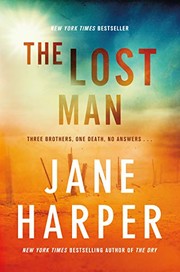
Reading options
What's inside (10 sections)
Jane Harper made her name with the Aaron Falk books, a detective series about a city man investigating crimes in the dry heart of Australia. The Lost Man, her third novel, cuts the detective loose entirely. Nobody calls the police for most of this book. The crime, if there is one, happened somewhere heat does most of the work, and the only investigator is a brother who has spent his whole life five hours' drive from the nearest person who might help.
It came out in 2018, published in the US by Flatiron Books, runs 352 pages, and stands alone. It won the Ned Kelly Award for Best Novel and a shelf of other prizes, and it is the book I hand to people who say they do not read mysteries.
The grave
The novel opens with a body at the stockman's grave, a lone headstone in the middle of nowhere in far-western Queensland. It is a local landmark the way the Eiffel Tower is a landmark, except the grave sits hours from anything, and the only reason to visit is to prove you can survive the trip. Cameron Bright, the middle of three brothers, is dead beside it. He has been dead a while. The evidence is brutal and precise: a ring worn into the dry dirt around the headstone, because he circled it, hour after hour, following the sliver of shade, trying to stay out of the sun. He lasted less than twenty-four hours in the heat.
His Land Cruiser is discovered kilometres away, unlocked, stocked with water, fuel, and food, and completely functional. That is the detail that turns the tragedy into a problem. The rule of the outback is simple and absolute: you never leave your vehicle. Nobody who grew up out here would walk away from a working car into forty-degree heat. The police wonder about suicide. The community wonders, carefully, about other things.
Nathan
The protagonist is Nathan Bright, the eldest brother, a man who lives alone on a property that has been going downhill for years. He has a son, Xander, from a marriage that ended, and he sees the boy on school holidays. He is not exactly shunned by the nearby town of Balamara, but he is not exactly welcome either. Years earlier, he drove past his stranded father-in-law on the road and did not stop, and the man died. You can argue about what Nathan could have known and what the desert lets anyone know, and the town has already decided, and the decision is on the permanent record. He buys supplies at odd hours so there is less time to stand in a checkout queue being looked through.
So when Cameron dies, Nathan is the brother with the time, the suspicion, and the outsider status to ask the questions nobody sensible would ask. His investigation is not a set of interrogations. It is a set of long drives, awkward meals, and conversations with people who are grieving and hiding, in a landscape where every secret is visible from the wrong angle.
The landscape
Harper does something in this book that I have not seen many crime writers attempt: she makes the environment into a participant with no agency and no mercy. The heat has rules. Travel has protocols. Every vehicle carries more water than it needs and a radio that works or a decision to make about why it does not. The properties are so big that a driveway can be longer than some towns, and a neighbour in trouble is not a five-minute walk away but a logistical problem with a fuel budget.
There is a scene early where the police and the family discuss whether Cameron could have walked away from his vehicle on purpose, and the conversation functions as legal procedure and as worldbuilding at the same time, because in this country, abandoning a working car is not a mistake, it is a statement. Harper gets a lot of mileage from that inversion. In a city, leaving your car is nothing. Here, it is either madness or intention, and the book spends the rest of its length deciding which one.
The stockman's grave itself is the best piece of set design in the novel. A lone headstone, a saddlebag on it, the remains of a stockman who died out here a century ago and whose story is exactly as unresolved as Cameron's, standing in for every man who has ever been swallowed by the country. Harper never overworks the symbolism. She just keeps the grave in the frame, and by the end you understand what it is saying about family history, which is that the land keeps what it takes and the living decide what to say about it.
The family
The Brights are a cattle family, and the family history is part of the terrain. The father, Carl, was a violent man who ran the household the way he ran the property, with physical force and no appeals. The mother, Liz, survived him the way some people survive weather. Nathan carries the inheritance in the form of a reputation and a certain talent for silence. Cameron got the charm and the look of success. The youngest brother handles the family yard and the endless small jobs and gets treated like staff by everyone, including, for a while, the reader. Cam's wife Ilse and their daughters, Sophie and Lo, live on the family block. Nathan's ex, Jacqui, moved back to the region for reasons that come clear over the course of the book, and their son Xander is visiting for the holidays, which is the story's second timeline whether anyone wants it or not.
What Harper does with the family that has already happened is the engine of the book. Nathan is not investigating a stranger. He is investigating the boy he grew up with, competed with, cleaned up after, and resented. Every fact he turns up about Cameron is a fact about Nathan too, and about the father they shared, and the pattern of violence that did not stop when Carl died. The coldest sentence in the book is the one where Nathan realizes he has been assuming the sons escaped their father, and then does the arithmetic on what that assumption cost everyone around them.
What the investigation finds
The case, as Nathan reconstructs it, is not one secret but a chain of them. Cameron had been refusing to help family members in trouble, in ways that were technically within his rights and morally beyond the pale. He was having an affair with a young employee named Katy, which had left her pregnant and unsupported. There was an old accusation of rape years before that Nathan had always dismissed, and now cannot. And behind the closed doors of the family block there was a pattern of abuse aimed at Ilse and at the girls, a pattern the neighbours never heard and the law never saw because out here sound carries but people do not.
The last piece, the one that makes the book, comes from Liz. She tells Nathan the truth about the day Cameron died. It was not suicide. It was not a stranger. Cameron had left the grave site, and his mother had made sure he could not leave it alive.
What Liz had learned: Ilse was planning to escape with the children. What she feared: that Cameron would do what Carl had done, that the cycle would claim the next generation the way it had claimed hers. So she rode out on horseback, met him at the grave, and drove his vehicle away, with her horse galloping after the car, leaving her son with the choice the desert gives everyone, which is no choice at all. He was dead of exposure by the time anyone found him. The mother did it. The mother has been carrying it, and telling Nathan does not lift any weight, it only moves it.
The choice
Nathan does what I think most people in his situation would do, and the book is honest about how uncomfortable that is. He decides not to tell the police. The family closes ranks around the fact of what happened, and each person gets on a different vehicle and drives their separate direction, carrying it. The ending is not absolution. It is logistics: who drives whom to the airport, whether Nathan will finally visit Xander in Brisbane, whether the women who survived Carl and Cameron can start using the word survived. Harper lets the ending be small and quiet and earned, and lets the family begin the long renegotiation of one another.
The book's final scene is my favorite kind of mystery resolution, the kind that reframes rather than reveals. You never get the satisfaction of a courtroom. You get something more adult, which is a group of people deciding what they can live with and what they will refuse to pass on.
A word about the women
Ilse and Katy and Liz are the load-bearing characters in a book that could easily have used them as scenery, and Harper gives each of them a full cost. Ilse married into the family through a sequence that the book lays out without comment, since she dated Nathan first, before she knew the brothers knew each other, and Cameron pursued her once he learned that she was his brother's former girlfriend. The asterisk next to that relationship sits there for the whole novel, and it pays off in the ending. Katy is young, employed by the family, and pregnant by a man who is not going to help her, and the book refuses to make her a villain or a victim, only a person with a future problem and a town that will judge her for it either way. Liz is the quiet center holding the last quarter of the novel, and her scenes with Nathan, in which a mother explains what she has done and a son decides whether he can hold it, are the best writing Harper has done. If you like the Aaron Falk books for the detective work, this different flavor of resolution may surprise you. It surprised me in a way I have kept thinking about.
Why it works
The Lost Man is a slow burn, and I mean that as an engineering description. Harper's sentences are plain and patient, and she lets the heat and distance do the pacing. Kirkus called the setting almost as alien as the moon's surface, which is the right comparison: the station country here is a place where an ordinary broken-down car is a death sentence and an ordinary family argument has nowhere to go but worse. The Guardian's reviewer noted that the conclusion chills despite the outback heat, and that is exactly the effect. The answer arrives in bright sunlight, and you feel cold.
Harper is also good at a thing that is easy to get wrong: representing a closed community without turning it into a chorus of suspects. Balamara is not a puzzle box full of liars. It is a town with its own logic, where Nathan's exclusion is both cruel and, given what the town knows, not crazy. The minor characters are drawn with a thumb, not a caricature, and the daughters and the wife and the employee are people the book takes seriously, in a genre that often uses women as collateral damage.
If there is a flaw, it is a couple of coincidences in the middle third, and a mystery about a missing envelope around the grave that the study guides argue over more than the text probably supports. Some readers will guess the shape of the ending early, because the book is fair about planting it. That did not bother me. The Lost Man is not really asking who did it. It is asking what a family does with the answer, and whether a person who inherits violence can put it down, and the puzzle serves those questions instead of the other way around. Read it in winter. It is a hot book, and I mean that both ways.
FAQ
Who killed Cameron Bright in The Lost Man?
His mother, Liz, drove his car away from the stockman's grave after learning that his wife planned to escape his abuse, leaving him to die of exposure.
Is The Lost Man part of the Aaron Falk series?
No, it is a standalone novel, though it shares Jane Harper's outback setting with the Aaron Falk books.
Why did the town of Balamara shun Nathan?
Years earlier he drove past his stranded father-in-law without stopping, and the man died. The town blamed him, and the grudge outlasted the circumstances.
Similar books
The Soulmate
A cliffside fall leaves a wife doubting her husband as old abuse and buried secrets surface.
2,126-word summary · 9 min read
The Survivors
Kieran Elliott returns to Evelyn Bay twelve years after a storm killed his brother, and a young woman's murder forces the town to face what it has concealed.
2,571-word summary · 11 min read
The Dry
Falk returns to drought-hit Kiewarra for Luke's murder-suicide, and an old secret about Ellie's drowning resurfaces to change the case.
2,100-word summary · 9 min read

The Best of Friends
Three lifelong friends discover their teenage sons were hiding more than anyone knew after a night that leaves one dead, one in a coma and one silent.
2,040-word summary · 9 min read
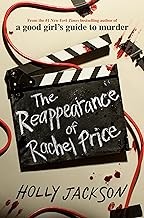
The Reappearance of Rachel Price
Bel films a doc when her missing mother walks back after years.
2,254-word summary · 10 min read

Keep It in the Family
Mia and Finn renovate a long empty house and find seven children hidden in the attic.
2,270-word summary · 10 min read

We Begin at the End
Thirteen-year-old Duchess Day Radley shields her little brother Robin after their mother dies, as freed killer Vincent King returns and sick chief Walk tries…
2,956-word summary · 13 min read
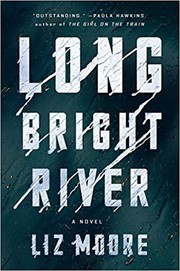
Long Bright River
Philadelphia officer Mickey patrols Kensington amid the opioid crisis, hunts a killer of vulnerable women, and searches for her missing addict sister Kacey…
2,986-word summary · 13 min read
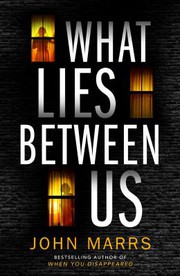
What Lies Between Us
Nina keeps mother Maggie locked upstairs for years, trading lies about sisters and deaths that unravel fast.
2,062-word summary · 9 min read
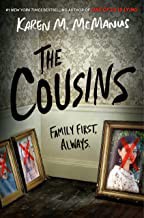
The Cousins
Three cousins work at their rich grandmother island resort while digging into why their parents were cut off.
2,565-word summary · 11 min read
The Chain
Rachel must kidnap another child to save kidnapped Kylie, entering a chain where parents pass crime forward.
2,021-word summary · 9 min read
Pieces of Her
After her mother kills a mall shooter with shocking skill, Andy Oliver uncovers a hidden 1980s past of radicals and wealth.
2,791-word summary · 12 min read
The Storm
A struggling innkeeper, a returning murder suspect, and a true crime writer collide as another hurricane bears down on the Alabama coast.
2,349-word summary · 10 min read
The Life We Bury
A college junior interviews a dying convict for class and reopens a 30-year-old murder case in Minnesota.
2,708-word summary · 12 min read
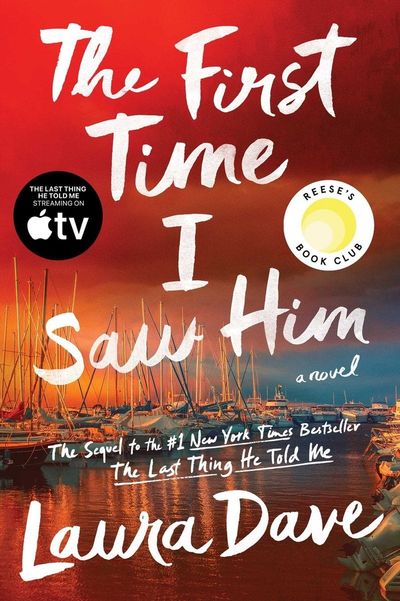
The First Time I Saw Him
Five years after Owen vanished, Hannah and Bailey have rebuilt in California until Owen walks into her exhibition and danger returns.
2,407-word summary · 11 min read
The Family Remains
Lucy returns to London as bones on the Thames reopen the Chelsea mansion deaths.
2,304-word summary · 10 min read
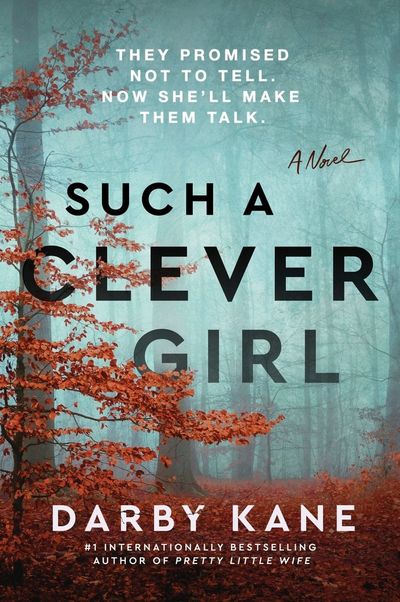
Such a Clever Girl
Fifteen years after the Tanners vanished, Aubrey returns at 30 as a new disappearance forces three women to face old secrets.
2,203-word summary · 10 min read
Mystic River
Three Boston friends reunite when one daughter is murdered.
2,230-word summary · 10 min read
I Found You
A man with no memory on a beach, a vanished husband, and a 1993 holiday collide in a seaside town.
2,990-word summary · 13 min read
Everyone in My Family Has Killed Someone
A mystery writer narrates his own snowbound family reunion, where everyone has killed someone and the bodies pile up.
2,961-word summary · 13 min read
All the Little Houses
In 1980s Longview, Texas, social queen Charleigh and daughter Nellie guard mean-mom secrets when a new family threatens their empire.
2,206-word summary · 10 min read
Two Can Keep a Secret
Twins new to Echo Ridge dig into aunt's murder as homecoming threats return.
2,078-word summary · 9 min read
Little Secrets
A mother missing a son finds her husband cheating and handles both herself.
2,008-word summary · 9 min read
Invisible Girl
A missing teen, a strained marriage and a doxxed loner collide in London.
1,996-word summary · 9 min read
The Mother-in-Law
Sally Hepworth's 2019 family thriller follows Lucy as she clashes with her polished mother-in-law Diana, until Diana's sudden death forces Lucy to rethink…
2,471-word summary · 11 min read
Watching You
A new wife in Bristol fixates on a charismatic neighbor while a teen boy logs every move before a murder.
2,363-word summary · 11 min read
The Good Sister
Twin sisters share a careful arrangement until a plan to have a baby pulls old family secrets into view.
3,255-word summary · 14 min read
The Good Daughter
Twenty eight years after a home invasion shattered her family, a lawyer witnesses a school shooting that reopens old wounds.
2,505-word summary · 11 min read
Not a Happy Family
After a bitter Easter dinner, Fred and Sheila Merton are found dead and their three adult children each hold a motive.
3,764-word summary · 17 min read
Daisy Darker
A family gathers on a tidal island for an 80th birthday and someone starts killing to a nursery rhyme.
1,917-word summary · 9 min read