
Reading options
What's inside (8 sections)
I did not expect to care this much about a sequel. When I finished The Last Thing He Told Me back in 2021, I closed it satisfied. Hannah and Bailey had found each other. Owen was gone, and gone for reasons that made a sad kind of sense. The epilogue gave us a small warm scene years later and I thought that was the end of it.
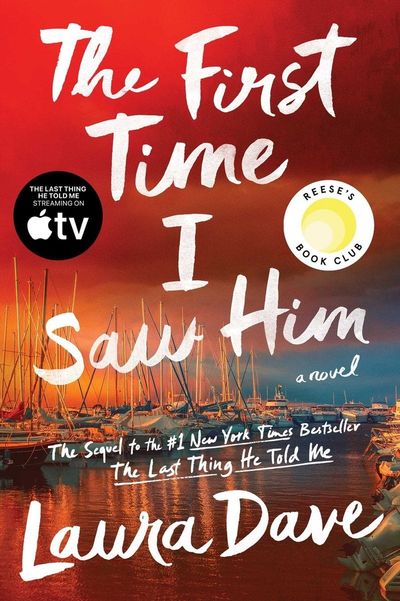
Then Laura Dave announced she had kept going. The First Time I Saw Him came out on January 6, 2026 from Scribner, 288 pages in hardcover, and it went straight onto the bestseller list and into Reese Witherspoon's book club. It also became the basis for season two of the Apple TV+ show with Jennifer Garner. I bought it the week it came out for the same reason everyone else did. I needed to know whether Hannah ever got her second chance, and what it cost.
This one picks up right where that epilogue left off, about five years after Owen disappeared. You should know going in that it assumes you read the first book. Nothing here works without it. If you have not read The Last Thing He Told Me, start there. My full summary of it is on this site, and the short version is this: Hannah Hall, a woodturner living in a Sausalito floating home, gets a two word note, Protect her, and then her husband Owen Michaels vanishes the same day his startup is raided by the FBI. With his sixteen year old daughter Bailey, who barely tolerates her, Hannah chases the truth to Austin, Texas and learns Owen is really Ethan Anderson, a man who changed their names years ago to hide Bailey from her grandfather's criminal circle. Hannah gives up her reunion with Owen so Bailey can keep her name and her life.
Five years later in Southern California
The sequel opens on a steadier life, and I felt the relief of it before anything went wrong. Hannah and Bailey have settled in Southern California. The years in Sausalito, the floating home, the deck, the shop full of shavings, all of that is behind them. What they built instead is the part I liked most in these early chapters. They forged a real relationship with Bailey's grandfather Nicholas, the same man whose past forced Owen to run in the first place. Putting the past behind them, the jacket copy says, and for a while I believed it.
Bailey is five years older, out of her teens and into a life of her own. The girl who once told Hannah that nobody could shield her from the truth has grown into someone who trusts her stepmother completely. That trust was the whole prize of the first book, earned scene by scene at a kitchen table with a duffel of cash between them, and Dave does not waste it here. She treats it as the foundation everything else can shake.
Hannah has changed too. She is still an artist who works with her hands, and her career has grown into proper exhibitions, real rooms with her pieces on the walls and her name on the card. I liked seeing that. In the first book her craft was mostly background, bowls and shavings while the plot ran. Here her work puts her in public, in front of crowds, and that visibility is exactly what makes the next scene possible. A woman hiding from her past probably should not hang her name on a gallery wall. Hannah does it anyway, because she decided to live. That choice is the engine of the book.
Nicholas hovers at the edge of these chapters in a way that kept me alert. The forgiveness between him and Hannah, between him and Bailey, reads as genuine but unfinished. Dave is careful with him. He is an old man with a long shadow, and every warm scene with him carries a small cold draft. I kept waiting for that draft to turn into weather.
A face at the exhibition
Then Owen walks into Hannah's new exhibition, and the book detonates its own calm.
I want to be careful with how much I say about this scene, because it is the jolt the whole novel is built around and it lands harder cold. What I can tell you is what the setup promises. Hannah sees her vanished husband in a public room full of people. She knows at once, the way she knew who Protect her meant five years earlier, that she and Bailey are in danger again. There is no slow burn here. The first book took its time assembling the mystery. This one lights the fuse in the opening movement and spends the rest of its pages on the fire.
What struck me is how differently Hannah reacts this time. In Sausalito she was reactive, waiting by the phone, making coffee, saying normal things while her mind ran wild. Here she moves fast. She has five years of earned closeness with Bailey, five years of practice being the person who tells the truth instead of holding it back, and she acts like it. The panic is still there. Dave writes Hannah's fear in the body, sleeplessness, the old habit of running scenarios at night. But the freezing is gone. She decides, and then she does the thing.
Owen himself stays half in shadow for much of what follows, and I thought that was the right call even as it frustrated me. He is the reason for everything and the person we understand least. Every choice he made in the first book, the cash, the flight, the silence, gets reexamined here under harder light. Was it protection or control. Was the sacrifice as clean as Hannah told herself it was. Dave lets those questions sit without rushing to answer them, and the waiting is uncomfortable in a good way.
On the run, with the past catching up
The middle of the book is a run. Hannah and Bailey are forced to move, to decode what is happening and who is behind it, in what the early coverage accurately describes as a race involving old enemies and new threats. I will keep the specifics light because the turns come quickly and several of them genuinely surprised me. The shape is what matters. Every step forward into safety requires a step back into the history they tried to leave, Texas, the names they shed, the people who remember Ethan Anderson.
The mother daughter core holds the whole thing together. In the first book they were learning to talk. Here they talk fluently and the tension comes from what talking cannot fix. Hannah risks everything to get Bailey to safety, the jacket copy says, and that sentence undersells how literal it gets. There are moments where Hannah has to choose between Bailey's safety and her own reunion with Owen, and Dave stages those choices without sentimentality. Nobody gives a speech. People just do the hard thing and live with the look on the other person's face.
Nicholas matters more as the run continues, and I found his thread the most emotionally complicated in the book. He is family now, and he is also the origin of the danger. Bailey loving her grandfather while fearing what his name attracts is the sharpest version of the book's central bind. You cannot pick your blood. You can only decide what to do when it knocks. A few scenes between Bailey and Nicholas late in the run hit me harder than any chase beat, precisely because they are quiet.
About those cryptic clues the advance coverage mentions: yes, there is a trail, and yes, decoding it is part of the propulsion. I will say only that the clues feel of a piece with the first book's paper trail of photos and rosters and church records. Dave likes evidence you can hold. If you enjoyed Hannah cross checking names in a university archive in Austin, you will enjoy what she has to do here with less time and higher stakes.
Forgiveness, and what a second chance costs
The jacket copy calls this a novel about the power of forgiveness, and asks how far you would go for a second chance. Both lines earn their place. Every major character wants something back. Hannah wants Owen. Bailey wants the years without him. Owen wants the family he surrendered. Nicholas wants a clean name in the eyes of his granddaughter. The book's position, as I read it, is that second chances are real but priced. Somebody always pays, and the currency is usually someone else's safety or someone else's story about who they are.
That theme lands because the first book already made us feel the price. Hannah gave up Owen so Bailey could stay Bailey. Forgiveness in this sequel is not a single scene where people cry and hug. It is a series of practical decisions about risk, honesty, and who gets to know what. Hannah telling Bailey the truth early, even when the truth is destabilizing, is the clearest throughline from book one. She learned that holding things back nearly broke them. She does not repeat the mistake, even when repeating it would be easier.
I also appreciated that Dave lets forgiveness have limits. Some things people did, on all sides of the old Texas history, do not get washed clean by love. The book distinguishes between forgiving a person and trusting them again, and it is honest about which one is harder. A few of the late scenes between Hannah and Owen turn on exactly that distinction, and they are the best written pages in the novel, restrained and a little bruised.
If there is a thesis here beyond the thrills, it is that family is a practice, not a status. Hannah was not Bailey's mother by blood or by early affection. She became it by showing up, by telling the truth, by leaving when leaving protected the girl and returning the moment return was possible. The title, which I will not explain, reframes that practice in a way that gave me chills when I understood it.
The way Dave tells it this time
The craft news first: this is a faster, wider book than its predecessor. Where The Last Thing He Told Me stayed inside Hannah's present tense voice with claustrophobic focus, the sequel works across multiple perspectives and timelines on its way to a finale that answers the lingering questions. That description comes from the trade coverage and it matches my reading. The shifts never confused me, and they let Dave build suspense out of dramatic irony, the reader knowing something Hannah does not, or vice versa.
At 288 pages it moves. I read it in two sittings, which I almost never do with sequels, because the chapters kept ending one beat past where I could stop. Dave's prose stays plain and functional in the best sense. She does not write fancy sentences. She writes clear ones that carry feeling without announcing it. The Washington Post called it a tense story but a surprisingly tender one, and that is exactly right. The tenderness is the differentiator. Plenty of thrillers can stage a run. Fewer can make you tear up in the middle of one.
The finale gives answers. I want to stress that because sequel finales so often dodge. Questions the first book left open, about Owen's years away, about what the family can possibly look like now, get addressed head on. Whether every answer satisfies is a separate matter, and I had quibbles I will get to. But nobody can accuse Dave of coyness. She closes doors.
One craft note for fellow process nerds: the exhibition scenes show Dave did her homework on how artists actually talk about their work. Hannah discussing her pieces sounds like a real maker, specific about material and method, a little uncomfortable with the social part. It is a small thing and it grounded the book's most melodramatic turn in something tactile.
The parts that nagged me
Now the criticism, because a friend would tell you the truth. First and largest: this is not a standalone. Dave makes zero concession to new readers. Names, old wounds, the whole Texas backstory arrive with minimal recap, and the emotional payoff depends entirely on five years of accumulated attachment. If you have not read the first book, you will spend the first third confused and the rest unmoved. Start there. It is a fast read and worth it.
Second: the thriller logic leans on timing and coincidence the way the first book's Austin section did. People arrive where they need to be. Messages surface when the plot needs them. Doors open. I noticed it more here because the pace is faster, which gives you less time to forgive each creak. If you are the kind of reader who interrogates every logistics beat, wanted posters, phones, how anyone found anyone, you will find threads to pull. I chose to pull none of them on first read and had a better time for it.
Third: at 288 pages, some threads feel compressed. Nicholas, the most interesting figure in the book after Hannah, gets fewer scenes than I wanted, and one late turn involving him resolves faster than it should. A secondary ally who helps during the run (kept nameless here to avoid spoilers) arrives as a function more than a person. The slimness is also the virtue. Nothing drags. But I finished wanting about forty more pages of the quiet stuff, the scenes this author writes best.
Fourth, a smaller thing: the event machinery around the book, Reese's pick, the February season two premiere, the instant bestseller banners, occasionally makes the novel feel like a delivery vehicle for a franchise. A few passages read as engineered for adaptation, short scenes, clean dialogue, easy cuts. I do not actually mind, since the show brought many readers to the book, but I felt it once or twice.
None of that dented my overall response much. Readers who loved the first book for Hannah and Bailey, rather than for the puzzle, will find the thing they actually came for: two people who chose each other, tested again, choosing again. Read it for that. Forgive the creaks. And read the first one first, so the title lands the way it is supposed to land.
FAQ
Do I need to read The Last Thing He Told Me first?
Yes. The sequel picks up where the epilogue left off and assumes you know Hannah, Bailey, Owen, and the Texas backstory.
Who is Nicholas in the sequel?
Bailey's grandfather, whose past forced Owen to run. Five years on, he has a genuine relationship with Hannah and Bailey.
Is The First Time I Saw Him connected to the TV show?
Yes. The novel inspired season two of the Apple TV+ series starring Jennifer Garner, which premiered in February 2026.
Similar books

The Best of Friends
Three lifelong friends discover their teenage sons were hiding more than anyone knew after a night that leaves one dead, one in a coma and one silent.
2,040-word summary · 9 min read
Keep It in the Family
Mia and Finn renovate a long empty house and find seven children hidden in the attic.
2,270-word summary · 10 min read
The Cousins
Three cousins work at their rich grandmother island resort while digging into why their parents were cut off.
2,565-word summary · 11 min read
Pieces of Her
After her mother kills a mall shooter with shocking skill, Andy Oliver uncovers a hidden 1980s past of radicals and wealth.
2,791-word summary · 12 min read
The Storm
A struggling innkeeper, a returning murder suspect, and a true crime writer collide as another hurricane bears down on the Alabama coast.
2,349-word summary · 10 min read
Such a Clever Girl
Fifteen years after the Tanners vanished, Aubrey returns at 30 as a new disappearance forces three women to face old secrets.
2,203-word summary · 10 min read
All the Little Houses
In 1980s Longview, Texas, social queen Charleigh and daughter Nellie guard mean-mom secrets when a new family threatens their empire.
2,206-word summary · 10 min read
The Good Sister
Twin sisters share a careful arrangement until a plan to have a baby pulls old family secrets into view.
3,255-word summary · 14 min read
The Last Thing He Told Me
Hannah Hall gets a note saying Protect her, then her husband vanishes and she must team with his teen daughter to find why.
2,951-word summary · 13 min read

Six Years
A professor who promised to forget the woman he loved sees her husband's obituary and discovers that the wedding, the marriage, and the woman herself may never…
2,076-word summary · 9 min read
The Girls in the Garden
Clare moves her daughters to a gated London garden where the community feels safe; at the midsummer party, twelve-year-old Pip finds her sister bleeding in the…
1,973-word summary · 9 min read
The Vanishing Stair
Stevie Bell returns to Ellingham Academy under a secret bargain, chasing the truth about a 1936 kidnapping while a new death makes the school feel smaller and…
2,026-word summary · 9 min read
Finlay Donovan Knocks 'Em Dead
Someone has put a contract on Finlay Donovan's ex-husband, and the novelist and her nanny have to find the hitman before the school pickup.
1,990-word summary · 9 min read

Girl, Forgotten
A rookie US marshal guards a judge with a stalker and ends up reopening the 1982 prom-night murder of the judge's pregnant daughter.
2,111-word summary · 9 min read
The Lost Man
A man is found dead at a lone grave in the Queensland outback, his car stocked and kilometres away. His brother works out the last day and the family behind it.
2,036-word summary · 9 min read

The Boy from the Woods
Wilde, found feral in a New Jersey forest in 1986, hunts for a missing teenager while a senator's secrets tear a wealthy town apart.
2,270-word summary · 10 min read
Vanishing Acts
A search-and-rescue worker's perfect life cracks when her past and her father catch up.
2,799-word summary · 12 min read
The Reappearance of Rachel Price
Bel films a doc when her missing mother walks back after years.
2,254-word summary · 10 min read

We Begin at the End
Thirteen-year-old Duchess Day Radley shields her little brother Robin after their mother dies, as freed killer Vincent King returns and sick chief Walk tries…
2,956-word summary · 13 min read
The House at Riverton
In 1999, ninety eight year old maid Grace Bradley tapes the truth about a 1924 shooting at Riverton Manor, poet Robbie Hunter, two sisters and a lie held for…
2,433-word summary · 11 min read
Long Bright River
Philadelphia officer Mickey patrols Kensington amid the opioid crisis, hunts a killer of vulnerable women, and searches for her missing addict sister Kacey…
2,986-word summary · 13 min read
Every Last Secret
A wealthy wife tracks a possible affair, but dinners, therapy, and a sudden death expose buried secrets across two polished suburban marriages and force her to…
2,687-word summary · 12 min read
Bring Me Back
Finn lost Layla at a French rest stop twelve years ago. Now engaged to her sister Ellen, he faces sightings, emails and Russian dolls that reopen everything.
2,912-word summary · 13 min read
What Lies Between Us
Nina keeps mother Maggie locked upstairs for years, trading lies about sisters and deaths that unravel fast.
2,062-word summary · 9 min read
The Other Mrs.
A Chicago family inherits a house on a Maine island, then a neighbor is found murdered. Kubica's 2020 thriller builds to a final reframe.
2,267-word summary · 10 min read
The Chain
Rachel must kidnap another child to save kidnapped Kylie, entering a chain where parents pass crime forward.
2,021-word summary · 9 min read
Reconstructing Amelia
A grieving lawyer mother reopens her teen daughter's alleged suicide at an elite Brooklyn school, uncovering bullying and secrets.
2,032-word summary · 9 min read
What Lies in the Woods
Naomi returns after Olivia vanishes to face what happened in the woods at eleven.
2,213-word summary · 10 min read
The Soulmate
A cliffside fall leaves a wife doubting her husband as old abuse and buried secrets surface.
2,126-word summary · 9 min read
The Life We Bury
A college junior interviews a dying convict for class and reopens a 30-year-old murder case in Minnesota.
2,708-word summary · 12 min read