
Reading options
What's inside (8 sections)
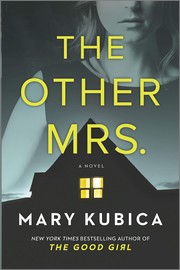
I picked up The Other Mrs. because Local Woman Missing had made me a Mary Kubica reader the year before, and I wanted to go back to the book that came right before it. Kubica published this one in 2020 with Park Row, and the original hardcover runs 368 pages. I read it over four nights in February, the kind of cold week where a novel set on a gray island off Maine feels a little too close. The setup hooked me fast. A family leaves Chicago for a house they inherited on a tiny coastal island. A neighbor is found dead. Suspicion settles on the newcomers. I thought I was getting a straight murder mystery with an island winter mood. The book gave me that, then pulled the floor out near the end in a way I am still turning over.
Sadie Foust narrates most of it, and she is the reason the book works and also the reason it frustrated me in patches. She and her husband Will have two boys, fourteen year old Otto and seven year old Tate, plus two dogs and a 1,200 square foot condo they are glad to leave. Will's sister Alice has died suddenly, and the family inherits her house on the island along with a duty none of them chose. Alice's sixteen year old daughter Imogen, dark eyed and silent and angry, comes with the house. Sadie meets the girl for the first time on moving day. She tries kindness. Imogen stares through her. That first car ride up the steep street, the gray house with the wide porch, the neighbor who watches from his lawn and does not wave back, Kubica gets all of it down with the damp salt air smell included. I felt the move in my chest. New place, dead woman's furniture still in it, a grieving teenager sleeping down the hall, two boys trying to act fine.
The house on the island
The house deserves its own section because it acts like a character. It is gray with a covered porch running the full width, ringed by trees tall enough to block the light. Inside it is all paneling and heavy drapes, Alice's taste frozen in place. The attic is the worst of it, crammed and airless, the kind of space that makes you imagine sounds. Sadie feels something off about the place from the first afternoon and cannot name it. I liked that Kubica lets the unease build through chores instead of shocks. Sadie scrubs. She opens curtains that stare back at trees. She finds Alice's things in drawers and feels like a trespasser. Tate is thrilled to have a yard for the first time. Otto hovers near his mother, reluctant, and the two of them have always been alike, watchful and slow to trust.
Winter does half the scary work. The steep street would be treacherous in snow. The ocean smell mixes with woodsmoke and rot. The island is small enough that everyone knows whose car is whose, and the Fousts arrive with out of state plates and Chicago habits. Groceries, school enrollment, the ferry schedule, the price of heating oil, Kubica threads these small logistics through the early chapters so the family's isolation feels practical before it feels dangerous. They are broke in the particular way of people who owned a condo and now own a big old house that eats money. Will commutes to teaching work. Sadie tries to settle into a new job and new routines. The boys test the boundaries of a place where you cannot just walk to a friend's apartment. Imogen locks her door and plays music too loud and disappears for hours. Every small friction matters later, which I appreciated on reread. Almost nothing in the first hundred pages is filler.
Imogen and the grief in the spare room
Imogen is sixteen, nearly grown, and furious at being handed to strangers. Her mother Alice died by suicide, and the book treats that loss with more gravity than I expected from a commercial thriller. Imogen is not a puzzle or a red herring with legs. She is a teenager whose mother chose to leave her, now living in that mother's house with an aunt and uncle she barely knows. She threatens Sadie in small ways. A look held too long. A remark about the house that lands like a slap. A door slammed at exactly the wrong hour. Sadie, who is trying so hard to be a good mother to her own boys, reads every bit of it as danger. I kept wanting to shake Sadie and tell her the girl is grieving, not hunting her. But Kubica keeps Imogen genuinely hard to read. She sneaks out. She lies about small things. She knows more about Alice's last months than she tells. Some of my favorite scenes are the quiet ones where Sadie tries to reach her and fails, offering food that goes uneaten, asking questions that get shrugs, standing outside a closed door listening to music she does not recognize.
Otto and Tate give the household its other weather. Tate is seven, literal minded, transposing his soft and hard g sounds, delighted by space and snow and dogs. He asks the questions adults dodge. Otto at fourteen is closer to Imogen's orbit than anyone admits, old enough to wander the island and young enough to be impressed by a sixteen year old who smokes and knows things. The brothers' bond felt true to me. Otto protects Tate without making a show of it. Tate adores Otto and repeats his opinions as fact. When the trouble starts, both boys absorb more than their parents realize, and Kubica is good at showing how children map adult fear. Doors locked twice. Voices lowered. A mother who checks the windows. Kids always notice.
Morgan Baines is found dead
Then the murder lands. Morgan Baines, a neighbor woman, is found dead in her home, and the small island tilts. Police come. Rumor runs faster than the ferry. Everyone locks up. Everyone revises what they thought of the Baines household. Sadie is shaken beyond what the facts seem to support, and that gap is the engine of the middle of the book. She cannot sleep. She replays her few meetings with Morgan. She starts asking questions that a newcomer with sense would leave alone. Part of this is guilt, part is fear, part is something older that she will not name. Kubica writes Sadie's dread from the inside. Short sentences. Loops of thought. Checking and rechecking. I recognized the texture of real anxiety in those passages, the way a worried mind rehearses conversations that never happen.
The procedural layer is solid without taking over. Detectives interview the street. Timelines get built from soft memories. Who saw whose car, what time the lights were on, which dog barked. The island's size cuts both ways. There are few suspects, but everyone has a view of everyone else's comings and goings, and every account disagrees a little. Kubica understands that small town investigations run on grudges and favors as much as evidence. A neighbor volunteers too much. Another says too little. Someone cleans something they should have left alone. I liked that the police in this book are neither heroes nor fools. They are tired public servants working a thin staff in winter, and they notice Sadie noticing things.
All eyes turn to the new family
Suspicion lands on the Fousts the way it always lands on newcomers. They have no history on the island, no one to vouch for them, and they live in a dead woman's house with a troubled teenager. Small facts curdle. Why did they really leave Chicago. What does Sadie do all day. Why is Imogen out at night. Why does Will's story about one evening differ from Sadie's by an hour. Kubica stacks these pressures with skill. A casserole invitation that is really an interrogation. A school pickup where conversation stops when Sadie arrives. A colleague who repeats something Sadie said in confidence. I felt claustrophobic reading these chapters, and I think that is the point. Sadie fled one place where people talked about her and walked straight into another.
This is also where Sadie's unreliability starts to show its edges. She withholds things from Will. She withholds things from the reader. She presents herself as a devoted mother rattled by murder, and much of that is true, but there are smudges. A phone call she does not mention. A drive she describes twice with different details. A memory from Chicago that surfaces and gets pushed back down. I found myself rereading paragraphs to check what she had actually said versus what I had assumed. Some readers will find that game fun. I mostly did, though there were two or three stretches where I felt Kubica was hiding the ball rather than playing fair, holding back a fact Sadie would naturally have thought about in the scene. When a first person narrator omits something she is staring straight at, I notice, and it costs a little trust.
The past in Chicago will not stay past
Underneath the murder plot runs the Chicago backstory, and Kubica feeds it out in pieces. The marriage was strained before the move. Money, grief, resentment, the usual weights, plus something sharper that Sadie circles for most of the book. Short chapters set years earlier follow a lonely teenage girl, bullied and watchful, learning to survive by disappearing inside herself. These sections read differently from Sadie's present tense voice, dreamier and sadder, and I confess I did not see at first how they connected. Other readers may assemble it faster. I was too busy suspecting every adult on the island, including Will, whose mild lecturer manner started to look like camouflage around page two hundred.
What I can say without spoiling the turns is that the past chapters and the present chapters belong together more tightly than they appear, and the last quarter of the book forces a full reread of Sadie's Chicago history. Motives invert. Sympathies invert. A character I had written off as background comes forward. A kindness I had taken at face value looks different in new light. Kubica plants the clues in plain sight, a remark about names, a detail about who was where on which night, a medical fact that only means something once you know to weigh it. I admire the construction even where I questioned the psychology. One reveal genuinely surprised me. The one after it felt like one turn too many, asking me to reassign blame I had just finished reassigning.
The ending, and where I push back
The final chapters move fast. Confrontations, a flight through winter dark, truths said out loud at last. I finished the last sixty pages standing in my kitchen because sitting still had become impossible. The murder of Morgan Baines resolves in a way that connects to the Fousts' buried history rather than island randomness, which I found satisfying. The title earns itself. The "other Mrs." of the title is not a phrase I want to explain here, since meeting it cold is half the pleasure, but it reframes Sadie, Will, and Alice all at once. The closing pages aim for mercy more than shock, and I respected that choice. After so much dread, the book lets its surviving characters face daylight with open eyes.
Now the pushback, because this book needs it. First, Sadie is a hard narrator to live with for 368 pages. She is anxious, self pitying, and often unfair to Imogen, a grieving child in her care. Kubica surely intends some of that harshness as a symptom of Sadie's buried guilt, and anxiety is not a character flaw, but there were evenings I dreaded Sadie's chapters the way you dread a call from a friend who only talks about herself. Will fares little better for long stretches, passive and vague about money and feelings, reaching for calm the way some men reach for a remote. The marriage at the center felt thin to me, two people performing teamwork while keeping separate ledgers of hurt.
Second, the twist machinery creaks if you press it. The big reveal depends on withheld information and on characters behaving in exactly the unnatural ways the plot requires, staying silent for years, then talking all at once. One coincidence too many props up the final alignment. I also thought Morgan Baines herself got shortchanged. She is vivid in others' memories and thin as a person, more catalyst than character, and the book's feelings about her shift to suit each new theory. A murder mystery can survive a thin victim if the detection is strong. Here the detection is mostly Sadie spiraling, so Morgan's absence in the middle left a hollow I noticed.
Still, I am glad I read it, and I read the whole thing with genuine urgency. The island winter setting is superb, specific down to heating bills and ferry times. Imogen's grief is drawn with care. The structure rewards attention, and the final reframe made me flip back through marked pages to check the plantings, always a good sign. If you like domestic suspense where the narrator herself is the crime scene, where a house keeps score and a new town keeps receipts, this 2020 Park Row thriller will keep you up. Read the Chicago chapters slowly. Watch what Sadie does with her hands when she lies. And save some daylight for the ending. You will want to walk around the block after.
FAQ
When was The Other Mrs. published?
It was first published on February 18, 2020 by Park Row. The original hardcover runs 368 pages.
Who are the main characters in The Other Mrs.?
Sadie and Will Foust, their sons Otto and Tate, Will's late sister Alice, her teenage daughter Imogen, and murdered neighbor Morgan Baines.
Does The Other Mrs. have a twist ending?
Yes, late chapters connect the past timeline to Sadie's narration and reframe the Chicago backstory. The title's meaning lands in that final stretch.
Similar books
Local Woman Missing
Two women vanish from one street. Eleven years later, a missing girl returns with no memory.
2,581-word summary · 11 min read

Six Years
A professor who promised to forget the woman he loved sees her husband's obituary and discovers that the wedding, the marriage, and the woman herself may never…
2,076-word summary · 9 min read

Worth Dying For
Reacher stops for one night in rural Nebraska and finds a family that runs the county, a missing girl and a shipment worth killing for.
2,021-word summary · 9 min read

The Best of Friends
Three lifelong friends discover their teenage sons were hiding more than anyone knew after a night that leaves one dead, one in a coma and one silent.
2,040-word summary · 9 min read

Say You're Sorry
A widowed prosecutor defends the teenager accused of killing her babysitter, uncovering a small town's secrets and a killer hiding in plain sight.
2,116-word summary · 9 min read

Girl, Forgotten
A rookie US marshal guards a judge with a stalker and ends up reopening the 1982 prom-night murder of the judge's pregnant daughter.
2,111-word summary · 9 min read

The Boy from the Woods
Wilde, found feral in a New Jersey forest in 1986, hunts for a missing teenager while a senator's secrets tear a wealthy town apart.
2,270-word summary · 10 min read

Keep It in the Family
Mia and Finn renovate a long empty house and find seven children hidden in the attic.
2,270-word summary · 10 min read

The Other Woman
In London, Emily falls for devoted Adam but faces his cold mother Pammie, whose quiet sabotage of dresses, flats, and plans hides a twist that reframes both…
2,647-word summary · 12 min read

Every Last Secret
A wealthy wife tracks a possible affair, but dinners, therapy, and a sudden death expose buried secrets across two polished suburban marriages and force her to…
2,687-word summary · 12 min read
Bring Me Back
Finn lost Layla at a French rest stop twelve years ago. Now engaged to her sister Ellen, he faces sightings, emails and Russian dolls that reopen everything.
2,912-word summary · 13 min read
Reconstructing Amelia
A grieving lawyer mother reopens her teen daughter's alleged suicide at an elite Brooklyn school, uncovering bullying and secrets.
2,032-word summary · 9 min read

Pieces of Her
After her mother kills a mall shooter with shocking skill, Andy Oliver uncovers a hidden 1980s past of radicals and wealth.
2,791-word summary · 12 min read
What Lies in the Woods
Naomi returns after Olivia vanishes to face what happened in the woods at eleven.
2,213-word summary · 10 min read
The Last House Guest
A year after her best friend dies in Littleport, Maine, a local woman finds a hidden phone that reopens the case.
2,596-word summary · 12 min read

Such a Clever Girl
Fifteen years after the Tanners vanished, Aubrey returns at 30 as a new disappearance forces three women to face old secrets.
2,203-word summary · 10 min read

Anatomy of an Alibi
Two Louisiana women swap lives for twelve hours to spy on a husband, then he turns up murdered and only one of them has an alibi.
2,278-word summary · 10 min read

All the Little Houses
In 1980s Longview, Texas, social queen Charleigh and daughter Nellie guard mean-mom secrets when a new family threatens their empire.
2,206-word summary · 10 min read

Listen for the Lie
Lucy Chase cannot remember the night her best friend Savvy died in Plumpton, Texas, until a true crime podcast pulls her back.
2,160-word summary · 10 min read

The Golden Couple
A cheating wife, a watchful husband, and a rule-breaking therapist collide in a marriage repair that hides stalking, a vanished woman, and a murder plot.
2,677-word summary · 12 min read
All the Missing Girls
Told backwards over fifteen days, a woman probes two disappearances ten years apart in her hometown.
2,064-word summary · 9 min read
The Wife Between Us
A jealous ex-wife stalks her replacement, but nothing in this marriage is what it seems.
2,756-word summary · 12 min read
The Housemaid's Secret
Millie takes a job for the Garricks and hears strange crying behind doors.
3,260-word summary · 14 min read
The Housemaid
The Housemaid retold: Millie cleans for the Winchesters, locked doors, twists in Long Island.
2,000-word summary · 9 min read

The Good Girl
Taken from a bar, Mia vanishes into a snowy cabin winter while police read absences.
2,017-word summary · 9 min read

What She Knew
Rachel lets her eight-year-old son run ahead in a Bristol park, and the nine-day search turns her into a suspect in the public eye.
2,952-word summary · 13 min read

The Beach House
A young valet is beaten to death at a Hamptons party, and his law-student brother spends a year building a case against the family that covered it up.
2,049-word summary · 9 min read

Rules of Prey
Minneapolis detective Lucas Davenport hunts a killer who leaves a new rule at every scene and treats murder as a game of wits.
1,914-word summary · 9 min read

4th of July
Lindsay Boxer shoots two armed teenagers in self-defense, faces a wrongful-death trial, and spends her leave chasing a string of throat-slashing murders in…
2,192-word summary · 10 min read

61 Hours
A bus crash strands Jack Reacher in a snowbound South Dakota town where a drug gang, a corrupt police force, and a single witness are on a collision course.
2,227-word summary · 10 min read