
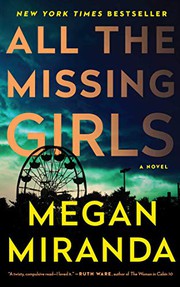
All the Missing Girls
2,064-word summary 9 min read 400 pages in the book
- First published
- 2016
- Publisher
- Simon & Schuster
- Pages
- 400
- ISBN
- 9781501107979
Reading options
What's inside (12 sections)
I read All the Missing Girls with a pencil for timelines, which the book both demands and rewards. Megan Miranda published it with Simon and Schuster in 2016, a 400 page thriller with ISBN 9781501107979. Nicolette Farrell returns to her North Carolina hometown to settle her father affairs and walks into two disappearances ten years apart. Corinne, her best friend, vanished a decade ago and was presumed drowned. Annaleise, a teenager, vanishes from the same fairground now. The novel tells fifteen days backwards, from Day Fifteen to Day One, so every revelation reframes what you thought you knew. Gimmick and engine at once. It works better than it should.
Nic, called Nic, left Cooley Ridge after Corinne night and built a Philadelphia life with a fiance who proposes with spreadsheets. Her father early Alzheimer empties the house of memory. Her brother Daniel stayed, working construction and nursing old guilt. Her ex Tyler stayed too, kind and stuck. Nic plans a fast sale. Then Annaleise disappears after talking to Nic at the fair. Police ask questions. Daniel acts strange. Tyler knows more than he says. Nic starts digging while lying to everyone about that night ten years ago when Corinne ran into woods and never came out. The backwards structure means you meet consequences before causes. A fight on Day Twelve makes sense only when Day Four arrives. Readers who trust narrators will be punished kindly. Nic lies by omission on nearly every page.
Backwards days
The reverse timeline deserves a technical note because Miranda commits fully. Each chapter is labeled Day Fifteen down to Day One, with timestamps inside. You learn who was where before you learn why. A bruise on Daniel on Day Thirteen gets its punch on Day Five. A receipt in Nic pocket on Day Eleven gets its store on Day Three. That design forces active reading. Keep a simple log. Who claims to have seen whom. What car was where. The payoff is not one twist but a cascade in the last fifty pages where Days Two and One flip the meaning of Days Fifteen through Three. Some readers find backwards motion distancing. Feelings arrive after facts, which cools urgency. Miranda compensates with present danger in each day. A search party. A confrontation. A car that follows. Cold cases stay warm because someone is always knocking now.
Cooley Ridge itself is drawn with exasperated love. A town that lives off a quarry swimming hole and a fairground, where everyone knows whose truck was where and lies about it for neighbors. Class lines run quiet. The Farrells have a big house and lake rights. Tyler family has less and stays anyway. Corinne family left bitterness behind. Annaleise family performs grief on camera while hiding debts. Miranda, who writes small towns well, lets gossip function as both comfort and cover. Casseroles arrive with questions. Search volunteers share rumors while handing water. That texture keeps the puzzle human. Girls go missing in places that feed searchers. Remember both.
Nic and Daniel
The sibling core carries the book past its trick. Nic and Daniel loved Corinne differently and failed her together. Daniel dated her. Nic envied her freedom. The night she vanished they chased her into woods, argued, and left her to walk home. She never arrived. Daniel has spent ten years drinking around that memory. Nic has spent ten years narrating around it. Their reunion scenes are the best written. Short sentences. Old jokes that die fast. A garage where they smoked as teens now holding their father boxes. Daniel knows Nic is lying about now the way she lied about then. Nic knows Daniel confession would cost him everything. They protect each other by withholding, which is love as practiced in guilty families. It takes the whole backwards walk for both to tell straight.
Tyler functions as the decent man the genre usually kills or corrupts. Ex boyfriend, current neighbor, first to search for Annaleise, last to accuse Nic. His steadiness makes Nic dishonesty visible. He tells truth even when it hurts him, like admitting he saw Daniel that night. Nic rewards him with more lies. Their almost rekindling never quite catches because trust left town with Corinne. That failed romance is sadder than any murder. Two kind people who cannot start clean in dirty air. Miranda lets Tyler walk away intact rather than twist him into a villain for surprise. Restraint worth applauding in a genre that suspects every nice boy.
The two girls
Corinne and Annaleise mirror without merging, which matters. Corinne was wild, older in manner, pushing against Cooley Ridge with plans to leave. Annaleise is younger, quieter, caught between divorced parents. Different girls. Same fairground. Same woods. The book refuses to make either a symbol. Corinne loved swimming and hated her stepfather rules. Annaleise loved horses and feared disappointing everyone. Their disappearances rhyme because the town repeats patterns, not because girls are interchangeable. Fathers drink. Boys drive too fast. Fair lights blind. Those conditions produce missing girls the way quarries produce deep water. Pretty and dangerous by design.
The solution, which I will frame without names, involves no stranger and no mastermind. Just young people making terrible choices in woods at night, then adults making worse choices to cover them. The final Day One chapter replays Corinne night from a angle that makes earlier lies legible. No one meant murder. Everyone meant silence after. That ordinariness is the horror Miranda aims for. Missing girls are rarely taken by monsters. They are lost to impulse, fear, and neighbors who decide some truths cost too much. Annaleise case resolves in parallel with harsher clarity because fresh evidence cannot be buried as deep. The town learns twice. Whether it changes is left open.
What works and what strains
What works is structure serving theme. Backwards telling mirrors how hometowns process scandal. Newest gossip first. Old causes last. Miranda writes Nic voice with controlled panic that fits reverse motion. She knows the ending but cannot face the start. Sentences tighten as days count down. Short chapters keep pages turning for a 400 page book that reads faster. Small town details feel lived rather than researched. Quarry jumps. Fair food. Lake houses with mold. Those textures ground the trick.
The strain is emotional distance and cast blur. Backwards motion cools urgency, as noted, and secondary men blur. Daniel, Tyler, and a detective all brood similarly in early chapters. Readers may need the log to separate trucks and alibis. The fiance in Philadelphia exists to be left, with little interior life. A subplot about Nic father house sale stalls while searches run. Still, the last hundred pages repay patience. Days Three to One land like dominoes set up across 300 pages. Rereading early chapters after finishing is genuinely fun. Clues were fair. Lies were flagged by tense shifts most will miss first time.
Who it is for
Read it if you like thrillers with structural bets, or want missing girl stories that indict towns rather than strangers. It pairs well with Sharp Objects for sister wounds and The Dry for small town cover ups. Content notes include teen disappearance and presumed death, drowning discussed, driving under influence, domestic violence in backstory, and grief with early dementia. Suitable for older teens and up.
I finished thinking about fairgrounds after closing. Lights, noise, teenagers scattering to dark edges while parents eat fried dough. Every town has one. Most nights end with rides home. Some end with woods. Miranda book honors both outcomes by showing how thin the line runs. Bad luck. Bad temper. Bad silence after. All the Missing Girls counts its days backwards so you feel the line tighten. By Day One you understand what Day Fifteen cost. That understanding does not bring girls back. It warns the living to speak sooner. Tell where you go. Tell what you saw. Do not let woods keep your sentence.
Craft note
If the backwards structure confuses, try reading Days Fifteen to Eight normally, then slowing for Seven to One with notes. Miranda plants physical anchors. A watch. A jacket. A receipt. Track objects rather than motives. Motives lie. Objects stay where left. That method cracks the book open without spoiling its final turn. The last line lands harder when you remember the first image. A car. A road. A girl walking where she should not have to walk alone.
The father house
Nic father house deserves its own note because property drives the plot as much as passion. A big lake house emptying as its owner fades, full of boxes, guns, and lake rights worth money. Nic wants to sell fast to fund her city life. Daniel wants to keep it as anchor. Developers circle. That tension forces Nic to stay past the weekend she planned. Each room searched for papers reveals family layers. A hunting rifle with history. A photo of Corinne on the dock. A receipt that places a truck somewhere fatal. Houses in thrillers often just host. This one testifies. Floorboards remember what siblings forgot. Miranda, who writes domestic suspense well, lets the sale stall until truth surfaces. You cannot sell a house holding bodies of memory. Clean it first. That cleaning takes fifteen days backwards and one long night forwards.
Annaleise family
Annaleise parents show grief performed versus grief lived. Her mother cries on camera and organizes searches with color coded vests. Her father drinks and threatens. Both love their daughter in ways that help and hinder. Media attention brings tips and liars together. A psychic calls. A trucker confesses falsely. The family must sort signal from noise while fearing the worst. Miranda treats them with respect rather than suspicion for most of the book, which makes the final facts hit harder. Ordinary families under cameras behave strangely without guilt. Remember that when judging their interviews. Grief has no blocking. The parents sleep in shifts by the phone. That phone, silent for days, rings once with news that changes everything. Answer it standing. You will need your legs.
The quarry hole
The quarry swimming hole functions as town memory in water form. Teens jump from cliffs every summer. Corinne swam there the day she vanished. Annaleise photos show her there days before. Police drag it without hope. Nic remembers Corinne daring dives while others watched. That water holds every town summer and one town secret. Miranda uses it sparingly, which gives each mention weight. A search boat. A found shoe. A dive no one admits. Water keeps what woods give up. When the final facts surface, the quarry stays quiet rather than yielding bodies theatrically. Some holes keep their dead. The town swims anyway because heat demands it. That coexistence, play above graves, defines Cooley Ridge more than any trial. Fun and dread share the same water. Learn to swim in both.
Daniel truck
Daniel truck deserves its own paragraph as evidence and character. Old, dented, seen everywhere on key nights, the truck places Daniel at scenes he denies attending. He lies about mileage, passengers, and timing in small ways that stack. Nic covers for him automatically, sibling habit older than the crimes. That cover up costs them both credibility with police who notice. Trucks in small towns testify better than people. Everyone knows whose engine knocks. Miranda tracks the truck across days like a third sibling. Where it parked. Whose hair was in the bed. What receipt matches its gas. By Day One the truck route maps the whole tragedy without a confession needed. Objects convict where mouths protect. Check the bed. Read the miles. The truth rode shotgun all along.
Nic fiance Everett, often background in summaries, matters as the outside view that fails. Kind, organized, proposing with timelines, he loves Nic without understanding Cooley Ridge gravity. His calls from Philadelphia sound thin against quarry water and fairground noise. Nic lies to him most easily because he wants clean stories. When she finally tells partial truth, he offers solutions that miss. Hire lawyers. Sell fast. Leave. All sensible. All impossible while Annaleise is missing and Daniel shakes. Everett exits without villainy, which honors decent partners who cannot follow into hometowns. Some loves work only on clean roads. Cooley Ridge roads run muddy. Nic chooses mud over marble. That choice costs her the engagement and returns her to herself. Fair trade, the book implies. Somewhat.
FAQ
When was All the Missing Girls published?
Simon and Schuster published it in 2016. The paperback runs 400 pages and the ISBN is 9781501107979.
Who are the main characters?
Nicolette Farrell, her brother Daniel, Tyler, Annaleise who vanished, and Corinne who vanished before.
Is it part of a series?
No. It stands alone.
Similar books
The Last House Guest
A year after her best friend dies in Littleport, Maine, a local woman finds a hidden phone that reopens the case.
2,596-word summary · 12 min read

The Other Mrs.
A Chicago family inherits a house on a Maine island, then a neighbor is found murdered. Kubica's 2020 thriller builds to a final reframe.
2,267-word summary · 10 min read

What Lies in the Woods
Naomi returns after Olivia vanishes to face what happened in the woods at eleven.
2,213-word summary · 10 min read

Such a Clever Girl
Fifteen years after the Tanners vanished, Aubrey returns at 30 as a new disappearance forces three women to face old secrets.
2,203-word summary · 10 min read

Six Years
A professor who promised to forget the woman he loved sees her husband's obituary and discovers that the wedding, the marriage, and the woman herself may never…
2,076-word summary · 9 min read

Worth Dying For
Reacher stops for one night in rural Nebraska and finds a family that runs the county, a missing girl and a shipment worth killing for.
2,021-word summary · 9 min read

The Best of Friends
Three lifelong friends discover their teenage sons were hiding more than anyone knew after a night that leaves one dead, one in a coma and one silent.
2,040-word summary · 9 min read

Say You're Sorry
A widowed prosecutor defends the teenager accused of killing her babysitter, uncovering a small town's secrets and a killer hiding in plain sight.
2,116-word summary · 9 min read
The Survivors
Kieran Elliott returns to Evelyn Bay twelve years after a storm killed his brother, and a young woman's murder forces the town to face what it has concealed.
2,571-word summary · 11 min read

Girl, Forgotten
A rookie US marshal guards a judge with a stalker and ends up reopening the 1982 prom-night murder of the judge's pregnant daughter.
2,111-word summary · 9 min read

The Boy from the Woods
Wilde, found feral in a New Jersey forest in 1986, hunts for a missing teenager while a senator's secrets tear a wealthy town apart.
2,270-word summary · 10 min read
The Affair
In 1997, Reacher goes undercover in a Mississippi town where a murder near an army base collides with a senator's power. The case that ends his military career.
2,039-word summary · 9 min read
Blindsighted
Sara and Jeffrey hunt a killer staging women in small-town Georgia.
2,400-word summary · 11 min read

Keep It in the Family
Mia and Finn renovate a long empty house and find seven children hidden in the attic.
2,270-word summary · 10 min read

Every Last Secret
A wealthy wife tracks a possible affair, but dinners, therapy, and a sudden death expose buried secrets across two polished suburban marriages and force her to…
2,687-word summary · 12 min read
Bring Me Back
Finn lost Layla at a French rest stop twelve years ago. Now engaged to her sister Ellen, he faces sightings, emails and Russian dolls that reopen everything.
2,912-word summary · 13 min read
The Cousins
Three cousins work at their rich grandmother island resort while digging into why their parents were cut off.
2,565-word summary · 11 min read

Reconstructing Amelia
A grieving lawyer mother reopens her teen daughter's alleged suicide at an elite Brooklyn school, uncovering bullying and secrets.
2,032-word summary · 9 min read

Pieces of Her
After her mother kills a mall shooter with shocking skill, Andy Oliver uncovers a hidden 1980s past of radicals and wealth.
2,791-word summary · 12 min read
The Storm
A struggling innkeeper, a returning murder suspect, and a true crime writer collide as another hurricane bears down on the Alabama coast.
2,349-word summary · 10 min read
The First Time I Saw Him
Five years after Owen vanished, Hannah and Bailey have rebuilt in California until Owen walks into her exhibition and danger returns.
2,407-word summary · 11 min read
Strangers in the Villa
A strained couple in a Spanish villa takes in guests who refuse to leave.
2,208-word summary · 10 min read
Someone We Know
A teen burglar, two unsigned apology letters, and a murdered neighbor wife turn a quiet suburb paranoid.
2,743-word summary · 12 min read

My Husband's Wife
Artist Eden Fox returns from a run to find her key fails at Spyglass and her husband claims a stranger is his wife in Hope Falls.
2,437-word summary · 11 min read

Anatomy of an Alibi
Two Louisiana women swap lives for twelve hours to spy on a husband, then he turns up murdered and only one of them has an alibi.
2,278-word summary · 10 min read

All the Little Houses
In 1980s Longview, Texas, social queen Charleigh and daughter Nellie guard mean-mom secrets when a new family threatens their empire.
2,206-word summary · 10 min read

Two Can Keep a Secret
Twins new to Echo Ridge dig into aunt's murder as homecoming threats return.
2,078-word summary · 9 min read
The Truth About the Harry Quebert Affair
A blocked writer tries to clear his mentor Harry Quebert after a girl missing since 1975 is found buried with his famous manuscript.
2,192-word summary · 10 min read
The Good Sister
Twin sisters share a careful arrangement until a plan to have a baby pulls old family secrets into view.
3,255-word summary · 14 min read

Listen for the Lie
Lucy Chase cannot remember the night her best friend Savvy died in Plumpton, Texas, until a true crime podcast pulls her back.
2,160-word summary · 10 min read