
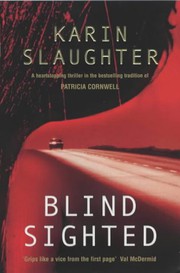
Blindsighted
2,400-word summary 11 min read 310 pages in the book
- First published
- 2001
- Publisher
- HarperCollins
- Pages
- 310
- ISBN
- 9780712694100
- Series
- Grant County (#1)
Reading options
What's inside (7 sections)
I picked up Blindsighted because I wanted to see how Karin Slaughter started, before Will Trent and the bigger Atlanta books. Published in 2001 as the first Grant County novel, running 310 pages in the Century edition tied to ISBN 9780712694100 and issued in the US by HarperCollins, it introduces Dr. Sara Linton, pediatrician and part time coroner for Grant County, Georgia, and her ex husband Jeffrey Tolliver, chief of police in the small town of Heartsdale. The case is brutal from the first chapter. A young college professor is found dead and mutilated in a diner bathroom. A second woman is found displayed like a crucifixion a few days later. A third woman, a cop, goes missing. I expected a standard small town procedural. What I got was darker and more personal, a book where the investigation keeps circling back to Sara own buried assault twelve years earlier in Atlanta.
Heartsdale matters as a setting. It is the kind of Georgia town where people know your parents, your church, your parking spot. Sara works at the clinic with children she has known since birth and takes coroner calls because the county needs someone steady. Jeffrey runs a small force with old loyalties and old grudges. His senior man Frank Wallace is competent and protective of the town way. Young detective Lena Adams is fierce, prickly, and trying to prove she belongs. Sara younger sister Tessa still lives close enough to drop in unannounced. The diner where everything starts, the Grant filling station, is the sort of place where lunch runs late and the bathroom door sticks. That ordinariness makes the first crime harder to absorb.
A body in the diner
Sara is late for lunch with Tessa when she finds Sibyl Adams in the diner bathroom. Sibyl is a professor at the local college, blind since childhood, and the identical twin of Lena. She is dead on the toilet, blood pooled, with two deep knife cuts forming a cross over her abdomen. Sara, trained to act, tries to help and quickly understands there is no helping. She calls Jeffrey. The scene freezes into that strange procedural calm where everyone speaks quietly and moves too carefully.
The autopsy tells a worse story. Sibyl was raped, including assault with the knife wound itself, and drugged with a large dose of belladonna, the nightshade plant that dilates pupils, raises temperature, steals voice, and clouds memory. The cross cuts meet at a stab from a double edged blade. There are signs she was silenced in a cruel way that fits with her blindness and helplessness. Sara tells Jeffrey plainly that this is ritual work and not a one off fight. Someone staged this. Someone will do it again.
Lena reaction is immediate and raw. She accuses Sara of failing to save her sister, swings at Jeffrey, then folds. She demands to work the case. Jeffrey, who knows grief makes bad decisions, tries to keep her at the edge. He pairs her with a junior man and gives her busywork. She disobeys, as you expect she will, and interviews witnesses on her own. I found Lena hard to like here and hard to dismiss. She is rude to Sara, insubordinate to Jeffrey, and openly contemptuous of procedure. She is also a twin who just lost the other half of her language. Slaughter does not sand her down. That choice pays off later, but in the first hundred pages you may want to shake her.
A fair criticism belongs early. Slaughter writes violence without looking away, and this book is graphic in a way that will stop some readers cold. The assaults are described through medical findings, which makes them precise rather than vague. Precise helps the mystery, because clues hide in the findings, but it also means you read details about wounds, drugs, and bodily fluids that other thrillers would fade out. If you are sensitive to sexual violence, this is not a book to push through. The violence is central, not decorative, yet its weight is heavy from the start and never quite lifts.
Crucified on a car
While Jeffrey and Frank chase registered offenders and ex boyfriends, a second woman vanishes. Julia Matthews, twenty three, a college student, has been missing two days. Her ex boyfriend talks big and knows little. Lena, left to stew, pulls a false confession out of him that collapses against the facts, which tells Jeffrey two things. The boyfriend is not the killer, and Lena can interrogate when she controls her temper.
Then the killer puts Julia where Sara cannot miss her. While Jeffrey is in hospital after taking buckshot guarding a Black busboy threatened over the first murder, Sara walks out to the lot and finds Julia nude on the hood of her own car, arms spread, feet crossed, mouth taped, license forced down her throat. Her front teeth are gone. Her body has been scrubbed with bleach. Her hands and feet are pierced. Her heart stops as Sara works. Sara cracks her chest in the parking lot and massages the heart back. Julia lives long enough to reach hospital and to speak a little.
Julia account is fragmentary and awful. A man bumped her near the library, stuck her with a needle, kept her in a dark basement with dripping water. She is drugged, ashamed, confused about kindness shown between assaults. When Lena interviews her, Julia says the man made love to her, and Lena flinches in a way Julia sees. Minutes later Julia seizes Lena gun and kills herself. It is a shocking turn that Slaughter handles without sermons. A young woman saved from a killer does not feel saved. The system that was supposed to protect her, hospital, police, interview room, becomes another small dark room. I thought this was the bravest and bleakest section of the book, and also the point where some readers will decide Slaughter is too grim for them. I did not blame Julia for despairing, which made Lena guilt afterward harder to watch.
Sara second autopsy work yields two breaks. Belladonna berries in the stomach, pointing to local sourcing and planning. And a small handcuff key hidden in the body, its sharp edge torn through the attacker condom. That tear means DNA. For the first time the investigation has biology instead of only staging. It is good police work wrapped in grim labor, and Slaughter gives Sara full credit for staying steady through it. She also shows the cost. Sara vomits, washes, goes back in. She treats the dead with the same gentleness she uses on living children, which is why Jeffrey trusts her findings even when they fight about everything else.
What Sara never told
The middle of the book shifts from who killed Sibyl to what happened to Sara. Twelve years earlier, as a resident at Grady Hospital in Atlanta, Sara was raped in a bathroom by a janitor named Jack Allen Wright. He handcuffed her, taped her mouth, assaulted her, stabbed her, and poured vinegar into her mouth while quoting scripture about finishing. She became pregnant. The pregnancy was ectopic. She lost part of her ability to have children through surgery that followed. She testified. He went to prison and later to monitored release with chemical castration. Every year he sends her a postcard to remind her he remembers. She kept the transcript. She kept the ring from her marriage too, though she told Jeffrey she threw it away.
Slaughter reveals this slowly, through Tessa pushing Sara to tell Jeffrey, through Sara leaving the transcript where Jeffrey will find it, through Jeffrey driving to Atlanta to confront Wright instead of staying home. The confrontation is ugly. Wright taunts, claims innocence about new harassment, points to his bracelet and medication. His parole officer holds him on violations after Jeffrey finds an illegal gun, but the reader understands Wright is a parallel horror, not the Heartsdale killer. His function is to show what Sara survived and what Jeffrey failed to hear the first time. Their marriage broke partly because she could not speak and he did not know how to ask.
I have mixed feelings about how much weight this backstory carries. On one hand, it explains Sara guardedness, her care with victims, her refusal to be pitied, and her fury when Lena treats her as a rival instead of an ally. On the other, it stacks traumas. Dead professor with a twin sister. Crucified student who dies by her own hand after rescue. Coroner with a rape and infertility and an annual taunt from her attacker. Cop ex husband with guilt and a temper. At times Heartsdale feels less like a town and more like a ward for the wounded. Slaughter keeps the prose grounded enough that it works, but readers who prefer one wound per book may find the layering excessive. I did in places, especially when every interview seemed to trigger another memory.
The procedural work around this section is solid and specific. Jeffrey maps where belladonna could grow and who would know dosage. Frank quiets a racial harassment incident without paperwork, which tells you how this force polices its own. Lena house is searched after she vanishes, and a slur carved inside a cabinet matches marks found on Sara car, Sibyl classroom board, and Julia textbook. That match pulls the case toward someone who has been near all three women without seeming near. Employment records from Grady become the bridge. A girl who died under Sara care the day Sara was attacked. A pharmacy intern on duty that same season. A quiet man now working in Heartsdale, dating Sara casually, filling prescriptions with a smile.
The pharmacist next door
The killer is Jeremy Jeb McGuire, the town pharmacist Sara has been seeing lightly. His younger sister Sally died at thirteen under Sara care at Grady after pregnancy from his own abuse of her, a death he blames on Sara rather than himself. He trained, moved to Grant County, waited, courted proximity, and staged victims for Sara to find. He drugs Lena and holds her nailed to an attic floor behind a false panel. He drugs Sara wine with vinegar, a signature from her old attack that tells her who he is before he says it. The photograph on his wall matches the one she saw in a Grady waiting room twelve years before. That click is the coldest moment in the book, colder than the autopsy scenes, because it turns a small kindness, dating a polite widower type, into years of being watched.
Slaughter stages the last fight in Sara house and at the lake without making Sara superhuman. She refuses him, fights badly and bravely, crashes through a bedroom window, runs barefoot, swims for rock shallows she knows from childhood summers. Jeb follows by boat, hits the rocks, cannot swim, strikes his head. Sara tries to save him even then, because that is who she is, and fails. Jeffrey arrives to pull her from cold water. They find Lena in the attic, alive, broken, furious to be seen that way. Sara tells her Jeb is dead and understands in one look that death will not end what he did to Lena. It is a restrained exchange after so much blood, and it lands harder for being spare.
Afterward, Sara tells Jeffrey she will resign as coroner to cut him out of her life. He refuses the premise, declares love, stays. She fishes her old wedding ring from a sink trap and lets him pick a fist. He pockets it and asks to bring dinner. She says yes. The reconciliation is tentative rather than triumphant, which fits two people who communicate best over bodies and worst over breakfast. Some readers will find the romance too neat after horror. I found it honest in its incompleteness. They are not healed. They have agreed to eat dinner and see.
Who it suits and where it strains
Blindsighted works as a debut because Slaughter commits to procedure and to cost. The medicine is detailed. Pupils, temperatures, tape residue, bleach versus DNA, berries versus injection, condom tear versus key edge. The policing is small town true. Short staff, overlapping roles, bars and churches as intelligence networks, old racial lines that flare when fear rises. The triangle of Sara, Jeffrey, and Lena carries the theme without speeches. Sara holds pain inward. Jeffrey acts outward. Lena attacks outward to avoid feeling inward. By the end each has failed the others at least once and shown up at least once, which feels like how real teams survive bad cases.
The strains are real and worth naming. The book is long on suffering and short on air. Heartsdale gets little ordinary life between crimes. Tessa offers a flash of sister humor, and a few clinic scenes with children remind you Sara has a day job, but most pages smell of morgue or interview room. Lena spends much of the book unlikable in ways that test patience, though I think that is deliberate and mostly redeemed by what she endures and how Sara treats her after. The reveal leans on coincidence. That the pharmacist is both the grieving brother from Atlanta and Sara current casual date, that victims align so neatly for Sara to find, that records arrive just in time. Mystery plots often lean this way, but here the lean is visible. And the prose, while direct and propulsive, sometimes explains motive twice, once in action and once in reflection. A firmer cut would have helped the middle hundred pages move faster.
Still, I finished with respect for what Slaughter attempted first time out. She wrote a small town where evil is not a stranger passing through but a neighbor filling bottles, where a blind professor brilliance does not save her, where a student rescue fails, where a detective sister survives by hating the pity she also needs. She gave Sara competence without coldness, Jeffrey decency without heroics, and a killer whose logic is sickeningly clear once named. If you want cozy crime, look elsewhere. If you want to start Grant County to understand Sara before later books test her further, start here, in Heartsdale in 2001, 310 pages in this edition, with a diner bathroom and a car hood and a lake so cold it burns. Read in daylight. Leave room between chapters. This one stays.
FAQ
Is Blindsighted the first Grant County book?
Yes. It appeared in 2001 as Grant County 1 and introduces Sara Linton, Jeffrey Tolliver and Lena Adams in Heartsdale.
Is Blindsighted very graphic?
Yes. Assaults and autopsies are described in medical detail, and Julia death after rescue keeps the tone bleak throughout.
Do Sara and Jeffrey get back together?
Partly. They agree to dinner and he keeps her old ring, but trust is still thin after secrets about Grady and the case.
Similar books
More from Grant County first, then related titles.
Triptych
A GBI agent with dyslexia hunts a rapist while two Atlanta cops hide pasts.
2,576-word summary · 11 min read

Rules of Prey
Minneapolis detective Lucas Davenport hunts a killer who leaves a new rule at every scene and treats murder as a game of wits.
1,914-word summary · 9 min read

3rd Degree
The third Women's Murder Club novel follows a San Francisco terror cell and a three-day killing schedule, and it costs the club a member.
2,685-word summary · 12 min read

Worth Dying For
Reacher stops for one night in rural Nebraska and finds a family that runs the county, a missing girl and a shipment worth killing for.
2,021-word summary · 9 min read

Say You're Sorry
A widowed prosecutor defends the teenager accused of killing her babysitter, uncovering a small town's secrets and a killer hiding in plain sight.
2,116-word summary · 9 min read
The Survivors
Kieran Elliott returns to Evelyn Bay twelve years after a storm killed his brother, and a young woman's murder forces the town to face what it has concealed.
2,571-word summary · 11 min read
The Poet
A crime reporter investigates his twin brother's apparent suicide and uncovers a killer who leaves Edgar Allan Poe quotes behind, in the novel that took…
2,020-word summary · 9 min read
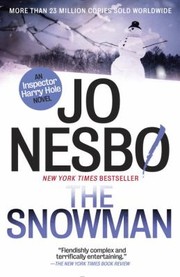
The Snowman
After the first snow, a mother vanishes and Harry Hole links her pink scarf to eleven missing women.
2,750-word summary · 12 min read
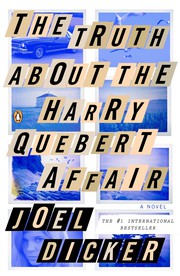
The Truth About the Harry Quebert Affair
A blocked writer tries to clear his mentor Harry Quebert after a girl missing since 1975 is found buried with his famous manuscript.
2,192-word summary · 10 min read
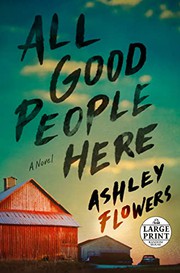
All Good People Here
A journalist returns home to care for her uncle and reopens a 20 year old child murder tied to a new abduction.
2,006-word summary · 9 min read

Girl, Forgotten
A rookie US marshal guards a judge with a stalker and ends up reopening the 1982 prom-night murder of the judge's pregnant daughter.
2,111-word summary · 9 min read
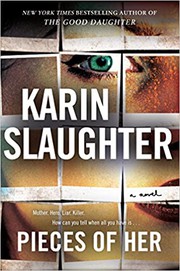
Pieces of Her
After her mother kills a mall shooter with shocking skill, Andy Oliver uncovers a hidden 1980s past of radicals and wealth.
2,791-word summary · 12 min read
The Good Daughter
Twenty eight years after a home invasion shattered her family, a lawyer witnesses a school shooting that reopens old wounds.
2,505-word summary · 11 min read
Pretty Girls
Estranged sisters Claire and Lydia reunite after a murder exposes snuff films, their sister Julia's fate, and a killer near Lydia's daughter.
2,498-word summary · 11 min read

What She Knew
Rachel lets her eight-year-old son run ahead in a Bristol park, and the nine-day search turns her into a suspect in the public eye.
2,952-word summary · 13 min read

The Beach House
A young valet is beaten to death at a Hamptons party, and his law-student brother spends a year building a case against the family that covered it up.
2,049-word summary · 9 min read

Six Years
A professor who promised to forget the woman he loved sees her husband's obituary and discovers that the wedding, the marriage, and the woman herself may never…
2,076-word summary · 9 min read

How the Light Gets In
Gamache investigates the murder of the last Ouellet quintuplet while the Sûreté he served is dismantled from inside by the man who took his protégé.
2,279-word summary · 10 min read

Bury Your Dead
Recovering from a failed raid that killed his officers, Gamache investigates a murder in a Quebec City library while Beauvoir reopens a case in Three Pines.
2,022-word summary · 9 min read

The Trespasser
A Dublin Murder Squad detective investigates a staged dinner-party killing and finds a cover-up that reaches into her own department.
2,051-word summary · 9 min read

The Late Show
Exiled to the LAPD night shift after accusing her supervisor, Renée Ballard keeps two cases that were meant to be handed off at dawn: a brutal assault and a…
2,563-word summary · 11 min read

4th of July
Lindsay Boxer shoots two armed teenagers in self-defense, faces a wrongful-death trial, and spends her leave chasing a string of throat-slashing murders in…
2,192-word summary · 10 min read

The Camel Club
Four Washington misfits witness a murder on Roosevelt Island and stumble into a conspiracy that reaches the Oval Office, with a hostage president and a nuclear…
2,354-word summary · 10 min read

61 Hours
A bus crash strands Jack Reacher in a snowbound South Dakota town where a drug gang, a corrupt police force, and a single witness are on a collision course.
2,227-word summary · 10 min read
The Last Mile
Melvin Mars is hours from execution for his parents' murder when another man confesses, and FBI cold case detective Amos Decker goes looking for the trap.
2,746-word summary · 12 min read

Still Missing
A realtor is abducted at a Vancouver Island open house and held for more than a year. Told through therapy sessions, the novel follows her escape and the hunt…
2,466-word summary · 11 min read

Bad Luck and Trouble
A deposit of $1,030 summons Jack Reacher back to his old army unit, which is being picked off one name at a time.
2,366-word summary · 11 min read
Finlay Donovan Knocks 'Em Dead
Someone has put a contract on Finlay Donovan's ex-husband, and the novelist and her nanny have to find the hitman before the school pickup.
1,990-word summary · 9 min read

Echo Burning
Reacher hitches a ride with a Texas woman who wants her abusive husband killed, then has to prove she did not murder him when he comes home.
2,209-word summary · 10 min read
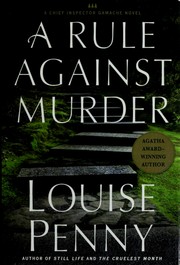
A Rule Against Murder
Gamache's anniversary at a remote lodge turns into a closed-circle murder when the family statue kills Julia, and everyone at the Manoir had a reason.
2,201-word summary · 10 min read