
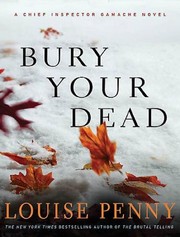
Bury Your Dead
2,022-word summary 9 min read 371 pages in the book
- First published
- 2010
- Publisher
- Minotaur Books
- Pages
- 371
- ISBN
- 9780312377045
- Series
- Chief Inspector Armand Gamache (#6)
Reading options
What's inside (10 sections)
Louise Penny's sixth Gamache novel opens with a mistake. Not a small one. Chief Inspector Armand Gamache is in an abandoned factory with a tactical team, counting down the seconds before a raid, and he understands that he has misread the situation. The book then jumps forward, and for the next four hundred pages it keeps jumping back, doling out the disaster in fragments while Gamache tries to recover in Quebec City. It is the most structurally ambitious book in the series so far, and it is also the one where Penny asks the most of her readers.
The premise is simple enough. Gamache is on leave after a police operation went catastrophically wrong. Three officers are dead, several are wounded, and Gamache blames himself. His wife sends him to Quebec City to rest. His mentor, Émile Comeau, is there. The Winter Carnival is starting. Gamache decides to spend his time researching the Battle of the Plains of Abraham at the Literary and Historical Society, a venerable English-language institution with a beautiful library and a basement full of secrets.
Then a body turns up in that basement, and the vacation is over.
The Lit and His
The dead man is Augustin Renaud, an amateur archaeologist who has spent his life trying to find Samuel de Champlain's grave. Champlain founded Quebec City in 1608, and nobody knows where he is buried. Renaud believed the answer was under the Literary and Historical Society, and he had been pestering the board for years to let him dig. He was found at the bottom of the subbasement stairs, killed by a shovel. The subbasement was scheduled to be cemented over within days.
Penny uses the murder to open up a closed world. The Lit and His is run by a board of Anglophone Quebecers who are proud of their institution and aware that it is a relic of a time when English speakers ran the city. There is Elizabeth MacWhirter, formidable and sharp. There is Porter Wilson, who gives a radio interview that makes everything worse. There is Winnie, the librarian, who knows where everything is. And there is the young Presbyterian minister, Thomas Hancock, who sat on the board for eighteen months and seems to know more than he says.
The historical material is dense. Gamache learns about the 1869 dig that may have uncovered Champlain's coffin, about a priest named Chiniquy who preached against alcohol, about a doctor named James Douglas who founded a mental hospital after fleeing the United States for robbing the wrong grave. He learns that the portrait everyone thinks is Champlain may actually be of Louis XIII's accountant. He learns that the society sold off boxes of books, and that two of them are missing.
That last detail is the key. The missing books are a diary and Champlain's bible, and the bible suggests something that would complicate the founding story of French Canada: Champlain may have been a Huguenot, a Protestant. The coffin in the basement, when it is finally opened, contains the skeleton of a woman. The past, in this novel, is not a tidy inheritance. It is a set of compromises and cover-ups that people have agreed not to look at too closely.
The confession
The solution to the Lit and His murder is less important than the scene where it arrives. Gamache, walking his dog in a blizzard on the Plains of Abraham, finds Thomas Hancock in a stone turret, planning to kill himself. Hancock confesses. He killed Renaud because Renaud was about to make the secret public, and Hancock believed he was the only person who could stop it. The confession is quiet and sad. Hancock is not a monster. He is a man who decided that one life was worth less than a story, and then discovered that the decision did not make him feel righteous.
Penny is good at this kind of moral inversion. Her killers are rarely purely evil. They are people who have convinced themselves that the harm they do is necessary, and the novel's job is to show the cost. Hancock's cost is his soul, and Gamache's response is not triumph. It is exhaustion.
Three Pines
The second plotline takes place in Three Pines, where Jean-Guy Beauvoir has been sent to reopen the case that ended the previous book. Olivier Brulé, the bistro owner, is in prison for murdering a hermit who lived in the woods. Olivier's partner, Gabri, has been writing to Gamache every day with the same question: why would Olivier move the body?
It is a good question, and it unravels the conviction. Beauvoir returns to the village, which is full of snow and old friends and new suspects, and begins to reconstruct what happened. The hermit was a recluse who carved beautiful things. Olivier found him, traded food for art, and sold the art for a fortune. When the hermit was killed, the weapon was found in Olivier's possession, and the case seemed closed. But the hermit's identity was never clear, and the people who had reason to hate him are still in the village.
The resolution is a tangle of old grievances. The hermit was not who everyone thought. He was the father of Old Mundin, a local man who had believed his father was dead. Old Mundin recognized his father's treasures in an antique shop, traced them to Olivier, and came to Three Pines looking for the man who had stolen them. When he found the hermit, he killed him with a menorah, not for the treasure but for the betrayal. The cruel irony is that the hermit had faked his own death and abandoned his family, and the son who killed him had been grieving a man who was still alive.
Beauvoir's investigation is the warmest part of the book. Three Pines is a comfort, even in winter, and the villagers are glad to see him. But Beauvoir is not well. He was shot in the raid, and he is carrying pain and pills and a secret. His scenes with Ruth, the foul-mouthed poet, are the best in the novel. She does not ask him to be brave. She just sits with him and lets him be broken.
The raid
The third plotline is the one that gives the book its title and its weight. Penny reveals the disaster in flashbacks: the kidnapped agent, Paul Morin, a young man who played the violin and was about to be married. The phone call Gamache takes from him. The hours of trying to trace the call. The raid on the factory, the ambush, the dead officers, Beauvoir shot, Gamache shot. The video of the aftermath released online, apparently by someone inside the Sûreté.
The flashbacks are interleaved with the present so that the reader learns the truth at the same pace as Gamache's memory allows. It is an effective technique, and it makes the final chapters almost unbearable. Gamache's guilt is not abstract. He spoke to Morin on the phone. He promised to find him. He told him to trust him. And then Morin died, and Gamache was not there.
The political dimension is handled with a light touch. Superintendent Francoeur, Gamache's rival, appears to be involved in the leak, and the novel suggests that the Sûreté is a place where careers matter more than lives. But Penny does not turn it into a conspiracy thriller. The real subject is grief, and the way a man who has spent his life being competent has to learn how to live after a failure he cannot fix.
The flashbacks also let Penny show the mechanics of a police operation without pretending they are glamorous. There are radios, maps, chains of command, and a great deal of waiting. The raid itself is over in minutes. The consequences take the rest of the book. That ratio is the most honest thing in the novel.
The ending
The novel ends with two returns. Gamache and Beauvoir drive Olivier back to Three Pines, where he is reunited with Gabri. Olivier cannot forgive Gamache yet. He says so plainly, and Gamache accepts it. The village welcomes him home, and the bistro fills with noise and food, and the reader feels the relief of a wrong made right.
Then Gamache goes for a walk alone. He sees Morin's body, found too late. He apologizes. He asks for forgiveness. And this time there is no answer. The silence is the point. Penny has spent the whole book showing us a man who talks to the dead, who imagines their voices, who needs their approval. At the end, he has to let go of that too.
What works and what does not
Bury Your Dead is the most complex book in the series, and complexity has costs. The Lit and His mystery is rich but crowded. There are too many board members, too many historical detours, too many names that sound alike. The 1869 dig and the Chiniquy subplot are fascinating, but they slow the book down, and the final revelation about Champlain's coffin is more interesting as an idea than as a payoff.
The Three Pines plot is stronger because it is simpler and because it is about people we already care about. Old Mundin's confession is genuinely shocking, and the revelation that the hermit was his father is the kind of twist that reconfigures everything before it. But it also depends on a coincidence: that the son would end up in the same village as the father who abandoned him. Penny earns it emotionally, if not quite logically.
The raid is the heart of the book. It is the reason Gamache is in Quebec City, the reason he cannot sleep, the reason he takes on a murder investigation he has no business taking on. The flashback structure works, and the final revelation of how many officers died is handled with restraint. Penny does not glorify the violence. She shows the aftermath: the funerals, the phone calls, the empty chair.
In the series
Bury Your Dead sits at the center of the Gamache series, and it is a turning point in several ways. The raid changes Gamache's relationship with the Surete, and the fallout carries into later books. The Three Pines plot closes a story that had been running since The Brutal Telling. The Quebec City plot introduces a new setting and a new set of institutional characters, and it shows Penny stretching beyond the village that made her name.
It also marks a shift in the series' emotional register. The earlier books are about puzzles and village life, with a growing sense of menace underneath. This one is about trauma. Gamache is not the same man at the end, and the series is not the same series. Penny has said that she wanted to write about what happens to a good man after a failure he cannot undo, and that is exactly what the novel does.
The risk of that choice is that the book becomes a therapy session with a mystery attached. It does not, quite, because Penny keeps the plot moving and because the supporting characters carry their own weight. Beauvoir's pain, Ruth's blunt kindness, Émile's patience: these are not decoration. They are the reason the novel works as more than a procedural.
The verdict
This is a book about burying the dead, and about the difference between burying them and leaving them. Gamache cannot leave Morin. Olivier cannot leave the hermit. Hancock cannot leave Champlain. Everyone in the novel is haunted by a past they thought they had put away, and the mystery plot is a way of making that haunting concrete.
It is not the place to start the series. It depends too heavily on the previous book, and it assumes you already know and love Three Pines. But for readers who have followed Gamache this far, it is one of the richest entries. It is sad, smart, and deeply humane, and it understands that the hardest part of grief is not the loss. It is the silence afterward.
FAQ
Who killed Augustin Renaud in Bury Your Dead?
Thomas Hancock, the young Presbyterian minister and former board member of the Literary and Historical Society, killed him with a shovel to keep the secret about Champlain's remains from becoming public.
Do I need to read The Brutal Telling first?
Yes. Bury Your Dead resolves the Olivier Brulé case from The Brutal Telling and assumes you know the Three Pines characters and the hermit's murder.
What happened in the raid that Gamache blames himself for?
A rescue operation for the kidnapped agent Paul Morin turned into an ambush. Three Surete officers were killed, Beauvoir and Gamache were wounded, and Gamache believes his misreading of the situation caused the deaths.
Similar books
More from Chief Inspector Armand Gamache first, then related titles.

Still Life
A beloved teacher found with an arrow in Three Pines looks like hunting accident until Gamache looks closer.
1,996-word summary · 9 min read
A Fatal Grace
Gamache returns to Three Pines for Christmas where hated CC de Poitiers is electrocuted on a frozen lake.
2,339-word summary · 10 min read
The Cruelest Month
Gamache returns to Three Pines where a seance ends in murder.
2,529-word summary · 11 min read
A Rule Against Murder
Gamache's anniversary at a remote lodge turns into a closed-circle murder when the family statue kills Julia, and everyone at the Manoir had a reason.
2,201-word summary · 10 min read
How the Light Gets In
Gamache investigates the murder of the last Ouellet quintuplet while the Sûreté he served is dismantled from inside by the man who took his protégé.
2,279-word summary · 10 min read

The Trespasser
A Dublin Murder Squad detective investigates a staged dinner-party killing and finds a cover-up that reaches into her own department.
2,051-word summary · 9 min read

Rules of Prey
Minneapolis detective Lucas Davenport hunts a killer who leaves a new rule at every scene and treats murder as a game of wits.
1,914-word summary · 9 min read

The Late Show
Exiled to the LAPD night shift after accusing her supervisor, Renée Ballard keeps two cases that were meant to be handed off at dawn: a brutal assault and a…
2,563-word summary · 11 min read
The Bat
Oslo detective Harry Hole aids Sydney police after a young Norwegian woman is murdered and finds a wider pattern. Grief, drink, and a lost partner shape the…
2,766-word summary · 12 min read
Finger Lickin' Fifteen
Lula sees a celebrity chef decapitated and talks Stephanie into entering a barbecue contest to lure the killers, while Ranger hires her to find a security leak…
2,248-word summary · 10 min read
The Last Mile
Melvin Mars is hours from execution for his parents' murder when another man confesses, and FBI cold case detective Amos Decker goes looking for the trap.
2,746-word summary · 12 min read
Fearless Fourteen
Bounty hunter Stephanie Plum babysits a teenager, guards a fading singer, and hunts nine stolen million dollars under her boyfriend's basement.
2,466-word summary · 11 min read

3rd Degree
The third Women's Murder Club novel follows a San Francisco terror cell and a three-day killing schedule, and it costs the club a member.
2,685-word summary · 12 min read

Worth Dying For
Reacher stops for one night in rural Nebraska and finds a family that runs the county, a missing girl and a shipment worth killing for.
2,021-word summary · 9 min read

Say You're Sorry
A widowed prosecutor defends the teenager accused of killing her babysitter, uncovering a small town's secrets and a killer hiding in plain sight.
2,116-word summary · 9 min read
Lean Mean Thirteen
Stephanie Plum's ex-husband disappears after she attacks him, leaving her suspected of murder and chasing a forty-million-dollar secret through Trenton.
2,100-word summary · 9 min read
The Survivors
Kieran Elliott returns to Evelyn Bay twelve years after a storm killed his brother, and a young woman's murder forces the town to face what it has concealed.
2,571-word summary · 11 min read
The Memoirs of Sherlock Holmes
Doyle's second Holmes collection gathers twelve Strand stories, including the early case of the Gloria Scott and the confrontation with Moriarty at Reichenbach…
2,390-word summary · 11 min read
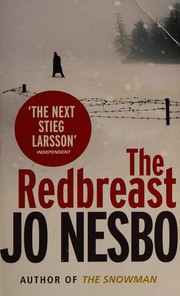
The Redbreast
Harry Hole chases an ageing sniper through modern Oslo while two Norwegian volunteers on the Eastern Front carry a fifty-year-old betrayal toward a royal…
2,453-word summary · 11 min read
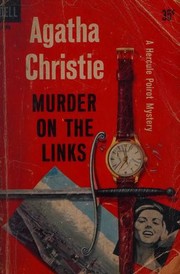
The Murder on the Links
Poirot arrives in France too late to save his client, who is found stabbed in a grave and was not the man he claimed to be. Christie's second Poirot novel.
2,055-word summary · 9 min read
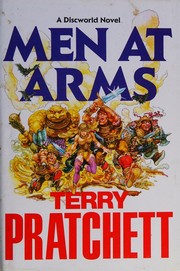
Men at Arms
The City Watch gets new recruits and a murder case when the Disc's only handgun turns up in Ankh-Morpork, in the fifteenth Discworld novel.
2,216-word summary · 10 min read

Broken Harbor
A family is found slaughtered in a half-built Dublin estate where no one broke in, and star detective Scorcher Kennedy must explain the holes in the walls.
2,308-word summary · 10 min read
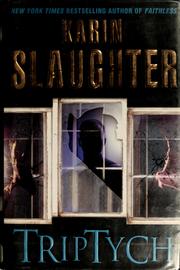
Triptych
A GBI agent with dyslexia hunts a rapist while two Atlanta cops hide pasts.
2,576-word summary · 11 min read
The Maltese Falcon
Sam Spade hunts a jeweled bird through lies after his partner is killed.
2,529-word summary · 11 min read

One, Two, Buckle My Shoe
Poirot links a dentist murder to a missing banker and stolen millions.
2,549-word summary · 11 min read
Cruel & Unusual
Scarpetta links an execution to a boy's murder while someone steals bodies.
2,533-word summary · 11 min read
Case Histories
A Cambridge PI takes three cold cases that tangle with his own loss.
2,465-word summary · 11 min read
Blindsighted
Sara and Jeffrey hunt a killer staging women in small-town Georgia.
2,400-word summary · 11 min read
At Bertram's Hotel
Miss Marple finds a luxury hotel fronting robbery and murder.
2,550-word summary · 11 min read
The Man in the Brown Suit
Anne Beddingfeld sees a Tube death in London and chases a paper clue to South Africa, diamonds, and the hidden Colonel.
2,292-word summary · 10 min read