
Reading options
What's inside (8 sections)
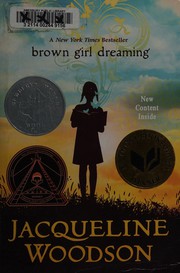
I had been avoiding Brown Girl Dreaming for about a year, for no good reason. I had decided that a memoir in verse would be a book I admired more than enjoyed, all white space and Important Feelings. Then I opened it on a Sunday afternoon, read "february 12, 1963," and went to make tea because I could tell I would finish it in one sitting. I did, mostly. My edition is the 2014 Nancy Paulsen Books hardcover, 352 pages, and it turns faster than that number suggests.
This is not a novel. It has no invented plot, no tidy villain. It is Woodson's account of her first ten years or so, from her birth in Columbus, Ohio, in 1963 to a Brooklyn classroom where a teacher tells her she is a writer. Five parts carry the story: "i am born," "the stories of south carolina run like rivers," "followed the sky's mirrored constellation to freedom," "deep in my heart, i do believe," and "ready to change the world." Ten haiku called "how to listen" interrupt them, about attention rather than plot.
i am born
The opening poem is a birth notice and a history lesson at once. Jacqueline arrives on February 12, 1963, in Columbus, Ohio, not far from where her great-great-grandparents were enslaved. The next poem, "second daughter's second day on earth," puts "Negro" on her birth certificate and sets her alongside Malcolm X, Rosa Parks, James Baldwin, and Ruby Bridges. The word sits on the page like a stamp. Her life begins inside a story she did not choose.
Her father, Jack Woodson, wanted to name her Jack, after himself. Her mother, Mary Ann Irby, refused. He left the hospital angry, and she named the baby Jacqueline. That story is told to her, not remembered by her, and the book is honest about that. In "other people's memory," three relatives give three different times of day for her birth. Morning, afternoon, night. Jacqueline concludes that her birth has been lost in other people's bad memory. The poem sets up the book's real subject: not what happened, but who gets to tell it.
The Woodson side of the family gets a few poems of its own. They are proud and educated, and they are fond of the story that they descend from Thomas Jefferson and Sally Hemings. Woodson presents that as family lore, not as a genealogy she has proven, which matters. Jack grew up in a big white house in Nelsonville, Ohio, went to college on a football scholarship, and had no patience for the South. "You can keep your south," he says. His marriage to Mary Ann is a collision of two versions of Black life in America, one that believes in Ohio and one that believes in Greenville. It does not survive the collision. By the time Jacqueline is a toddler, her mother has taken her and her siblings to live with her parents in South Carolina.
A great-great-grandfather, born free in 1832, fought in the Civil War and has his name on a memorial in Washington. A great-grandfather was the first Black student in his white school. Mary Ann tells Jacqueline to think of him when she is the only brown girl in a room. The ancestors are not decoration. They steady a child who is about to learn how many rooms will not want her.
the stories of south carolina run like rivers
Greenville is the heart of the book, and the neighborhood is Nicholtown. The family lives on Hall Street with Georgiana and Gunnar Irby. Gunnar works at a printing press. White men there call him by his first name and sometimes ignore his orders, even though he is a foreman. He comes home singing, and his voice travels down Hall Street. The children call him Daddy, because that is what their mother calls him, and he calls them his children. Georgiana is a Jehovah's Witness and runs the house on a schedule of Bible study, ministry school, and meetings. The children learn the week by its religious obligations.
Georgiana is the most complicated adult in the book. She is loving and severe, proud and worried. She does daywork for white families, dresses in a hat and white gloves to go, and tells the children she is not ashamed if it feeds them. Then she comes home exhausted and makes them promise they will never do it. On Saturday nights she presses their hair with a hot comb while Odella reads aloud. She corrects their grammar and forbids "ain't," "y'all," and "ma'am." The ban on "ma'am" is the one that stuck with me. Mary Ann associates it with the way Black people were made to address white people in the South. Politeness, in her house, is a costume that can be used against you.
Mama's rules are strict enough that Hope gets beaten with a willow switch for saying "ain't." Woodson does not soften that, and she does not turn her mother into a villain. The fear underneath the punishment is clear: a Black child will be judged by how she speaks, and a Southern accent is a liability in a Northern city. The book lets you see the adult's fear and the child's confusion at once.
Outside the house, history keeps intruding. Downtown Greenville has "whites only" signs that have been painted over, but the letters still show through like ghosts. The children see sit-ins, teenagers carried out of stores with their bodies limp and their faces calm. Gunnar explains nonviolent protest and says he is willing to die for it. Miss Bell hosts movement meetings in her house because her white employer would fire her if she were seen at them. Mama's friend Dorothy goes through nonviolence training and admits she is not sure she could stay nonviolent in the face of certain humiliations. That admission is what makes the marchers people rather than symbols.
The South here is not only a place of danger. It is candy from the candy lady, lemon chiffon ice cream with Gunnar, a garden, a porch, fireflies, the smell of the air, the sound of crickets. That joy is what makes the later leaving hurt.
followed the sky's mirrored constellation to freedom
Mary Ann goes to New York for a visit, comes back talking about moving, then leaves again for a long stretch. The children stay with their grandparents. A year later she returns with a new baby, Roman, and a plan. Roman is lighter-skinned than the others, and people assume he cannot be their brother. He also has the same gap in his front teeth. The gap becomes a family joke and a small argument against strangers.
The move to Brooklyn is a shock. The first apartment is uninhabitable, so they stay with Aunt Kay, Mary Ann's sister, and her boyfriend Bernie. Kay lives upstairs on Herzl Street. She braids hair, hugs with her arms open, and is close enough in age to Mama that people mistake them for twins. Then Kay falls down the stairs and dies. The book calls it a fall and does not explain it. Jacqueline is six. The reader feels the shape of the missing information. After the funeral, Jacqueline says she has no more memories of Kay. That line is quieter and worse than any dramatic scene could be.
The family moves to Madison Street, partly because the old apartment is unbearable. The landlord points to a statue of Mary, Joseph, and Jesus outside and says the house is protected. Mama, who is not religious in the same way as Georgiana, jokes about it, but Jacqueline catches her smiling at the statue. Woodson lets small objects carry grief. A staircase, a statue, a composition notebook, a brush.
School is another kind of displacement. Jacqueline is a slow reader. Odella is the gifted one, the sister who reads under the table and wins the awards. Teachers call Jacqueline by Odella's name and then lose interest when she turns out not to be Odella. In "the other woodson," that disappointment is plain. Then there is the cursive q. A teacher asks her to write her name in cursive, and she writes "Jackie" because she cannot form the q. The teacher asks if that is what she wants to be called, and she nods. She would rather lose her full name than admit the failure. It is a whole childhood in one letter.
But the writing starts here too. Jacqueline gets a composition notebook and falls in love with the paper before she can fill it. She writes her name. She copies lyrics from the radio, including "Family Affair," and learns to read by transcribing what she hears. A teacher reads Robert Frost's "Birches," and some of the children put their heads on their desks to hide happy tears. She finds a book about a boy named Stevie who is brown like her, and for the first time she thinks that someone like her has a story to tell. Woodson does not inflate the moment. It is a library book, not a thunderclap.
deep in my heart, i do believe
Part IV turns the book into a portrait of a writer. Jacqueline memorizes Oscar Wilde's "The Selfish Giant" and recites it to her class when asked to read aloud. Everyone is impressed. She does not know how she did it, but she knows it is a gift. She starts a book about butterflies, made of haiku, because she has decided that on paper things can live forever. Her family is affectionate and unimpressed. They tell her she should be a teacher or a lawyer. Mama tells her to stop daydreaming.
Maria is the other good thing in this section. Maria lives two doors down, is from Puerto Rico, and teaches Jacqueline the word "amiga." They trade plates of food, eat on the stoop, and write "Maria & Jackie Best Friends Forever" in chalk on the sidewalk. When Maria's mother cooks pernil, Jacqueline cannot eat it because Jehovah's Witnesses do not eat pork, so she eats pasteles with chicken instead. Maria's family includes her in the party anyway. Then Diana moves in next door, and Jacqueline is jealous of the shared language and culture Diana has with Maria. The jealousy is petty and real, and Woodson does not make her narrator nicer than she was.
Robert, Mama's younger brother, brings the wider world into the apartment. He comes home with an afro. He is funny and generous, and then the police come looking for him at night. He goes to jail, and Mama explains it with a Bible phrase about the wide road. When he comes back, he has converted to Islam and talks about Mecca. Jacqueline kneels beside him while he prays, curious about a promised land that is not the one her grandmother describes. Later, she and Maria walk around with their fists raised after seeing Angela Davis on television. They do not understand the politics, only the pose, and the pose matters.
This is also where Gunnar begins to die. The cough becomes the center of the visits to Greenville. He cannot sing on his walk home anymore. He sits in the garden less. Jacqueline brings him chicken soup and tells him stories in Spanish, and he tells her she is his favorite grandchild. On the bus, Georgiana still sits in the back even after segregation is illegal, because she does not want white people looking at the children like dirt. Jacqueline says they are not dirt. Georgiana agrees, and stays in the back anyway. That is one of the book's clearest pictures of how legal change and daily life fail to line up.
ready to change the world
Gunnar dies, and the book stays close to the aftermath. Georgiana moves to Brooklyn and sits by the window, watching the leaves, while Jacqueline learns double dutch in front of her. Georgiana plants a mimosa seed, and the sapling comes up in winter, a piece of Greenville in New York. Jacqueline and Maria buy bubble gum cigarettes and pretend to smoke until Odella reminds them that smoking killed Gunnar. They chew the gum instead. That is how the book handles grief: a silly game, a correction, a piece of candy.
The last section is also where Jacqueline starts to claim the word "writer" for herself. She writes a skit for Kingdom Hall and puts horses and cows in it, and Mama makes her take them out. She promises herself she will use the story somewhere else. She watches "The Big Blue Marble" on television and wants to tell stories from all over the world. In "a writer," Ms. Vivo reads her poem aloud and says the thing she has needed to hear. In "every wish, one dream," she wishes on dandelions and pennies for one thing only.
The final poem, "each world," is the one people quote. It lists the worlds she can walk into: Ohio and Greenville, her father's family and her mother's, Jehovah's Witness and nonbeliever, listener and writer, Jackie and Jacqueline. Then it gathers them into one world called You.
Each day a new world Opens itself up to you.
I understand why the book ends there. I also think it is the least interesting poem in the book, or at least the most pleased with itself. The rest of the book earns that ending, but the ending states its lesson more directly than the poems before it. Woodson is better when she trusts the object. The mimosa tree, the composition notebook, the cursive q, the statue outside the house: those do the work. "Each world" explains the work. That is a small complaint, and it comes from liking the book.
what the verse does, and what it leaves out
The verse form is what people love or resist, so it is worth being specific. These are not prose paragraphs chopped into lines. Some poems have real rhythm and turn, especially the haiku and the poems about sound. Others are closer to lineated anecdotes, and the line breaks do not always add much. If you want a conventional narrative with scenes that build, this will feel airy. If you like white space and suggestion, it will feel generous. I read it fast, then slower, and the second reading was better.
The child's point of view creates gaps that are deliberate and occasionally frustrating. Aunt Kay's death is a fall, full stop. Robert's arrest is explained in a Bible phrase. The parents' marriage is mostly a few fights and an absence. Jack Woodson disappears after Part I, and the book does not chase him down. That is honest to a child's knowledge, but it keeps the most dramatic material offstage. A reader who wants the adult's reckoning will not find it here. This is a book about the first ten years, not the whole life.
The middle-grade label is a little misleading. The book is taught in middle schools, and the poems are accessible, but the subjects include segregation, police at the door, jail, a parent's abandonment, a death in the family, and the subtle ways adults fail children. Nothing is graphic, but a ten-year-old will feel a lot that she cannot explain. That is not a flaw. It does mean the book can be read at ten and again at forty, and it will not be the same book.
I would push back on the idea that this is a book about "dreaming" in a soft way. The dreams here are specific and practical. Jacqueline wants to write. She wants to be believed. She wants a room of her own, or at least a notebook. The book is less interested in affirmation than in evidence that a girl told she is slow can become a person who is heard. That is a more useful story than the cover copy suggests.
Would I recommend it? Yes, with a caveat. If you want a fast, plotty memoir, this is not it. If you want a book that treats memory as rooms you can walk back into, and trusts a child to notice more than she can explain, it is very good. I finished it wanting to call my grandmother, which is the truest thing I can say about it.
FAQ
Is Brown Girl Dreaming a novel or a memoir?
It is a verse memoir. Woodson retells her own childhood from her 1963 birth in Columbus, Ohio, to about age ten in Brooklyn.
What awards did Brown Girl Dreaming win?
It won the 2014 National Book Award for Young People's Literature, a 2015 Newbery Honor, and the Coretta Scott King Author Award.
How is the book structured?
Five titled parts move from Ohio to South Carolina to Brooklyn, with ten haiku called "how to listen" threaded through the book.
Similar books
On the Come Up
Bri Jackson, a sixteen-year-old rapper in Garden Heights, chases a record deal while a viral song turns her into a symbol she never wanted to be.
2,034-word summary · 9 min read
Clap When You Land
Two half sisters, one in Sosúa and one in Queens, discover each other after their father dies in a plane crash, in Elizabeth Acevedo's novel in verse.
2,890-word summary · 13 min read
The Color of Water
A Black journalist presses his white mother about her hidden past, from a Virginia store to twelve college degrees.
2,457-word summary · 11 min read

Finding Me
Viola Davis traces her path from poverty in Rhode Island to Oscar night with blunt honesty about race and family.
2,823-word summary · 13 min read
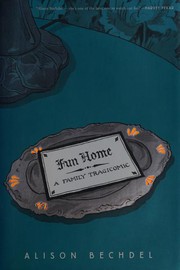
Fun Home: A Family Tragicomic
Alison Bechdel's graphic memoir about her father, their shared secrets, and the funeral home they called Fun Home in rural Pennsylvania.
2,755-word summary · 12 min read
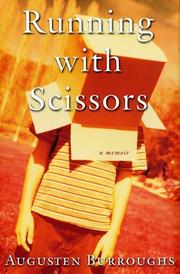
Running with Scissors
A boy sent to live with his mother's psychiatrist grows up in a chaotic house with no rules.
2,036-word summary · 9 min read
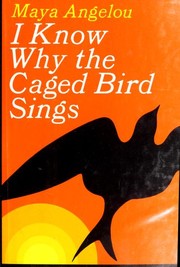
I Know Why the Caged Bird Sings
Angelou recalls Stamps, St Louis and San Francisco, from childhood silence after trauma to voice through books and work.
2,607-word summary · 12 min read
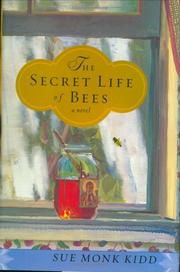
The Secret Life of Bees
Lily runs from her father with Rosaleen to Tiburon, finding shelter with beekeeping sisters.
2,207-word summary · 10 min read

What Happened to Goodbye
Mclean has reinvented herself in four towns since her parents divorced. In Lakeview she uses her real name, and for the first time staying put becomes a choice.
2,796-word summary · 12 min read
Take My Hand
In 1973 Montgomery, a young nurse discovers that two sisters were sterilized without consent, and spends the rest of her life living with what she could not…
2,126-word summary · 9 min read

Long Walk to Freedom
Mandela's account of a Thembu childhood, a law practice, a banned movement, twenty-seven years in prison, and the negotiation that ended apartheid.
2,454-word summary · 11 min read
The Power of One
A boy in apartheid South Africa decides to become welterweight champion of the world, and the novel follows every mentor, fight, and loss that gets him there.
2,145-word summary · 10 min read

Little Town on the Prairie
In the spring after the Long Winter, fifteen-year-old Laura sews shirts, studies for a teaching certificate, and helps send her blind sister Mary to college.
2,071-word summary · 9 min read

Too Much and Never Enough: How My Family Created the World's Most Dangerous Man
Mary L. Trump's 2020 memoir traces how a cold, zero-sum Queens household shaped her uncle, and uses family tax documents to challenge his self-made story.
2,059-word summary · 9 min read

The Age of Miracles
A California girl grows up while the Earth's rotation slows, and ordinary adolescence continues alongside slow catastrophe.
2,417-word summary · 11 min read
Peace Like a River
An asthmatic boy in the early 1960s narrates his family's search for his older brother, who is accused of two killings and has escaped custody.
1,969-word summary · 9 min read
Beautiful Boy: A Father's Journey Through His Son's Addiction
David Sheff recounts watching his son Nic slide into meth addiction, and his own desperate, humbling search for how to help without destroying them both.
2,076-word summary · 9 min read

The Chosen
A shattered pair of glasses in a 1944 Brooklyn softball game starts a friendship between a Hasidic boy and his Orthodox neighbor, and their fathers pull them…
2,443-word summary · 11 min read

The Magnolia Story
How Chip and Joanna Gaines met, closed their first shop, nearly lost everything in a housing development, and built Fixer Upper.
2,994-word summary · 13 min read
Why I'm No Longer Talking to White People About Race
Reni Eddo-Lodge traces black British history and shows how institutions, culture, and everyday assumptions keep producing racial inequality.
2,071-word summary · 9 min read
This Is How You Lose Her
Yunior cycles through love affairs and betrayals in nine linked stories, tracing the damage he does and the family history behind it.
2,195-word summary · 10 min read

The Second Summer of the Sisterhood
Four friends share the traveling pants through a summer of grandmothers, first loves, and mothers who are learning to let go.
2,209-word summary · 10 min read

Old Yeller
Travis Coates takes in a stray yellow dog that protects his family on the Texas frontier, and learns about loyalty and loss.
2,165-word summary · 10 min read

Aristotle and Dante Dive into the Waters of the World
Ari and Dante return for senior year in El Paso, navigating first love, AIDS, family grief, and the cost of being openly gay in 1987 Texas.
2,188-word summary · 10 min read
A Painted House
In 1952 Arkansas, seven-year-old Luke Chandler picks cotton with his family and learns how quickly poverty, violence, and adult secrets can end a childhood.
2,060-word summary · 9 min read

The Story of Edgar Sawtelle
A mute boy on a Wisconsin dog-breeding farm relives Hamlet as his uncle returns, his father dies in the barn, and the dogs inherit what is left.
2,392-word summary · 11 min read
A Raisin in the Sun
Lorraine Hansberry's 1959 play follows the Younger family as a $10,000 insurance check, a house in a hostile neighborhood, and a stolen investment test their…
2,444-word summary · 11 min read

Someone Like You
Halley and her best friend Scarlett face a summer of grief, a surprise pregnancy, and Halley's dangerous first romance in Sarah Dessen's 1998 young adult novel.
2,218-word summary · 10 min read
Maame
Maddie Wright, 25, has spent years as the responsible one in her Ghanaian British family, and the year she finally tries to live for herself is the year…
2,108-word summary · 9 min read