
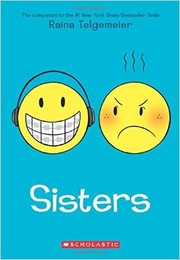
Sisters
2,025-word summary 9 min read 197 pages in the book
- First published
- 2014
- Publisher
- Graphix
- Pages
- 197
- ISBN
- 9780545540605
- Series
- Smile (#2)
Reading options
What's inside (9 sections)
Everyone talks about Smile, and they should, but Sisters is the Raina Telgemeier book I press on adults. Smile is about teeth, orthodontia, and learning to say no to friends who are not really friends. Sisters is about the far messier business of being stuck in a car with the person who knows exactly how to annoy you, and about watching your parents' marriage bend without being able to do anything about it. It is a kids' book that trusts kids with unhappiness, and it never talks down to them about it.
It came out in 2014, four years after Smile, and it is the second of Telgemeier's autobiographical graphic novels, the one that sits between Smile and Guts. The spine says Sisters, but on the copyright page it is honest about its subtitle-free promise: this is a memoir, drawn by the person who lived it, colored by Braden Lamb in a pair of palettes that do a lot of quiet storytelling.
The trip
The frame story is simple. Raina is fourteen. It is summer, and the family is driving from their home in the Bay Area to Colorado Springs for a family reunion. Mom drives. Raina sits in the middle row of the station wagon with her little sister Amara, who is nine, and their little brother Will rides in the back. Dad is not with them because of work. He will meet them at the reunion, and the fact that his absence is treated as normal is part of what makes the book hum under the surface.
The drive is the engine of the plot, and Telgemeier does the thing comics do better than any other form: she lets a long, boring car trip be the whole point. There are gas stations, fast food, motels, and miles of nothing, and by about the third chapter the reader understands that the real action of the book is the negotiation happening across the back seat. Raina wants to listen to music and be left alone with her headphones. Amara wants attention, or a fight, or both. Their conflicts are small and repetitive and completely recognizable, which is why they escalate so believably.
The sister she ordered
Interleaved with the present-day trip are flashbacks, drawn in sepia, that explain how Raina got here. As a four-year-old she campaigned for a baby sister the way only a four-year-old can, and she had plans for the relationship before Amara even existed. When Amara arrived, she was not the sister Raina had ordered. She cried constantly as a baby. She got a name Raina had not chosen. She grew into a kid who loves animals, dirt, and being outside, while Raina wants to draw, listen to music, and be indoors, ideally alone.
The flashbacks are where the book's title does its work. Sisters is not a celebration of sisterhood in the greeting-card sense, and it is not a story in which the older sister is secretly the lucky one. It is a study of two people who share a bedroom and almost nothing else, and who have spent years building up an account of mutual grievances so detailed that neither of them can remember how it started. The closest thing they have to a shared language is drawing, and even that becomes a battlefield when Raina feels that Amara is copying her or, worse, getting attention for it.
Telgemeier draws the parents in these flashbacks with real care. They are tired. They bicker in the margins of panels, in the background, over things the kids are not supposed to notice and notice anyway. A fight about money, a tone of voice, a conversation that stops when a child walks in: the sepia sections are full of small evidence that the household is under strain, and it is assembled so carefully that younger readers can take it in without being frightened by it.
Two sisters in one car
Back in the present, the trip grinds on, and this is where Sisters is funniest. The portrait of Amara is unsparing in a way that feels affectionate: she needles, she sulks, she announces deeply held beliefs at maximum volume in enclosed spaces. Raina gives as good as she gets, and the book is honest about the fact that the older sister, who should know better, nearly always goes down to her level. There are scenes at a cousin's house and at roadside stops where the family dynamic is laid out in a couple of pages that would take a novelist a whole chapter: the parents negotiating logistics, the cousins choosing sides, Raina against Amara, everyone against the heat.
If you grew up with a sibling, the book is a documentary. If you grew up without one, it is reporting from a country you have only heard about, and I think that is why Sisters has such broad appeal. The specific texture of the fights is Raina's, but the mechanics, the boredom, the alliances, the way a family finds a scapegoat when it is tired, those are universal. The book's panels are clean and expressive, and Telgemeier's faces are great at the exact expressions kids make when they are pretending not to be upset.
The snake
The tensions come to a head at the reunion. And then there is a snake. I am not going to walk through the mechanics of it, because the scene is one of the funniest sequences in Telgemeier's whole bibliography, and Kirkus singled it out for exactly that reason when the book came out. What matters for the plot is this: at the reunion, in a house packed with relatives and their own tangled histories, a snake gets loose, the family panics, and for a little while Raina and Amara are on the same side of the problem because they are the only two people in the room approaching it sensibly.
The snake does not fix anything. That is important. What it does is give the sisters a moment where the fighting stops long enough for each to see the other as useful, and the rest of the book builds on that moment without pretending it solved a decade of conflict.
What the book is really about
Underneath the comedy, Sisters is about a kid watching her parents fall out of love. Raina notices the tension before Amara does and carries it more heavily. There is a scene late in the book where the parents' strain is finally visible to both sisters at once, and the book handles it with an honesty I still find impressive: no one sits the kids down to explain anything, no one promises it will be fine, and Raina's fear goes unresolved because the real fear was unresolved for years. Telgemeier said as much in interviews after the book came out. She deliberately ended the story inside a fourteen-year-old's limited view, with her own words, which she has described as confusion and fear and also some hope.
That choice is what separates Sisters from a hundred other sibling stories. It refuses the reassuring ending, and it gives its young readers something better: a truthful one. The sisters reach a truce, tentative and conditional, and the family goes on being a family, which is not the same thing as being happy.
Reception and context
The book was received about as well as a middle grade graphic novel can be. The New York Times review, written by a then-teenage novelist Maya Van Wagenen, called it uncomfortable yet transcendent, which remains a good description. Kirkus named it a Best Children's Book of 2014. It was a YALSA Great Graphic Novels for Teens selection and an ALSC Notable Children's Book, and it helped win Telgemeier the 2015 Eisner Award for Best Writer and Artist. By 2017 the paperback had spent more than a hundred weeks on the New York Times graphic books bestseller list, which mostly tells you that kids keep handing it to other kids, which is the only review that matters in this category.
A few caveats, for balance. Readers who come to it hoping for the same satisfying arc as Smile sometimes leave disappointed, because Sisters is looser and ends without a bow. Some of the flashbacks run long, and the road trip structure means the middle section can feel as tedious as the drive it depicts. That is deliberate, but deliberate is not always fun, and I know more than one young reader who stalled in the middle. Press on. The snake and the ending are worth it, and the second half retroactively strengthens the first.
The thing I keep coming back to is that Sisters is a book about paying attention: to a sibling you did not choose, to parents who are failing at something quietly, to yourself. It never raises its voice to make those points. It just draws a family in a station wagon, fighting, and trusts the reader to see everything in the panels that the words leave out. That is real craft, and it is why this one has stayed with me longer than the more famous book that came before it.
The Telgemeier effect
You cannot talk about Sisters honestly without talking about the market it helped create. When Smile came out in 2010, middle grade graphic novels were still treated by most publishers as a niche within a niche, the kind of thing you printed in small runs and hoped school librarians would carry. Telgemeier had already spent years drawing the Baby-Sitters Club adaptations, and she knew how to make a page legible to a kid who had never read a comic before. Smile sold and sold and kept selling, and Sisters, four years later, arrived into a different industry than the one her first memoir had faced. Publishers who had ignored the format suddenly had graphic novel imprints. Book fairs redesigned around it. People in the trade started using a phrase, the Telgemeier effect, for the wave of young readers she pulled into comics.
You can see why the books did that. Telgemeier's panels are uncluttered, her faces carry the emotion, and she compresses complicated family material into single images that a nine-year-old can read at a glance. The sepia flashbacks in Sisters do a remarkable amount of work without a word of caption: the color alone tells you that the past is a different country, and the difference in how the family behaves in those panels tells you most of what you need to know about the marriage. The structure also trusts the reader to hold two timelines, which is more than a lot of adult novels dare.
There is a criticism worth naming. Some readers, including some parents, find the parents' fighting in Sisters heavier than they expected from the author of Smile, and a few young readers find the book sadder than they wanted. That is the risk Telgemeier took by refusing to pretend the family was fine. The payoff is that kids who live in households like Raina's get to see their own experience drawn as ordinary, not as a problem novel, with all the humor and irritation intact. It is one of the reasons the book still circulates so hard, a decade on, from hand to hand in school hallways. The Telgemeier effect is not just about sales. It is about a generation of kids who learned that a book could sound exactly like their own kitchen table.
One more thing worth knowing before you hand this to a young reader: Sisters is not the end of the story. The family's story continues in Guts, the third memoir, which deals with anxiety and school in the same honest register, and the two books together form a portrait of a girl growing up in a household that was never as stable as the adults wanted it to appear. Read on its own, Sisters stands as a single summer, one car, two sisters, and a snake. Read with the others, it becomes something larger: a childhood told from inside, with all the fights left in.
FAQ
Do I need to read Smile before Sisters?
No. Sisters stands alone, though it is a companion to Smile and follows the same family. Reading Smile first adds context to Raina's earlier years and her friends.
Is Sisters based on real events?
Yes. It is Telgemeier's autobiographical account of a childhood road trip and her relationship with her younger sister Amara, drawn from her own family's story.
What ages is Sisters for?
It is aimed at middle grade readers, roughly ages eight to twelve, and deals frankly with sibling conflict and parents who fight. Plenty of adults read it too.
Similar books
More from Smile first, then related titles.
Ghosts
Catrina moves to foggy Bahía de la Luna for her sister Maya's health and learns to face the town's ghosts.
2,946-word summary · 13 min read
The Stonekeeper
After their father's death, Emily and Navin chase a monster into a hidden world to save their mother, and Emily's great-grandfather's amulet offers power at a…
2,753-word summary · 12 min read
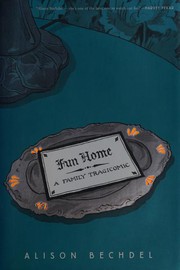
Fun Home: A Family Tragicomic
Alison Bechdel's graphic memoir about her father, their shared secrets, and the funeral home they called Fun Home in rural Pennsylvania.
2,755-word summary · 12 min read
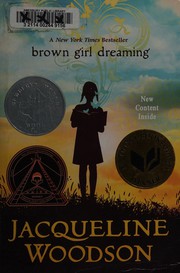
Brown Girl Dreaming
Jacqueline Woodson retells her childhood in verse, moving from Ohio to South Carolina to Brooklyn while the civil rights movement reshapes the world around her.
2,727-word summary · 12 min read

Bone, Vol. 1: Out from Boneville
Three cartoon cousins are run out of Boneville, separated by locusts, and dropped into a valley where rat creatures and an old grudge are waiting.
2,155-word summary · 10 min read

The Shadow Sister
Star D'Apliese steps out of her sister's shadow and follows a bookshop clue into the Edwardian life of Flora MacNichol, a woman who gave up love for duty.
2,260-word summary · 10 min read

Little Town on the Prairie
In the spring after the Long Winter, fifteen-year-old Laura sews shirts, studies for a teaching certificate, and helps send her blind sister Mary to college.
2,071-word summary · 9 min read

Too Much and Never Enough: How My Family Created the World's Most Dangerous Man
Mary L. Trump's 2020 memoir traces how a cold, zero-sum Queens household shaped her uncle, and uses family tax documents to challenge his self-made story.
2,059-word summary · 9 min read
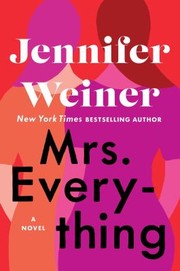
Mrs. Everything
Two Jewish sisters in Detroit grow up, apart and together, across seven decades of American life, from the 1950s to the 2016 election.
2,362-word summary · 10 min read

Hard Luck
Rowley has a girlfriend, so Greg turns to a Magic 8 Ball, a family Easter hunt and the school yearbook for answers.
2,586-word summary · 11 min read
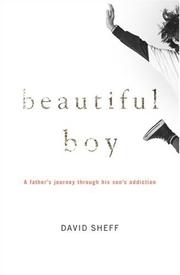
Beautiful Boy: A Father's Journey Through His Son's Addiction
David Sheff recounts watching his son Nic slide into meth addiction, and his own desperate, humbling search for how to help without destroying them both.
2,076-word summary · 9 min read
Between Sisters
Estranged sisters Meghann and Claire reunite in Washington when Claire announces a rushed wedding, then face their mother's desertion and a medical crisis.
2,467-word summary · 11 min read

The Magnolia Story
How Chip and Joanna Gaines met, closed their first shop, nearly lost everything in a housing development, and built Fixer Upper.
2,994-word summary · 13 min read
The House We Grew Up In
The Bird family of the Cotswolds breaks apart after a suicide and spends twenty years not talking about what happened.
2,198-word summary · 10 min read
Saga, Volume 3
Marko, Alana, and Hazel hide on the planet Quietus with the reclusive author who inspired their romance, while assassins and a prince close in.
1,989-word summary · 9 min read
The Storm Sister
Ally D'Aplièse loses her father and her lover within weeks, then follows a brass frog and a Norwegian biography into Anna Landvik's music and the world of…
2,376-word summary · 11 min read
The War That Saved My Life
Ten-year-old Ada has never left her London flat, hidden away because of her clubfoot. Wartime evacuation sends her to Kent, where a reluctant guardian and a…
2,252-word summary · 10 min read
The Girl Who Drank the Moon
A witch who secretly rescues the town's sacrificed babies accidentally enmagicks one with moonlight, and the girl grows up with a power she cannot name.
2,078-word summary · 9 min read
Garden Spells
Two sisters reunite in their family home in Bascom, North Carolina, where an apple tree shows anyone who eats from it the biggest event of their life.
2,030-word summary · 9 min read
Clap When You Land
Two half sisters, one in Sosúa and one in Queens, discover each other after their father dies in a plane crash, in Elizabeth Acevedo's novel in verse.
2,890-word summary · 13 min read
Beezus and Ramona
Nine year old Beezus tries to be a good older sister while four year old Ramona turns every ordinary day into a disaster, until a tenth birthday forces honesty.
2,062-word summary · 9 min read
True Colors
Three Grey sisters split over love and duty after their father judges them.
2,596-word summary · 12 min read
The Most Fun We Ever Had
Four Sorenson sisters orbit perfect parents hiding old cracks.
2,590-word summary · 12 min read
The Identicals
Twin sisters swap Nantucket and Martha Vineyard lives for a summer.
2,556-word summary · 11 min read
Esperanza Rising
Esperanza trades ranch life for farm labor camps in California.
2,338-word summary · 10 min read
Long Bright River
Philadelphia officer Mickey patrols Kensington amid the opioid crisis, hunts a killer of vulnerable women, and searches for her missing addict sister Kacey…
2,986-word summary · 13 min read
Flipped
Juli Baker and Bryce Loski retell second grade to eighth grade from opposite sides, through a sycamore sit, trashed eggs, a yard fix-up, and one tense family…
2,689-word summary · 12 min read

Blankets
Craig Thompson recalls sharing a bed with brother Phil, falling for Raina at church camp, losing his faith, and keeping art through Michigan winters.
2,586-word summary · 11 min read
We Are All Completely Beside Ourselves
Rosemary tells of twin sister Fern, a chimp raised as family, and research fallout.
2,058-word summary · 9 min read