
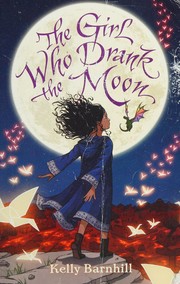
The Girl Who Drank the Moon
2,078-word summary 9 min read 388 pages in the book
- First published
- 2016
- Publisher
- Algonquin Young Readers
- Pages
- 388
- ISBN
- 9781616205676
Reading options
What's inside (9 sections)
A Newbery winner that trusts its readers
The first thing to know about The Girl Who Drank the Moon is that it does not condescend, and the second is that it does not flinch. Kelly Barnhill's novel, published by Algonquin Young Readers in 2016 and awarded the Newbery Medal in 2017, opens with a ritual that most children's books would soften: once a year, the people of a town called the Protectorate take the youngest baby in the village, carry it into a clearing in the forest, and walk away. The ritual is presented as lore and law at once, described in short chapters of a parent telling the story to a child, and the voice in those chapters has the cadence of something handed down by candlelight. It is beautiful and it is horrible, and Barnhill trusts her readers to hold both at the same time, which turns out to be the whole novel in miniature.
The Protectorate believes the Witch demands the sacrifice. The town's prosperity, its safety from the woods, depends on the offering. What the town does not know, and what the reader learns early, is that everything about the bargain is backwards.
Xan, Glerk, and a tiny dragon
The Witch is real, and her name is Xan, and she is not malevolent, or even mildly interested in infants as an offering. She is about five hundred years old, a witch who belongs to an older order entirely, and for years she has policed the clearing the night after each sacrifice. She takes the baby. She feeds it starlight, which makes a child ordinary and bright, and she carries it across the forest to the Free Cities, where families who have been waiting are handed children without ever being told where they came from. The babies of the Protectorate have not died for generations. They have been adopted, loved, and renamed, and the shadow of the Witch has been the engine of the whole arrangement.
Xan lives in a swamp at the edge of the woods with two companions who are the best comic inventions in the book. Glerk is a swamp monster who is as old as the world and who happens to be a poet, and he behaves the way a very old uncle behaves when children arrive: careful, dry, and secretly the softest heart in the house. Fyrian is a dragonling the size of a dove who believes with absolute conviction that he is a Simply Enormous Dragon living in the land of the giants, and whose mother died centuries ago in an event nobody in the story has yet remembered. When Barnhill writes these three together, the book is warm and funny enough to carry a much less interesting plot.
One night, traveling slowly because the baby in her care is unusually peaceful, Xan makes a mistake. Instead of starlight, she feeds the child moonlight. Moonlight does something different to a human soul: it enmagicks it. Xan knows immediately what she has done, and she knows what it means. She names the baby Luna and keeps her, because a child full of magic cannot be handed to ordinary parents. The baby has a birthmark shaped like a crescent moon, and she has a mother in the Protectorate who never stopped screaming.
The Sorrow Eater
The villain of the book is not a witch in the fairy tale sense. Sister Ignatia runs the Sisters of the Star, the religious order that gives the Protectorate its festivals and its rules, and she has an ally in Grand Elder Gherland, the town's political and spiritual authority, a man who has never questioned the arrangement because the arrangement has made him comfortable. Gherland's nephew, Antain, is next in line to become an Elder, and he is the character who eventually asks the questions that bring the whole structure down.
Ignatia is something much worse than a fraud, and the novel takes its time revealing the scale of it. Five hundred years ago, this part of the world was ruled from a castle, and it was a place of magicians, witches, and dragons, and there was a volcano. When the volcano threatened to erupt, the powerful of that age worked together to seal it and organize an evacuation. The being who is now called Sister Ignatia, known then as the Sorrow Eater, was part of the plan, and she sabotaged it. She let the magicians burn. She gathered the survivors, told them a story about a Witch who must be fed, and settled them into the Protectorate, which she designed as a farm for the thing she eats: human sorrow. For five centuries she has fed on the town's grief, growing stronger with every sacrifice, and the Witch of the woods, the one demanded by the ritual, has been a lie she tells to keep the meals coming.
The volcano, meanwhile, was never really dead. The wizards stopped it up, and it went underground, where it leaks into the bog's water and mud and poisons the air; the world of the book sits on a buried fuse, which is the other thing everyone has agreed not to remember.
The mother in the tower
Luna's mother refuses to give up her baby. On the day of the sacrifice, she fights, she screams, and the Sisters lock her in a tower for madness, which is what the Protectorate calls any woman who will not submit. She does not go quiet. She folds paper birds, thousands of them, and the birds carry pieces of her, her grief and her searching, out into the world. The novel's most fragile magic belongs to her: the paper birds know the way home. Eventually she escapes, finds a pair of old shoes that make the wearer run impossibly fast, and follows her daughter's trail through the forest. The shoes once belonged to Ignatia, back when Ignatia had a body worth dressing, and that will matter later.
Antain, meanwhile, is walking his own road in the forest, sent by his uncle and Ignatia as part of the trap around the Witch, and his encounter with Xan disassembles everything he was raised to believe. The Witch turns out to be a tired old woman who feeds babies starlight. Antain goes back to the Protectorate wearing a new set of eyes, and the book tracks him as he tries to be decent inside an indecent system. Ethyne, the council member he loves, was already ahead of him.
The magic that must be hidden
Luna grows up in the swamp with Xan, Glerk, and Fyrian, and for a while Barnhill lets the book be a domestic fantasy about an unusual family. When Luna is five, her magic erupts. The eruption is mostly small and strange, meaningless accidents and startled chickens, until the day she turns Glerk into a bunny, and Xan understands what is coming. The girl's power is going to keep growing until she is thirteen, and when it peaks, the release will be enormous, and Xan, who bound it in the first place, will not survive the unbinding.
The solution Xan finds is terrible and beautiful. She returns to the old castle, reads the papers of Zosimos, the wizard who trained her five centuries ago, and works out a spell that encases Luna's magic in a single grain inside her brain, sealed until her thirteenth birthday. The cost is the spell's flip side: the seal is keeping Xan alive, and when it breaks, so does she. She casts it anyway, and the consequences are worse than she expected in one specific way. Everything magical in Luna's life goes invisible to her. Lessons do not stick. Stories about witches slide off. Xan gets one long stretch of ordinary years with her granddaughter, paid for with the girl's ignorance of the thing she actually is, and the trade sits at the center of the book like a held breath.
The thirteenth birthday and the road to the volcano
The seal breaks three days before Luna turns thirteen, and the book pivots into its final movement, which gathers all its threads into one road. Luna's power comes out at full volume: the forest reacts, the birds react, Antain walks into the middle of it and nearly gets himself hurt, and Luna meets her mother for the first time with only a fierce stranger's face to go on. Ignatia, who has begun to starve because the town's sorrow is finally in short supply, stalks the same road, hunting the girl and the shoes and the last of her grip on the story she has told for five hundred years. Fyrian learns who set fire to the sky on the day his mother died, and Glerk remembers what everyone agreed to forget: the volcano is waking up.
The confrontation is the part adults should read out loud. Luna faces Ignatia and does the one thing nobody else could think to do: she peers into the Sorrow Eater's heart, which is old and encased in a pearl, and sees that it is full of sorrow, all the grief she has eaten and never digested. Luna unlocks it. Five hundred years of other people's pain arrive at once, and Ignatia, feeling for the first time since the volcano, is consumed by her own meal. The volcano erupts anyway. Luna, filled with moonlight and five hundred years of a witch's unfinished work, does the magnificent impossible thing the whole book has been pointing toward, and holds the towns inside a shelter of her own magic while the mountain empties itself onto the world.
Xan dies the day the first of the Star Children come to the Protectorate, children she carried across the forest across five centuries, arriving at last in the town that gave them away. Barnhill gives her a death of happiness, which sounds sentimental until you have watched the arithmetic behind it. Glerk, the oldest creature in the world, does what the oldest friend should do. He takes her to the Bog.
What the book leaves in your hands
The aftermath is gentle and slightly overstuffed, which is my main complaint. Antain and Ethyne marry, take Luna and her mother into their home, and begin the messy work of governing a town whose founding story has just collapsed. Luna and Fyrian travel to the Free Cities to tell people the truth about the Witch they were raised to fear. And the frame story closes when the parent telling the child about the Protectorate arrives at the end of the tale: the kind and generous Witch claimed the town for herself, and the story ends. The parent, the novel finally implies, knows every part of this from the inside. Sorrow, the book argues, is not the enemy. Sorrow that cannot be spoken, that gets farmed and fed on and turned into law, is.
The frame chapters deserve their own credit. Sprinkled between the main story are short passages of a parent telling a child the history of the Protectorate, the way a bedtime story folds in a national epic, and the device does two jobs at once. It gives the novel the feel of something recovered rather than invented, and it keeps the book's biggest question permanently in view: who gets to tell a town its own story, and what happens when the story is wrong. When the teller's voice returns at the end with the true version of the Witch, the correction is more than information. It is the novel forgiving its own setting.
The faults are real but small. The middle sags, the narration hops between more heads than it needs, and a couple of threads, including the poem Glerk leaves Luna on the last pages, land with less weight than Barnhill clearly intended. The reveal of the volcano runs long after the emotional climax is over, and readers who want clean fairy tale pacing will notice every extra mile. What holds it all up is the voice and the family at the center: a witch, a swamp poet, and a dragon who thinks he is enormous, raising a girl who turns out to be made of moonlight.
If you are looking for a book to read aloud over a winter, this one was built for it. If you are an adult who only reads middle grade when someone makes you, this is the one to make an exception for.
FAQ
What age is The Girl Who Drank the Moon for?
It is middle grade, roughly ages 10 and up, and works well as a read aloud. It deals directly with grief and sacrifice but keeps a warm core.
Did it win any awards?
It won the 2017 Newbery Medal, awarded by the American Library Association.
Is it part of a series?
No. It is a standalone novel with a complete ending.
Similar books
The Stonekeeper
After their father's death, Emily and Navin chase a monster into a hidden world to save their mother, and Emily's great-grandfather's amulet offers power at a…
2,753-word summary · 12 min read
Rise of the Evening Star
Kendra and Seth return to Fablehaven as the Society of the Evening Star closes in, with a traitor inside the house and a demon prison key at stake.
2,874-word summary · 13 min read
Fablehaven
Kendra and Seth spend the summer with their grandfather and learn his woods hide Fablehaven, a preserve for fairies, satyrs and darker things.
2,949-word summary · 13 min read

The Field Guide
Three siblings move into a creepy Maine estate, anger a brownie, and find a forbidden guide to the fairy world in the first Spiderwick book.
2,033-word summary · 9 min read
The Once and Future Witches
Three estranged sisters bring witchcraft back to an 1893 city where magic hides in nursery rhymes and the fight for the vote is also a fight for power.
2,132-word summary · 9 min read

Secrets of the Dragon Sanctuary
Kendra is replaced by a plant copy and held by the Society, while Seth steals a unicorn horn so the family can enter a dragon sanctuary.
2,590-word summary · 12 min read
Witches Abroad
Three Lancre witches fly to Genua to stop a fairy godmother from forcing a servant girl into a storybook marriage, and find a city arranged around a happy…
2,651-word summary · 12 min read
The Time Paradox
When his mother falls ill with a fairy disease, Artemis Fowl travels back in time to find the extinct lemur that can cure her and confronts his younger self.
2,601-word summary · 12 min read
Nettle & Bone
Marra, a princess in a convent, leaves to save her abused sister, but first she must finish three impossible tasks: a bone dog, a nettle cloak, moonlight in a…
2,061-word summary · 9 min read

Grip of the Shadow Plague
A plague turns Fablehaven's creatures of light into shadows while Kendra hunts an artifact in Arizona and Seth races to find the cause.
2,131-word summary · 9 min read

The Indigo Spell
Sydney Sage hunts an aging witch, learns forbidden magic, and finally admits she loves Adrian, while the Alchemist tattoo on her cheek may be controlling her.
2,604-word summary · 12 min read
The Indian in the Cupboard
Omri learns a key turns plastic Little Bear into a live Iroquois man.
2,228-word summary · 10 min read
Three Dark Crowns
Three triplet queens must kill each other for the crown, but love and gifts get in the way.
2,134-word summary · 9 min read
Wyrd Sisters
Three Lancre witches rescue a murdered king's baby, hide Lancre's future, and trap a guilty duke with a play in Ankh-Morpork.
3,085-word summary · 14 min read
The Rules of Magic
Franny, Jet, and Vincent Owens test strict family rules and a love curse in 1960s Manhattan and Massachusetts in Alice Hoffman's warm prequel about love, loss,…
2,686-word summary · 12 min read
Magyk
A baby found in snow, a lost seventh son, and a run for the Marram Marshes as Marcia Overstrand shields two children from DomDaniel.
2,604-word summary · 12 min read
The School for Good and Evil
Best friends Sophie and Agatha are taken to fairy tale school and sorted to wrong sides.
2,042-word summary · 9 min read
Dead Witch Walking
Witch and runner Rachel Morgan quits the agency with a death mark on her head and hunts an untouchable crime lord.
2,709-word summary · 12 min read
Blood & Honey
Married witch Lou and hunter Reid flee church and coven while dark magic tempts Lou to save them.
2,280-word summary · 10 min read
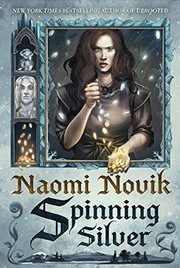
Spinning Silver
A moneylender's daughter says she can turn silver to gold, drawing a winter king, a plain duke's daughter, and a poor servant into one hard bargain.
2,813-word summary · 13 min read
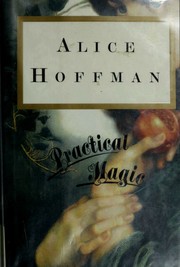
Practical Magic
Orphaned sisters Sally and Gillian Owens flee magic and love, until Gillian returns with a dead boyfriend and Sally must face the family curse.
2,974-word summary · 13 min read
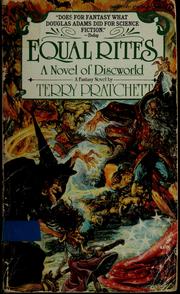
Equal Rites
A dying wizard passes his staff to a baby girl, and Granny Weatherwax escorts Esk to Unseen University in Pratchett's third Discworld book.
2,871-word summary · 13 min read

The Blinding Knife
Kip trains to join the Blackguard while the Prism hides his true identity, loses his colors, and fights a war against a rogue drafter who wants to birth a god.
2,049-word summary · 9 min read
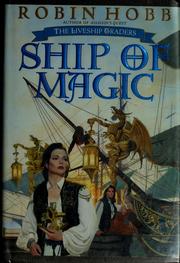
Ship of Magic
A sentient ship wakes when her captain dies, and the family that owns her starts to come apart over who gets to sail her.
2,026-word summary · 9 min read

Inkdeath
The final Inkworld novel sends Mo into the land of the dead, leaves Meggie choosing between two boys, and ends the Adderhead's immortality with three written…
2,062-word summary · 9 min read
Hounded
A two-thousand-year-old druid runs a bookshop in Arizona, hides from an Irish god who wants his sword back, and talks to his dog.
2,159-word summary · 10 min read
Dawnshard
Rysn sails toward forbidden Akinah to save her dying larkin and finds a Dawnshard guarded by the Sleepless.
3,229-word summary · 14 min read

Bone, Vol. 1: Out from Boneville
Three cartoon cousins are run out of Boneville, separated by locusts, and dropped into a valley where rat creatures and an old grudge are waiting.
2,155-word summary · 10 min read

The Icebound Land
Captured and enslaved in Skandia, Will fights a drug that erases him while Halt and Horace cut a bloody road through Gallica to bring him home.
2,088-word summary · 9 min read

Magic Burns
A magic flare hits Atlanta, and mercenary Kate Daniels must recover stolen maps, find a missing witch, and keep a teenage girl alive while Celtic gods try to…
2,021-word summary · 9 min read