
Reading options
What's inside (9 sections)
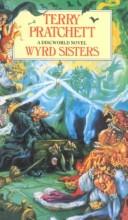
I picked up Wyrd Sisters because I wanted to see Pratchett handle Shakespeare, and I stayed for the witches. This is Discworld number six, published in 1988 by Gollancz, 251 pages, and it is the book where Granny Weatherwax, Nanny Ogg, and Magrat Garlick finally work as a trio. I had met Granny before in Equal Rites, where she was stern and solitary. Here she has company, and the friction between the three of them carries half the comedy. The plot borrows its skeleton from Macbeth, a murdered king, three witches, prophecies, daggers, a forest that moves, but Pratchett bends it into a story about who gets to tell the truth in a small mountain kingdom.
Lancre is tiny. That matters. It is the sort of place with more standing stones than soldiers, with thin roads, deep woods, rain that seems personal, and a castle that has stood so long its stones know every footstep. The king at the start is Verence, a decent man with no great gift for ruling but no cruelty either. The man who wants his throne is his cousin, Duke Leonal Felmet. Felmet is not a grand villain with a grand plan. He is ambitious, resentful, easily led by his wife, and already half sick with the idea that the crown should be his. His wife, Lady Felmet, is stronger willed and colder. She wants power the way other people want food. When the book opens, that hunger has already turned into a decision.
Murder on the castle stairs
The murder happens fast and feels sordid rather than noble. Felmet meets King Verence on the stairs in Lancre Castle at night and kills him. There is no duel, no speech, no witnesses except the stones and, in Pratchett's logic, the land itself. Verence falls. Felmet takes the crown. Lady Felmet starts giving orders before the body is cold.
What makes the scene stick is what follows. Verence does not simply vanish. He lingers as a ghost, confused, tied to the castle, unable to leave or to act. He watches Felmet sit in his chair, wear his robes, and sign papers. He tries to shout and finds that the living hear him only as drafts and cold spots. Pratchett plays this for both laughs and sadness. The ghost is not powerful. He is a bureaucratic problem. He cannot rest while his murder is denied and his son is in danger.
That son is the reason the witches enter. Verence had an infant son, also in the castle that night, with his nurse and the Fool close by. The Fool in Lancre is not a village idiot. He is a trained jester from the Guild of Fools and Joculators, a thin sad man who speaks in bleak jokes and hides a quick mind behind cap and bells. When Felmet strikes, the Fool grabs the baby and runs. He knows he cannot outrun soldiers for long on mountain paths. So fate, or what passes for fate when witches are watching, puts three women on the same road.
Three witches and a baby with a crown
Granny Weatherwax, Nanny Ogg, and Magrat Garlick are out on the heath that night because that is what witches do when something is wrong. The sky feels wrong. Animals are restless. Granny, whose first name is Esme and who hates anyone using it, feels the death before she hears about it. Nanny Ogg, short, round, fond of drink and song, mother to a sprawling tribe of children and owner of a vicious grey tomcat named Greebo, is already complaining about her boots. Magrat, young, earnest, draped in occult jewelry she ordered by mail, still believes witchcraft should involve herbs, charms, and proper ritual. She is the third of the coven because three is the correct number, though Granny treats her like an apprentice who reads too many books.
They meet the Fool on the road, bleeding, holding a bundle. The bundle is Prince Tomjon, a baby with a crown tucked in with him and a bloody knife as proof. The Fool begs them to hide the child. Granny understands at once what keeping the boy in Lancre would mean. Felmet would search every cottage. A baby prince is a threat as long as he breathes. So the witches make a fast, practical choice. They will pass the boy out of the kingdom.
The handoff is one of my favorite passages because it shows how Pratchett mixes kindness with hard sense. The witches wash the baby, wrap him warm, and wait on the road for a traveling company of players. The company is led by Olwyn Vitoller, an actor manager with a loud voice, a failing purse, and a good heart. His troupe travels with carts, costumes, worn scripts, and children of their own. The witches give Tomjon to Vitoller and his wife, along with money and firm instructions to raise him as their own and keep him away from Lancre. They keep the crown. A crown can be hidden in a thatch roof. A growing boy with royal blood cannot.
This is also where the book sets its clock. Tomjon is a baby. He cannot claim a throne for years. Felmet will spend those years digging in, killing talk, paying for praise. The witches know they have bought time, but not enough.
Fifteen years in one night
Pratchett solves the waiting problem with magic that feels both clever and costly. Granny decides not to wait fifteen years in the ordinary way. She decides to bring the future closer.
Lancre sits in a soft place in the world. Time there already runs a little loose around the standing stones on the moor. The stones are old, older than the castle, older than stories. They shift when no one looks. Granny, with Nanny and a reluctant Magrat to make three, uses that looseness to move the whole kingdom forward. She wraps Lancre Castle and its lands in a sleep of stories and lets fifteen years pass in a single night for the rest of the world while Lancre itself stays still. When the spell breaks, Tomjon will be a grown young man on the road, and Felmet will have ruled for a decade and a half, grown cruel and strange, without the witches having to live through every day of it.
The price is real. Such magic tires Granny to the bone. Nanny has to steady her. Magrat, who wanted ceremony, learns that great magic looks less like chanting and more like holding a heavy door shut while wind tries to tear it open. The scene matters because it fixes Granny's character. She does not like show. She likes headology, the art of making people do what they should by making them think it was their idea. Yet when headology will not save a kingdom, she will spend her own strength and pay without complaint.
After the spell, Lancre wakes to a changed world. Outside its borders, fifteen years have gone. Inside, people remember yesterday. The confusion is handled with shrugs and jokes, which is very Lancre. Life goes on. Felmet remains duke, because the spell did not remove him. It only shortened the wait.
I should note a fair criticism here. This middle stretch, with the witches settling back into cottage life and the narrative cutting to the players on the road, loses pace. Pratchett follows Vitoller's troupe through mud, bad inns, missed cues, and jokes about acting that are funny in isolation but slow the hunt for the crown. Readers who came for Lancre may fidget while Tomjon learns to project to the back row. On a first read I skimmed some of the travel talk. On a second read I liked it more, but it still feels like a long bridge between the murder and the return.
Lancre under Duke Felmet
Fifteen years of Felmet have marked the kingdom. He is not a competent tyrant. He is a frightened one. He taxes, he threatens, he orders celebrations no one enjoys. He builds, he bans, he rewrites. He is obsessed with being loved and with being seen as lawful. He hires informers, quarrels with farmers, and stages public events where people are told when to cheer. Lady Felmet sharpens all of this. Where he wavers, she pushes. She wants Lancre respected, which in her language means feared.
The land itself objects. This is one of the book's best ideas. Lancre is almost a character. The forest thickens where soldiers try to march. The standing stones move closer when Felmet walks the moor, as if listening. Animals watch. The castle feels cold to the duke in rooms where Verence's ghost still drifts. Servants hear footsteps with no feet. Felmet, who does not believe in witches except as a nuisance to be taxed, starts seeing daggers in the air, hearing voices, washing his hands over and over. Pratchett takes Lady Macbeth's hand washing and Macbeth's dagger and hands them to a middle aged duke with no poetry in him, which makes the madness funnier and more pitiful.
The witches refuse to rule directly, and that refusal is the moral spine of the book. They could frighten Felmet off with storms. They could dose his wine. Granny will not. Witches, in her code, do not meddle in politics with magic. They watch, they nudge, they keep the balance. People must choose their king. Magic used to force that choice would poison it. So Granny stays in her cottage, Nanny drinks and gossips and gathers news, Magrat tries to organize resistance with ribbons and strongly worded herbs. Their inaction frustrates Magrat, who is young enough to want a straight fight. It also frustrates the reader a little, by design. Pratchett wants us to feel how slow right action can be when power must come from consent rather than fire.
During these years Tomjon grows up without knowing he is a prince. Vitoller raises him as a player. The boy learns lines before he learns letters, or so it feels. He becomes Tomjon Vitoller, a gifted actor with a fine memory, quick feet, and a natural command of a crowd. He plays kings before he knows he might be one. The troupe works its way toward the big city of Ankh-Morpork and the Dysk, the theatre district where new plays are built and old ones are stolen. The Fool, meanwhile, has stayed in Lancre, serving Felmet with bitter jokes, watching, remembering the night on the road. He knows what the witches did. He waits for the boy to grow.
The Dysk and the play that lies
Ankh-Morpork's theatre world gives Pratchett room to mock everything he loves about Shakespeare. The Dysk is muddy, loud, greedy, brilliant. Playwrights, actors, prompters, bear baiters, orange sellers, and critics crowd together. At its center is Hwel, a dwarf playwright with a bald head, bad temper, and a gift for turning any story into five acts with a song. Hwel is Pratchett's Shakespeare figure, overworked, underpaid, able to write a love scene while eating a pie. He works for Vitoller, who has managed to bring his company to the city.
Felmet reaches into this world with money. He wants a play about Lancre. Not the true story, with a murder on the stairs and a baby passed to players, but a clean story where Verence was a fool, Felmet was asked to rule, and the witches are comic hags who mumble over a pot. If people in Ankh-Morpork laugh at that version, and if travelers carry it back to Lancre, then truth will bend. Felmet understands, in his clumsy way, that a crown needs a story. He cannot win the land, so he will buy the tale.
Hwel writes the false play because he needs the fee. Vitoller stages it because he needs the house full. Tomjon, now a young star, is given a witch part and hates it without knowing why. The rehearsals are full of good jokes about theatre life. Actors argue about motivation while standing in the wrong light. Hwel cuts scenes to fit the paying patron. Nanny Ogg, who has come to the city with Granny and Magrat to check on Tomjon, watches from the pit and takes loud offense at being portrayed as a cackling crone. Granny sits still and grows colder. She knows false words, repeated often, can stick like burrs.
Here the book leans hard on in jokes, and this is another fair criticism. If you know Macbeth, the false play scenes crackle. You catch the bent lines, the fake three witches chant, the clumsy prophecy. If you do not, some pages feel like backstage gossip that goes on a beat too long. I know the Scottish play well enough to catch most of it, and I still felt Pratchett was showing off his reading. A friend who had never seen Macbeth told me she liked the theatre chapters least. She is not wrong. The satire is sharp, but it asks for homework.
The witches decide they cannot let the lie stand. Again they refuse to burn the theatre down, though Nanny suggests it as a practical option. Instead they will answer a play with a play.
The play that tells the truth
The climax is a trap built of greasepaint and ghosts. The witches return to Lancre with Tomjon, Vitoller's company, Hwel, and the Fool. Felmet, eager to have his version blessed at home, orders a grand performance in Lancre Castle. The court gathers. Lady Felmet arranges smiles. The false play begins, with actors in padded crowns and painted beards doing the duke's history.
Then Granny changes it from inside. With Nanny and Magrat feeding her power, she bends the performance so the actors speak truth they do not know. The player king confesses a murder he did not commit in life. The player duke hears his own words come back with blood on them. Lights gutter. And Verence's ghost, who has waited fifteen years to be seen, walks onto a stage crowded with living men and points.
It works because a play lets people see what speeches hide. The court watches Felmet watch himself. He breaks. He shouts at the ghost, at the witches, at his wife. Lady Felmet tries to hold the room by force and dies in the struggle that follows, refusing to bend even when the lie has collapsed. Felmet, exposed and raving, falls to his death soon after, a small mad end for a man who wanted a large legend. The room, full of nobles who cheered him that morning, goes quiet. Truth does not need trumpets. It only needs a stage where it cannot be edited.
What follows is quieter and better than a battle. Tomjon is offered the crown. He is the lost prince, the face people hoped for, the actor who can hold a hall silent. He says no. He grew up as Vitoller's son in practice if not in blood, and the stage is his home. He loves applause, movement, new towns. A crown would fix him to one damp castle with bad drains. His refusal is not played as noble self sacrifice. It is played as self knowledge. He knows who he is.
The crown then passes where few expected. The Fool takes off his cap and bells. He is revealed as the true heir, the son of the old king by a brief, kind liaison that the court had buried, younger than Tomjon in claim by blood but elder in right once Tomjon steps aside. He is crowned as Verence II. It is a lovely turn because the Fool has spent the whole book telling the truth as jokes. Now he must tell jokes as a king. He accepts Magrat as his bride, which startles Granny and delights Nanny. Magrat, who began the book as the thin earnest girl with mail order mysticism, gains weight in the story at last. She has stood on the heath, helped move time, faced Felmet's court without fainting. Marriage to a king who understands fools feels earned, even if Pratchett rushes the courtship.
My last criticism belongs here. Magrat starts thin. For the first third she is mostly a butt for Granny's dry remarks and Nanny's winks. Pratchett clearly likes her, but he takes too long to give her a scene where she acts without asking permission. When it comes, her anger at Felmet's play and her steady work in the final spell, she blooms fast. I wished that growth had started fifty pages earlier. Readers who love Granny and Nanny from the start may need patience with Magrat.
Still, the ending satisfies because it honors Lancre's scale. No dark lord falls. No army breaks. A small kingdom gets a decent young king who knows how to listen, a queen who knows herbs and stubbornness, and three witches who go home to their cottages. The stones settle. The forest steps back. Granny puts the kettle on. After all the borrowed thunder from Macbeth, with its cauldrons and prophecies and walking woods, Pratchett closes on tea and sweeping. Power returns to people who will use it sparingly, and the players roll their carts toward the next town, with Tomjon already learning a new part. The crown stays. The story moves on, which is as it should be.
Why it holds up
Wyrd Sisters holds up because its target is not Shakespeare but the use of stories by rulers. Felmet does not fear swords as much as he fears talk. He pays Hwel to fix the past because he knows a repeated lie can feel truer than a remembered murder. The witches win not by stronger magic but by forcing one honest performance in front of witnesses. That feels current without forcing a moral. Pratchett trusts the reader to see the point.
It also holds up because the trio works. Granny's iron sense, Nanny's warm appetite for life, Magrat's soft hope: together they cover the ways people endure bad rule. I laughed most at Nanny, who treats danger the way other people treat weather, and I thought most about Granny, who could rule Lancre in a week and refuses to try. If you have never read Discworld, this is a fine door. If you know Macbeth, bring that knowledge and enjoy the bent mirror. If you do not, come for the ghost, the walking stones, and the Fool who stops fooling just long enough to be crowned.
FAQ
Do I need to know Macbeth to enjoy Wyrd Sisters?
Yes. It uses Macbeth for its bones: three witches, a murdered king, a guilty duke who sees daggers, and a forest that walks. You can follow the plot without Shakespeare, but the jokes land harder if you know the play.
Who ends up as king of Lancre?
Tomjon grows up on the stage and refuses the throne. The Fool, raised as a jester, is shown to be the true son of the old king and is crowned as Verence II.
Is Wyrd Sisters part of Discworld and where does it fit?
Yes, though it stands alone. It is the sixth Discworld novel and the first to center Granny Weatherwax, Nanny Ogg, and Magrat Garlick as a trio. Earlier books give background, but this one resets their story.
Similar books
More from Discworld first, then related titles.
The Color of Magic
A failed wizard guides a tourist across a flat world on a turtle, with comic fantasy chaos.
2,032-word summary · 9 min read
The Light Fantastic
Rincewind and Twoflower fall off the world while wizards race a red star.
1,974-word summary · 9 min read
Equal Rites
A dying wizard passes his staff to a baby girl, and Granny Weatherwax escorts Esk to Unseen University in Pratchett's third Discworld book.
2,871-word summary · 13 min read
Mort
Death hires apprentice Mort in this 1987 Discworld comedy, where a spared princess splits reality and duty bends for love, with no Rincewind.
2,386-word summary · 11 min read
Sourcery
A dying wizard hides his soul in a staff, his eighth son becomes a sourcerer strong enough to break the world, and Rincewind is sent to stop him with a sock.…
2,404-word summary · 11 min read
Guards! Guards!
A drunk captain, his last two guards, and an earnest recruit face a summoned dragon in Ankh-Morpork in Pratchett's funny eighth Discworld book.
2,307-word summary · 10 min read
Reaper Man
Death gets fired and farms while Windle Poons refuses to die.
2,579-word summary · 11 min read
Witches Abroad
Three Lancre witches fly to Genua to stop a fairy godmother from forcing a servant girl into a storybook marriage, and find a city arranged around a happy…
2,651-word summary · 12 min read
Small Gods
God Om trapped as a tortoise must convince novice Brutha to save Omnia from its own church.
2,063-word summary · 9 min read
Men at Arms
The City Watch gets new recruits and a murder case when the Disc's only handgun turns up in Ankh-Morpork, in the fifteenth Discworld novel.
2,216-word summary · 10 min read
Hogfather
Death fills in for a missing Father Christmas, Susan Sto Helit hunts the Hogfather, and the twentieth Discworld novel turns Santa into a management problem.
2,871-word summary · 13 min read
Night Watch
Vimes is thrown back in time and must train his young self through a revolution.
2,003-word summary · 9 min read
The Wee Free Men
Nine-year-old Tiffany Aching teams with the Nac Mac Feegle to rescue her brother from the Fairy Queen.
2,600-word summary · 12 min read
Going Postal
A hanged con artist must revive Ankh-Morpork's dead Post Office and outwit a murderous rival in Pratchett's 33rd Discworld novel.
2,228-word summary · 10 min read
Nettle & Bone
Marra, a princess in a convent, leaves to save her abused sister, but first she must finish three impossible tasks: a bone dog, a nettle cloak, moonlight in a…
2,061-word summary · 9 min read
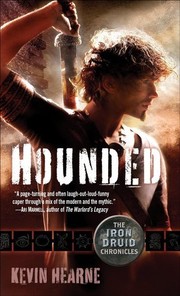
Hounded
A two-thousand-year-old druid runs a bookshop in Arizona, hides from an Irish god who wants his sword back, and talks to his dog.
2,159-word summary · 10 min read
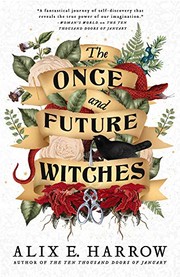
The Once and Future Witches
Three estranged sisters bring witchcraft back to an 1893 city where magic hides in nursery rhymes and the fight for the vote is also a fight for power.
2,132-word summary · 9 min read

The Bane Chronicles
Eleven stories across five centuries follow Magnus Bane from a ban in Peru to his first date with Alec in this illustrated Shadowhunter companion.
2,470-word summary · 11 min read

The Indigo Spell
Sydney Sage hunts an aging witch, learns forbidden magic, and finally admits she loves Adrian, while the Alchemist tattoo on her cheek may be controlling her.
2,604-word summary · 12 min read
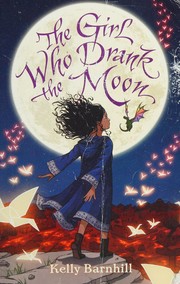
The Girl Who Drank the Moon
A witch who secretly rescues the town's sacrificed babies accidentally enmagicks one with moonlight, and the girl grows up with a power she cannot name.
2,078-word summary · 9 min read
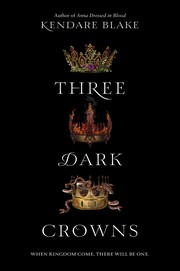
Three Dark Crowns
Three triplet queens must kill each other for the crown, but love and gifts get in the way.
2,134-word summary · 9 min read
Dead Witch Walking
Witch and runner Rachel Morgan quits the agency with a death mark on her head and hunts an untouchable crime lord.
2,709-word summary · 12 min read
Blood & Honey
Married witch Lou and hunter Reid flee church and coven while dark magic tempts Lou to save them.
2,280-word summary · 10 min read

The Blinding Knife
Kip trains to join the Blackguard while the Prism hides his true identity, loses his colors, and fights a war against a rogue drafter who wants to birth a god.
2,049-word summary · 9 min read
Strega Nona
A village witch doctor hires a boy who does not listen, and the pasta pot he was told not to touch floods Calabria with noodles he cannot stop.
2,587-word summary · 11 min read

Inkdeath
The final Inkworld novel sends Mo into the land of the dead, leaves Meggie choosing between two boys, and ends the Adderhead's immortality with three written…
2,062-word summary · 9 min read

Go the Fuck to Sleep
A rhyming bedtime book for adults in which an exhausted father narrates the fourth hour of a toddler's stalling, one profane couplet at a time.
2,291-word summary · 10 min read
Dawnshard
Rysn sails toward forbidden Akinah to save her dying larkin and finds a Dawnshard guarded by the Sleepless.
3,229-word summary · 14 min read
Bone, Vol. 1: Out from Boneville
Three cartoon cousins are run out of Boneville, separated by locusts, and dropped into a valley where rat creatures and an old grudge are waiting.
2,155-word summary · 10 min read
The Field Guide
Three siblings move into a creepy Maine estate, anger a brownie, and find a forbidden guide to the fairy world in the first Spiderwick book.
2,033-word summary · 9 min read