
Reading options
What's inside (8 sections)
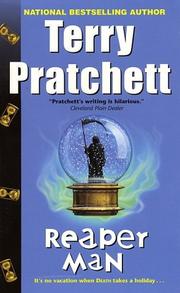
I came to Reaper Man after a run of earlier Discworld books left me fond of Death as a character, and I wanted the one where he finally gets pushed out. Published in 1991 as the eleventh Discworld novel, in the Corgi Books paperback tradition and running 384 pages in the HarperTorch reprint tied to ISBN 9780061020629, it pairs two stories that barely touch until the end. In one, Death is told he has grown too human and is given a short mortal span to live out. In the other, a very old wizard dies at exactly the wrong moment and has to keep walking around Ankh-Morpork because there is nobody to collect him. I expected a farce about a skeleton with a scythe learning to eat breakfast. What I got was stranger and sadder, a comedy about retirement, chores, undead support groups, and a shopping mall that wants to eat a city.
The setup for Death is brief and cold. The Auditors of Reality, grey and bodiless creatures who keep the universe tidy, decide that Discworld Death has developed too much personality. They appeal to Azrael, the vast and mostly silent keeper of all deaths everywhere, and get permission to replace him. Death is handed a little gold timer with his remaining life inside and turned loose. He sends Albert, his long serving manservant, back to the world to live whatever life is left to him. He keeps his horse Binky, who is very real and very fast, and rides out to spend his remaining time among mortals. For a being who has spent millennia meeting people only at the last second, the prospect of waiting, sleeping, hunger, and pay is entirely new.
Told to retire
What makes this opening work is how little ceremony there is. No trial with speeches. No thunder. Just clerks closing a file. Pratchett treats cosmic dismissal the way a council treats a pension, with forms and quiet condescension, and that flatness makes Death seem small for the first time. He has always been the tall skeleton in black, speaking in capital letters without quotation, arriving on time. Here he is early for his own ending with nowhere to go.
I liked that Pratchett does not make Death angry right away. He is puzzled more than furious. He has collected kings and paupers, philosophers and fools, and he has started to wonder about what they felt. He saved a life once when he should not have. He adopted a daughter in an odd way. He hired help. Each small kindness was a mark against him with the Auditors, who want a function without feelings. So they give him what they think he wants. Become human for a while. See how inefficient it is. Then vanish.
There is a fair criticism to register even this early, and it follows the whole book. Pratchett splits his attention between Death in the country and the wizards in the city, and the two halves do not move at the same speed. The Death chapters have a clear line. Find work, learn limits, face the end. The wizard chapters circle, argue, eat large meals, and chase side effects. If you came mainly for Death, you will feel the city chapters tug at your sleeve. I did on my first pass, though I came to enjoy them more once I stopped expecting them to hurry.
Bill Door finds work
Death walks into the Octarine Grass Country during harvest season and takes the name Bill Door. The name is a blunt joke about his old tool, and nobody in the village gets it, which suits him. He finds work with Miss Renata Flitworth, a woman past eighty who runs a small upland farm alone and does not tolerate slackers. She hires him because he is tall, strong, shows up, and does not drink. She keeps him because he works through rain, mends fences without being asked, learns to handle a scythe on wheat instead of souls, and treats her with plain respect.
Miss Flitworth is one of Pratchett best late additions to the series. She is thin, white haired, sharp tongued, and entirely practical. She counts her coins, oils her own clocks, remembers a young man who died before they could marry, and refuses pity. At first she sees Bill as a useful stranger who sleeps in the barn. Slowly she sees the shape under the act. He does not know how to yawn. He is gentle with animals but does not understand tiredness until it hits him like weather. She never pries, which is her kindness.
Farm life gives Pratchett room for his favorite kind of comedy, competence meeting ignorance. Bill learns to sharpen, to stack, to thatch, to buy boots that hurt. He meets Ned Simnel, a clever local lad building a mechanical harvester with more enthusiasm than funding, and helps him without understanding patents or pride. He discovers sleep as a small death that returns you changed. None of this is played as cute montage. Each chore costs him time from his timer, and he knows it.
If I have a complaint about this stretch, it is that Pratchett sometimes leans on the same beat. Bill misunderstands a custom, villagers stare, Miss Flitworth translates, Bill tries again and gets it half right. The rhythm is warm, but after the third or fourth variation I wanted a sharper turn. The turn does come, through fire and debt and a landlord who wants the farm, yet the middle hour on the farm could have been trimmed by twenty pages without losing heart.
Windle Poons misses his exit
In Ankh-Morpork, Windle Poons dies at one hundred and thirty and immediately has a problem. Windle is a wizard of Unseen University, deaf as a post in one ear, fond of his chair, recently looking forward to a decent rest and whatever comes next for wizards. He dies in bed with colleagues around him. Then he sits up. Nobody has come to fetch him. His soul has nowhere to file itself. So he gets up, annoyed, still dead, and goes back to work as a zombie.
The University at this point has a new Archchancellor, Mustrum Ridcully, a big bearded countryman who likes hunting and hearty breakfasts and treats magic as a practical art like ditch digging. Around him are the usual senior men. The Bursar, nervy and fond of dried frog pills. The Dean, the Lecturer in Recent Runes, the Chair of Indefinite Studies, the Senior Wrangler, plus young Ponder Stibbons, who actually reads the manuals, and the Librarian, who is an orangutan and remains the most sensible person in the room. Their first response to Windle is academic. Try to bury him. Try to banish him. Try to pretend the rules still hold if spoken loudly.
Windle burial at a crossroads with a stake, carried out with his cheerful cooperation, fails to stop him, and that failure sets the tone for the city plot. Life force with no outlet is piling up across Discworld. Ghosts chatter. Furniture fidgets. Wires tangle. In Ankh-Morpork the surplus starts to take shapes. Poltergeists rattle kitchens. A shopping cart follows people with intent. Small round snow globes appear in stalls, sold cheap by peddlers, pretty and faintly wrong. Mrs. Cake, the medium with a slight gift for seeing the dead, warns that the globes are eggs. The wizards laugh until the eggs start to hatch into trolleys that roll uphill toward food.
Windle, meanwhile, joins the Fresh Start Club, a support group for the undead run by Reg Shoe, a passionate zombie who campaigns for dead rights with leaflets and slogans. The group includes a werewolf trying to stay polite, a couple of vampires working on restraint, a banshee with gland trouble, and others making the best of secondhand life. Windle fits because he is too tired to be grand about dying and too decent to be bitter. He wants tea. He wants a chair that does not creak. He wants someone to explain the paperwork. Reg gives him pamphlets instead, and somehow that helps.
Pratchett is very good on committee comedy here. Meetings open late. Minutes go long. Everyone talks over the banshee. Yet under the jokes there is a point about neglect. The city has no service for people caught between states, so they serve each other.
Eggs, trolleys, and a mall with teeth
The middle of the book turns from haunting to hunger. The snow globes are city eggs, seeds of a creature that feeds on urban life and grows into a vast parasitic mall. It starts as a shimmering pile in a foggy part of town, all Escalators and bright signs and promises of everything under one roof. Then it grows walls, corridors, shops that sell shops, air that smells of polish and sugar. People walk in curious and walk out dazed, carrying bags they did not plan to buy. Trolleys breed in back rooms. The place learns what shoppers want and offers it back with interest.
I thought this was Pratchett at his most observant. He had written about guilds and banks and operas before, but here he writes about the specific hypnosis of new retail. The mall does not threaten with claws. It threatens with convenience, warmth, music, and the feeling that you are missing a bargain. The wizards approach it as a monster to blast, which fails, because blasting a mall only rearranges the sale signs. Windle and the Fresh Start Club approach it as a place with habits, which works better. They map its corridors, learn its feeding times, find the dull anchor points where it is weakest.
There is a long sequence inside the half built complex where the wizards get lost among mirrors and food courts while Windle crew keeps its head. I will admit I lost the thread of the geography here. Corridors loop. Levels repeat. The payoff still lands, with a joint effort that uses wizard firepower after undead legwork has opened the way, but a tighter edit would have helped.
Two smaller creations deserve mention because they carry the theme without speeches. The Death of Rats appears as a tiny hooded figure with a scythe made from a sliver, taking up part of the work left undone, riding a small raven and squeaking where Death would speak in capitals. He is funny until he is not, because he cares for even the smallest ends. The new Death, grown from collective fear of what death should be, arrives as a tall crowned shape without mercy, all edge and rule. Put side by side, they ask what kind of ending a world deserves. One that notices a rat. Or one that files it.
Bill Door against the new Death
Back on the farm, time runs short. Bill timer is almost empty. Miss Flitworth farm faces pressure from a neighbor who wants her land and from debts she will not discuss. A fire, carelessly or deliberately set, threatens wheat and house. Bill works past exhaustion, which for him is a new sensation with a cost. He breathes dust. His hands blister. He understands for the first time why mortals fear rain at harvest and why they still sing while they stack. Miss Flitworth watches him spend himself and understands what he is. Not a ghost. Not a god on holiday. The old collector learning the weight of what he collected.
When the new Death comes for Bill Door, Pratchett gives the book its best chapter. The challenger is everything the Auditors wanted. Punctual, vast, incurious, certain. Bill meets him in a barn with a harvest scythe instead of the great blade, wearing worn clothes instead of black, tired in his bones. Miss Flitworth, who refuses to leave him to face it alone, helps in a practical way that I will not spoil beyond saying it involves good timing and no magic words. Bill wins not by being stronger but by having learned something the new shape never bothered to learn. How to want an extra minute not for himself but for someone else. How to stand in borrowed boots and still stand straight.
Victory returns him to himself. He is Death again, tall and inevitable, but changed. He goes to Azrael, the ancient quiet at the center of all endings, while the Auditors complain about procedure. The scene is short and oddly moving. Death does not argue law. He argues care. He says that endings without attention become nothing, and nothing must also end sometime. Azrael, who has watched universes gutter out, grants him continuation. It is not a courtroom win. It is more like a tired parent letting a conscientious worker keep a difficult job because nobody else will do it with kindness.
After that, Pratchett allows himself sentiment without apology. Death gives Windle Poons, who helped save the city and has waited patiently for release, a proper exit with company and thanks. Then he returns to Miss Flitworth, whose own time has come. He does not take her at once. He offers her an evening. They go to the harvest dance she missed in youth, he in a borrowed suit that almost fits, she in a dress kept folded for decades. She dances, laughs, remembers her young man who died in an accident before they could marry, and understands near the end that she had already slipped away hours earlier and Death had granted her the night as a gift. He reunites her with that lost love before they go on. I found the sequence affecting in a way Discworld rarely tries so openly. Some readers may find it soft after so much satire. I thought the softness was earned because Bill had carried wheat beside her.
What holds and what wobbles
Reaper Man holds because its two endings rhyme without matching. Windle gets rest after learning how to live while dead. Miss Flitworth gets joy after learning how to accept help while dying. Death gets his job back after learning why the job matters. None of them are saved from ending. They are saved from ending alone or unseen. That feels true to Pratchett middle period, funny about institutions and tender about people, willing to spend pages onUniversity dinners and farm chores to make a final hour matter.
The wobbles are real too. The wizard plot takes too long to name its monster. The mall idea is brilliant but the execution blurs in corridors. Some jokes about shopping, faculty politics, and undead activism repeat their punchlines. A few characters exist for one gag.
Who should pick it up. If you like Death from earlier books, this is required. If you like the wizards, you get them in bulk, with Ridcully settling in and Ponder doing the actual thinking while the Librarian steals every scene he ambles through. If you want a starting point for Discworld, I would not start here. Start with Mort to meet Death first, or Guards Guards for the city at full snap. Come here second, when you already care about the skeleton who tries to understand humanity by doing the dishes, mending a roof, and staying for the dance. It is 384 pages in this reprint, first published in 1991, and it earns its length more often than not. The parts that drag make the parts that sing easier to hear, like boots on a barn floor before music starts.
FAQ
Do I need to read earlier Discworld books before Reaper Man?
No, but Mort helps. This is Discworld 11 from 1991 and the story explains Death, Albert, Binky and Unseen University as it goes.
Who is Miss Flitworth?
Renata Flitworth is an elderly farm owner who hires Bill Door, sees what he is, and gives him work, shelter and reason to fight the new Death.
Is Reaper Man only comedy?
No. The jokes about retirement, committees and shopping are constant, but the close with Windle and Miss Flitworth is openly sad and kind.
Similar books
More from Discworld first, then related titles.
The Color of Magic
A failed wizard guides a tourist across a flat world on a turtle, with comic fantasy chaos.
2,032-word summary · 9 min read
The Light Fantastic
Rincewind and Twoflower fall off the world while wizards race a red star.
1,974-word summary · 9 min read
Equal Rites
A dying wizard passes his staff to a baby girl, and Granny Weatherwax escorts Esk to Unseen University in Pratchett's third Discworld book.
2,871-word summary · 13 min read
Mort
Death hires apprentice Mort in this 1987 Discworld comedy, where a spared princess splits reality and duty bends for love, with no Rincewind.
2,386-word summary · 11 min read
Sourcery
A dying wizard hides his soul in a staff, his eighth son becomes a sourcerer strong enough to break the world, and Rincewind is sent to stop him with a sock.…
2,404-word summary · 11 min read
Wyrd Sisters
Three Lancre witches rescue a murdered king's baby, hide Lancre's future, and trap a guilty duke with a play in Ankh-Morpork.
3,085-word summary · 14 min read
Guards! Guards!
A drunk captain, his last two guards, and an earnest recruit face a summoned dragon in Ankh-Morpork in Pratchett's funny eighth Discworld book.
2,307-word summary · 10 min read
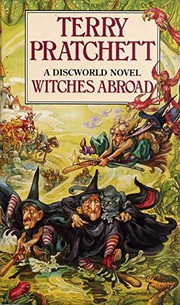
Witches Abroad
Three Lancre witches fly to Genua to stop a fairy godmother from forcing a servant girl into a storybook marriage, and find a city arranged around a happy…
2,651-word summary · 12 min read
Small Gods
God Om trapped as a tortoise must convince novice Brutha to save Omnia from its own church.
2,063-word summary · 9 min read
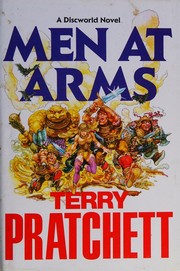
Men at Arms
The City Watch gets new recruits and a murder case when the Disc's only handgun turns up in Ankh-Morpork, in the fifteenth Discworld novel.
2,216-word summary · 10 min read
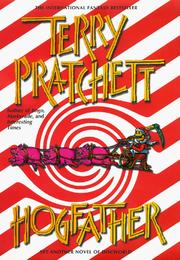
Hogfather
Death fills in for a missing Father Christmas, Susan Sto Helit hunts the Hogfather, and the twentieth Discworld novel turns Santa into a management problem.
2,871-word summary · 13 min read
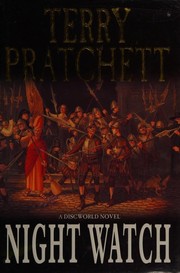
Night Watch
Vimes is thrown back in time and must train his young self through a revolution.
2,003-word summary · 9 min read
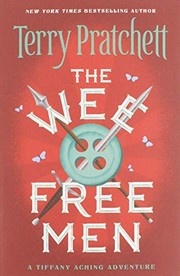
The Wee Free Men
Nine-year-old Tiffany Aching teams with the Nac Mac Feegle to rescue her brother from the Fairy Queen.
2,600-word summary · 12 min read
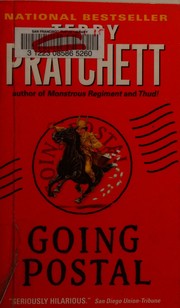
Going Postal
A hanged con artist must revive Ankh-Morpork's dead Post Office and outwit a murderous rival in Pratchett's 33rd Discworld novel.
2,228-word summary · 10 min read
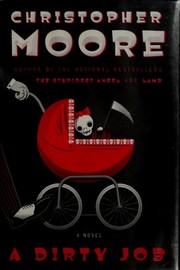
A Dirty Job
Grieving San Francisco secondhand shopkeeper Charlie Asher inherits the Death job, collecting souls into vessels while raising little baby Sophie as Minty…
2,454-word summary · 11 min read
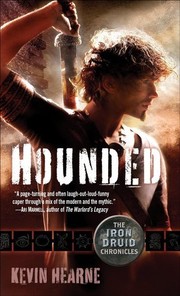
Hounded
A two-thousand-year-old druid runs a bookshop in Arizona, hides from an Irish god who wants his sword back, and talks to his dog.
2,159-word summary · 10 min read
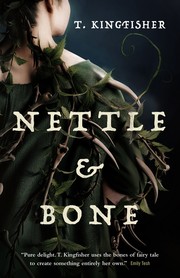
Nettle & Bone
Marra, a princess in a convent, leaves to save her abused sister, but first she must finish three impossible tasks: a bone dog, a nettle cloak, moonlight in a…
2,061-word summary · 9 min read
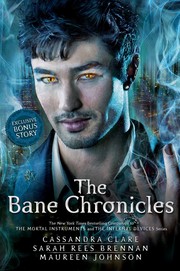
The Bane Chronicles
Eleven stories across five centuries follow Magnus Bane from a ban in Peru to his first date with Alec in this illustrated Shadowhunter companion.
2,470-word summary · 11 min read
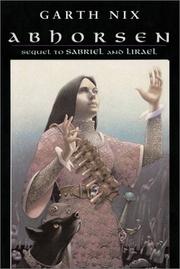
Abhorsen
Lirael as Abhorsen-in-Waiting must bind the Destroyer Orannis with Sam, Dog, and Mogget.
2,214-word summary · 10 min read

The Blinding Knife
Kip trains to join the Blackguard while the Prism hides his true identity, loses his colors, and fights a war against a rogue drafter who wants to birth a god.
2,049-word summary · 9 min read
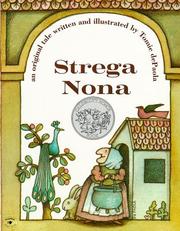
Strega Nona
A village witch doctor hires a boy who does not listen, and the pasta pot he was told not to touch floods Calabria with noodles he cannot stop.
2,587-word summary · 11 min read

Inkdeath
The final Inkworld novel sends Mo into the land of the dead, leaves Meggie choosing between two boys, and ends the Adderhead's immortality with three written…
2,062-word summary · 9 min read
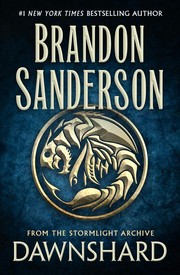
Dawnshard
Rysn sails toward forbidden Akinah to save her dying larkin and finds a Dawnshard guarded by the Sleepless.
3,229-word summary · 14 min read
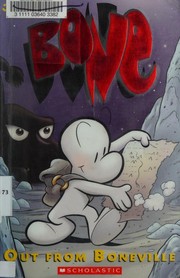
Bone, Vol. 1: Out from Boneville
Three cartoon cousins are run out of Boneville, separated by locusts, and dropped into a valley where rat creatures and an old grudge are waiting.
2,155-word summary · 10 min read
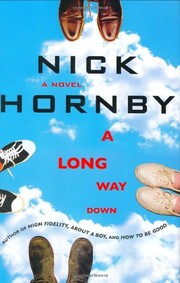
A Long Way Down
Four strangers meet on a London rooftop on New Year's Eve, each planning to jump, and end up making a pact to stay alive until Valentine's Day.
2,145-word summary · 10 min read
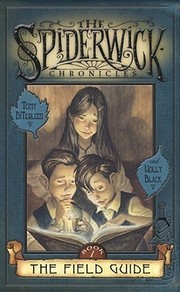
The Field Guide
Three siblings move into a creepy Maine estate, anger a brownie, and find a forbidden guide to the fairy world in the first Spiderwick book.
2,033-word summary · 9 min read

Magic Burns
A magic flare hits Atlanta, and mercenary Kate Daniels must recover stolen maps, find a missing witch, and keep a teenage girl alive while Celtic gods try to…
2,021-word summary · 9 min read
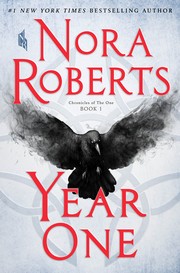
Year One
A plague released in Scotland kills most of humanity, and the survivors discover magic, build a town, and wait for a child who may save them.
2,029-word summary · 9 min read
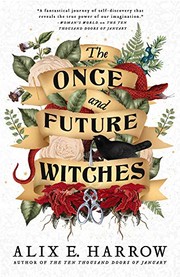
The Once and Future Witches
Three estranged sisters bring witchcraft back to an 1893 city where magic hides in nursery rhymes and the fight for the vote is also a fight for power.
2,132-word summary · 9 min read
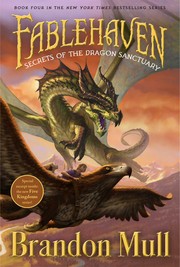
Secrets of the Dragon Sanctuary
Kendra is replaced by a plant copy and held by the Society, while Seth steals a unicorn horn so the family can enter a dragon sanctuary.
2,590-word summary · 12 min read