
Reading options
What's inside (7 sections)
I picked up Going Postal because a friend said it was the funniest Discworld novel about paperwork ever written, and that sounded like a dare. He was right. It came out in 2004 from Doubleday as the 33rd Discworld book, and it starts the Moist von Lipwig sequence, which makes it Moist von Lipwig book one even though the series field on this site keeps it under Discworld for consistency. The HarperTorch edition runs 416 pages. Unlike most Discworld novels it is split into chapters, each opening with a mock serious synopsis in the style of old Victorian adventure stories, which tells you the tone before the first page finishes.
The opening line says the prospect of being hanged in the morning concentrates a man's mind wonderfully, except the mind mostly concentrates on being inside a body that is about to be hanged. That is the whole book in miniature. A man facing death, thinking fast, talking faster, and finding that cleverness keeps buying him one more day.
The man at the end of the rope
Moist von Lipwig is a con artist, and a very good one. He has lived under many names, most recently Albert Spangler, and he has taken banks, merchants, and widows for large sums with nothing but confidence and forged paper. The book opens with the law finally catching him. Ankh-Morpork hangs him. The drop works. Moist dies.
Then he wakes up.
Lord Vetinari, the Patrician who runs Ankh-Morpork with a smile and a network of spies, had the hanging faked. Moist was hanged to within half an inch of his life, cut down, and carried to the palace to wake up on an expensive carpet with a headache and a choice. Vetinari offers him a job. He can become Postmaster of the Ankh-Morpork Post Office, or he can walk out of the room through a particular door. The door opens onto a very long drop. Moist, who understands odds, takes the job.
I loved this setup because it reframes the usual fantasy bargain. Moist is not chosen for virtue. He is chosen because he is a fraud, and Vetinari needs exactly that. The Post Office is dead, the rival communication company is strangling the city, and only a man who knows how to lie beautifully can sell the public on trusting the mail again. Vetinari even assigns Moist a parole officer who cannot be bribed, threatened, or outrun. Mr Pump is a golem, seven feet of clay with glowing eyes, who follows Moist everywhere and reports back. Every escape attempt ends with heavy footsteps and a polite request to return.
Moist tries to run anyway. Of course he does. He is Moist. He gets as far as learning that every road out of the city seems to curve back toward the Post Office, and that Pump can wait longer than any man can run. So he walks through the doors of his new command and finds the worst headquarters in the history of public service.
The building full of letters
The Post Office on Ankh-Morpork's main square has not delivered a letter in decades, and it shows. The great hall is packed floor to ceiling with undelivered mail. Carts of it. Piles of it. Rooms where the letters have been shoved in and the doors nailed shut. Pigeons have lived in the rafters so long their droppings coat everything in a thick layer. The smell alone could knock a troll sideways. Two employees remain. That is the entire staff of the city's postal service. Two.
Junior Postman Tolliver Groat is seventy something, half blind, barely mobile, and held together by patent medicines and habit. He speaks of himself with a kind of royal distance and treats postal regulations as holy writ, even the ones that stopped making sense fifty years ago. His assistant is Stanley Howler, a young man not much past boyhood who was raised, more or less, by the mail itself and who collects pins with a devotion that borders on the sacred. Stanley has a pin for everything. He can tell you which issue had the flawed perforation. He is the only cheerful thing in the building, and Pratchett writes him with real tenderness underneath the jokes.
Moist takes one look at this and does what con men do. He starts selling. He puts on the postmaster's hat, literally, a winged hat that belonged to the job, and tells Groat and Stanley that the mail will move again. He does not believe it himself at first. He is stalling while he plans his next escape. But the building has other ideas, because the mail in the Ankh-Morpork Post Office has been sitting so long, wanted so badly to be delivered, that it has developed something like a will. Letters rustle when no wind blows. Piles shift in the night. At one point Moist is nearly buried in a slide of letters that seems to want him the way the sea wants a swimmer. Pratchett plays this straight enough that it stops being a joke. All those unsent words, birthdays and apologies and love letters, pressing to be read. Moist, who has spent his life forging words, finds himself surrounded by real ones that never arrived.
The dead postmasters add weight. Moist learns that several men took this job in the months before him and each died inside the building within weeks, in strange and violent ways. Someone does not want the Post Office revived. That someone has money, patience, and access to assassins, which narrows the field in Ankh-Morpork to about one suspect.
Stamps and clay feet
Moist's great invention is the postage stamp. Ankh-Morpork has never had one. He issues a small square of paper with a picture of Vetinari's head, prices it at a penny, and tells the city that sticking it on a letter will get that letter delivered. It is a lie when he says it. Then he makes it true, which is the con artist's version of public service.
To move the backlog he hires golems. The city has a large golem population, clay workers who labor without pay because their ancient rules say they must serve whoever holds their purchase papers. Moist, with Vetinari's backing and Adora Belle's guidance, starts freeing them the legal way, buying their papers and handing the papers to the golems themselves, which makes each golem its own master. The freed golems take postal jobs. They can walk all night, carry enormous loads, and never lose a letter. One of them, a big gentle female golem who takes the name Gladys, becomes the heart of the sorting room. Another detail I liked is that the golems speak in the slow all caps of their kind and take everything literally, so Moist has to learn to give orders the way you would write a contract with no loopholes.
All of this puts him at war with the Grand Trunk Company, which owns the clacks, the system of semaphore towers that flash coded light messages across the Disc at great speed. The clacks is fast, expensive, and run by crooks. Its chairman is Reacher Gilt, a pirate turned financier who wears success like a stolen coat and who took the company from its founders with forged books and hired knives. Service has rotted under him. Messages go missing. Operators are squeezed. Prices climb. The clacks board meets Vetinari, smiles, lies, and leaves, and Vetinari decides the Post Office will be his weapon. A cheap, reliable mail service would break the Grand Trunk's grip, and Moist is the man to build it.
The middle of the book runs on this rivalry. Moist stages stunts. He hires a coach to race a clacks message. He delivers letters by sheer showmanship while the backlog burns down sack by sack. He discovers that being believed feels better than being believed in falsely, which confuses him deeply. There is a lovely thread where Moist realizes the winged hat is changing how people see him and, worse, how he sees himself. He starts answering to Postmaster. He starts caring whether Stanley gets his dinner. The con is working on the con man.
The lady, the Gnu, and the banshee
Adora Belle Dearheart arrives like a thrown knife. She is thin, chain smoking, sharp with everyone, and she runs the Golem Trust, which campaigns for golem freedom. She is also the daughter of Robert Dearheart, the engineer who built the clacks before Gilt stole it, and her family lost everything to the Grand Trunk's fraud. Her brothers died. Her father died. She keeps the papers that could hang Gilt and waits for a weapon worth firing. She and Moist insult each other from their first meeting and fall in love at roughly the same speed, which is fast. Their courtship consists of arguments, cigarette smoke, and Moist learning that Adora Belle can see through every version of him except the honest one, which he has never tried.
Gilt answers Moist's success the way rich villains do. He hires Mr Gryle, a banshee assassin, to kill the Postmaster. The banshee attack burns down much of the Post Office, which should end the story, except the building's ancient sorting engine, a strange device that bends space inside the mail hall, deals with Gryle in a way I will not spoil beyond saying the machine sorts him. Moist survives. The mail survives. The city, which has started buying stamps the way it once bought lies from Moist under other names, demands the Post Office be rebuilt.
The climax is a wager, and it is pure Pratchett. Moist bets Gilt that a letter carried by post can reach Genua, two thousand miles away, faster than the clacks can send the same message. It is absurd. The clacks moves at the speed of light. A coach moves at the speed of horses. To have any chance Moist needs help from the Smoking Gnu, a secret group of young clacks operators who crack the Grand Trunk's codes for fun and fury. The Gnu plans to send a woodpecker into the towers, a killer command that would smash the whole system dead. Moist talks them out of destroying the towers and into something smarter. Using Adora Belle's stolen Grand Trunk records, they slip a false message into the stream, a confession made to look like it comes from the dead, exposing Gilt's murders and thefts to every operator on the line. The scene where the truth spreads tower to tower, faster than anyone can stop it, is the best payoff in the book.
There is also the quiet custom that gives the book its afterlife. Clacks operators send the names of their dead colleagues onward up the line, with the code GNU attached, so the name keeps traveling and the person is not forgotten. After Pratchett's death, fans carried that idea onto the internet itself, which is why some websites still send a special header in his memory. Knowing that while reading makes the tower chapters hit harder.
Gilt falls. Vetinari gives him the same choice Moist got at the start, run the Mint or take the other door, and Gilt, who believes his own legend, steps through the door to his death. Moist lives, keeps the hat, keeps the girl, more or less, and learns that going straight is just a longer con where the mark is yourself. The final pages set up his next trial with the city's bank, which continues in the sequel.
Whether to pick it up
This is late Pratchett operating at full power, and it shows in the plotting. The machinery of the wager, the fraud, and the rescue all mesh. The jokes come from character rather than decoration. Vetinari gets some of his finest scenes here, managing Moist the way a man plays an instrument he built himself. Groat and Stanley earn their happy beats. The golem chapters say more about work and freedom in a few pages than most novels manage in full.
The fair criticism is pace in the middle. The stamp craze, the golem hiring, and the clacks boardroom scenes pile up, and a few chapters feel like delightful admin before the banshee attack relights the fuse. Gilt is also a splendid villain but a thin one. He is greed with good tailoring, and next to Moist's tangled conscience he can feel simple. Readers who need their villains wounded will not find it here.
Start here if you want Discworld at its most joyful. You need no prior books, though Vimes and the Watch brush past the edges and fans will catch the references. If you like heists, underdog workplaces, and a romance between two people who are both terrible at softness, this is your book. If you bounced off the early Rincewind books for being all chase and no heart, try this one instead. It has chases, but the heart is stamped, sorted, and delivered.
Content notes. There is an execution scene at the start, though the victim survives, plus murder by hired killers, arson, and a hanging played for tension. Language is mild with some innuendo. Smoking is constant, since Adora Belle barely appears without a cigarette. No explicit sex. Suitable for teens and up who enjoy satire with teeth.
FAQ
Is Going Postal part of a series and where does it fit?
Yes. It is the 33rd Discworld novel and the first book about Moist von Lipwig, followed by Making Money. No earlier Discworld book is needed to follow it.
When was Going Postal published and how long is it?
It was first published in 2004 by Doubleday. The HarperTorch edition cited here runs 416 pages with ISBN 9780060502935.
Who are Adora Belle Dearheart and Reacher Gilt?
Adora Belle Dearheart is a golem rights activist and Moist's sharp tongued love interest, daughter of the clacks founder. Reacher Gilt is the fraudster chairman of the Grand Trunk Company who stole it and tries to kill the Post Office revival.
Similar books
More from Discworld first, then related titles.

The Color of Magic
A failed wizard guides a tourist across a flat world on a turtle, with comic fantasy chaos.
2,032-word summary · 9 min read

The Light Fantastic
Rincewind and Twoflower fall off the world while wizards race a red star.
1,974-word summary · 9 min read
Equal Rites
A dying wizard passes his staff to a baby girl, and Granny Weatherwax escorts Esk to Unseen University in Pratchett's third Discworld book.
2,871-word summary · 13 min read
Mort
Death hires apprentice Mort in this 1987 Discworld comedy, where a spared princess splits reality and duty bends for love, with no Rincewind.
2,386-word summary · 11 min read
Sourcery
A dying wizard hides his soul in a staff, his eighth son becomes a sourcerer strong enough to break the world, and Rincewind is sent to stop him with a sock.…
2,404-word summary · 11 min read
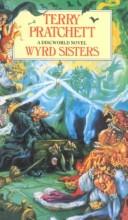
Wyrd Sisters
Three Lancre witches rescue a murdered king's baby, hide Lancre's future, and trap a guilty duke with a play in Ankh-Morpork.
3,085-word summary · 14 min read
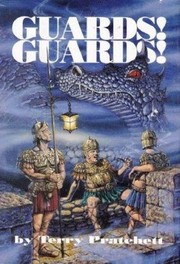
Guards! Guards!
A drunk captain, his last two guards, and an earnest recruit face a summoned dragon in Ankh-Morpork in Pratchett's funny eighth Discworld book.
2,307-word summary · 10 min read

Reaper Man
Death gets fired and farms while Windle Poons refuses to die.
2,579-word summary · 11 min read
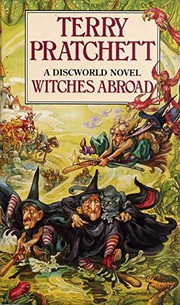
Witches Abroad
Three Lancre witches fly to Genua to stop a fairy godmother from forcing a servant girl into a storybook marriage, and find a city arranged around a happy…
2,651-word summary · 12 min read
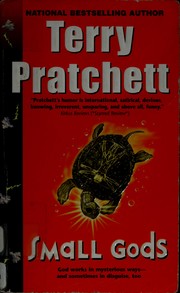
Small Gods
God Om trapped as a tortoise must convince novice Brutha to save Omnia from its own church.
2,063-word summary · 9 min read
Men at Arms
The City Watch gets new recruits and a murder case when the Disc's only handgun turns up in Ankh-Morpork, in the fifteenth Discworld novel.
2,216-word summary · 10 min read
Hogfather
Death fills in for a missing Father Christmas, Susan Sto Helit hunts the Hogfather, and the twentieth Discworld novel turns Santa into a management problem.
2,871-word summary · 13 min read
Night Watch
Vimes is thrown back in time and must train his young self through a revolution.
2,003-word summary · 9 min read

The Wee Free Men
Nine-year-old Tiffany Aching teams with the Nac Mac Feegle to rescue her brother from the Fairy Queen.
2,600-word summary · 12 min read
The Blinding Knife
Kip trains to join the Blackguard while the Prism hides his true identity, loses his colors, and fights a war against a rogue drafter who wants to birth a god.
2,049-word summary · 9 min read

Inkdeath
The final Inkworld novel sends Mo into the land of the dead, leaves Meggie choosing between two boys, and ends the Adderhead's immortality with three written…
2,062-word summary · 9 min read
Dawnshard
Rysn sails toward forbidden Akinah to save her dying larkin and finds a Dawnshard guarded by the Sleepless.
3,229-word summary · 14 min read

The Field Guide
Three siblings move into a creepy Maine estate, anger a brownie, and find a forbidden guide to the fairy world in the first Spiderwick book.
2,033-word summary · 9 min read
Secrets of the Dragon Sanctuary
Kendra is replaced by a plant copy and held by the Society, while Seth steals a unicorn horn so the family can enter a dragon sanctuary.
2,590-word summary · 12 min read

Lioness Rampant
Alanna searches for the Dominion Jewel with the Shang Dragon, then returns to Tortall to face Duke Roger at Jonathan's coronation.
2,478-word summary · 11 min read
The Time Paradox
When his mother falls ill with a fairy disease, Artemis Fowl travels back in time to find the extinct lemur that can cure her and confronts his younger self.
2,601-word summary · 12 min read
The Golem's Eye
Two years after The Amulet of Samarkand, Nathaniel is a rising bureaucrat, Bartimaeus is his unwilling servant again, and something made of clay is tearing…
2,299-word summary · 10 min read
Magician's Gambit
Garion and his companions cross haunted Maragor and the caves beneath Rak Cthol to recover the Orb of Aldur.
2,391-word summary · 11 min read
Homeland
Drizzt Do'Urden is born into the cruel drow city of Menzoberranzan, where his father teaches him to fight and to doubt everything his family believes.
2,303-word summary · 10 min read
Enchanters' End Game
Garion marches toward Torak while Ce'Nedra leads the West's army in the final Belgariad volume, where prophecy and war meet.
2,557-word summary · 11 min read
Nettle & Bone
Marra, a princess in a convent, leaves to save her abused sister, but first she must finish three impossible tasks: a bone dog, a nettle cloak, moonlight in a…
2,061-word summary · 9 min read
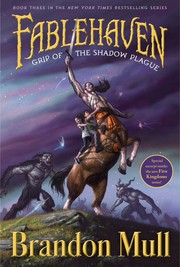
Grip of the Shadow Plague
A plague turns Fablehaven's creatures of light into shadows while Kendra hunts an artifact in Arizona and Seth races to find the cause.
2,131-word summary · 9 min read

The Rose & the Dagger
Shahrzad is pulled from her Caliph husband and left in a desert camp of rebels, needing to break his curse and end a war before it ends her.
2,520-word summary · 11 min read
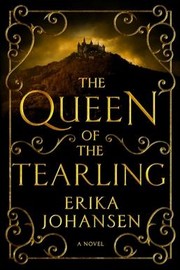
The Queen of the Tearling
Nineteen-year-old Kelsea leaves the woods to take her throne, ends a shipment of human captives, and draws the Red Queen's revenge.
2,357-word summary · 10 min read
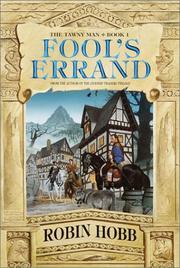
Fool's Errand
FitzChivalry Farseer has lived in exile for fifteen years. When Prince Dutiful vanishes before his betrothal, Fitz returns to Buckkeep to find him, with a wolf…
2,606-word summary · 12 min read