
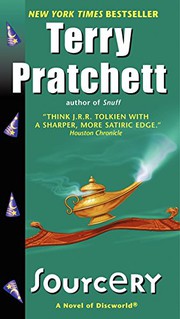
Reading options
What's inside (9 sections)
Some Discworld books work as a first date with the series. Sourcery is not one of them, and I mean that as praise.
It is the fifth Discworld novel, published in 1988, the same year Pratchett brought out Wyrd Sisters, and the third to follow Rincewind, the failed wizard who once carried one of the Octavo's eight great spells in his head and has spent every book since trying to avoid anything that interesting happening to him again. By now the series has its own gravity. The Librarian is an orangutan. The Luggage is a suitcase with hundreds of little legs and a serious loyalty problem. Death speaks in a voice that does not need capitals. If you have not been introduced, Sourcery still works, but half the jokes slide past and the ending means less than it should.
What pulled me back to it this time is the premise. Sourcery takes a rule the earlier books mention in passing, that wizards are not allowed to marry or have children, and builds an entire catastrophe out of it.
An eighth son of an eighth son of an eighth son
On the Disc, eight is a magical number. The eighth son of an eighth son is born a wizard. That sounds fine until you follow the arithmetic one step further: the eighth son of an eighth son of an eighth son is born a sourcerer, a wizard who is a source of magic rather than a channel for it. Ordinary wizards borrow from the world's background magic and give it back, more or less. A sourcerer manufactures the stuff, and the first ones caused the Great Mage Wars, which left whole regions of the Disc uninhabitable. Hence the rule. Hence the family curse waiting to happen.
Ipslore the Red broke that rule. He married, had eight sons, and was banished from Unseen University for it. His wife died. When Death comes for him in the opening pages, Ipslore refuses to go quietly. He pours his spirit into his wizard's staff and leaves the staff to his eighth son, Coin. Death cannot take him. Striking the staff to reach him would kill the boy, and the boy has done nothing wrong yet. So Death, in one of those moments where Pratchett's cosmic bureaucracy turns genuinely unsettling, simply waits.
Eight years later, Coin arrives in Ankh-Morpork. He is a small, polite child holding a staff that talks to him in his father's voice, and he is the most powerful being on the Disc.
The university rolls over
The Archchancellor-designate of Unseen University, Virrid Wayzygoose, is murdered by Coin before his induction ceremony. Coin then walks into the Great Hall, defeats one of the University's senior wizards in front of everyone, and is promptly welcomed by the rest of them. That last part is the joke, and it is not really a joke: the wizards of Unseen University are academics first and heroes never. They see which way the wind is blowing and they hang their robes on it. Pratchett, who spent decades writing about institutions and the people inside them, knows exactly how little resistance a room full of careerists offers when the alternative is a fight.
Under Coin's presence, magic floods into the world. Ordinary wizards find their powers inflated by the ambient stuff, and Ankh-Morpork discovers what happens when a faculty of insecure men suddenly gets everything it ever wanted. The wizards take over the city, scrub it into a pristine and slightly wrong version of itself, and turn its ruler, Lord Vetinari, into a newt. Plans are made to take over the world in a general, committee-approved sort of way. Give a mediocre man a windfall and watch what he does with the furniture: this is one of Pratchett's cleanest studies of the theme.
Rincewind, the Luggage, and the Librarian miss all of it. They fled the University shortly before Coin's arrival, having noticed that every magically sensitive pest in the building had packed up and left, which is the closest thing to a fire alarm the place has. They end up at the Mended Drum, drinking and pretending not to be worried.
The hat, the thief, and the boat
At the Drum, a woman called Conina turns up with a box. Conina is the daughter of Cohen the Barbarian, the greatest hero the Disc has ever produced, and she has spent her adult life trying to have a quiet career as a hairdresser. Her blood will not let her. She walks into rooms the way a blade walks into a duel, and when the plot needs a hero she cannot help being one.
The box contains the Archchancellor's hat, which she stole from Wayzygoose's chambers. The hat is not just a hat. It has been worn by hundreds of Archchancellors, and some of their personality has soaked into it, along with their accumulated opinions about how wizardry ought to be run. It is sentient in a fussy, institutional way. It has decided that Coin is a threat to wizardry and to the world, and that the two are more or less the same thing. Through a mixture of persuasion and the kind of pressure only a magic hat and a professional thief can apply, it dragoons Rincewind onto a boat to Al Khali, a city across the sea, where the hat insists there is someone fit to wear it.
This is the best structural move in the book. The hat gives an otherwise passive protagonist a quest, and it gives Pratchett an excuse to write an extended tour of heroic fantasy's furniture at the expense of fate, prophecy, and destiny. Rincewind spends most of the voyage looking for a way off the boat. The hat spends most of it being insufferable. Both are correct.
Al Khali, city of stories
The middle of the book lives in Al Khali, and how much you enjoy it depends on how much you like Discworld at its silliest. The city is ruled by Creosote, a young and dreamy Seriph who inherited the throne, the treasury, and a lamp with a genie in it, and whose main interests are poetry and being told stories. His vizier, Abrim, is treacherous in the traditional manner. Pratchett runs the whole adventure-story kit through the wash: harems, snake pits, flying carpets, a palace that looks like it was built by someone who had read about palaces and never seen one.
Rincewind gets thrown into the snake pit, where he meets Nijel the Destroyer, a barbarian hero in training who has read too many books about barbarian heroes and can quote all the right moves without being able to perform any of them. Conina is installed in the Seriph's harem, where the nightly entertainment is storytelling and the ongoing problem is that nobody will let her leave. The Luggage, having been rejected by Conina in a scene it takes deeply personally, wanders off into the desert, gets drunk, and eats several things it should not have. I had forgotten how funny that subplot is. A suitcase cannot speak, and Pratchett still gives it an inner life, a wounded dignity, and a body count.
Not everything lands. The Al Khali section is long, some of its comedy runs on repetition, and the pacing slackens in a way that later Discworld novels simply do not. But it earns its keep with Abrim, who puts on the Archchancellor's hat hoping to steal its power and gets possessed by it instead. The hat, loaded with centuries of committee experience, turns out to be a better wizard than any living one, and it fights the sourcery-empowered wizards of Ankh-Morpork to a standstill while building a tower of its own. The Luggage eventually settles that fight by walking through the front door. The tower falls, the hat is destroyed, and our heroes escape on the Seriph's flying carpet as the palace comes down around them.
The world with too much magic
Back in Ankh-Morpork, Coin has concluded that the old wizarding orders are obsolete and ordered the Library burned. Themed orders, robe colors, graded degrees: all of it, gone. It reads as a joke about institutional reform until you remember who is doing the reforming. Coin is not freeing anyone. He is clearing the field.
The Librarian saves the Library's books by hiding them in the ancient Tower of Art, because of course he does. The Librarian has been the moral center of every book he appears in, and here he is the one who finally shames Rincewind into going back and doing something.
By then the situation is dire. With the old orders gone, wizards across the Disc have started fighting each other on a scale that threatens to take the world with them. Coin, told that wizards still answer to the gods, imprisons the gods in an alternate reality that collapses into a pearl the size of a fist, which is a thing you can do when you are a source rather than a channel. What he does not know is that the gods had also been holding the Ice Giants in check. The Ice Giants are now strolling across the Disc, freezing everything in their path. The boy has removed every adult from the room and is discovering that the adults were load-bearing.
Rincewind, humiliated by Creosote's casual contempt for wizards, steals the flying carpet and heads home. When the Librarian tells him what is at stake, he does something I did not expect on this reread: he goes to face Coin. Not bravely, exactly. Rincewind has never done anything bravely in his life. He goes the way a man goes to a dentist, because the alternative is worse, and because somewhere under the cowardice there is a small, stubborn thing that does not want the world to end.
A sock, a child, and the end of everything
The confrontation between Rincewind and Coin is the heart of the book, and it works because Pratchett refuses to make it a fight. Rincewind's only weapon is a sock with a half-brick in it, and his only real protection is that he has no magic in him at all. There is nothing in him for sourcery to grab hold of. He is a hole in the shape of a man, and Coin cannot fill him.
Ipslore, from inside the staff, pushes his son to kill the intruder. Coin hesitates. He is a child, and Rincewind treats him like one, which no one else has done since the staff took over his life. What follows is not really an argument. It is Rincewind being too tired to be properly scared and saying the obvious thing: that this is not what being a wizard is supposed to mean, that the staff is not his father, that the boy can put it down.
When Coin finally throws the staff away, Ipslore channels everything he has through it, and for a moment father and son fight across the room. The other wizards flee. Rincewind grabs the child and hauls them both out of the world entirely, into the Dungeon Dimensions, the grey emptiness behind reality where the Things live. Death strikes the staff and takes Ipslore's soul. Rincewind shoves Coin back toward the University, tells him to go home, and stands alone against the Things with his other sock, this one filled with sand, swinging it like a man who has decided that if he is going to die he would at least like the death to be stupid. The Luggage charges in after him, because whatever else you say about the Luggage, it never abandons him.
Free of the pearl, the gods return and stop the Ice Giants. Coin undoes what he did to the city and the University, puts Vetinari back the way he was, and finds Conina and Nijel looking for Rincewind. He makes them forget. It is a kindness, and like most of Coin's decisions it is also a theft: he erases Rincewind from their story because remembering would hurt, and Coin has decided he is allowed to make that choice for them. Conina and Nijel leave together, happy, and do not know why. Then Coin looks at what he is and does the only sensible thing. He is too powerful to stay. He steps into a dimension of his own making and is never seen on the Disc again.
The last scene is the Librarian, alone in the Library, placing Rincewind's battered hat on a pedestal. The narrator's closing line gets me every time: a wizard will always come back for his hat. It is the kind of ending Pratchett wrote better than anyone, funny and sincere in the same breath, and it is also a cliffhanger, because Rincewind is still stuck in the Dungeon Dimensions. The next book, Eric, opens with him there.
What holds up, and what does not
The reception at the time was strong. The Times called it a memorable account of how we adapt power before it adapts us, and suggested it might be Pratchett's masterpiece. Publishers Weekly praised the wordplay, noting that the author never takes himself or his message too seriously. The reviewer at SF Reviews, more skeptical, gave it three and a half stars and observed that early Pratchett was barely scratching the surface of what his wit could eventually do. That is the fairest verdict I have seen. Sourcery is a very good Discworld novel standing next to the great ones that came after it. The Al Khali stretch sags, a couple of chase sequences repeat their own gags, and the prose occasionally reaches for a joke it cannot quite land. None of that stops the last fifty pages from being excellent, and none of it stops Coin from being one of the most quietly sad figures in the series: a boy who was never given a life, only a staff.
If you are new to Discworld, start with Mort or Guards! Guards! and come back to this one once you know what an Archchancellor is supposed to do. If you have already read a few, Sourcery is the book where you can watch the series figure out how big it is allowed to be. It is the fifth novel, and it is the first one that feels like the Discworld could hold anything.
FAQ
Do I need to read the earlier Discworld books before Sourcery?
It is the fifth Discworld novel and the third featuring Rincewind, and it can be read on its own. The Luggage, the Librarian, and Rincewind's history land harder if you have read The Colour of Magic and The Light Fantastic first.
Why are wizards not allowed to marry on the Discworld?
Because the eighth son of an eighth son is born a wizard, and a wizard's eighth son is born a sourcerer, a direct source of magic powerful enough to cause the Great Mage Wars.
Does Rincewind die at the end of Sourcery?
No, but he ends up trapped in the Dungeon Dimensions after saving Coin, and the final scene leaves his hat waiting for him in the Library. The next novel, Eric, starts with him still stuck there.
Similar books
More from Discworld first, then related titles.
The Color of Magic
A failed wizard guides a tourist across a flat world on a turtle, with comic fantasy chaos.
2,032-word summary · 9 min read
The Light Fantastic
Rincewind and Twoflower fall off the world while wizards race a red star.
1,974-word summary · 9 min read
Equal Rites
A dying wizard passes his staff to a baby girl, and Granny Weatherwax escorts Esk to Unseen University in Pratchett's third Discworld book.
2,871-word summary · 13 min read
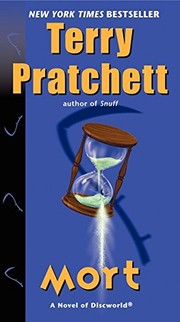
Mort
Death hires apprentice Mort in this 1987 Discworld comedy, where a spared princess splits reality and duty bends for love, with no Rincewind.
2,386-word summary · 11 min read
Wyrd Sisters
Three Lancre witches rescue a murdered king's baby, hide Lancre's future, and trap a guilty duke with a play in Ankh-Morpork.
3,085-word summary · 14 min read
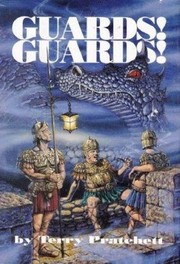
Guards! Guards!
A drunk captain, his last two guards, and an earnest recruit face a summoned dragon in Ankh-Morpork in Pratchett's funny eighth Discworld book.
2,307-word summary · 10 min read
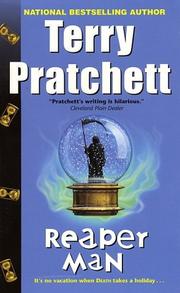
Reaper Man
Death gets fired and farms while Windle Poons refuses to die.
2,579-word summary · 11 min read
Witches Abroad
Three Lancre witches fly to Genua to stop a fairy godmother from forcing a servant girl into a storybook marriage, and find a city arranged around a happy…
2,651-word summary · 12 min read
Small Gods
God Om trapped as a tortoise must convince novice Brutha to save Omnia from its own church.
2,063-word summary · 9 min read
Men at Arms
The City Watch gets new recruits and a murder case when the Disc's only handgun turns up in Ankh-Morpork, in the fifteenth Discworld novel.
2,216-word summary · 10 min read
Hogfather
Death fills in for a missing Father Christmas, Susan Sto Helit hunts the Hogfather, and the twentieth Discworld novel turns Santa into a management problem.
2,871-word summary · 13 min read
Night Watch
Vimes is thrown back in time and must train his young self through a revolution.
2,003-word summary · 9 min read
The Wee Free Men
Nine-year-old Tiffany Aching teams with the Nac Mac Feegle to rescue her brother from the Fairy Queen.
2,600-word summary · 12 min read
Going Postal
A hanged con artist must revive Ankh-Morpork's dead Post Office and outwit a murderous rival in Pratchett's 33rd Discworld novel.
2,228-word summary · 10 min read
Magician: Apprentice
An orphan kitchen boy and a smith's son grow up in a frontier castle just as invaders from another world open a rift and begin a war that will change both of…
2,114-word summary · 9 min read
Ghost Story
Dead but not gone, Harry Dresden returns as a spirit to find his killer, protect the friends he left behind, and learn why the afterlife gave him a second…
1,978-word summary · 9 min read
Cold Days
Back from the dead as the Winter Knight, Harry Dresden must follow Mab's order to kill an immortal and defend Demonreach on Halloween night.
2,361-word summary · 10 min read
Turn Coat
Morgan asks Harry for sanctuary as the Council calls him traitor.
2,590-word summary · 12 min read
Small Favor
Harry owes Mab a favor and must find Marcone while Denarians hunt a holy girl.
2,741-word summary · 12 min read
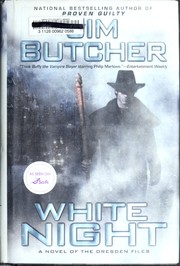
White Night
Wizard Harry Dresden hunts fear-feeding White Court killers preying on Chicago's minor talents, reunites with Elaine Mallory, and faces a coup at Chateau Raith.
2,521-word summary · 11 min read
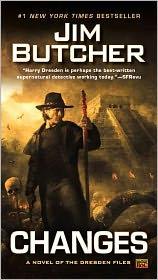
Changes
Harry Dresden learns he has a seven-year-old daughter Maggie, hidden for years. The Red Court seizes her for a bloodline rite, forcing him toward Chichen Itza.
2,855-word summary · 13 min read
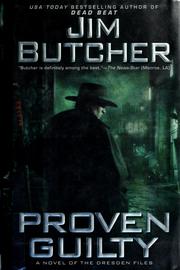
Proven Guilty
Warden Harry defends teen Molly from White Council while fear phages stalk con.
2,068-word summary · 9 min read
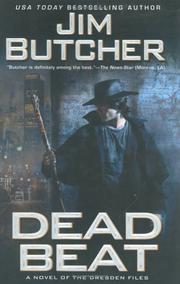
Dead Beat
Wizard Harry Dresden hunts the Word of Kemmler through necromancers to stop a Halloween godmaking rite.
2,883-word summary · 13 min read
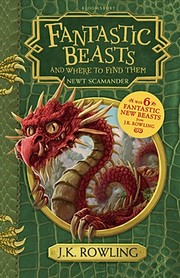
Fantastic Beasts and Where to Find Them
Newt Scamander's Hogwarts textbook catalogues 85 magical beasts across five continents.
2,669-word summary · 12 min read

The Blinding Knife
Kip trains to join the Blackguard while the Prism hides his true identity, loses his colors, and fights a war against a rogue drafter who wants to birth a god.
2,049-word summary · 9 min read

Inkdeath
The final Inkworld novel sends Mo into the land of the dead, leaves Meggie choosing between two boys, and ends the Adderhead's immortality with three written…
2,062-word summary · 9 min read
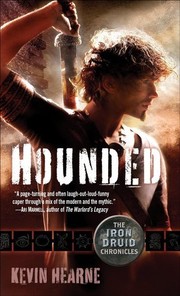
Hounded
A two-thousand-year-old druid runs a bookshop in Arizona, hides from an Irish god who wants his sword back, and talks to his dog.
2,159-word summary · 10 min read
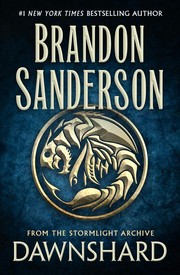
Dawnshard
Rysn sails toward forbidden Akinah to save her dying larkin and finds a Dawnshard guarded by the Sleepless.
3,229-word summary · 14 min read

The Field Guide
Three siblings move into a creepy Maine estate, anger a brownie, and find a forbidden guide to the fairy world in the first Spiderwick book.
2,033-word summary · 9 min read

Magic Burns
A magic flare hits Atlanta, and mercenary Kate Daniels must recover stolen maps, find a missing witch, and keep a teenage girl alive while Celtic gods try to…
2,021-word summary · 9 min read