
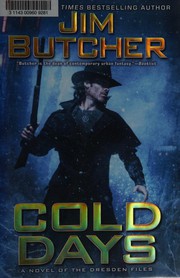
Cold Days
2,361-word summary 10 min read 528 pages in the book
- First published
- 2012
- Publisher
- Roc
- Pages
- 528
- ISBN
- 9780451464408
- Series
- The Dresden Files (#14)
Reading options
What's inside (8 sections)
The Dresden Files is one of those series that changes shape every few books, and Cold Days is a shape-change book. It is the fourteenth novel, published November 27, 2012 by Roc, 528 pages in the hardcover first edition, ISBN 9780451464408, and it opens with Harry Dresden alive in Arctis Tor, the fortress of the Winter Queen, which is not where the previous book left him. To say more about how he got there would spoil Ghost Story, but the short version is that the man who spent a year as a ghost is back in his body, and the body now belongs to Winter. Butcher had used the working title Winter Knight before settling on Cold Days, and both titles tell the truth. This is the book where Harry learns what he signed up for.
The setup is a training montage with teeth. Mab, the Queen of Air and Darkness, has been rebuilding him after the events of Changes: his back, his strength, his reflexes, his willingness to hurt people. Sarissa, a changeling who serves as his physical therapist, is the closest thing to kindness in the fortress, and she has reasons of her own for helping. The Winter Knight's mantle is not a costume. It gives Harry power he never had, and it whispers at him constantly, offering appetite in place of judgment, cruelty in place of fear. Butcher writes those whispers well, and they become the book's psychological engine.
The party in Arctis Tor
His formal introduction to the Winter Court happens at a party that is also, supposedly, his birthday party. Harry was born on Halloween, a detail the series has been saving, and the court has dressed up for the occasion in every sense. Mab presents her new knight to the assembled monsters, and Maeve, the Winter Lady, uses the evening to try to kill him. She arranges a fight with the Redcap, a fairy killer out of Scottish legend, and stacks the deck with her own people. Sarissa helps. Kringle helps, and Kringle is not a joke here; this series treats Santa as an old, dangerous power with a seasonal face, which is consistent with everything else it does with myth. Harry survives the evening by being more ruthless than the room expects, and Mab, watching, is pleased.
The reward for surviving is the plot. Mab exiles her daughter from the court and gives her new knight his first assignment: kill Maeve. She will not explain why. Harry, who has spent his whole adult life being lied to by fairies, knows that queens do not ask for a daughter's death because of a family quarrel, and that an immortal's death is not a normal job. Killing an immortal turns out to be a puzzle with a rule attached, and the rule has a deadline: Halloween, which is two days away. After that, the window closes and Maeve is untouchable again.
Chicago, off its axis
The homecoming is bleak in a way the earlier books never quite managed. Harry's life in Chicago has been dismantled during his absence. His office and apartment are gone, his possessions are mostly gone, and his name is attached to enough destruction that even his friends look at him differently. He retrieves Bob from Butters, which requires a small breaking and entering, and the skull spirit gives him the bad news about immortality: gods and queens cannot die on ordinary days, but on Halloween the masks come off, and an immortal can be killed like anyone else. Bob would rather not be involved. Bob is involved anyway.
The first friend who can still look him in the eye is Molly Carpenter, his former apprentice, now living alone and known in the supernatural underworld as the Ragged Lady. What Molly did at the end of Ghost Story left her with a fearsome reputation and a lot of fear of her own, and her old warmth is wrapped in armor. She gives him a place to stay, a place to think, and the first honest assessment of what the Winter mantle may be doing to him. She also has a new tiny bodyguard, Lacuna, who is roughly as tall as Toot-Toot and twice as hostile, and the little folk still answer when the Za-Lord calls, which is one of the few uncomplicated loyalties left.
Thomas Raith, his half-brother, is another of the few. Thomas is a White Court vampire with a hunger of his own to manage, and he and Justine provide the book's glimpses of domestic life and family loyalty between disasters. Karrin Murphy is the third: she refuses to hand over one of the Swords of the Cross, which Harry wants because he is about to fight a war and swords of faith feel like the right tool, and her refusal is correct for reasons she explains. The two of them also finally stop pretending that their years of partnership were only professional. They talk about what they might be, and both of them are realistic about the obstacles, aging and mantles and the likelihood that Harry does not get to keep his life for long.
The island that Merlin built
The plot engine is a report from Molly: power is building on Demonreach, the island in Lake Michigan that Harry has only partly understood until now. He sails out with Molly and Thomas and meets the spirit of the island, the genius loci that has been waiting for him to claim his post. The island is not a nature preserve. It is a prison, carved in tunnels lined with crystals, and the prisoners are this series' worst monsters, including things far older and worse than the naagloshii that nearly killed Harry in Turn Coat. Merlin built it, the original Merlin, and he built it to last forever, with a failsafe: if the prison is ever breached, the island will destroy itself before it lets the inmates loose, and the blast will take a large piece of the Midwest with it.
As the Warden, Harry can feel the island like another limb, and what he feels is an attack coming. Someone is preparing a ritual at the summit that will crack the prison open, and that someone is working with the Outsiders, the beings from beyond the walls of reality that the series has been building toward for years. The Outsiders are not interested in winning a fight. They are interested in ending the game, and the prison is a storehouse of things they can use. The deadline from Bob and the deadline on the island are the same date: Halloween, when the walls between worlds are thin and old rules bend.
The middle of the book is a series of consultations, and it is the part that separates readers. Harry visits Donar Vadderung, who runs a security firm out of a Chicago skyscraper and is, under the hat, Odin; he is also Kringle, which confirms what the party scenes suggested. He gets an audience with the Mothers, the oldest and most alien of the queens, who talk around the truth and let him assemble it. He asks Titania, the Summer Queen, for help and gets a refusal delivered with centuries of grief over the daughter Harry's actions cost her. He speaks with the Gatekeeper, the White Council wizard whose job is watching the Outer Gates, and learns that Winter has been fighting this war in secret the entire time, and that the thing the series kept hinting at with talk of a Black Council is connected to an infection from Outside called Nemesis, a contagion that gets inside a mind and turns it without changing how it looks. He seeks out Lily and, against his better judgment, Maeve. And he collects a fact that will matter later: the infection lets its hosts do what no fairy can, which is lie.
The Redcap, working for Maeve, raises the stakes by kidnapping people Harry cares about: Mac the pub owner, Butters, Andi the werewolf, and Thomas's Justine, with a hawthorn dart for Harry when he comes running. The damage from that dart lingers through the rest of the story, which is a nice touch; Harry does not just shake off poison anymore, or at least he should not. Rescuing the hostages and then getting to the island in time takes the whole crew, plus the little folk, plus a fair amount of luck, and the book keeps count of how few hours are left.
The Wild Hunt
The best set piece arrives on the water, where the Wild Hunt comes hunting for Harry and Murphy. The Hunt is the Erlking's host of hunters and hounds out of European folklore, and one of the pleasures of the sequence is watching Butcher write something that behaves exactly like the legend. The leader of the Hunt can be challenged, and the prize for winning is command of the Hunt itself. The Erlking leads it, Kringle rides with it, and both of them stand between Harry and the horn. Harry should not be able to survive that fight, but he has Murphy, a gun, and more nerve than sense, and the night ends with him at the head of the Wild Hunt riding across Lake Michigan on Halloween. It is a glorious image, and the book knows it.
The redirected Hunt hits the Outsiders at Demonreach. Hundreds of them are coming ashore, led by a Walker, one of the Outsiders' commanders, whom Harry calls Sharkface because the alternative is a name that crawls into your dreams. Harry's crew stands with him: Thomas fighting at the edge of his control, Molly building illusions that should be beyond her, Murphy shooting straight, the little folk swarming where they can do the most damage. Harry himself is the weapon that surprises the enemy, because his magic hurts Outsiders in ways it should not, a talent tied to a word Maeve and the Erlking both use for him: starborn. The Hunt is the hammer, and the ritual at the summit is the anvil, and Harry is the one who has to climb the hill to reach both.
The summit
At the top, everything is a mess of old loyalties. Fix, the Summer Knight, attacks Harry on sight, two knights of rival courts doing what the courts have trained them to do, and Harry puts him down without killing him. Lily, the Summer Lady, is there with Maeve, feeding power into a circle that is tearing at the island's heart, and she is not acting like a villain. She is acting like someone who has been convinced she is saving something. Maeve is the one running the con, and when Harry faces her, she beats him, because a wizard with a mantle is still smaller than a queen. So he does the thing he has been threatening to do since the party: he calls Mab, and his Queen answers.
That confrontation resolves nearly everything. Mab offers her daughter a chance to yield. Maeve refuses, and then she does something no fairy can do, which proves the infection conclusively: she lies to her mother's face. She shoots Lily dead, and the Summer Lady's mantle passes to Sarissa, Mab's other daughter, who was standing right there. Then Murphy shoots Maeve, which is the moment the book has been building toward, a mortal woman killing an immortal queen on Halloween, and the Winter Lady's mantle goes into Molly. Two young women Harry cares about are now queens of Faerie, and neither of them will be the same. The Nemesis origin gets traced to the athame from the early books, the dagger that carried the contagion into Chicago's supernatural politics, which means the war that has been escalating since book four was one enemy all along.
The aftermath is short and strange. Mab tells her knight, in effect, that he finally proved worth the trouble. Kringle tells him something more useful and more hopeful: mantles can be worn and, maybe, set down. Murphy tells him she will have his back no matter what he becomes, which is either the bravest promise in the series or the most doomed. Harry stays on the island, cutting a branch from its oldest oak to make himself a new staff, which is as close to a homecoming as the book allows. And one of the last scenes, Molly leaving with Mab for training, is genuinely unsettling, because Molly was the most innocent person in the series and now she wears the same crown as Maeve.
What works, and what does not
The back half of Cold Days is some of the best pure action Butcher has written, and the lore payoff is enormous. The reveal that Nemesis has been the hidden hand behind Aurora and behind the hints of a Black Council reorganizes the whole series in a way that is satisfying rather than cheap. Mab gets her best material yet: terrible, honest in her way, and proud in a way that costs her. The humor survives too, mostly through Toot-Toot and Lacuna. Tor.com called the book one of the best in the series when it came out, and for the final two hundred pages, that is defensible.
The first third is the price of admission. Harry spends a long time being briefed, and this is a fourteenth book whose cast has grown enormous, so half the cast takes a turn. Kirkus liked the novel but asked for stronger copy editing to fix continuity errors, and that note is fair; the series has a lot of moving parts, and Cold Days does not always keep them straight. The ending resolves three or four massive status changes in a handful of pages, and readers who wanted more room for Molly's transformation, or for the actual texture of being a new Winter Lady, will feel shortchanged. It is also the worst possible place to enter the series. This is a book for people who have read the first thirteen, and specifically for people who read Ghost Story and wanted to know what happens when a dead wizard gets his body back.
FAQ
Do I need to read the earlier Dresden Files books first?
Yes. Cold Days is the fourteenth novel and depends heavily on Ghost Story and the first thirteen books, so Storm Front is the real starting point.
What is Demonreach in Cold Days?
Demonreach is the island in Lake Michigan that turns out to be a prison built by the original Merlin to hold ancient monsters. Harry Dresden is its Warden, and if the prison is breached, its failsafe would destroy a large part of the Midwest.
What is Nemesis?
Nemesis is a contagion from beyond reality that infects minds and turns its hosts to the Outsiders' cause. Cold Days reveals it as the force behind the corruption Harry has been fighting since the early books.
Similar books
More from The Dresden Files first, then related titles.
Storm Front
Wizard PI Harry Dresden hunts heart-explosion killer in Chicago.
2,563-word summary · 11 min read
Fool Moon
Wizard Harry Dresden hunts a full moon killer through Chicago werewolf packs.
2,855-word summary · 13 min read
Grave Peril
Chicago ghosts turn murderous as Harry Dresden faces a vengeful sorcerer and Bianca's vampire trap.
3,484-word summary · 15 min read
Summer Knight
Harry refuses Mab to solve a Summer Knight murder and stop fairy war.
2,147-word summary · 10 min read
Death Masks
Wizard Harry Dresden hunts the stolen Shroud of Turin while dueling a vampire lord and facing fallen angels.
2,979-word summary · 13 min read
Blood Rites
Wizard Harry Dresden guards a porn set from entropy curses while learning brother Thomas and fighting Black Court nest.
2,211-word summary · 10 min read
Dead Beat
Wizard Harry Dresden hunts the Word of Kemmler through necromancers to stop a Halloween godmaking rite.
2,883-word summary · 13 min read
Proven Guilty
Warden Harry defends teen Molly from White Council while fear phages stalk con.
2,068-word summary · 9 min read
White Night
Wizard Harry Dresden hunts fear-feeding White Court killers preying on Chicago's minor talents, reunites with Elaine Mallory, and faces a coup at Chateau Raith.
2,521-word summary · 11 min read
Small Favor
Harry owes Mab a favor and must find Marcone while Denarians hunt a holy girl.
2,741-word summary · 12 min read
Turn Coat
Morgan asks Harry for sanctuary as the Council calls him traitor.
2,590-word summary · 12 min read
Changes
Harry Dresden learns he has a seven-year-old daughter Maggie, hidden for years. The Red Court seizes her for a bloodline rite, forcing him toward Chichen Itza.
2,855-word summary · 13 min read
Ghost Story
Dead but not gone, Harry Dresden returns as a spirit to find his killer, protect the friends he left behind, and learn why the afterlife gave him a second…
1,978-word summary · 9 min read

Iron Kissed
Mercy repays Zee by hunting a fae killer, clears his name, and finally chooses between Adam and Samuel.
2,944-word summary · 13 min read
Twelve Months
A grieving Dresden rebuilds Chicago over one year while ghouls gather and Thomas fades.
2,193-word summary · 10 min read
Hounded
A two-thousand-year-old druid runs a bookshop in Arizona, hides from an Irish god who wants his sword back, and talks to his dog.
2,159-word summary · 10 min read

Magic Burns
A magic flare hits Atlanta, and mercenary Kate Daniels must recover stolen maps, find a missing witch, and keep a teenage girl alive while Celtic gods try to…
2,021-word summary · 9 min read

The Golem's Eye
Two years after The Amulet of Samarkand, Nathaniel is a rising bureaucrat, Bartimaeus is his unwilling servant again, and something made of clay is tearing…
2,299-word summary · 10 min read

The Hazel Wood
Alice Proserpine has spent her life running from bad luck. When her mother vanishes, she follows a trail of fairy-tale clues to her grandmother's estate and…
2,064-word summary · 9 min read
Magician: Apprentice
An orphan kitchen boy and a smith's son grow up in a frontier castle just as invaders from another world open a rift and begin a war that will change both of…
2,114-word summary · 9 min read
An Enchantment of Ravens
Isobel, a mortal artist in the fairy town of Whimsy, paints a portrait of the autumn prince and falls in love with him, breaking the laws of her craft.
2,087-word summary · 9 min read
Tithe: A Modern Faerie Tale
A retelling of Holly Black's Tithe: Kaye Fierch returns to the Jersey Shore, discovers she is a changeling, and becomes the mortal sacrifice in a faerie power…
2,586-word summary · 11 min read

The Bane Chronicles
Eleven stories across five centuries follow Magnus Bane from a ban in Peru to his first date with Alec in this illustrated Shadowhunter companion.
2,470-word summary · 11 min read
Sourcery
A dying wizard hides his soul in a staff, his eighth son becomes a sourcerer strong enough to break the world, and Rincewind is sent to stop him with a sock.…
2,404-word summary · 11 min read
Dreamfever
With the walls between worlds down and Mac broken by the Fae, Dreamfever is the darkest volume of the Fever series, and the one that changes everything.
2,007-word summary · 9 min read
Deadlocked
A dead woman on Eric's lawn starts a murder investigation, a vampire queen wants Eric as her consort, and the fairies in Sookie's life close in.
2,885-word summary · 13 min read
A Deal with the Elf King
A village herbalist is exposed as the hidden Human Queen, married to a cold elf king, and given three months to save his dying kingdom or be bound to it…
2,094-word summary · 9 min read
Shadowfever
Mac Lane hunts the Sinsar Dubh in Dublin as Fae walls fail and Barrons secrets surface.
3,016-word summary · 13 min read
Bloodfever
Mac hunts the Sinsar Dubh in Dublin while Barrons tests her.
2,124-word summary · 9 min read