
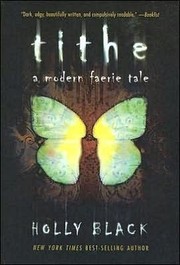
Tithe: A Modern Faerie Tale
2,586-word summary 11 min read 310 pages in the book
- First published
- 2002
- Publisher
- Simon & Schuster
- Pages
- 310
- ISBN
- 9780689849244
- Series
- Modern Faerie Tales (#1)
Reading options
What's inside (8 sections)
I picked up Tithe because I wanted the version of faeries that bites. Not the glittery, wish-granting kind, but the old folkloric kind: beautiful, capricious, and willing to ruin a human life over a debt. Holly Black's first novel delivers that in a New Jersey setting that smells of salt, boardwalk planks, and cheap beer. It is rough in places, but it has a voice and a mean streak that make it hard to shake.
A bad gig in Philadelphia
The novel opens in a Philadelphia bar where Kaye Fierch, sixteen, is killing time while her mother's band, Stepping Razor, finishes a bad set. Kaye is small, blond, half Japanese, and has spent years on the road with Ellen, her mother, a singer with a whiskey voice and a habit of choosing men who treat her badly. Ellen's boyfriend Lloyd plays guitar in the band. He is not a monster, just a mediocre man with a mean streak and a drinking problem.
Kaye notices a man with cat-yellow eyes talking to Lloyd at the bar. The man is too well dressed for the room, and his eyes reflect the light. She has learned to ignore odd things. Then Lloyd, his face blank and his pupils blown wide, lifts a knife toward Ellen's back. Kaye shoves him without thinking. He is drunk enough that her slight weight knocks him off balance, and the knife clatters to the floor. The bar piles on him. By the time the police arrive, Lloyd cannot remember anything and is screaming curses at Ellen.
The novel does not kill Lloyd. He is arrested and then he simply vanishes from the story, which is its own kind of erasure. The relationship is over. Ellen packs their clothes into plastic garbage bags, wakes her mother, and drives Kaye back to the Jersey Shore house they left six years earlier. The retreat is not a homecoming. It is a regrouping, and Kaye knows it.
Kaye grew up in that house until she was ten. She remembers the woods, the creek, the boardwalk, and three tiny faeries named Lutie-Loo, Spike, and Gristle. Everyone told her they were imaginary. Her mother still teases her about "that faerie bullshit" and "her cute imaginary friends." At sixteen, Kaye is not sure she believes it herself, but she leaves a bowl of milk on the back step anyway. That detail matters: belief here is a habit, a hope, and a way of staying loyal to a version of yourself that other people tried to talk you out of.
Janet Stone, Kaye's best friend, is still in town, with glitter makeup, platform shoes, and a cigarette always going. Janet's boyfriend Kenny is handsome and bored. Janet's older brother Corny works at a gas station, reads comics, and feels trapped in a life that is too small for him. Black introduces Corny imagining a rifle in his car and counting people he could shoot, a nasty detail the book does not soften. Corny turns out to be lonely, funny, gay, and starved for a friend. He and Kaye bond over manga and comics, and he comes out to her with a joke about Spock and Kirk. The novel is interested in people who have been told they are weird and built a personality out of the damage.
The broken carousel and the knight in the rain
Janet takes Kaye to an abandoned merry-go-round building, a decayed piece of the old Shore with lead faces over the windows and glass on the floor. The group drinks bourbon and tequila. Marcus, one of the local boys, asks Kaye what flavor of Asian she is and makes a crude joke about school uniforms. Janet tells him off. The book lets the casual racism sit without turning it into a lesson.
Kaye wanders upstairs and finds a broken carousel horse, pearl white and covered with glued-on mirror pieces, its legs shattered. She climbs onto it and imagines it alive. The horse seems to rise under her. Kenny follows her, says he saw it move, and puts his hand on her thigh. She bolts, tearing her shirt on the window, and runs home through the rain. The scene is ugly and effective, and it shows that Kaye's magic is not a cute trick. It leaks out of her when she is emotional, and it has already done something to Kenny she does not understand.
On the walk home, Kaye hears a moan in the woods. She finds a faerie knight bleeding in the mud with an iron-tipped branch jutting from his chest. He is tall, silver-haired, with pointed ears and mercury-colored eyes, and he expects her to finish him off. She pulls the branch out, tears her shirt into bandages, and summons a kelpie with a bloodied leaf and a spoken message. The kelpie comes out of the polluted stream like a black horse made of water and moss. Roiben rides it into the night. He gives Kaye three questions and warns her to stay away from the Folk, who are capricious and have little regard for mortals.
The scene is the heart of the book's appeal: the romance and the horror are the same. Roiben is beautiful and wounded, and he is also a killer. The rain, the blood, and the silver eyes all work, and the image of the knight in the mud is the one that sold the book.
Kaye's childhood friends send a message in a hollow acorn. Spike and Lutie-Loo are real. Gristle is dead. They warn her that Roiben killed him. She goes to the diner with Janet, Kenny, and their friends. Kenny follows her and kisses her, and Janet sees them. Kaye realizes she has enchanted him without meaning to. Roiben arrives, returns her repaired shirt, and admits he killed Gristle on his mistress's orders. Kaye uses her third question to demand his full name: Rath Roiben Rye. She tells him to kiss her ass. He throws her to the floor and presses his mouth to her hip. The scene is funny, scary, and a lesson in literal-minded servitude. Janet storms out. Kaye has lost her friend and gained a weapon.
Names have power
Spike and Lutie-Loo lead Kaye to the Thistlewitch, a diviner who lives in the woods and speaks in a voice like dry leaves. She explains the politics of Faerie. The Seelie Court, the bright court, and the Unseelie Court, the dark court, have a truce. The solitary fey, those who belong to neither court, must bind themselves to the Unseelie Queen, Nicnevin. Every seven years the compact is renewed with a Tithe, a mortal sacrifice. Roiben, a Seelie knight, serves Nicnevin. Nephamael, Nicnevin's knight, serves Silarial, the Seelie Queen.
The Thistlewitch also tells Kaye what she is. She is a changeling, a pixie swapped for a human baby. The real Kaye Fierch is in the Seelie Court, raised among the faeries while Kaye was raised in Philadelphia. The plan is for Kaye to pose as the mortal sacrifice. At the last moment a Seelie knight will strip her glamour, reveal her as fey, void the Tithe, and free the solitary fey for seven years. Kaye agrees, though she does not trust the plan or the adults selling it.
She rolls in clover on her grandmother's lawn, a folk trick for seeing through glamour. Her human skin peels away. Underneath she is green-skinned, black-eyed, pointed-eared, with iridescent wings. The transformation is painful and a little disgusting, and Black does not make it pretty. Kaye runs to Corny, who helps her through it, and then they take the broken carousel horse to the kelpie. The kelpie teaches Kaye glamour in exchange for the horse. He is a wonderful creation: a water horse who can become a nude young man, a murderer, a mimic, and a teacher. He tells her that "crippled things are always more beautiful." He also says magic is not the sole province of the fey. She also learns to remove the enchantment on Kenny, leaving him humiliated and confused.
Kaye goes to the Unseelie Court under Cemetery Hill. The court is a feast of casual cruelty: strange creatures, wine, a queen who enjoys watching people squirm. Nicnevin orders Roiben to bring the human girl who saved him as the Tithe. Roiben catches Kaye in her pixie form and does not recognize her. He warns her to leave. She asks for a kiss. He gives her one, and she escapes. Corny, who followed her, drinks faerie wine and falls under Nephamael's spell. Nephamael is the other exchanged knight, wearing a cape lined with thorns and an iron circlet that burns his forehead. He makes Corny his pet. Corny wanted power and found submission, and the narrative does not pretend his desire is simple.
The tithe
Days later, Nephamael replaces Kaye's crude glamour with a powerful one using a white stone amulet. Flying creatures carry her to Cemetery Hill. Nicnevin's enchantment makes Kaye agree to the sacrifice. Roiben prepares her for the ritual, and as the spell fades they talk honestly and kiss. He pulls back because he thinks she is still charmed. Kaye is chained with iron manacles. Nicnevin offers a riddle: "What belongs to you, yet others use it more than you?" Kaye answers, "A name." The queen gives Kaye to Roiben, then orders him to sacrifice her anyway.
Kaye realizes the answer to a riddle Roiben whispered to her before the ceremony. It is his name. She shouts "Rath Roiben Rye" and commands him to cut her bonds. He fights the court. Spike picks the locks on her iron cuffs. Nicnevin steps on Kaye's throat, and Roiben kills the queen. Kaye's glamour is stripped away, revealing her as a winged pixie. She orders Roiben to flee, and they escape. The sequence is messy and thrilling, and it pays off the book's central idea: a name is a handle, and whoever knows it can turn you.
The escape is not a victory. The Tithe is void, and the solitary fey are free for seven years. They run wild across New Jersey. The news reports maulings and disappearances. Kaye wants to believe her friends are good, but Roiben tells her that freedom without law is not kindness. The Tithe was a cage, but the cage was also a lid. Kaye's friends wanted out, and their freedom has a body count.
Janet calls to invite Kaye to a Halloween rave at the waterfront. Kaye tries to talk her out of it. Janet goes anyway. At the rave, the kelpie lures Janet into the water and drowns her. Kaye reaches her too late and has to persuade the kelpie to give up the body. Janet is not a villain or a fool. She is a lonely girl who made a bad choice at a party, and her death is the price of Kaye's bargain.
The bill comes due
Kaye and Roiben go to the Seelie Court's camp. Silarial, the Seelie Queen, tells them Nephamael has seized the Unseelie throne. Kaye sees the real human Kaye among the Seelie, a girl who has been raised in Faerie while Kaye was raised in Philadelphia. Kaye does not get a reunion or an explanation. She gets a mirror. Then they go back to the Unseelie Court to rescue Corny.
Nephamael has Roiben's true name, which he got from Spike before killing him. He orders Roiben to kill Kaye with a golden knife. Kaye drops iron tacks into Nephamael's wine. The iron takes him down. Corny, who has been enchanted and abused, picks up the knife and stabs Nephamael again and again. It is a brutal, sad scene, and Black lets Corny laugh while he does it, the sound of someone taking the only revenge he can reach.
Silarial arrives with her court, expecting to take over. Kaye accuses her: the amulet around Silarial's neck is the one Nephamael used, the human Kaye was in Silarial's court, the three faeries who watched Kaye were Seelie, and Nephamael ran the Tithe. Silarial planned to let Kaye die, blame Nicnevin, and rule the Unseelie Court through Nephamael. She does not deny it. Roiben declares himself King of the Unseelie Court and offers a compact. Bind to him, and he will give them all of Samhain, freedom from dusk until dawn forever. No one challenges him. Silarial retreats, taking Roiben's sister Ethine under her cloak with a cruel smile. Roiben sits on the throne with ash-colored eyes. He has won, and he has been left with a court of monsters and a sister in the enemy's hands.
Janet's funeral is small and Victorian, with maroon wallpaper and school friends whispering. Corny holds Kaye's hand through the service and says he will never be powerless again, whatever it takes. It is a promise that sounds like a threat. Kaye's mother is terrified and resolves to commute to the city instead of moving there. Later, outside a supermarket, Roiben appears. He says he has come to return the kiss he stole when she was enchanted. She tells him to take it back. He kisses her and calls himself her servant. The last line is a joke and a vow, and it lands because the book has earned it.
What the book leaves you with
Tithe is about names, consent, bargains, and the price of freedom. Kaye's power comes from knowing Roiben's name, and she uses it to save him and herself. The horror is that love and compulsion are tangled. The courts are not good and evil. They are two kinds of appetite, and the human world is not safer. It has its own predators and its own parties where a girl can get hurt.
Black's prose is lean and sharp. She has a good eye for the Jersey Shore in October: boardwalk planks, salt, dying arcades, the smell of iron and exhaust. The dialogue is often very funny, especially Corny's. The romance is intense but thin in places. Roiben is more a mood than a person, and the age gap between him and Kaye is deliberately uncomfortable. The final act is crowded. The Silarial reveal, the amulet, the rescue, the throne, the compact, and Ethine all arrive quickly, and some of it is explained rather than dramatized. Janet's death is used to raise the stakes, and the book moves on from it faster than it should. The tithe lore arrives in a chunk from the Thistlewitch, efficient but not elegant.
The book is also very frank about sex, drugs, and violence for a YA novel. Corny's relationship with Nephamael is coercive and eroticized, and the novel offers no clean moral about it. This is not a book for younger readers, and not for anyone who wants cozy faerie romance. It is for readers who like their faeries dangerous, their heroines prickly, and their endings bittersweet.
If you want a fantasy where the good queen wins, a romance that is mostly flirtation, or faeries who act as wise guides, this is not it. But if you want a book that understands why people are drawn to dangerous things, and what it costs to get free, Tithe is worth your time. It is the first of the Modern Faerie Tales, and it ends with a throne, a funeral, and a kiss outside a supermarket. That is a strange combination, and Black makes it work.
FAQ
Is Tithe a young adult novel?
Yes. Holly Black's 2002 debut was published as young adult, though it includes drug use, sexual coercion, and graphic violence.
What is Kaye Fierch?
Kaye is a pixie changeling raised as a human in Philadelphia. The real human Kaye was raised in the Seelie Court.
Does Tithe end on a cliffhanger?
It ends with Roiben on the Unseelie throne, Janet's funeral, and a kiss outside a supermarket. The main Tithe plot resolves, but the wider series continues in Valiant.
Similar books
More from Modern Faerie Tales first, then related titles.
The Lost Sisters
Taryn Duarte writes a letter to her twin, Jude, explaining how she fell for Locke and why she stayed silent while he used them both.
1,914-word summary · 9 min read

Wicked Lovely
Aislinn sees faeries and must decide whether to become Summer Queen while loving mortal Seth.
2,059-word summary · 9 min read
The Stolen Heir
Feral ex-queen Suren joins Prince Oak on a frozen quest to stop her mother, Lady Nore.
2,305-word summary · 10 min read
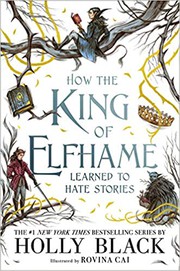
How the King of Elfhame Learned to Hate Stories
Cardan recalls a harsh boyhood and an uneasy crown in this short illustrated companion to the Folk of the Air trilogy, told wholly from his side.
2,902-word summary · 13 min read
The Queen of Nothing
Exiled Jude returns to Faerie to save Taryn and break a deadly curse.
2,091-word summary · 9 min read
The Wicked King
Jude must hold Cardan on the Elfhame throne while the Undersea plots.
3,439-word summary · 15 min read
The Cruel Prince
Mortal Jude fights for a place at the faerie court, bargaining with the prince she hates.
2,477-word summary · 11 min read

The Golem's Eye
Two years after The Amulet of Samarkand, Nathaniel is a rising bureaucrat, Bartimaeus is his unwilling servant again, and something made of clay is tearing…
2,299-word summary · 10 min read

Lore
Lore Perseous, the last of a hunted bloodline, is pulled back into the Agon when a wounded Athena offers her revenge against the god who killed her family.
2,188-word summary · 10 min read
An Enchantment of Ravens
Isobel, a mortal artist in the fairy town of Whimsy, paints a portrait of the autumn prince and falls in love with him, breaking the laws of her craft.
2,087-word summary · 9 min read

The Bane Chronicles
Eleven stories across five centuries follow Magnus Bane from a ban in Peru to his first date with Alec in this illustrated Shadowhunter companion.
2,470-word summary · 11 min read

Glass Houses
Claire Danvers moves off campus to escape a bully and lands in a house where the roommates know Morganville's real secret: the town belongs to vampires.
2,345-word summary · 10 min read
Cold Days
Back from the dead as the Winter Knight, Harry Dresden must follow Mab's order to kill an immortal and defend Demonreach on Halloween night.
2,361-word summary · 10 min read
Dreamfever
With the walls between worlds down and Mac broken by the Fae, Dreamfever is the darkest volume of the Fever series, and the one that changes everything.
2,007-word summary · 9 min read
These Hollow Vows
Brie trades with the Unseelie to save her sister and steals for a prince.
2,384-word summary · 11 min read

The Iron Queen
Meghan faces the Iron King past while Ash pays a winter price.
2,548-word summary · 11 min read
Shadowfever
Mac Lane hunts the Sinsar Dubh in Dublin as Fae walls fail and Barrons secrets surface.
3,016-word summary · 13 min read
Fated Throne
Twins face the throne trial as heirs close in and stars shift.
2,349-word summary · 10 min read
Bloodfever
Mac hunts the Sinsar Dubh in Dublin while Barrons tests her.
2,124-word summary · 9 min read

Cursed Fates
Twin heirs Tory and Darcy Vega face Lionel Acrux, brutal trials and tangled mate bonds in this fifth Zodiac Academy book, a 749-page bridge to open war and…
2,750-word summary · 12 min read

The Iron Daughter
Exiled with Ash after the scepter theft, Meghan hunts the Iron stronghold as iron magic wakes inside her.
2,995-word summary · 13 min read
Iron Kissed
Mercy repays Zee by hunting a fae killer, clears his name, and finally chooses between Adam and Samuel.
2,944-word summary · 13 min read

Shadow Princess
Tory and Darcy learn they are Phoenixes with shadows inside them and face Lionel, the Heirs and a rescue that goes wrong.
2,837-word summary · 13 min read
The Reckoning
Twin heirs survive trials and hazing at Zodiac Academy while the heirs start to split.
1,984-word summary · 9 min read
Ruthless Fae
Tory and Darcy Vega return to Solaria for a brutal second term as the heirs fight their claim and old family secrets start to surface.
3,004-word summary · 13 min read
The Iron King
Meghan Chase follows her stolen brother into the Nevernever and bargains with a Winter prince to face the Iron King.
2,720-word summary · 12 min read
The Awakening
Twin sisters Tory and Darcy Vega learn they are lost Fae heirs and enter Zodiac Academy in Solaria, where the four Heirs bully them to force them off the…
2,960-word summary · 13 min read
Queen of Shadows
Celaena returns to Rifthold as Aelin to free magic, face Arobynn and the Valg, and reunite with Rowan and Chaol.
4,447-word summary · 20 min read