
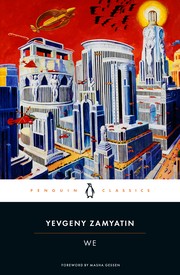
We
2,247-word summary 10 min read 225 pages in the book
- First published
- 1924
- Publisher
- Penguin Books
- Pages
- 225
- ISBN
- 9780140185850
- Original title
- Мы
Reading options
What's inside (10 sections)
Every dystopian novel you have read is a descendant of this one, and most readers come to it after learning that. We was written in 1920 and 1921 by a Russian shipbuilding engineer who had already been arrested twice by the tsarist state, and when the new Soviet state banned it, he did the one thing his narrator could never do: he got out. The manuscript was smuggled abroad, translated into English in 1924, and the Russian text did not appear in Russia until 1988. Orwell read a French translation in 1946, reviewed it, and then wrote Nineteen Eighty-Four. The debt is obvious on every page, and it says something about the book that knowing this does not spoil it. We is stranger and sadder than its famous children.
A City of Glass
The novel is the diary of D-503, a mathematician and the chief engineer of the Integral, a spaceship being built to carry the One State's version of happiness to other planets. His journal is addressed to the unknown beings out there, which gives the book its title and its best joke: he is writing a document meant to convince aliens to submit, and instead he is recording his own collapse into something like a soul.
The One State is a city of glass. Every apartment building is transparent, every citizen is a Number, and every hour of the day is assigned by the Table of Hours. Work hours, walk hours, sex hours, all scheduled and public. There is a Bureau of Guardians watching everything and everyone. There are the pink tickets, coupons that grant a citizen the right to lower the curtains and have sex with an assigned partner. There is a Green Wall around the city, keeping out the wild world and the people in it. And above everything there is the Benefactor, the ruler whose huge face appears on screens and whose Machine dispenses the final judgment on rebels.
D-503 is a true believer, and this is what makes the book work. He does not secretly dissent. He loves the Table of Hours, he finds arithmetic beautiful, and he writes sentences about the "mathematically infallible happiness" of the One State that he clearly means. His assigned lover is O-90, a round, warm Number who is too short to be permitted a child, a grief the state has ruled out of bounds for her. His best friend is R-13, a state poet with thick lips and a talent for reading the execution poems that the state publishes. Everybody in the book is a function, and none of them can see it until love and desire make them visible.
I-330
Into this world walks I-330. She smokes. She drinks. She flirts. She has a small imperfection in her teeth, and when D-503 first notices it, the sentence he writes about it is the first crack in the glass. She takes him to the Ancient House, the one building in the city built of opaque stone, decorated with a statue and old furniture and human history. She makes him laugh without permission. She has access to things she should not have access to, including a pass into the tunnels that lead under the Green Wall.
D-503 does not fall in love so much as dissolve. The journal entries begin to break apart. He skips work. He makes scenes in public. The writing style, which starts as a mathematician's ledger, turns into something closer to fever, and the Russian modernists of the 1920s borrowed from that jagged, impressionistic style all over the place. The state's diagnosis is that he has developed a soul, and the cure for a soul is a procedure.
I-330 turns out to be part of MEPHI, an underground resistance movement whose members meet in the sewers and tunnels, and whose goal is to bring down the Green Wall and destroy the One State. The movement's name is written in green letters on the wall, and the book treats it with a skepticism that has aged well. MEPHI is not a clean band of heroes. Its methods are strange and its allies stranger, including smugglers and the wild humans outside the wall who cover themselves in animal fur. D-503 becomes a courier for the resistance without ever quite understanding what he is part of, which is how most people end up in historical events.
O-90 and the Child
The book's most painful subplot belongs to O-90. She wants a child, and the law forbids her because her height is below the required standard. She asks D-503 to father one anyway, illegally, and he agrees. When the pregnancy proceeds and the child is born or nearly born, O-90 cannot bear the thought of handing it over to the state nursery, which is the rule. I-330 arranges for her to be smuggled outside the Green Wall, to live with the wild people, where her child can stay with her. It is not presented as an escape into freedom. It is presented as a door closing behind her, and the last thing D-503 knows about her is that she is gone.
The Guardians are always present in the background, and their agent S-4711 is one of the book's quiet monsters. He is described as moving in an S-pattern, and his perfume smells like eau de Cologne 4711, which is one of those details that makes the surveillance state feel physical rather than abstract. D-503 keeps catching himself under observation and cannot decide whether S-4711 is protecting him, watching him, or setting him up, and the answer is that all three are the same job.
The Great Operation
The state's counterattack, when it comes, is one of the most frightening inventions in twentieth-century fiction. The authorities announce that imagination is a disease, that it has a physical location in the brain, and that it can be cured with an operation. The Great Operation is made mandatory. X-rays are pointed at the imagination center, and the subject comes out compliant, content, and hollow.
D-503 resists until he does not. He is taken in and operated on, and the change in his journal is immediate and terrible. He becomes a model Number. He turns in the people he loves. He confesses his crimes in the most loyal language available to him. He watches I-330 taken to the Gas Bell, where prisoners are tortured by suffocation, and he feels nothing except a sort of mathematical approval that the arithmetic of the state is being maintained.
I-330 never breaks. The closing pages describe her torture and her silence. She is sentenced to the Machine of the Benefactor, the state's execution device, and she goes to it with her head up. D-503 records this in a flat, dutiful voice, and his lack of grief is the most damning evidence in the book about what the operation has done. The state, meanwhile, is winning and not winning. Parts of the Green Wall have been breached. Birds have come back through the holes, which reads like hope and is written like an infection. A temporary high-voltage wall goes up. The last line of the novel is D-503's declaration that reason must win.
Rituals of the One State
The book's worldbuilding is best when it is showing the state at worship. There is the Day of Unanimity, when every Number votes in public and the ballot is a formality, because dissent is unthinkable and the Guardians are watching. There are the public executions, staged as festivals, where state poets like R-13 read verses about the condemned before the Machine does its work. There is the march music that plays over loudspeakers so that citizens walk in step, and the Table of Hours, which turns time itself into an instrument of the state. The One State does not just punish; it schedules, celebrates, and sings, and that is what makes it feel alive rather than drawn.
The Benefactor is the center of the cult. His face appears on screens, his Machine dispenses death, and his decrees are treated as natural law. Nobody argues with the Benefactor because nobody remembers a time when the Benefactor could be argued with. That is the deepest point the novel makes about authority: tyranny does not need to be loved, it needs to be unthinkable, and Zamyatin shows the machinery that keeps it that way. The Guardians are everywhere, but the real prison is the certainty of the citizens that there is nothing else.
D-503's journals also record the small rituals of dissent, and those are the most alive pages. The illegal visits to the Ancient House. The cigarettes. The drinks. The walks taken without permission. The pink ticket used outside the ledger. The revolution in We is not fought with weapons, at least not at first. It is fought by doing small human things in a city built to prevent them, and the state's response, the Great Operation, is designed to erase the part of the mind that could ever want to.
The Style and the Translations
The prose is strange on purpose. Zamyatin was a modernist, and the journal format lets him break syntax, jump between scenes, and crash images into each other. Sentences that start as engineering notations end as poetry. Numbers become characters, equations become feelings, and by the second half the entries read like fever charts. Readers who come to the book expecting a smooth dystopian thriller like Nineteen Eighty-Four will be surprised; this is closer to a prose poem with a plot, and it rewards patience.
Translation matters more than usual here. The English editions differ on basic terms. Gregory Zilboorg's 1924 version, the first, calls the state the United State and the ruler the Well-Doer. Later translators, including Clarence Brown in the Penguin edition I recommend, use One State and Benefactor. Brown's introduction is itself worth the purchase price, because he lays out the novel's publication history and its debt to the Russian satirical tradition, and the Penguin edition is the one most readers will encounter in a bookstore or a library. A term like pink tickets is clear in any edition; the names of the state's instruments shift, so it is worth checking which translation you are holding before you quote the book at anyone.
The comparison with Orwell is unavoidable and a little misleading. Orwell's Winston rebels because he wants to be free, and his tragedy is that the state can retrain the part of him that wants. D-503 rebels because he is falling in love, and his tragedy is that the state can cut out the part of him that loves. Orwell is more political; Zamyatin is more metaphysical. Huxley, who insisted he had not read We before writing Brave New World, shares Zamyatin's interest in engineered contentment, and the three books together still form the strange trinity that every dystopia since has been rearranging.
Why It Still Matters
The things We invented are now furniture in our heads: the numbered citizens, the transparent walls, the leader with the all-seeing machine, the mandatory happiness, the torture chamber with a friendly name, the revolution that cannot be finished because revolutions are infinite. The novel's phrase for that last idea, that there is no last revolution, is the ethical center of the whole book. Any state that claims to have arrived is lying, and the only question is how it punishes the people who notice.
Orwell's review of the novel was respectful and slightly condescending, praising its imagination while noting its roughness, and his own book went on to far greater fame. The comparison is unfair to both books. Orwell is better at the texture of lived oppression, the small humiliations and the bedsit smells. Zamyatin is better at the metaphysics, the sense that a society can engineer away the part of a person that wants anything at all. Huxley and Vonnegut and Le Guin and every writer who has ever put a happy face on a surveillance state are standing on this book's shoulders, and the shoulders are narrower than they expected.
How to Read It
The first thing to know is that the prose is strange on purpose. Zamyatin was a modernist, and the journal format lets him break syntax, jump between scenes, and let images crash into each other. I recommend the Penguin edition translated by Clarence Brown, which includes a superb introduction about the novel's history, and I would also tell readers not to worry too much about keeping the Numbers straight, since the names are designed to be unmemorable and the emotional throughline is D-503's voice, which changes more than any character in the book.
The second thing to know is that the ending is neither a triumphant revolution nor a complete defeat, and readers who want a clear moral will be frustrated. MEPHI is compromised, I-330 dies, O-90 escapes into a wilderness the book refuses to romanticize, and the state survives in a damaged and threatened form. That ambiguity is the point. We is not a warning about a future that must be avoided. It is a diagnosis of a present that keeps recurring, written by a man who lived through two of them and left the manuscript behind like a message in a bottle.
FAQ
Did We influence 1984?
Yes. Orwell read a French translation in 1946, reviewed it for Tribune, and wrote Nineteen Eighty-Four shortly afterward, and critics have traced many shared features between the two books.
When was We first published?
It was written in 1920 and 1921 but could not be published in the Soviet Union. The first English edition appeared in 1924, and the Russian text was not published in Russia until 1988.
Is We hard to read?
It is short but strange: a journal written in jagged, mathematical prose with abrupt jumps in time, so readers who want a smooth narrative may find the style difficult.
Similar books

The House of the Scorpion
A clone raised in a drug lord's poppy fields learns what he was made for and chooses what to do with the life he was given.
2,527-word summary · 11 min read
The Illustrated Man
A tattooed drifter's moving pictures retell eighteen Bradbury stories of children, rockets, Mars and the last night of the world.
2,791-word summary · 12 min read
The Caves of Steel
Detective Elijah Baley must solve a Spacer's murder in a domed New York, partnered with R. Daneel Olivaw, a humaniform robot built in the victim's image.
2,445-word summary · 11 min read
The Dispossessed: An Ambiguous Utopia
Physicist Shevek leaves anarchist Anarres for capitalist Urras to share time theory, finding walls both places.
2,288-word summary · 10 min read
Parable of the Sower
Lauren Olamina flees burning Robledo with her Earthseed verses and walks north to plant a new faith.
2,311-word summary · 10 min read
The Man in the High Castle
In a 1962 America split between Japan and Germany, an antiques dealer, a craftsman, and a judo teacher cross paths over a banned novel claiming the Allies won,…
2,317-word summary · 10 min read

The Power
Girls gain electric skeins and the world reorders through four witnesses.
2,070-word summary · 9 min read
Do Androids Dream of Electric Sheep?
Bounty hunter Rick Deckard retires escaped androids in ruined San Francisco while doubting what empathy still means.
2,841-word summary · 13 min read
The Time Machine
Wells sends a Victorian inventor to the year 802,701, where idle Eloi and blind Morlocks share a dark human fate.
2,335-word summary · 10 min read

Anna Karenina
Anna leaves Karenin for Vronsky while Levin seeks faith and farming outside Moscow.
3,942-word summary · 18 min read
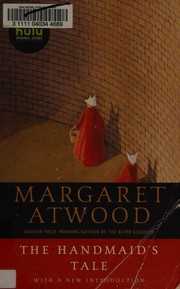
The Handmaid's Tale
Atwood's The Handmaid's Tale retold: Offred in Gilead, the Commander, Serena Joy, Mayday, and the van.
2,369-word summary · 11 min read
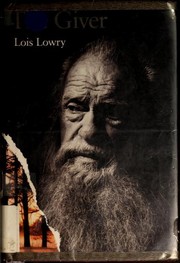
The Giver
Lois Lowry's The Giver retold: Jonas's Assignment, the memories, release, and the sled ride out.
2,510-word summary · 11 min read
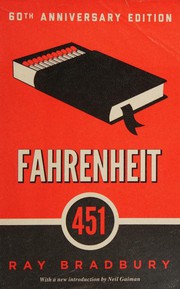
Fahrenheit 451
Bradbury's Fahrenheit 451 retold: Montag burns books, meets Clarisse, hides books, and follows the river to the readers.
2,336-word summary · 10 min read
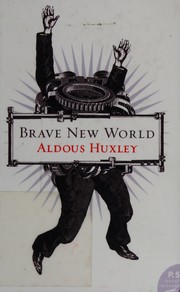
Brave New World
Huxley's Brave New World retold: hatcheries, soma, Bernard and Lenina, John the Savage, and the lighthouse.
2,513-word summary · 11 min read
1984
A long retelling of George Orwell's 1984: Winston Smith's quiet rebellion in Oceania, the Party's grip on truth and memory, and why the ending still lands as…
2,110-word summary · 9 min read

Heretics of Dune
Fifteen centuries after Leto II, the Bene Gesserit raise a new Duncan Idaho while the Honored Matres return and Rakis burns.
2,673-word summary · 12 min read

Iron Widow
Wu Zetian enlists to avenge her sister, kills her pilot, and becomes an Iron Widow in a mecha Huaxia where the machines are built to kill women.
2,444-word summary · 11 min read

The Age of Miracles
A California girl grows up while the Earth's rotation slows, and ordinary adolescence continues alongside slow catastrophe.
2,417-word summary · 11 min read
Divergent: Official Illustrated Movie Companion
An oversize behind-the-scenes guide to the 2014 Divergent film, with casting stories, costume and set design, and scores of photos.
2,524-word summary · 11 min read
The Gambler
Dostoevsky's roulette novella: Alexei loses Polina, wins a fortune, loses everything, and promises himself one more bet tomorrow.
2,022-word summary · 9 min read
The Ask and the Answer
Todd and Viola are separated in occupied Haven, where the Mayor's Ask tortures suspects and the Answer plants bombs in the name of freedom.
2,265-word summary · 10 min read
Reveal Me
A Shatter Me novella told by Kenji, set between Defy Me and Imagine Me, as the rebels learn Anderson has taken hostages and Juliette faces Emmaline.
2,098-word summary · 9 min read

Out of the Silent Planet
A Cambridge philologist is kidnapped and taken to Mars, where the natives are civilized and the humans are the dangerous invaders.
2,612-word summary · 12 min read
I Who Have Never Known Men
Forty women in a cage, one child who remembers nothing, and a nearly empty world above the bunker. Harpman's quiet, unexplained dystopia.
2,025-word summary · 9 min read

Doctor Zhivago
A doctor and poet lives through revolution, war, and love in Pasternak's novel of private life under the pressure of Russian history.
2,213-word summary · 10 min read

Wither
In a future where women die at twenty, sixteen-year-old Rhine is sold as a bride to a wealthy stranger and plots an escape from a beautiful prison.
2,395-word summary · 11 min read

The Memory Police
On an unnamed island, ordinary things keep vanishing from memory, and a novelist hides her editor from the police who make sure the vanished stay forgotten.
2,440-word summary · 11 min read
The House of Mirth
Lily Bart, beautiful and penniless at twenty-nine, navigates New York's marriage market until a Dorset yacht scandal strips her of the only currency she has.
2,468-word summary · 11 min read

Never Fade
Ruby, now a leader in the Children's League, must track down the boy whose memories she erased, because he holds the only proof of what caused the disease that…
2,188-word summary · 10 min read
The Twelve
The middle volume of the Passage trilogy braids the year America died, a picnic massacre decades earlier, and the survivors' war against the twelve master…
2,089-word summary · 9 min read