
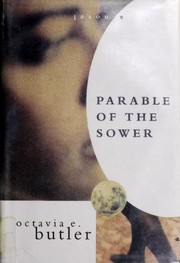
Parable of the Sower
2,311-word summary 10 min read 299 pages in the book
- First published
- 1993
- Publisher
- Four Walls Eight Windows
- Pages
- 299
- ISBN
- 9780941423991
- Series
- Earthseed (#1)
Reading options
What's inside (8 sections)
I picked up Parable of the Sower because a friend kept telling me it reads less like science fiction and more like a warning someone mailed from the future. She was right in a way that made me uncomfortable. The book came out in 1993 from Four Walls Eight Windows, and it follows a Black teenager named Lauren Olamina through a California that has come apart at the seams. My paperback-era copy of the story runs 299 pages in the first edition, and nearly every one of them feels practical. This is not a novel about heroes saving the world. It is about a girl who watches her street die, walks north with whoever she can keep alive, and starts a religion because the old ones stopped answering her questions.
Robledo behind the wall
Lauren is fifteen when the journal entries begin, living in Robledo, a small planned street near Los Angeles that has walled itself in. About a dozen households share the space inside. Her father is a Baptist minister who also teaches, and her stepmother Cory keeps the house running with a tired efficiency that Lauren respects more than she says out loud. Her brothers are younger and restless. The oldest of them, Keith, keeps slipping out through the wall to test himself against the outside, and every time he comes back a little harder and a little more pleased with himself.
Life inside runs on strict habits. Water costs real money, so baths are short and gardens get the rinse water. Everyone owns a gun or learns to borrow one. The street hires guards and builds the wall higher, and still the sounds come over it at night. Fires. Dogs fighting. People screaming a few blocks away while nobody inside dares to open the gate. Lauren describes all of this in her journal with a flat attention to detail that I found gripping. She notes what bullets cost, which neighbors share seeds, which kids are allowed past the gate and which are not. The effect is cumulative. You start to understand that the wall is not safety. It is a delay.
What makes Lauren different from the other kids is a condition she calls sharing. She feels the pain and pleasure of people around her as if it were happening to her own body. If she watches someone get hit, her own face stings. She believes she inherited it because her late mother used drugs while pregnant, and she hides it because tenderness looks like weakness in Robledo. Her father teaches her to shoot anyway, and she learns, though every lesson leaves her shaken. A girl who faints at the sight of blood she did not even lose has to train twice as hard to be taken seriously, and Lauren does.
Lauren and the verses she writes at night
At night Lauren writes verses. She has stopped believing in her father's God, a being who watches and judges and somehow permits children to starve outside the gate while sermons continue inside it. In place of that God she starts shaping an idea she will eventually call Earthseed. The core of it is simple, and she turns it over and over in her journal until it hardens. Change is the one constant in the universe. Whatever you touch will change you back. The thing to worship is not a person but change itself, and the work of a believer is to shape that change with clear eyes instead of begging it to stop.
I found these passages the strangest and strongest part of the early book. Butler gives Lauren a voice that is plain and stubborn, and the verses arrive without ceremony between entries about beans and bullets. Lauren tests each line against what she sees. Her father preaches endurance. Her neighbors pray for the return of better days. Lauren looks at the same street and concludes that better days are not coming back, so people had better learn to aim at something farther off. She settles on the stars. Earthseed, as she imagines it, exists to push human life out into space, to give the species a purpose larger than guarding a wall. It sounds grand coming from a teenager, and Butler knows it sounds grand, which is why she keeps Lauren doing chores between revelations.
Her father worries about her, in the distracted way of an overworked parent. He finds her reading everything, questioning everything, and he answers with patience that is wearing thin. Cory, her stepmother, sees more than she says. Keith keeps stealing and showing off, and the household bends around his trouble the way families do, telling itself the boy will settle. He does not settle. He runs off for good, and when the family next sees him, he is dead in a way that makes clear what the outside does to clever boys with no backup. Lauren records it all. The journal becomes the one place where she can admit that she is afraid the wall will fail and that she is already planning what to put in a bag when it does.
The night the wall fails
It fails the way everyone feared and nobody prepared for. Lauren's father goes off to his teaching work one day and never comes home. No body, no message, just absence. The street holds a service and keeps going because going is the only option, but something loosens in Robledo after that. Lauren's authority in her own head grows. She starts caching supplies with two neighbors who take her seriously, a young couple closer to her age who have also stopped pretending the wall will hold forever.
Then the raiders come, a huge rolling mob of them, many high on a street drug that makes fire beautiful to watch. They break the gate with a truck, pour through, loot, kill, and burn. Butler writes the attack in short brutal strokes. Dogs. Gunfire. Houses catching one after another. Lauren's stepmother and brothers die in it. The whole street goes up. Lauren gets out with her emergency pack, her gun, and almost nothing else, climbing over the wall she grew up behind while the neighborhood she mapped so carefully turns to smoke.
This section hit me hard, and I want to be honest that it is also where the book asks the most of you. The violence is not stylish. People Lauren loves die quickly and without speeches. There is no last-minute rescue, and Butler refuses to give the destruction a shape that flatters anyone. I admired that refusal even as I flinched at it. The point is not cruelty for its own sake. The point is that every habit Robledo built, the wall, the guns, the shared watches, was a local answer to a general collapse, and local answers run out.
North on foot with a growing company
Lauren heads north on foot toward the highway, dressed as a man, hair cut short, gun close. She has decided that the cities are death and the road is only slightly less so, and that her best chance is to keep moving toward places with water and work. Almost immediately she falls in with two other survivors from Robledo, Harry and Zahra, who have each other and nothing else. Lauren tells them part of the truth about her sharing and all of the truth about her route, and the three of them form a unit. It is a measure of Butler's skill that this small alliance feels earned rather than convenient. They argue about food, about whether to trust strangers, about God. Lauren starts speaking her Earthseed verses out loud, testing them on tired people the way you test a bridge with your foot.
More people join in ones and twos. A young couple with a baby. An older Black doctor named Bankole traveling alone with a gun he knows how to use and land waiting far up north. A woman with a small child. Others who attach themselves for a night and stay for a week. Lauren becomes the leader without ever quite campaigning for it, because she is the one who plans the watches, rations the water, and insists that everyone learn to shoot. She teaches Earthseed as they walk, not as sermons but as practical talk. If change is constant, she says, then every choice is a seed. People listen because she feeds them and stands watch, not because the verses are pretty.
The road chapters are episodic by design, and your patience with them will decide how you feel about the middle of the book. There are robberies, close calls with slavers and thieves, nights hiding from fires on the hills, a terrible stretch where Lauren has to shoot people who mean to kill her group and then suffers their dying through her sharing until she vomits. There are also quiet stretches I liked just as much. Lauren and Bankole arguing about whether Earthseed is a religion or a survival trick. Zahra asking blunt questions about sex and safety that Lauren answers without embarrassment. The baby getting sick and the whole group going still with fear. Butler keeps the scale human. Nobody topples a government. They just try to get twenty more miles up the road with everyone breathing.
One thread I found especially sharp is the talk about company towns. Travelers say desperate people are signing themselves into debt bondage in guarded settlements run by firms, trading freedom for walls and water. Lauren listens and files it away. She has seen what walls cost from the inside. The idea that the future might be a choice between the road and the collar gives her verses a harder edge. Earthseed is not only about the stars. It is about refusing both the nostalgia of people like her father and the surrender of people who will kneel for a fence.
Bankole's land and the founding of Acorn
The group aims for land Bankole owns in the north, acreage with trees and a spring that he has barely used. Getting there costs them. People die on the way, including people Lauren loves, and each death narrows her without stopping her. When the survivors finally stand on the property, it is ragged and overgrown and beautiful in the way only unwatched land can be after years of cities burning. They bury their dead there first, before they build anything. That ordering felt right to me. The settlement, which they name Acorn, starts as graves and a promise.
The last chapters move quickly from walking to settling. They clear ground, plan gardens, set watches, and argue about rules. Bankole, who is older and skeptical of Lauren's preaching, finds himself moved in spite of himself, partly by grief and partly by the plain fact that her verses kept people walking when nothing else did. Lauren writes new verses about roots and flight, about the destiny she imagines among the stars, and reads them to people who have earned the right to doubt her. The book closes not with triumph but with beginning. They have ground, water, guns, seeds, and each other. It is more than they had on the road and less than anyone deserves, and Lauren knows both things at once.
I will admit the ending left me restless in a good way. Butler does not pretend Acorn is safe. She has shown us two destroyed settlements already, and the reader understands that a third could follow. What has changed is that Lauren now has witnesses. Earthseed is no longer lines in a private journal. It is words a dozen tired people have heard and argued with and partly chosen. That feels like the honest version of hope, the kind you plant rather than the kind you announce.
What holds up and what wears thin
So much here holds up that I understand why the book keeps finding new readers. Lauren is a remarkable creation, devout and doubting at once, practical about guns and water and tender in ways she hides. The journal form suits her. Short entries let Butler move between chores and philosophy without either feeling forced, and the slow build from Robledo to the road to Acorn has a logic that survives rereading. The Earthseed idea itself earns its pages. It is not decoration. It is the engine that turns a survival trek into a story about what people owe the future.
A few things wear thin, and they are worth naming. The middle road stretch repeats its beats. Another ambush, another debate about trust, another verse, another burial. Taken one by one these scenes work, but across a hundred pages the pattern shows. Some of the later joiners stay sketches, defined by a single need or wound, and I occasionally lost track of who was who when the group passed half a dozen. Lauren's competence can also strain belief. She is a teenager who shoots, navigates, doctors, preaches, and leads, often on little sleep, and while Butler explains each skill through her father's training and her reading, there are nights on the road where she feels less like a gifted girl and more like a committee.
None of that broke the book for me. If you want a dystopia that flatters its reader with clever twists, look elsewhere. This one asks you to sit with Lauren while she counts bullets, buries friends, and rewrites her verses by firelight. I finished it thinking less about the burned street she fled and more about the question she keeps asking, which is what any of us would plant if we believed the future was still listening. That question followed me around for days, and it is why I am already planning to read the second book, where Lauren's story continues and the cost of her answers gets higher.
FAQ
When was Parable of the Sower first published, and by whom?
It appeared in 1993 from Four Walls Eight Windows. This summary follows the 299-page first edition text.
Is Parable of the Sower part of a series?
Yes. It opens the Earthseed series as book one. Lauren's story continues in The Parable of the Talents.
What is Lauren's sharing?
It is a condition that makes her feel other people's pain and pleasure in her own body. She believes it came from a drug her mother took, so she hides it on the road.
Similar books
More from Earthseed first, then related titles.
The Year of the Flood
Toby and Ren live through the plague apart, guided by God's Gardeners, then join to find Amanda.
2,422-word summary · 11 min read

The House of the Scorpion
A clone raised in a drug lord's poppy fields learns what he was made for and chooses what to do with the life he was given.
2,527-word summary · 11 min read
I Who Have Never Known Men
Forty women in a cage, one child who remembers nothing, and a nearly empty world above the bunker. Harpman's quiet, unexplained dystopia.
2,025-word summary · 9 min read

Wither
In a future where women die at twenty, sixteen-year-old Rhine is sold as a bride to a wealthy stranger and plots an escape from a beautiful prison.
2,395-word summary · 11 min read
We
In a city of glass ruled by the Benefactor, a state engineer building a spaceship falls for a woman who wants to tear the One State down.
2,247-word summary · 10 min read
The Illustrated Man
A tattooed drifter's moving pictures retell eighteen Bradbury stories of children, rockets, Mars and the last night of the world.
2,791-word summary · 12 min read

Never Fade
Ruby, now a leader in the Children's League, must track down the boy whose memories she erased, because he holds the only proof of what caused the disease that…
2,188-word summary · 10 min read
The Twelve
The middle volume of the Passage trilogy braids the year America died, a picnic massacre decades earlier, and the survivors' war against the twelve master…
2,089-word summary · 9 min read
The Caves of Steel
Detective Elijah Baley must solve a Spacer's murder in a domed New York, partnered with R. Daneel Olivaw, a humaniform robot built in the victim's image.
2,445-word summary · 11 min read
The Day of the Triffids
Blinded survivors flee carnivorous plants after a meteor shower.
2,171-word summary · 10 min read
A Canticle for Leibowitz
After nuclear war, monks save books across centuries while the world rebuilds and falls again.
2,381-word summary · 11 min read
Life As We Knew It
Sixteen-year-old Miranda keeps a diary while an asteroid strike on the moon brings tsunamis, blackouts, and a frozen year of hunger to her Pennsylvania town.
2,485-word summary · 11 min read
Among the Hidden
Twelve-year-old Luke, an illegal third child, befriends Jen and faces the cost of stepping out of hiding.
2,923-word summary · 13 min read
The Running Man
Out of work in a broken 2025, Ben Richards enters a televised manhunt where each hour alive pays cash.
2,922-word summary · 13 min read
The Infinite Sea
Cassie and Squad 53 wait out winter in a hotel while Ringer is retaken and learns the truth behind the 5th Wave.
2,985-word summary · 13 min read
Wool Omnibus
In a buried silo, a sheriff asks to go outside, and a mechanic learns why no one returns from cleaning.
2,095-word summary · 9 min read
The Passage
A failed Army experiment makes blood-hungry virals, and a quiet girl named Amy may hold the answer a century later.
2,755-word summary · 12 min read
The Man in the High Castle
In a 1962 America split between Japan and Germany, an antiques dealer, a craftsman, and a judo teacher cross paths over a banned novel claiming the Allies won,…
2,317-word summary · 10 min read
The Kill Order
Mark survives flares and Flare virus as WICKED forms thirteen years before maze.
2,129-word summary · 9 min read
Attack on Titan, Vol. 1
Humanity hides behind three walls until the Colossal Titan breaks Wall Maria and Eren Yeager vows to destroy every Titan.
2,357-word summary · 10 min read
The War of the Worlds
A Surrey writer watches Martians land in cylinders, march on London in tripods, and fall to Earth's smallest life.
2,667-word summary · 12 min read
Stranger in a Strange Land
A Mars-raised man lands on Earth, learns religion and love, and founds a church that shocks everyone.
2,725-word summary · 12 min read
The Death Cure
Thomas refuses WICKED's final test, remembers too much, and runs with the Gladers toward a last cure and a ship north.
2,955-word summary · 13 min read
The 5th Wave
Cassie Sullivan crosses ruined Ohio to save Sammy after four alien waves, trusting Evan Walker while doubting him.
3,063-word summary · 14 min read
Do Androids Dream of Electric Sheep?
Bounty hunter Rick Deckard retires escaped androids in ruined San Francisco while doubting what empathy still means.
2,841-word summary · 13 min read
The Time Machine
Wells sends a Victorian inventor to the year 802,701, where idle Eloi and blind Morlocks share a dark human fate.
2,335-word summary · 10 min read

The Scorch Trials
Thomas and the Gladers cross a burned wasteland to reach haven while WICKED watches.
2,097-word summary · 9 min read