
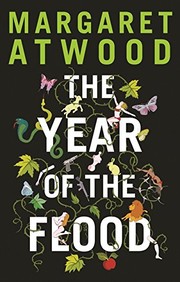
The Year of the Flood
2,422-word summary 11 min read 448 pages in the book
- First published
- 2009
- Publisher
- Bloomsbury Publishing
- Pages
- 448
- ISBN
- 9780747585169
- Series
- MaddAddam (#2)
Reading options
What's inside (8 sections)
I came to The Year of the Flood because Oryx and Crake left me with a held breath. That book ends with Snowman seeing strangers in the distance and having to decide what to do. I wanted to know who was out there. The Year of the Flood first came out in 2009 from Bloomsbury Publishing, a 448 page novel that stands as book two in the MaddAddam series. It does not continue Snowman in a straight line. It steps sideways and tells the same collapse from below, through two women who never lived inside the Compounds the way Jimmy did. That choice surprised me and then won me over.
My copy is a beat up paperback with a cracked spine. I read most of it at a kitchen table late at night, with tea going cold. The structure took a chapter to settle into. We get present tense survival, then long flashes back, then sermons and hymns tucked between. Once I caught the rhythm, I stopped checking page numbers and just followed Toby and Ren wherever they went.
Toby at SecretBurgers and the rooftop
Toby is the person I worried about most. When we meet her in memory, she is young and already tired. Her parents die in circumstances that look tied to corporate pressure and debt, and she is left to fend for herself outside the walled Compounds. She finds work at SecretBurgers, a cheap meat chain in the pleeblands where the food is suspect and the manager is worse.
That manager is Blanco. He is large, violent, and used to taking what he wants from women on staff. Toby learns to keep her head down, to count the till right, to avoid being alone with him in the back. It does not fully work. Blanco has a record of hurting and killing workers, and Toby knows she is on borrowed time. The scenes at the burger stand are greasy and close. Fryer smell. Sticky floors. A back door that does not lock right. Atwood does not linger for shock. She gives enough to make the threat plain.
Help comes from an odd direction. A group of God's Gardeners walks in, all sun hats and baskets and calm talk about vegetables. They buy food, they notice Toby, they leave a door open. Toby follows them to the Edencliff Rooftop Garden, a ramshackle commune built on roofs and empty lots where they grow beans and keep bees and mend clothes. Her old coworker Rebecca is there, cooking and teasing and telling her to sit down and eat.
Adam One leads the Gardeners. He is tall, mild voiced, certain. Outsiders call him a cult leader. Inside, people call him teacher. He preaches that a Waterless Flood is coming, a human made disaster that will clear most people away because of greed and poisoning of air and water. He keeps a calendar of saints, and they are not the usual names. Dian Fossey. Rachel Carson. Others known for defending animals or places. He hands out hymns from the God's Gardeners Oral Hymnbook and expects singing, even from skeptics.
Toby stays skeptical for a long time. She cannot swallow the theology. The prayers feel forced. The Vegivows, the promise to eat no meat, make sense to her on practical grounds but the sermons around them itch. Still, she learns. Pilar, called Eve Six, teaches her bees and mushrooms with a patience that steadies her. Nuala handles sewing and the children's choir. Burt runs garden vegetables. Katuro knows water and emergency care. Philo teaches a kind of meditation that actually helps Toby sleep. She rises to the rank of Eve, which means responsibility for knowledge and care, not power in any corporate sense. She learns to identify plants, to store seeds, to treat fevers with what is at hand.
Then Blanco finds the Gardeners. He raids, he threatens, he kills a young boy named Oates during an ambush in Heritage Park. Toby has to run again. She ends up at the AnooYoo spa, a high end place for rich women to get treatments, and she remakes herself with cosmetic surgery to hide. New skin, new hair with Mo'hair transplants, a different face in the mirror. She takes work there and keeps her head low. When the plague starts to spread, she locks herself inside the spa and lives off her Gardener skills, rationing bars, collecting rain, staying quiet while the world goes silent outside.
I loved this thread for its texture. Toby checking door bolts. Toby talking herself through hunger. Toby remembering Pilar on bees when fear spikes. It feels lived, not outlined.
Ren, Amanda and Scales and Tails
Ren is the second voice, and she sounds younger and more open than Toby. Her chapters come in first person, chatty and bruised. Her mother Lucerne starts married to a HelthWyzer scientist inside the Compounds, then falls for Zeb and drags Ren into the Gardeners as a child. Ren grows up among saints and songs, sharing a bed in crowded rooms, learning plant names, tagging after her friend Amanda.
Amanda matters a lot. She is a pleebrat Ren brings home, sharp tongued and loyal, the kind of friend who tells the truth when adults spin. The two girls split when Lucerne decides compound life is easier and pulls Ren back out. Ren goes to school, meets Jimmy and Glenn at HelthWyzer, mooned over Jimmy in that teenage way where every glance means too much. Glenn is the boy who will later call himself Crake. Even then he watches the Gardeners with bright interest, asking about their beliefs, filing them away.
Money runs out. Ren drops her dance classes at Martha Graham Academy and drifts. She ends up at Scales and Tails, a sex club inside SeksMart where women dress in sequins and feathers and perform on trapezes between private rooms. Ren dances, she sells sex, she tries to keep a boundary around herself that the job keeps rubbing thin. She sees Glenn again there, older and cooler, asking odd questions. She sees Jimmy too, tangled up with his own wants.
When the virus breaks, Ren happens to be locked in the Sticky Zone, a bio containment room at the club meant to isolate sick workers. That accident saves her. She waits, hungry and scared, listening to alarms and then to nothing. Amanda, who never joined the Gardeners fully but never forgot Ren, comes through the wrecked city and pulls her out. The reunion is messy and physical, hugging and crying and arguing about what to do next. They make for the Gardeners and then for Toby, because there is nowhere else that feels like shelter.
Ren annoyed me in spots, I admit it. She circles the same regrets about Jimmy, about her mother, about leaving Amanda. She repeats stories with small changes, the way tired people do. But her voice also carries the book's warmth. She notices clothes, songs, food. She remembers who shared a blanket. In a novel full of sermons, she keeps things human sized.
Adam One and the saints
You cannot retell this book without sitting with Adam One for a while. He preaches through half the novel in short texts between chapters. Feasts and fasts. Saints days. Warnings about eating too much, wasting water, trusting corporations to fix what they broke for profit.
His theology is a patchwork, and Atwood knows it. Bits of Bible. Bits of science. Long lists of extinct animals. Practical tips on compost laid next to prayers. He tells the Gardeners to honor each other, to keep seeds, to forgive debtors, to avoid fights. He also keeps secrets. He knows more about the Compounds than he says. He knows Zeb is restless. He knows some Gardeners will break away and form MaddAddam, a rougher group that wants to sabotage labs rather than pray.
Some readers will find these interludes slow. I did at first. Around page one hundred I started skimming hymns. Then one sermon caught me, about the liobam, a spliced creature made from lion and sheep that the firms sell as gentle and safe. Adam One calls it a sign of pride, making meat that pretends to be meek. That image stuck. After that I read the sermons more carefully. They are not decoration. They show how a community tries to hold together when science has become sales and government has become security guards.
Zeb is the counterweight to Adam One. He teaches urban bloodshed limitation and predator prey relations, which is a grand title for how to avoid getting killed. He swears, he fights, he loves Lucerne badly. He leaves with others like Shackleton and Crozier to do harder work under the name MaddAddam. His chapters, filtered through Toby and Ren, give the book grit. He does not believe prayer will stop bullets. He stays because his brother needs him and because the kids need feeding, not because he trusts the hymns.
Pilar, Rebecca, Burt and his wife Veena, their daughter Bernice, Surya, Mugi, Marushka the midwife, Stuart the furniture maker. The names pile up. Atwood gives each a small job and a habit. I forgot a few and had to flip back. That crowding is part of the point, I think. A commune is crowded. You learn who cooks, who mends, who scolds. You do not get clean arcs for everyone.
The Waterless Flood arrives
Midway, the tone shifts. The flashbacks thin. The present gets louder.
Crake's plan, which Oryx and Crake shows from inside the lab, appears here as rumor and static. BlyssPluss, a pill sold for health and pleasure, carries a hidden virus. It moves through travelers and clinics. People bleed, fever spikes, hospitals fill, screens go dark. Toby hears it through the spa walls, first as gossip from clients, then as sirens, then as silence. Ren experiences it sealed in the Sticky Zone, counting breaths, rationing water from a tap, wondering if Amanda is alive.
Atwood does not restage the lab confrontation at length. Crake and Jimmy and Oryx pass through Ren and Toby's stories at angles. Ren remembers Glenn asking about Gardeners. Toby remembers warnings from Adam One to store food and stay apart when the Flood comes. Both women survive because the Gardeners taught them to endure with little and because luck puts walls between them and coughing crowds.
Survival here is unglamorous. Toby eats dwindling spa snacks and rooftop weeds. She purifies water. She treats a cut with mold knowledge Pilar taught her. She talks aloud to keep steady. Ren and Amanda walk through empty streets, avoiding bodies, finding cans, sleeping in shifts. They meet feral pigoons, pigs grown to hold human organs, now smart and bold in packs. They see liobams loose and confused. They hear Painball announcements on dead channels, a televised game where convicts hunt each other in an enclosed forest.
I found these pages harder to read than the equivalent collapse in the first book, because the scale feels smaller and closer. Snowman watched from a beach with strange green eyed people. Toby watches from a locked spa with a mirror she dislikes. Ren walks with sore feet. The disaster is not an idea. It is blisters and thirst and whether to trust a voice at the door.
Blanco, Painball and torches
The last stretch brings the two threads together and it moves fast.
Blanco survives because he is inside the Painball arena when the plague hits, sealed off with other killers. He breaks out with three companions and tracks Toby to the spa. He wants revenge and he wants food. He catches Ren and Amanda on the way and hurts them to draw Toby out. Toby, who has spent the whole book avoiding direct fight, picks up a rifle. She shoots one man. She frees Ren. The others run with Amanda as hostage.
What follows is a hunt through overgrown parks and empty houses. Toby and Ren follow signs, argue, make up, share what little they have. They poison Blanco with doctored food and, with help from Jimmy, who stumbles into their path half starved and half mad, they bring down the other two. The violence is clumsy and costly. No one walks away clean. Oates is already dead. Others are bitten and bruised. Amanda is freed but shaken in a way that does not lift with one good night's sleep.
Atwood closes almost where the first book closed. The survivors gather, tired and wary, and see a group approaching with torches and music. In Oryx and Crake, Snowman sees unknown people and must choose. Here Toby and Ren see the same kind of arrival and must choose. Are these friends. Are these MaddAddam people. Are these another Painball crew. The book stops before answering. I liked that refusal. It keeps the trilogy honest. After a flood, you do not get certainty. You get a fire in the distance and a decision.
What held and what wore thin
The parallel structure is the win. Telling the same end from the pleeblands corrects the first book's narrow view. Jimmy knew labs and ads. Toby knows kitchens and spas. Ren knows clubs and rooftops. Together they show a whole city under stress. The Gardeners give Atwood room for humor and grief at once, saints days and seed packets beside fear of rape and hunger. Toby's spa siege and Ren's Sticky Zone wait are among the best survival writing Atwood has done, patient and sensory without showing off.
Fair criticism belongs here too. The middle repeats. Gardener feasts blur. Sermons stack up and slow momentum, especially if you read straight through. Some names never resolve into people, and I mixed up Shackleton, Crozier and Oates more than once. Ren's love ache for Jimmy circles without deepening for a stretch. Readers who want tight plotting may fidget around the second third, where lessons on compost and bees crowd out forward motion.
Who should try it. If you liked Oryx and Crake for dread and strange biology, this adds heart and community. If you enjoy stories about small groups holding together after shocks, the Gardeners will stay with you. If you need hard systems and exact timelines, the dream logic around the virus may frustrate. I closed my copy thinking about Pilar on mushrooms and Rebecca on soup, small care as resistance. After so much recent fiction about lone men with rifles, a book about women saving seeds and each other felt like fresh air, even with smoke in it.
FAQ
Is The Year of the Flood part of a series?
Yes. It is book 2 in the MaddAddam series, after Oryx and Crake and before MaddAddam. It retells the same plague from Toby and Ren.
Who are God's Gardeners?
They are an environmental religious group led by Adam One who keep seeds, honor green saints, and warn of a coming Waterless Flood.
Should I read Oryx and Crake first?
Yes, if you liked the first book. It answers who approaches at the end of Oryx and Crake, but it also stands as Toby and Ren survival story.
Similar books
More from MaddAddam first, then related titles.
Oryx and Crake
Snowman lives alone after the plague with Crake's green-eyed Children, remembering Jimmy, Crake and Oryx.
3,026-word summary · 13 min read
Parable of the Sower
Lauren Olamina flees burning Robledo with her Earthseed verses and walks north to plant a new faith.
2,311-word summary · 10 min read
The House of the Scorpion
A clone raised in a drug lord's poppy fields learns what he was made for and chooses what to do with the life he was given.
2,527-word summary · 11 min read
I Who Have Never Known Men
Forty women in a cage, one child who remembers nothing, and a nearly empty world above the bunker. Harpman's quiet, unexplained dystopia.
2,025-word summary · 9 min read

Wither
In a future where women die at twenty, sixteen-year-old Rhine is sold as a bride to a wealthy stranger and plots an escape from a beautiful prison.
2,395-word summary · 11 min read
Never Fade
Ruby, now a leader in the Children's League, must track down the boy whose memories she erased, because he holds the only proof of what caused the disease that…
2,188-word summary · 10 min read
The Twelve
The middle volume of the Passage trilogy braids the year America died, a picnic massacre decades earlier, and the survivors' war against the twelve master…
2,089-word summary · 9 min read
Life As We Knew It
Sixteen-year-old Miranda keeps a diary while an asteroid strike on the moon brings tsunamis, blackouts, and a frozen year of hunger to her Pennsylvania town.
2,485-word summary · 11 min read
Among the Hidden
Twelve-year-old Luke, an illegal third child, befriends Jen and faces the cost of stepping out of hiding.
2,923-word summary · 13 min read
The Running Man
Out of work in a broken 2025, Ben Richards enters a televised manhunt where each hour alive pays cash.
2,922-word summary · 13 min read
The Infinite Sea
Cassie and Squad 53 wait out winter in a hotel while Ringer is retaken and learns the truth behind the 5th Wave.
2,985-word summary · 13 min read
Wool Omnibus
In a buried silo, a sheriff asks to go outside, and a mechanic learns why no one returns from cleaning.
2,095-word summary · 9 min read
The Passage
A failed Army experiment makes blood-hungry virals, and a quiet girl named Amy may hold the answer a century later.
2,755-word summary · 12 min read
The Kill Order
Mark survives flares and Flare virus as WICKED forms thirteen years before maze.
2,129-word summary · 9 min read
Attack on Titan, Vol. 1
Humanity hides behind three walls until the Colossal Titan breaks Wall Maria and Eren Yeager vows to destroy every Titan.
2,357-word summary · 10 min read
The Death Cure
Thomas refuses WICKED's final test, remembers too much, and runs with the Gladers toward a last cure and a ship north.
2,955-word summary · 13 min read
The 5th Wave
Cassie Sullivan crosses ruined Ohio to save Sammy after four alien waves, trusting Evan Walker while doubting him.
3,063-word summary · 14 min read
The Scorch Trials
Thomas and the Gladers cross a burned wasteland to reach haven while WICKED watches.
2,097-word summary · 9 min read
The Maze Runner
Maze Runner retold: Thomas wakes in Glade, walls move, Grievers sting, Teresa triggers end.
1,907-word summary · 8 min read
The Hunger Games
Suzanne Collins's The Hunger Games explained: the reaping, Rue, the tracker jackers, the nightlock berry standoff, and what the arena is really for.
2,295-word summary · 10 min read
Catching Fire
Suzanne Collins's Catching Fire explained: the Quarter Quell, the arena's secret, Finnick and Johanna, and the moment the Games turn into a rescue.
2,459-word summary · 11 min read
The Testaments
Aunt Lydia, Agnes and Nicole conspire to bring down Gilead fifteen years later.
2,516-word summary · 11 min read
The Handmaid's Tale
Atwood's The Handmaid's Tale retold: Offred in Gilead, the Commander, Serena Joy, Mayday, and the van.
2,369-word summary · 11 min read

Heretics of Dune
Fifteen centuries after Leto II, the Bene Gesserit raise a new Duncan Idaho while the Honored Matres return and Rakis burns.
2,673-word summary · 12 min read
Year One
A plague released in Scotland kills most of humanity, and the survivors discover magic, build a town, and wait for a child who may save them.
2,029-word summary · 9 min read

Iron Widow
Wu Zetian enlists to avenge her sister, kills her pilot, and becomes an Iron Widow in a mecha Huaxia where the machines are built to kill women.
2,444-word summary · 11 min read
Wilder Girls
At a quarantined boarding school off Maine, three girls with strange mutations search for a missing friend and learn what the adults have hidden.
2,594-word summary · 12 min read