
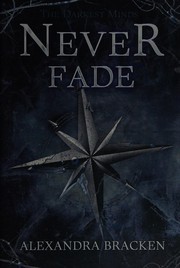
Never Fade
2,188-word summary 10 min read 507 pages in the book
- First published
- 2013
- Publisher
- Disney Hyperion
- Pages
- 507
- ISBN
- 9781423157519
- Series
- The Darkest Minds (#2)
Reading options
What's inside (8 sections)
The Darkest Minds ended with a bargain that cost Ruby everything she had left. She gave herself to the Children's League so Liam, Chubs and Zu could walk away free, and she erased herself from Liam's memory so he would never be hunted for loving her. Never Fade, published in 2013, picks up months later, and it asks the question that bargain created: how do you live as a weapon for people you half trust, when the only person who made you feel human does not remember you exist? The answer, delivered across five hundred pages of chases, betrayals and grief, is that you keep going and you pay for it in pieces.
After Thurmond
The novel opens with the dream that visits Ruby twice a month, the one that takes her back to Thurmond, the worst of the government's rehabilitation camps. She escaped that place in the first book, but the camp is still inside her head, and the government is still running camps like it all over the country. Ruby now lives on a Children's League base in California, where the League, a resistance organization that fights the government and the skip tracers, has put her in charge of a team. The kids on her crew call her Leader. She hates the word, because she knows what she is.
What Ruby is, specifically, is an Orange, a mind controller, one of the rarest and most feared of the Psi kids created by IAAN, the disease that killed most of America's children and left the survivors with powers the government could not tolerate. An Orange can enter a person's head, rewrite a memory, hollow out a conversation, make people do things and forget they did them. Ruby spent years hiding her real color, and the League has spent those years using exactly those abilities on its missions. Her team includes Vida, who is furious by default and loyal to Ruby's handler, Cate; Nico, a boy with a technical mind and a haunted face; and Jude, thirteen years old and delighted by everything, the kid who has adopted Ruby as his personal hero.
The League, she is learning, is not a family. It is an organization at war, and organizations at war do arithmetic on human lives. Its leader, Alban, treats Ruby as an asset. An operative named Rob has a plan to strap explosives to Psi children and send them into the camps as human bombs. Cate, the closest thing Ruby has to a friend among the adults, runs missions the leadership does not always know about. Ruby keeps her head down and does the work, and does not sleep much.
For readers arriving straight from the first book, the shape of Ruby's days is the point. She now runs missions that require reaching into strangers' minds, which means the power she once hid is deployed on schedule, against targets, with a handler's approval. Every operation confirms the League's assessment that she is valuable, and her own fear that she is becoming the kind of person she was afraid of in the first book. The novel keeps that fear close to the surface: nightmares, blackouts, moments where she enjoys the control a beat too long. Bracken is writing about a girl learning that survival has a moral cost, and she refuses to let the reader off the hook by making Ruby's targets villains. Some of them are just people standing in the way.
The Mission That Went Wrong
Ruby's world tilts on a rescue mission. A League agent has been captured, and Ruby defies Alban's cautious order and goes in with Vida and the team to retrieve him. The prisoner turns out to be Cole Stewart, Liam's older brother, working deep undercover. Cole is older, harder and colder than Liam, a soldier through and through, and he knows things the League needs. When Alban orders Ruby to take the flash drive out of Cole's memories by force, Ruby looks inside his head and catches a glimpse of Liam's face, and she lies about what she found to protect him.
That lie starts the plot. Cole comes to Ruby privately with a different arrangement. The flash drive everyone has been hunting contains the proof that the government was responsible for IAAN, and it is not in the hands of some enemy operative. It is in Liam's hands, because Liam took Cole's jacket by mistake when he fled Cole's apartment in Philadelphia, and the jacket had the drive in it. Cole's offer is transactional and enormous: find Liam, retrieve the drive, and Cole will steer the League away from Rob's plan to weaponize children and toward freeing the camps instead. Ruby, who has been trying not to think about Liam for months, has no choice but to say yes.
Before she can leave, the League's rot shows its teeth. Jude and Nico show Ruby security footage proving that Jarvin, one of Rob's allies, deliberately shot a young Green teammate in the back. Ruby is then assigned to Rob's command, and she uses the mission to feed him false information, accuse him over the comms of murdering children, and flee with Jude. They escape a government transport, but later, after a raid on an aid hangar goes wrong, Rob captures Ruby and drives off with her, intending to use her. Ruby does something she cannot take back. She climbs into his mind and shows him the children he has killed, all of them, until he is screaming. He crashes the car in the resulting chaos, and the manhunt brings the rest of the team, including Liam, to find her. Rob's death makes Ruby a liability to some of the League and a legend to others. It also tells her, clearly, what her second life looks like: she gets out, or her power eats her.
The Road West
Ruby and Jude run. They leave the League base intending to find Liam, and the road south and west fills up with old faces. Chubs, Liam's friend, joins them, healthier and sharper than the boy they left behind, wearing glasses he refuses to apologize for. Vida follows as well, because Vida in a walkaway is still a force of nature. Ruby is being hunted by her former employers, shadowed by the people who want the drive, and dragged forward by one simple fact: she is the only person alive who knows where the information is going next.
Then the reunion with Liam arrives, and it is everything the first book's ending promised and worse. Liam, safe and intact because of Ruby's sacrifice, does not know who she is. The memory she erased held all of it: the safe house, the cabin, their relationship, her face. He is polite to her at a gas station. He is confused by the way she flinches. And then he is pulled toward her anyway, because whatever the memory wipe erased, the instinct survived. He kisses her at a gas station pump, and the contact cracks the seal she put in his head. The memories flood back, including the realization of what she did, and the two of them have to stand inside that truth together. Ruby wiped herself out of the one life that ever made sense, to save the person living it, and he has to decide what to do with the person who made that call.
The restored relationship is the moral center of the book, and Bracken is smart about it. Guilt cannot be kissed away. Liam is furious, then sad, then tired, and the real question between them is whether a relationship built on a violation can be repaired by the people who chose it. The rest of the novel tests them against that question while the world burns.
The Second Betrayal
The group's supply lines run through Cate and Cole, and Ruby's communications with them start going wrong in ways too subtle to name. A message with Cate's personal sign-off arrives with the wrong response, and Ruby treats the compromise as confirmed. She goes to the appointed meeting in Pueblo expecting to find Cate, and finds Clancy Gray instead.
Clancy is the president's son, the first Psi kid to be publicly "cured," an Orange more sadistic than Ruby, and the author of many of the worst events of the first book. He has been running a long con on the League all along, hacking their communications through Nico, the boy on Ruby's own team who had been quietly feeding him intelligence. Clancy seizes control of Vida's mind to prove he can, then delivers the news. Rebels within the League have overthrown it. Alban is dead. Cate and Cole are imprisoned. While Ruby was chasing a flash drive, the war's leadership was being decapitated.
The second half of Never Fade is the blackest stretch of the series, and it is meant to be. An assassination attempt is made on President Gray's life, and the president's response is airstrikes on Los Angeles, the center of the children's resistance, where Ruby's group has been gathering their people. The attack kills indiscriminately. In the middle of it, hiding in a tunnel, Ruby loses Jude. The kid who followed her across the country because he believed she was a hero dies in the collapse of a concrete tunnel, and Ruby's grief becomes the thing that propels the ending, because grief that large does not leave room for anything else.
What Survives
The final movement delivers its revelations and clears the board for the next book. Clancy, who survived the strike, confesses to Ruby what Project Snowfall really was: his mother, Lillian Gray, a scientist, was researching a cure for IAAN, a way to remove the Psi abilities, and she was close when her son, who did not want to be cured, attacked her and scrambled her memories. Clancy reveals that he has destroyed the remaining papers and that anyone who wants a cure can consider the research gone.
Except that Ruby had already been through the wreckage. She salvaged the scorched pages of Snowfall, and she still has the flash drive that Liam carried. Between grief for Jude and the death of Cate's network, Ruby ends the novel holding the thing the whole war has been fought over: proof that a cure exists, and proof that the government's version of the disease's origin has been a lie from the beginning. The survivors decide to regroup near Sacramento. The League, whatever is left of it, has a new target. And Ruby, who came into the book believing she was a monster, walks out of it as the one person who might end the camps without burning down the country to do it.
The Verdict
Never Fade does the thing that second books in a trilogy rarely manage. It expands the world, darkens the tone, adds characters worth caring about, and makes the first book retroactively better. Cole, Vida, Nico and Jude all earn their pages, and Jude's death lands exactly as hard as it is supposed to. Bracken's prose is brisk, her action sequences are legible and her emotional arithmetic is cruel in the right way. The series became a New York Times bestseller and inspired a 2018 film adaptation of the first novel, and the books still have the largest following of anything Bracken, who also wrote Passenger and Lore, has published.
Content warnings are earned here too: children are killed, experimented on and used as soldiers throughout, and the violence is on the page. Readers who finished The Darkest Minds because of Ruby and Liam should come prepared for the book that separates them and tests whether they belong together. It is a middle chapter in the best sense, ending on a cliff over an open war and standing, on its own, as a story about what it costs to keep loving people in a country that has decided your life is a resource. Never Fade is not the funny one, and it is not the gentle one. It is the one that made the final book possible.
Two closing notes for readers deciding whether to continue. Cole deserves a paragraph of his own: he arrives as a hard case, all mission and no sentiment, and becomes the book's other engine, a version of Liam who took the war's cost up front and paid for it. The Stewart brothers, one erased and one armored, give the novel its spine of loyalty and its hardest question, which is what a person owes to blood and to a cause that claims the same people. The next book answers part of that. And the series itself kept growing. Bracken published novellas between the novels, collected later in a volume called Through the Dark, and in 2018 she returned to the world with The Darkest Legacy, which follows Suzume, the little girl with electricity in her hands from the first book, now grown. The 2018 film adaptation, starring Amandla Stenberg as Ruby, covered only the first novel, and no further movies followed. The books are the whole story, which is usually the right answer.
FAQ
Which colors mean which powers in The Darkest Minds?
Red means pyrokinesis, Orange means mind control, Yellow means electricity, Blue means telekinesis and Green means enhanced intelligence. Ruby is an Orange, Liam is a Blue, and Chubs is a Green.
Do I need to read The Darkest Minds first?
Yes. Never Fade begins months after the first book and depends on the twist of its ending, especially Ruby's decision to erase Liam's memory.
Is Never Fade part of a completed series?
Yes. The original trilogy ends with In the Afterlight, followed by the companion novel The Darkest Legacy and a collection of novellas called Through the Dark.
Similar books
More from The Darkest Minds first, then related titles.
The Darkest Minds
A teen with mind powers escapes a government camp and joins three runaways in Bracken's 2012 dystopia, first in The Darkest Minds series.
2,038-word summary · 9 min read
The Death Cure
Thomas refuses WICKED's final test, remembers too much, and runs with the Gladers toward a last cure and a ship north.
2,955-word summary · 13 min read
The House of the Scorpion
A clone raised in a drug lord's poppy fields learns what he was made for and chooses what to do with the life he was given.
2,527-word summary · 11 min read
Reveal Me
A Shatter Me novella told by Kenji, set between Defy Me and Imagine Me, as the rebels learn Anderson has taken hostages and Juliette faces Emmaline.
2,098-word summary · 9 min read

Wither
In a future where women die at twenty, sixteen-year-old Rhine is sold as a bride to a wealthy stranger and plots an escape from a beautiful prison.
2,395-word summary · 11 min read
The Rise of Nine
John, Six and Nine race to India to find Eight before the Mogs strike.
2,321-word summary · 10 min read
Under the Never Sky
Exiled from her Pod, Aria crosses a storm-scarred wilderness with Outsider Perry to find family and the fabled Still Blue.
2,572-word summary · 11 min read

Life As We Knew It
Sixteen-year-old Miranda keeps a diary while an asteroid strike on the moon brings tsunamis, blackouts, and a frozen year of hunger to her Pennsylvania town.
2,485-word summary · 11 min read
Among the Hidden
Twelve-year-old Luke, an illegal third child, befriends Jen and faces the cost of stepping out of hiding.
2,923-word summary · 13 min read
The Infinite Sea
Cassie and Squad 53 wait out winter in a hotel while Ringer is retaken and learns the truth behind the 5th Wave.
2,985-word summary · 13 min read
Imagine Me
Juliette remembers who she was and storms the capital to end the Reestablishment for good.
2,090-word summary · 9 min read
The Kill Order
Mark survives flares and Flare virus as WICKED forms thirteen years before maze.
2,129-word summary · 9 min read
The City of Ember
Two twelve-year-olds trade jobs and chase a chewed-up note to save their fading underground city before its lights fail.
2,998-word summary · 13 min read
Destroy Me
Shot by Juliette, Warner holds his base together while his father arrives with harsher plans for her.
2,556-word summary · 11 min read
The 5th Wave
Cassie Sullivan crosses ruined Ohio to save Sammy after four alien waves, trusting Evan Walker while doubting him.
3,063-word summary · 14 min read
The Scorch Trials
Thomas and the Gladers cross a burned wasteland to reach haven while WICKED watches.
2,097-word summary · 9 min read

Shatter Me
Juliette Ferrars, whose touch kills, is locked up by the Reestablishment until Adam and Warner pull her into war.
2,115-word summary · 9 min read
The Maze Runner
Maze Runner retold: Thomas wakes in Glade, walls move, Grievers sting, Teresa triggers end.
1,907-word summary · 8 min read
The Hunger Games
Suzanne Collins's The Hunger Games explained: the reaping, Rue, the tracker jackers, the nightlock berry standoff, and what the arena is really for.
2,295-word summary · 10 min read
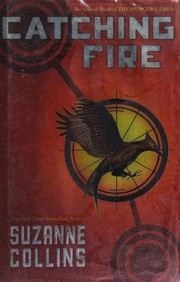
Catching Fire
Suzanne Collins's Catching Fire explained: the Quarter Quell, the arena's secret, Finnick and Johanna, and the moment the Games turn into a rescue.
2,459-word summary · 11 min read
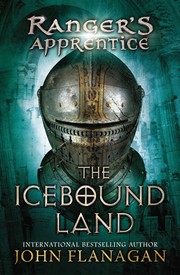
The Icebound Land
Captured and enslaved in Skandia, Will fights a drug that erases him while Halt and Horace cut a bloody road through Gallica to bring him home.
2,088-word summary · 9 min read
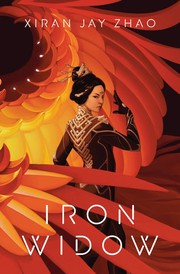
Iron Widow
Wu Zetian enlists to avenge her sister, kills her pilot, and becomes an Iron Widow in a mecha Huaxia where the machines are built to kill women.
2,444-word summary · 11 min read

Archenemies
Nova steals for the Anarchists while Adrian hides his Sentinel identity, and a serum that erases prodigy powers puts them both at risk.
2,485-word summary · 11 min read

Wilder Girls
At a quarantined boarding school off Maine, three girls with strange mutations search for a missing friend and learn what the adults have hidden.
2,594-word summary · 12 min read
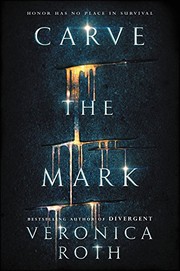
Carve the Mark
On a planet divided between conquered and conqueror, the tyrant's sister and a kidnapped oracle's son discover that their gifts make them useful to everyone…
2,340-word summary · 10 min read
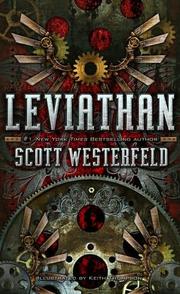
Leviathan
In an alternate 1914, a prince on the run and a girl disguised as a soldier meet aboard a living airship.
2,406-word summary · 11 min read
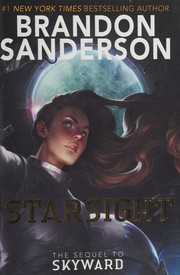
Starsight
Spensa Nightshade goes undercover aboard the Superiority space station Starsight to steal a hyperdrive, and finds a frightened bureaucracy where she expected…
2,568-word summary · 11 min read