
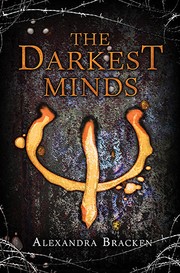
The Darkest Minds
2,038-word summary 9 min read 496 pages in the book
- First published
- 2012
- Publisher
- Disney Hyperion
- Pages
- 496
- ISBN
- 9781423157373
- Series
- The Darkest Minds (#1)
Reading options
What's inside (8 sections)
I came for the dystopia and stayed for the kids in the van
I picked up The Darkest Minds in the middle of that great young adult dystopia wave, when every other book had a brave teenager and a government that needed overthrowing. The 2012 hardcover from Disney Hyperion runs close to 500 pages, so this is a big first book in a planned series, and I went in expecting something formulaic. What I got was formula with feeling. The structure is familiar, but the characters sell it, and by the halfway mark I cared enough about four runaway kids in a stolen van that the page count stopped mattering.
The setup is simple and grim. A disease called IAAN swept through America and killed most of the country's children. The kids who survived came out changed, with strange abilities that frighten the adults left in charge. The government's answer is camps, euphemistically called rehabilitation centers, surrounded by fences and guards. Our narrator, Ruby Daly, has spent six years inside one of them.
IAAN, the color system, and Thurmond
Bracken builds her world fast and clearly, which I appreciated. After IAAN, surviving children are sorted by ability into colors. Greens are extremely intelligent. Blues can move objects with their minds. Golds, sometimes called Yellows, can control electricity. Reds can create and control fire. And Oranges can get inside people's heads, reading thoughts, planting suggestions, erasing memories.
Orange is the color everyone fears most, including, eventually, Ruby herself. A kid who can rewrite your memories is a walking threat to any authority, and the book is blunt about what happens to Reds and Oranges in the camps. They do not last long. So when ten year old Ruby realizes what she is, she does the only smart thing available. She hides it. A sympathetic doctor helps classify her as Green, the safe and boring category, and Ruby learns to keep her head down, follow the rules, and never let anyone see what she can really do.
The Thurmond chapters cover six years in compressed form. Ruby arrives at ten and grows up behind the fence, watching friends disappear, learning the camp's routines and cruelties. Days blur into uniforms, headcounts, work details, and lights out. The counselors reward obedience and punish curiosity. Kids learn not to ask where the taken ones go. Bracken does not linger here too long, which is a mercy, because camp misery can get repetitive. Instead she uses Thurmond to establish the stakes and Ruby's core wound. Before the camp, Ruby accidentally used her power on her own parents, and the memory of what she did to them, plus the fact that they turned her in, sits at the center of everything she feels about herself. She believes she is dangerous to love. That belief shapes every friendship she attempts for the rest of the book, because closeness itself feels like holding a weapon near someone sleeping.
The smartest choice Bracken makes is tying Ruby's power to guilt instead of wish fulfillment. Mind control sounds fun until you realize this particular mind controller erased herself from her own family's life.
Cate, the Children's League, and the breakout
When Ruby is sixteen, a woman named Cate Connor arrives at Thurmond posing as a doctor and tells Ruby she can get her out. Cate works for the Children's League, a resistance group fighting the government, and she claims the League has been watching Ruby and wants to help kids like her. Ruby, who has spent six years being invisible, grabs the offer.
The breakout goes wrong almost immediately. There is an ambush on the road, shooting, confusion, and Ruby ends up separated from Cate and on her own for the first time in her life. This stretch of the book is short but important, because it forces Ruby to use her abilities in the open to survive, and she hates every second of it. Every time she reaches into someone's mind, she feels the guilt spike. Bracken keeps that cost visible, which stops the powers from feeling cheap.
Cate and the League hover over the rest of the novel as a question mark. Are they rescuers or just a different kind of user? Ruby does not know, and neither do we, and that uncertainty drives a lot of her choices. She has been burned by every adult institution so far, and the League wants something from her even if Cate seems kind. That suspicion felt honest to me. A sixteen year old who grew up in a camp would not hand out trust easily. Later, when Ruby finally sees the League from the inside, the gleam wears off fast. Their headquarters runs on the same logic as the camps, sorting useful kids from useless ones, and Ruby has to decide whether being a weapon for the supposed good guys is any better than being a prisoner of the bad ones.
Liam, Chubs, and Zu
Alone on the road, Ruby falls in with three other escapees, and this is where the book finds its heart. Liam Stewart is eighteen, warm, reckless, funny, a Blue who acts like the group's big brother and moral compass. Chubs, whose real name is Charles Meriwether, is a Green, prickly and sarcastic and loyal underneath the complaining. Zu, short for Suzume, is the youngest, a Gold who barely speaks and communicates in gestures and expressions.
The four of them steal a van and head east looking for a place called East River, a rumored safe haven run by a mysterious figure called the Slip Kid. The road trip chapters are the longest section of the book and also the best. They scavenge for food, argue about directions, hide from patrols, and slowly turn into a family. Liam teaches Ruby how to be a person again. Chubs pretends to be annoyed by everyone while memorizing first aid and rationing supplies. Zu keeps finding small moments of joy, a stray dog, a working radio, that remind the older kids what they are fighting for.
There is a romance between Ruby and Liam, handled with patience I did not expect. Ruby keeps her distance because she is terrified of what her mind can do to him without meaning to. Every tender moment carries the threat that she could damage him by accident, or that knowing the truth about her would make him hate her. That tension works better than most YA love triangles, partly because there is no real triangle here, just two people circling each other while one of them keeps a devastating secret.
I should mention the scene at the abandoned houses, where the kids find a brief pocket of normal life, cooking and joking and almost forgetting the world outside. It does not last, because nothing lasts in this book, but Bracken lets it breathe. Those quiet chapters are what make the later action matter. You need to see what the kids stand to lose.
East River and the Slip Kid
East River turns out to be real, a camp of escaped kids living rough and free under the leadership of the Slip Kid. For a few chapters it looks like the promised land. There is food, shelter, community, kids being kids. Ruby lets herself hope, which in a dystopia is always a warning sign.
The Slip Kid is Clancy Gray, and the reveal of who he is reframes everything. He is the president's son, an Orange like Ruby, and the only person she has ever met who shares her abilities. At first that feels like a miracle. Someone who understands. Someone who can teach her control. Someone who is not afraid of her.
Clancy is the book's strongest creation and its darkest idea. He has had years to practice with his power and no guilt left to slow him down. Where Ruby experiences her abilities as a burden, Clancy experiences them as permission. He has been quietly manipulating everyone around him, collecting followers he controls without their knowledge, building a private kingdom inside the free camp. His scenes with Ruby are genuinely unsettling, because he keeps offering her the one thing she wants, freedom from shame, at the price of becoming like him.
The strength of the East River section is that the villain is not the government for once, but a damaged kid with too much power and no one left to tell him no. It complicates the book's morality in a way the camp chapters never could.
The climax piles on fast. The camp's location is exposed, government forces close in, and everything the kids built burns. Ruby is forced to use her powers at full strength, in ways she swore she never would, and the cost is real. People she cares about get hurt. Trust breaks. The safe haven was a trap all along, just a prettier one than Thurmond.
The ending, the memory wipe, and whether book two is earned
The final chapters hinge on one decision. Ruby realizes that as long as certain people remember her, those people are in danger, from the government, from the League, from her own uncontrollable abilities. So she does the thing she has feared since she was ten. She reaches into Liam's mind and erases herself from it. Every mile in the van, every joke, every almost kiss, gone, so that he can be safe without her.
It is a brutal ending, and I respect Bracken for committing to it. The easy version would reunite the group and promise revenge. Instead Ruby walks into the Children's League's headquarters alone, volunteering as a soldier, while the boy she loves remembers nothing about her. The last pages ache in a way most first in series books do not attempt, because they close a door instead of opening one.
Then the fair criticism, because this book earns some. The middle road trip section runs long, and readers who want constant plot may fidget during the scavenging chapters. Some of the worldbuilding creaks if you poke it. The government's plan for the camps never quite makes logistical sense, and the League's motives stay blurry partly because Bracken needs them blurry for the sequels. Chubs and Zu, wonderful as they are, get less interior life than Ruby and Liam, and Zu's silence sometimes feels like a convenient way to avoid giving her a viewpoint. And yes, if you have read several YA dystopias, you will spot some twists early, including one about a parent that the book treats as shocking.
But the things that work outweigh those complaints for me. Ruby's guilt driven narration gives the familiar material an emotional engine most dystopias lack. The found family feels earned rather than assembled. Clancy is a genuinely disturbing antagonist. And the memory wipe finale turns a standard escape story into something closer to tragedy.
A note on where the story goes from here. The book launched a series that continued with two more main novels plus a set of novellas filling in gaps around the other characters, and it was later adapted into a 2018 film, which tells you how much appetite there was for this story at the time. The sequels pick up with Ruby inside the League and follow the fallout of her choice, including what Liam does when fragments of the truth start surfacing. I will not spoil those books here, but knowing they exist changes how the ending reads. This is not a standalone with a sad cap, it is the first move in a longer game about power, memory, and who gets to decide what children are for.
As a series opener, it does exactly what it should. It tells a complete emotional story while leaving the larger war unresolved. If you like character driven dystopias with real stakes and a romance that costs something, start here. If you bounced off other books in the genre for feeling mechanical, Ruby's voice might be the one that brings you back. And if you have teenagers in the house who tore through the big dystopia trilogies, this is a strong next recommendation, darker in places than the packaging suggests, with enough heart to justify the tears at the end.
FAQ
When was The Darkest Minds published?
Published in December 2012 by Disney Hyperion. The hardcover runs 496 pages with ISBN 9781423157373.
Is The Darkest Minds the first book in a series?
Yes. It opens The Darkest Minds series, followed by two more main novels plus companion novellas.
What do the colors mean in The Darkest Minds?
Green means high intelligence, Blue telekinesis, Gold electricity, Red fire, and Orange mind control. Reds and Oranges are treated as the most dangerous.
Similar books
More from The Darkest Minds first, then related titles.
Never Fade
Ruby, now a leader in the Children's League, must track down the boy whose memories she erased, because he holds the only proof of what caused the disease that…
2,188-word summary · 10 min read
Reveal Me
A Shatter Me novella told by Kenji, set between Defy Me and Imagine Me, as the rebels learn Anderson has taken hostages and Juliette faces Emmaline.
2,098-word summary · 9 min read
Imagine Me
Juliette remembers who she was and storms the capital to end the Reestablishment for good.
2,090-word summary · 9 min read
Destroy Me
Shot by Juliette, Warner holds his base together while his father arrives with harsher plans for her.
2,556-word summary · 11 min read

Shatter Me
Juliette Ferrars, whose touch kills, is locked up by the Reestablishment until Adam and Warner pull her into war.
2,115-word summary · 9 min read
Iron Widow
Wu Zetian enlists to avenge her sister, kills her pilot, and becomes an Iron Widow in a mecha Huaxia where the machines are built to kill women.
2,444-word summary · 11 min read
Wilder Girls
At a quarantined boarding school off Maine, three girls with strange mutations search for a missing friend and learn what the adults have hidden.
2,594-word summary · 12 min read
The House of the Scorpion
A clone raised in a drug lord's poppy fields learns what he was made for and chooses what to do with the life he was given.
2,527-word summary · 11 min read
Saving the World and Other Extreme Sports
Max and the flock split in two to take down the lab behind their lives, one half in California and the other in Europe.
2,175-word summary · 10 min read
Divergent: Official Illustrated Movie Companion
An oversize behind-the-scenes guide to the 2014 Divergent film, with casting stories, costume and set design, and scores of photos.
2,524-word summary · 11 min read

Wither
In a future where women die at twenty, sixteen-year-old Rhine is sold as a bride to a wealthy stranger and plots an escape from a beautiful prison.
2,395-word summary · 11 min read
The Rise of Nine
John, Six and Nine race to India to find Eight before the Mogs strike.
2,321-word summary · 10 min read
Under the Never Sky
Exiled from her Pod, Aria crosses a storm-scarred wilderness with Outsider Perry to find family and the fabled Still Blue.
2,572-word summary · 11 min read
Shadow Me
Kenji Kishimoto narrates for the first time as he joins Nazeera on a quiet mission after Restore Me, carrying painful secrets into Defy Me.
2,512-word summary · 11 min read
School's Out - Forever
The bird kids try normal school under FBI guard until hunters crash class and chase them to Itex in Florida.
2,584-word summary · 11 min read
Life As We Knew It
Sixteen-year-old Miranda keeps a diary while an asteroid strike on the moon brings tsunamis, blackouts, and a frozen year of hunger to her Pennsylvania town.
2,485-word summary · 11 min read
Believe Me
Warner narrates life after Imagine Me as he and Juliette try to marry amid Sanctuary repairs.
2,217-word summary · 10 min read
Among the Hidden
Twelve-year-old Luke, an illegal third child, befriends Jen and faces the cost of stepping out of hiding.
2,923-word summary · 13 min read
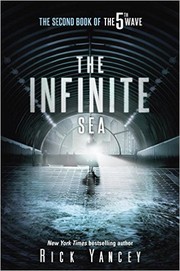
The Infinite Sea
Cassie and Squad 53 wait out winter in a hotel while Ringer is retaken and learns the truth behind the 5th Wave.
2,985-word summary · 13 min read
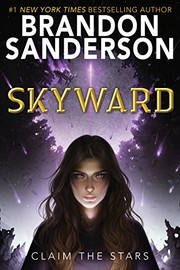
Skyward
Spensa dreams of flying for Detritus though her father was branded a coward, until a crashed ship, a talking AI, and flight school force out the truth.
2,865-word summary · 13 min read

Requiem
Lena fights in the Wilds while cured Hana marries into Portland power.
2,232-word summary · 10 min read
Messenger
Matty carries messages through a living Forest for Village until Trade Mart greed, a closing border, and his hidden gift force a final run.
2,363-word summary · 11 min read
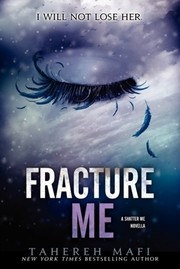
Fracture Me
Adam Kent narrates this short bridge story after Omega Point falls, hiding with his little brother James while facing his fading place beside Juliette. Best…
3,004-word summary · 13 min read

The Kill Order
Mark survives flares and Flare virus as WICKED forms thirteen years before maze.
2,129-word summary · 9 min read