
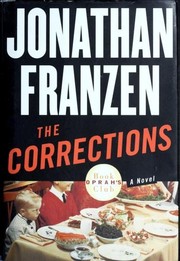
The Corrections
2,094-word summary 9 min read 576 pages in the book
- First published
- 2001
- Publisher
- Farrar, Straus and Giroux
- Pages
- 576
- ISBN
- 9780374129989
Reading options
What's inside (8 sections)
I came to The Corrections late, after hearing it described for years as the big family novel of its moment. Jonathan Franzen published it in September 2001 with Farrar, Straus and Giroux, 576 pages in the first hardcover (ISBN 9780374129989). It won the National Book Award for Fiction that year and became one of those books people argue about at tables. I expected a heavy social novel. What I found was funnier and sadder than that label suggests, a book about parents and grown children that keeps cutting between farce and grief.
The setup is simple. Alfred and Enid Lambert live in St. Jude, a Midwestern city Franzen invents, in a house full of old furniture and older rules. Alfred, once a stern railroad engineer, is sinking under Parkinson's disease. His body shakes, his mind slips, his pride holds. Enid, his wife of nearly fifty years, clings to one wish. She wants all three of their adult children home for one last Christmas. The children have scattered and stalled. Gary in Philadelphia, Chip in New York and then farther, Denise also in Philadelphia with a chef's career. Each gets a long section, and each return to St. Jude feels like a tide going out and coming back.
Franzen tells the story mostly in order of understanding rather than strict time. We meet each Lambert, learn how they earn and spend, who they sleep with and lie to, then watch them circle the parents' house. The tone shifts with each mind he enters. That movement is the pleasure of the book, and also, at times, its weight.
St. Jude and one last Christmas
The novel opens with Enid, and Franzen stays close to her worries. The house needs repair. Alfred sits in his chair, naps, loses control of bladder and temper, refuses help. Enid keeps up appearances with neighbors and church friends while quietly panicking about money, smells, and the Axon Corporation stock Alfred bought years ago. She believes a new drug called Aslan, linked to that company, might correct Alfred the way markets correct prices. The title starts to ring here. Everyone wants a correction, a fix applied from outside.
Enid's Christmas campaign drives the plot. She calls, writes, cajoles. She offers plane tickets. She hides how bad Alfred has become because she fears the children will stay away if they know. Franzen treats her without cruelty. She can be vain and nosy. She can also be brave in the plain work of feeding and dressing a man who no longer thanks her.
Alfred gets his own passages, and they are among the strongest. His inner speech still holds engineering order. He distrusts modern softness, from patent leather shoes to therapy talk, and he measures himself by control. As control leaves, his shame grows. Franzen shows the disease through tasks, buttons, forks, stairs, signatures, rather than through medical labels. Those small failures land harder than any diagnosis.
I should note the time frame. The present of the novel sits near the turn of the millennium, with memories reaching back to the children's youth and the parents' early marriage. Franzen uses that span to show how a family code formed. Alfred's reserve. Enid's hunger for pleasure deferred. The children learned both and rebelled in different directions.
Gary in Philadelphia
Gary, the eldest, looks from outside like the success. He works in finance in Philadelphia, has a house in a good suburb, a wife named Caroline and three sons. Inside, he is sinking. He drinks too much. He fights with Caroline about parenting, money, and whether he suffers from depression. Caroline thinks he does. Gary insists his gloom is clear sight.
Franzen gives Gary a dry, banker's voice. He tracks trades, school fees, the price of correctness in family life. A trip to St. Jude with one son shows how alike father and son can be. Gary tries to manage Alfred the way he manages a portfolio, with schedules and cold logic. Alfred resists management. The visit ends with little fixed and much exposed.
What makes Gary's section last is the marriage portrait. Caroline came from a rougher background and remade herself through manners and effort. Gary respects that effort and resents it. They recruit their sons into sides. They use therapists the way lawyers use precedents. Franzen satirizes the language of wellness here, the worksheets and warnings, yet he keeps the pain visible. Two people who once chose each other now keep score.
My fair criticism starts here too. Franzen can linger on Gary's grievances until the rhythm sags. A few scenes of rectitude at the dinner table make their point early and then repeat it. The repetition has a purpose, to show a mind stuck in loops, but a reader may feel the loop as drag.
Still, Gary matters to the whole. He is Alfred's true heir in temperament, and his failure to correct his father or himself sets the book's sober tone. Money cannot buy steadiness. Naming a feeling a disorder does not end it.
Chip and the Lithuanian detour
Chip, the middle child, is the novel's wild card and its comic engine. Once a promising academic with a taste for theory and affairs, he loses his teaching job after a relationship with a student and drifts into writing and odd work. He owes money. He borrows more. His sister Denise helps him. His pride stops him from asking his parents until need wins.
Franzen follows Chip to New York first, where he tries to finish a script and to survive his girlfriend's cooler head. Then, broke and half conned, Chip follows a former student turned small time operator to Lithuania. There he gets pulled into a strange scheme involving a breakaway politician, American investors, and the hope of wiring money across borders after the Soviet fall. The Vilnius chapters are broad, full of fixers, bodyguards, and deals made in restaurants. Some readers love this stretch. Some find it a different novel glued in.
I landed in between. The satire of post Cold War money is sharp. Franzen captures how American talk of freedom and markets sounded in places trying to build states from scraps. Chip, who once lectured on cultural suspicion, becomes a man selling his doubts for cash. That turn is well earned.
But the length tests patience. Lithuania runs long, with new names and double crosses that pull focus from St. Jude. The point is clear enough, a lost son chasing a shortcut correction through finance and politics, yet Franzen keeps adding checkpoints. I admired the nerve while wishing for twenty fewer pages.
Chip's return matters more than his adventure. Chastened and poorer, he comes closer to honest speech with his parents than either sibling manages at first. His scenes with Alfred carry real charge because both men know about failing at the codes they once preached.
Denise in the kitchen
Denise, the youngest, is the most competent Lambert and in some ways the most guarded. She is a talented chef in Philadelphia, courted by restaurants, praised for palate and calm under heat. Her work scenes are concrete and fun to read. Franzen knows kitchens, the brigade order, the burns, the late nights, the way a menu can hide a life.
Her private life is knotted. After a bad early marriage to a gentle man she did not love enough, she drifts into an affair with a married man, and later into a complicated tie with a woman whose husband employs her. Franzen writes these passages without scolding. Denise wants appetite without fraud, and keeps finding fraud inside appetite.
Her tie to Enid is tender and prickly. Enid wants Denise settled in a form she can describe to friends. Denise wants her mother's love without the script. Their phone calls, full of missed cues and quick recoveries, felt true to me. Alfred, for his part, trusts Denise more than the boys, and that trust gives their late scenes weight.
Denise also carries one of the book's plain themes. Skill at work does not sort a life. She can fix a sauce under pressure and still misread a lover's limits. Franzen respects her craft while refusing to let craft stand in for repair.
If Gary's section drags through loops and Chip's through plot, Denise's risks a different unevenness. Her restaurant politics, vivid at first, pile up names and backers. A reader who does not care about fine dining may skim. I cared enough to stay, partly because the kitchen gives Franzen a place where correction is real. Taste, adjust, taste again. That small honest loop rebukes the larger false ones.
Alfred and Enid at the center
For all the travel, the heart stays in St. Jude with two old people in a house that smells of age. Late in the novel Franzen brings everyone toward Christmas, with delays, excuses, and bad weather doing their usual work. Alfred worsens. He falls. He hallucinates. He soils himself and rages at help. Enid keeps setting the table in her mind even as the real table wobbles.
The Christmas itself is not a miracle. Franzen refuses that. People arrive late or not as hoped. Gifts misfire. Old insults surface over ham and pie. Yet small acts of care break through. A child bathes a parent. A spouse tells a direct truth after years of hints. Alfred has moments of childlike calm between storms.
Enid's arc closes on a hard note that I found honest. After Alfred's decline forces choices about care homes and drugs, including the Aslan promise that proves hollow in the way such promises do, Enid tastes a freedom she long deferred. Franzen does not punish her for it or bless her. He shows a woman learning to want for herself after decades of wanting through others.
Alfred's end is the book's gravest passage. Without giving every beat away, I can say Franzen stays with the body and the mind as they thin. The engineer who prized order meets disorder that no habit subdues. There is pity here rather than judgment. A life built on holding firm meets a disease that unbuilds holding.
A big book that sometimes crowds itself
So where does that leave the reader. The Corrections earns its fame as a family story with wide reach. Franzen moves from kitchens to trading desks to classrooms to a new republic without losing the thread of need. Parents need proof they raised decent adults. Adult children need proof they escaped without going cold. Everyone audits everyone, and the audits fail, and love persists in smaller units than anyone planned.
The satire is part of the draw and part of the rub. Franzen mocks therapy speak, academic jargon, foodie pride, market faith, and Midwestern niceness. Often the mockery bites because it comes from inside a character's head rather than from above. At other times the voice above takes over, and a paragraph starts to sound pleased with its own eye roll. Readers who dislike authorial nudges may tire in those spots.
Length is the other honest complaint. At 576 pages the novel holds several complete novellas. Gary's marriage, Chip's fall, Denise's kitchen years, each could stand alone. Bound together they enrich one another, but they also slow the middle. I felt the Vilnius and restaurant business sections most. A tighter cut there would have served St. Jude better.
Still, the whole holds. Few novels show money, sex, work, and aging parents in one frame with this much specific life. The house, the stocks, the recipes, the student papers, the trading screens, all feel researched without showing seams. Franzen never invents ease where ease would lie.
Who should read it. Readers who like long realist novels about families, in the line from Thomas Wolfe to Jonathan Franzen's peers, will find plenty to argue with and keep. Readers curious about American life around 2000, before later shocks, will find a record that still reads current in its worries about care, debt, and performance.
Who should pass or wait. Readers who want fast plot or warm reconciliation should look elsewhere. The pace is patient and the comforts are partial. Readers sensitive to long passages on bodily decline should know those passages are frank.
I finished thinking less about correction as cure and more about correction as attention. No drug, deal, or Christmas fixes the Lamberts. What helps is smaller. Showing up. Washing a pan. Signing a paper honestly. Calling back. Franzen gives his people that much, and withholds the rest. After 576 pages, that restraint felt like respect.
FAQ
When was The Corrections published?
Farrar, Straus and Giroux published it in September 2001. The first hardcover runs 576 pages (ISBN 9780374129989).
Did The Corrections win any awards?
Yes, it won the National Book Award for Fiction in 2001 and was a finalist for the Pulitzer Prize and other major awards.
Is the novel only about Alfred and Enid Lambert?
No. Chip, Gary, and Denise share the focus, and much of the story follows their jobs, marriages, and returns to St. Jude.
Similar books

Freedom
A St. Paul couple and their grown children strain marriage, loyalty, and ideals in 2000s America.
2,678-word summary · 12 min read

Little Earthquakes
Four Philadelphia women meet during pregnancy and discover that new motherhood is nothing like the plan, while friendship becomes the thing that holds them…
1,997-word summary · 9 min read

A Spool of Blue Thread
Four generations of the Whitshank family in Baltimore, and the silences, resentments and quiet love they hand down without ever saying so.
2,408-word summary · 11 min read

Days at the Morisaki Bookshop
Heartbroken Takako moves into her uncle's tiny secondhand bookshop in Jimbocho, and the shop and its regulars slowly give her back her life.
2,011-word summary · 9 min read
Olive, Again
Elizabeth Strout returns to Crosby, Maine, as Olive Kitteridge marries Jack Kennison, confronts her son, and faces old age, grief, and small-town judgment.
2,333-word summary · 10 min read
True Colors
Three Grey sisters split over love and duty after their father judges them.
2,596-word summary · 12 min read
The Most Fun We Ever Had
Four Sorenson sisters orbit perfect parents hiding old cracks.
2,590-word summary · 12 min read

The Identicals
Twin sisters swap Nantucket and Martha Vineyard lives for a summer.
2,556-word summary · 11 min read

The Accidental Tourist
Grieving Macon writes travel guides for haters of travel, then Muriel intrudes.
2,252-word summary · 10 min read

Kitchen
Orphan Mikage finds home in a kitchen with Yuichi and Eriko after loss.
2,597-word summary · 12 min read

An Object of Beauty
Lacey climbs the art world from Sotheby to fraud and fall.
2,629-word summary · 12 min read

Heart of the Matter
Two Boston mothers collide after a burn injury puts a single mom in the orbit of another woman's surgeon husband.
2,585-word summary · 11 min read
White Noise
Jack Gladney teaches Hitler studies, flees a chemical cloud with his family, and chases a drug for dread in DeLillo's funny and bleak 1985 novel of…
2,768-word summary · 12 min read

Survivor
Tender Branson, last Creedish survivor, confesses into a flight recorder as his plane dives, from servant to agent-made celebrity messiah in Palahniuk's 1999…
2,683-word summary · 12 min read
Summer Sisters
Vix and Caitlin share Martha's Vineyard summers from age twelve into adulthood, through first love, grief, marriage, and a disappearance that still haunts Vix.
3,633-word summary · 16 min read
Lost Lambs
A coastal family fractures as an open marriage fails and three sisters spiral while the youngest traces a shipping magnate's plot.
2,471-word summary · 11 min read

The Bean Trees
Taylor Greer flees Kentucky, inherits Cherokee toddler Turtle, and roots with Tucson strays.
2,082-word summary · 9 min read
The Pact
After Emily Gold dies from a gunshot, her boyfriend Chris Harte says it was a suicide pact and faces trial for murder.
2,873-word summary · 13 min read

The Memory Keeper's Daughter
On a snowy night a doctor gives away his newborn daughter and tells his wife she died.
2,154-word summary · 10 min read
My Sister's Keeper
Thirteen-year-old Anna sues her parents for medical emancipation so she can refuse to give her dying sister Kate a kidney.
2,332-word summary · 10 min read

What Happened to Goodbye
Mclean has reinvented herself in four towns since her parents divorced. In Lakeview she uses her real name, and for the first time staying put becomes a choice.
2,796-word summary · 12 min read

The Crying of Lot 49
A California woman named executor of her ex-lover's estate follows a muted post horn into a possible centuries-old postal conspiracy, and Pynchon refuses to…
2,003-word summary · 9 min read

Alone With You in the Ether
Two people in Chicago agree to six conversations, and the experiment becomes a love affair that is also a study of bipolar disorder, obsession, and the shape…
2,713-word summary · 12 min read

Howards End
Forster's 1910 novel follows two families, a house in Hertfordshire, and a burned note, asking whether money and feeling can ever be connected.
2,187-word summary · 10 min read

James
Percival Everett retells Huckleberry Finn from Jim's side, giving him a library, a hidden school, and a voice the novel lets loose.
2,211-word summary · 10 min read

Fathers and Sons
Arkady brings the nihilist Bazarov home to his father's estate, and a generational argument turns into love, a duel, and an early death.
2,192-word summary · 10 min read

Unaccustomed Earth
Lahiri’s second story collection follows Bengali families in America and abroad, tracing the quiet distances between parents and children, spouses, and the…
2,333-word summary · 10 min read

The Age of Miracles
A California girl grows up while the Earth's rotation slows, and ordinary adolescence continues alongside slow catastrophe.
2,417-word summary · 11 min read
Summer Island
A radio advice host hides a scandal, and the estranged daughter hired to write about it agrees to care for her at the family's island house.
2,325-word summary · 10 min read