
Reading options
What's inside (7 sections)
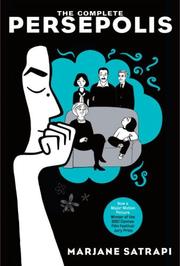
I picked up The Complete Persepolis because I had read the first volume years ago and always felt I had stopped halfway through someone's life. The edition I am describing here is the one volume Pantheon collection from 2007, 352 pages, which gathers the whole story in order. It starts with Marjane Satrapi as a fierce ten year old in Tehran and ends with her as a grown woman leaving Iran for good. The earlier English editions split this material into two books, childhood and return, and the French originals appeared with L'Association starting in 2000. Having it all in one place changes the reading. You stop thinking of it as a book about a revolution and start thinking of it as a book about what one family, and one girl, paid across twenty odd years.
Satrapi draws everything in stark black and white. Faces are simple, almost icons. Crowds become repeating shapes. Shadows sit in heavy blocks. At first the style looks too plain for the subject, and then you realize the plainness is the point. A bombing or an arrest lands harder when the drawing refuses to dress it up. I read the whole thing in a few sittings, which is easy to do with comics, and then found myself thinking about it for weeks, which is less common.
Tehran when the world flipped
Marji, as everyone calls her, starts as the only child of comfortable, educated, left leaning parents in Tehran. She goes to a French secular school, reads widely, and holds loud opinions. In the opening pages she wants to be a prophet when she grows up. She holds long imagined conversations with God, who appears in her drawings as a calm old bearded figure, and at the same time she worships revolutionaries, especially her Uncle Anoosh. One minute she lectures her parents about justice, the next she sulks because they will not let her march. Satrapi trusts the reader to recognize this kid. The politics are huge, but the behavior is ordinary childhood.
Then 1979 arrives. The Shah falls, marches fill the streets, and Marji's family celebrates with everyone else. Her parents oppose the Shah and join the protests. Her father photographs demonstrations, which will matter later. Her mother speaks her mind in public. Her grandmother, who grew up poor and remembers what kings take, talks about power with total contempt. For a short stretch the book feels almost joyful. Prisoners come home. Uncle Anoosh, freed after years in the Shah's jails, moves back into their lives and tells Marji stories and brings her little handmade presents. She adores him.
The turn comes fast. The new Islamic Republic tightens its grip, and the family's hopes curdle. Anoosh is arrested again and executed, and Satrapi draws Marji learning to live with a loss she cannot fix or fully grasp. The maid Mehri, who loves a neighbor boy, is blocked from marrying him because her class makes the match shameful, and Marji's attempt to help the couple teaches her how rank and money rule even love. The veil becomes mandatory. Marji's bilingual school closes into the new system. Guardians start patrolling. Each change arrives the way rules arrive for a child, as something overheard, then something enforced, then something normal that was unthinkable a year before.
What I admire here is the way Satrapi refuses to explain Iran to outsiders in lecture form. She shows a living room where people argue about Marx late at night, then shows the same room a year later with the curtains drawn because a party inside could mean arrest. She shows Marji's mother going out unveiled and furious, then shows the calculations every woman in the family starts making before leaving the house. History comes through in prices, in clothes, in who stops visiting. If you know little about the revolution, you will follow it fine. If you know a lot, you will notice how much she leaves to implication.
War and the years of hiding in plain sight
In 1980 Iraq invades Iran, and the book's middle Tehran stretch becomes a story about growing up female under bombs and morality police at the same time. Marji becomes a teenager. She buys black market pop tapes. She wears a denim jacket with punk buttons and gets stopped for it. She sneaks out to parties where boys and girls dance behind closed shutters while lookouts watch the street. Her parents, who once marched openly, now bribe and bargain and warn. The contrast Satrapi draws is painful. The same girl who debated prophets with God now debates guardians in the street, and the second argument can end at a police station.
The war itself enters through sound and absence. Jets pass. Missiles fall. One strike levels a building on a street Marji knows, and people she knows die in it. Satrapi draws the aftermath without spectacle, which somehow makes it worse. There is no heroic framing, just a girl understanding that death has moved into the neighborhood and stays there. Her father keeps photographing. Her mother keeps her temper. Her grandmother keeps telling stories about surviving worse, and Marji keeps testing every boundary she can find, because testing is what teenagers do even when the penalties turn serious.
This is also where the book earns its reputation for honesty about its own family. The Satrapis are middle class, secular, connected, and outspoken. They can afford black market goods, private parties, and eventually a plane ticket that saves their daughter's life. Satrapi never pretends otherwise. When Marji acts reckless, her parents call it reckless. When their comfort shields them from the worst of the war, the book lets you see the shielding. I found that fairness moving. A lot of memoirs quietly edit out their advantages. This one leaves them visible.
By the time Marji is fourteen she has been picked up, threatened, and pushed toward open rebellion at school. Her parents make the hardest call in the book. They send her alone to Vienna, to live with friends of friends and finish school in safety. The farewell at the airport is one of the famous passages, and it earns its fame. Her mother faints. Her grandmother holds herself together. Marji walks through the gate carrying too much luggage and no idea what comes next.
Vienna alone at fourteen
The Vienna years are the darkest part of the book and, for my money, the reason the complete edition matters so much. Readers who only know the first volume remember Marji as brave and funny. Here she becomes lonely, ashamed, reckless, and sometimes hard to like, which is exactly what exile does to a teenager with no supervision and too much freedom.
She starts in a nuns' boarding house, a strict Catholic girl's world that could not be further from Tehran. She makes friends, falls in with a wilder crowd, experiments with cigarettes and parties and boys, and lies constantly about who she is. Sometimes she plays up being Iranian, sometimes she hides it, depending on which version gets her accepted that evening. Satrapi is blunt about the humiliation underneath. Marji is living on her parents' money, failing to match the movie version of Europe she imagined, and slowly cutting ties with the values she was raised on because nobody in Vienna is watching.
Things fall apart in stages. She moves out, drifts between crash pads, gets thrown out, and ends up effectively homeless during a brutal winter. She gets sick on the street and nearly dies before landing in a hospital. There is no rescue framed as triumph. She calls home. Her parents, who have been scraping to support her, take her back. She returns to Tehran at eighteen, four years older and hollowed out, to a country still shaped by war and rules she no longer fits.
I want to pause on the art in this stretch, because it does work the prose could not. Vienna is drawn cold. Interiors are cramped and gray in feeling even though the ink is only black and white. Marji shrinks in her own panels. In Tehran she filled frames, arguing, marching, posing. In Vienna she goes small, squeezed into corners of rooms full of people who do not know her name. When she finally gets on the plane home, Satrapi gives her one of the book's rare wide open images, and the relief is physical. You do not need a caption to feel it.
A fair warning for new readers. This section moves slower than the Tehran chapters, and some readers bounce off it. The pranks and boyfriend drama can feel ordinary next to revolution and war. I think that ordinariness is deliberate. Satrapi is showing that survival stories do not end at the border. They continue in rented rooms, in bad decisions, in shame. But if you came for history, these hundred odd pages will test your patience before they pay off.
Homecoming, art school, and a marriage
Back in Tehran, Marji has to rebuild herself inside a system she now sees with foreign eyes. She is eighteen, depressed, and furious at everyone, including her parents. The reunion scenes are handled with unusual grace. Her father does not lecture. Her mother waits. Her grandmother, as always, says the true thing nobody else will say, which is that suffering made Marji interesting but self pity will make her boring. It sounds harsh on the page, and in context it reads as love. Within months Marji climbs out of the hole, starts drawing again, and applies to art school.
The university chapters are among my favorites, because they show young Iranians carving out freedom in centimeters. Marji studies graphic arts. She argues with teachers about drawing bodies, about models, about what art is allowed to show. She and her friends hold secret exhibitions, trade tapes, stage small rebellions in clothing and hair and attitude. She gets hauled before committees. She talks her way out, or her father talks her way out, or luck intervenes. The tone here is lighter than anything since the opening, and the humor returns. There is a wonderful running thread about the gap between what officials demand in public and what everyone does in private, and Satrapi mines it without mercy.
Then, at twenty one, she marries Reza, a fellow student and veteran. I will not pretend this section surprised me. Two young people, both a little broken, deciding that love will fix what war and exile cracked. For a while it works. They set up a small life. They laugh. Then the restrictions grind them down, the money runs short, the fights turn bitter, and Marji realizes she has repeated her parents' generation in miniature, building a private room inside a country that keeps knocking the walls down. The divorce is drawn quickly, almost briskly, and that briskness feels honest. Some endings do not get a grand scene. They get paperwork and exhaustion.
Through all of this her grandmother anchors the book. The old woman is the book's moral center and its best comic voice, vain about her jasmine flowers, blunt about men, fearless with officials, tender only in flashes. Her goodbye to Marji near the end, when Marji decides she must leave Iran for good, is the passage readers quote, and I will leave its words for you to find. It lands because Satrapi spent three hundred pages earning it.
Why the complete book, and how it holds up
Marji leaves for France in 1994, twenty four years old, carrying the whole story with her. The final pages mirror the first. Once again an airport, once again parents watching a daughter walk away, once again no promise about what comes back. The difference is that this time Marji chooses it herself. That choice gives the book its shape. Everything between the two airports is the price of the second one.
As a history, the book works best as memory rather than textbook, and readers should know that going in. Satrapi compresses parties, prisons, and invasions into a child's view, which means context sometimes flattens. Factions blur. Timelines squeeze. The Iran outside her family's circle, rural, religious, poor, appears mostly at the edges. Critics have raised this for years, and the criticism is fair as far as it goes. But it misunderstands the contract. This is one girl's true story, not a survey, and Satrapi never claims otherwise. The middle class lens is a limit and also the source of the book's intimacy. You learn how a revolution felt at one dinner table, in full.
As an object, the complete volume is the way to read it if you are starting now. The two halves rhyme in ways you miss when years pass between readings. Marji arguing with God as a child rhymes with Marji arguing with committees as a student. The mother who shouted in the street in 1979 rhymes with the daughter stopped in the street in the eighties. Trauma repeats, jokes repeat, goodbyes repeat. You need the full span to feel the pattern.
The reception since 2007 backs that up. The book became a classroom staple in many countries, which also made it a target. School boards and parent groups have challenged it over torture scenes, language, and politics, most visibly when Chicago's public schools tried to pull it from classrooms in 2013 before limiting it to older grades. Satrapi's answer to that kind of pressure has always been that forbidding a book advertises it, and the sales history suggests she has a point. The 2007 animated film she co directed, drawn in the same stark style, brought the story to a wider audience and earned an Academy Award nomination. None of that changes the pages themselves, but it explains why this memoir sits on shelves next to history books as often as next to comics.
My own criticism, offered with affection. The Vienna middle drags in spots, as I said. A few secondary figures blur together, especially among Marji's European friends, and the art's simplicity, which is a strength in crowd and war scenes, sometimes undersells quiet emotional beats that needed a closer look. And readers who want the politics argued out will find the book evasive. Satrapi shows you what her family believed by showing what they did, not by staging debates. I came to respect that choice, but I noticed it.
Still, I closed the volume convinced it earns its status. Few memoirs cover this much ground, childhood faith, revolution, war, exile, homelessness, art school, marriage, divorce, emigration, without losing the voice of the person living it. Marji at ten and Marji at twenty four sound like the same human being, which is harder than it looks across 352 pages drawn in two tones. Read it in order, in one go if you can. Let the rhymes accumulate. And when you reach the last airport, remember the first one. That is the whole book, held in two images.
FAQ
Is The Complete Persepolis only about her childhood in Iran?
No. The first volume is her childhood in Tehran, but the complete edition continues through four hard years alone in Vienna, her return to Iran as a young woman, art school, a failed marriage, and her final departure for France.
Is it suitable for teenage readers?
Teens can read it and many schools assign it, though it deals directly with war, executions, bombing, repression, and adult relationships. The art is plain black and white, but the subjects are serious.
Should I read this or the separate volumes first?
Start here. This 2007 Pantheon volume collects the whole story in order, so it reads as one continuous memoir from age ten to her late twenties.
Similar books
Persepolis
Marjane Satrapi's black and white memoir of growing up in Tehran during revolution and war, from a bold ten year old to a fourteen year old sent alone to…
2,984-word summary · 13 min read
Lone Survivor: The Eyewitness Account of Operation Redwing and the Lost Heroes of SEAL Team 10
Marcus Luttrell's account of the 2005 SEAL mission in Afghanistan that killed three of his team and left him alone.
2,144-word summary · 10 min read

American Sniper: The Autobiography of the Most Lethal Sniper in U.S. Military History
Navy SEAL sniper Chris Kyle recounts Texas roots, SEAL training, four Iraq tours, and the strain combat placed on his marriage and health.
2,011-word summary · 9 min read
Days of Love and Rage
Six Syrians build a short democracy in Manbij, then watch inequality and ISIS undo it.
2,022-word summary · 9 min read
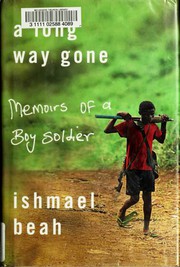
A Long Way Gone: Memoirs of a Boy Soldier
A Sierra Leone boy flees rebels, becomes a child soldier at thirteen, and fights his way back through rehab.
2,434-word summary · 11 min read

The Zookeeper's Wife: A War Story
The directors of the Warsaw Zoo hid roughly three hundred Jews in empty cages and outbuildings after the German invasion, while Jan worked for the resistance.
2,065-word summary · 9 min read

Long Walk to Freedom
Mandela's account of a Thembu childhood, a law practice, a banned movement, twenty-seven years in prison, and the negotiation that ended apartheid.
2,454-word summary · 11 min read
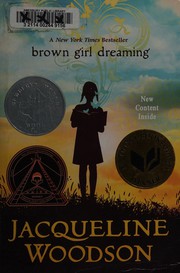
Brown Girl Dreaming
Jacqueline Woodson retells her childhood in verse, moving from Ohio to South Carolina to Brooklyn while the civil rights movement reshapes the world around her.
2,727-word summary · 12 min read

Down and Out in Paris and London
Orwell's account of washing dishes in Paris hotels and tramping through London does not ask for pity, only for a clear look at how poverty actually works.
2,282-word summary · 10 min read
Bury My Heart at Wounded Knee: An Indian History of the American West
Dee Brown's 1970 retelling of the American West from the point of view of the people it destroyed.
2,233-word summary · 10 min read

Doctor Zhivago
A doctor and poet lives through revolution, war, and love in Pasternak's novel of private life under the pressure of Russian history.
2,213-word summary · 10 min read

The Letters of Vincent van Gogh
Vincent van Gogh's letters to his brother Theo, in a Penguin Classics selection edited by Ronald de Leeuw, trace a decade of work, faith, and obsession.
2,611-word summary · 12 min read
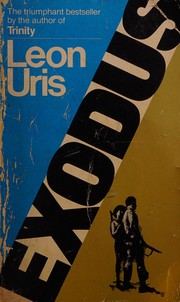
Exodus
Leon Uris's sweeping 1958 novel follows Jewish refugees, Haganah fighters, and Holocaust survivors from Cyprus to the founding of Israel and the 1948 war.
2,529-word summary · 11 min read

Killing Lincoln
Booth plots as Lincoln pushes war end and reunion in 1865.
2,486-word summary · 11 min read
Ham on Rye
Henry Chinaski grows up rough in Depression Los Angeles and finds writing.
2,244-word summary · 10 min read

Edge of Eternity
Five families cross civil rights, Cold War and Berlin Wall to the eighties.
2,489-word summary · 11 min read
Wild Swans
Three generations of women survive warlords, revolution, and the Cultural Revolution in Jung Chang's family memoir.
2,356-word summary · 10 min read

Twelve Years a Slave
Free violinist Solomon Northup tells how Brown and Hamilton lured him south into twelve years of Louisiana bondage until Bass letters brought rescue in January…
2,931-word summary · 13 min read

Fire & Blood
Archmaester Gyldayn chronicles Aegon the Conqueror through the Dance of the Dragons, with Doug Wheatley art across 752 pages.
3,268-word summary · 15 min read
Cleopatra: A Life
Pulitzer winner Schiff restores Cleopatra as a capable ruler, from Ptolemy debts and Caesar to Antony, Actium, and her death in 30 BC, built from coins and…
3,586-word summary · 16 min read

Blankets
Craig Thompson recalls sharing a bed with brother Phil, falling for Raina at church camp, losing his faith, and keeping art through Michigan winters.
2,586-word summary · 11 min read

The Splendid and the Vile
Larson follows Churchill circle through Blitz year with diaries and bombing nights.
2,038-word summary · 9 min read

Narrative of the Life of Frederick Douglass
Douglass names names from Maryland slavery to his 1838 escape, showing how literacy, wages, and faith were policed, then answers with defiance.
2,630-word summary · 12 min read

Band of Brothers
Easy Company, 506th Airborne, from Toccoa training through D-Day, Holland, Bastogne, and Hitler's Eagle's Nest.
2,685-word summary · 12 min read

The Story of My Life
Deafblind Keller learns water at pump through Sullivan finger spelling.
2,149-word summary · 10 min read
Reading Lolita in Tehran: A Memoir in Books
Seven women meet in secret in Tehran to read Lolita, Gatsby, and Austen while revolution presses in.
2,916-word summary · 13 min read

Maus II: A Survivor's Tale: And Here My Troubles Began
Vladek survives Auschwitz and the death march while Art struggles with success, guilt, and his father's aging stubbornness.
2,111-word summary · 9 min read
Dead Wake
Larson tracks Lusitania, U-20, and Room 40 toward May 1915 sinking.
2,471-word summary · 11 min read
Autobiography of Cotton
A Pulitzer winner traces her cotton-worker grandparents and a 1934 border strike through archives, memory, and damaged land.
2,213-word summary · 10 min read

Fun Home: A Family Tragicomic
Alison Bechdel's graphic memoir about her father, their shared secrets, and the funeral home they called Fun Home in rural Pennsylvania.
2,755-word summary · 12 min read