
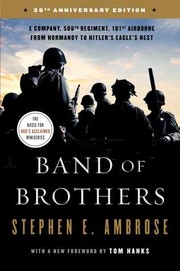
Band of Brothers
2,685-word summary 12 min read 336 pages in the book
- First published
- 1992
- Publisher
- Simon & Schuster
- Pages
- 336
- ISBN
- 9781501179402
Reading options
What's inside (8 sections)
I picked this one up because I had seen the HBO miniseries years ago and wanted to know how much of it came straight from the page. The answer is most of it. Published in 1992 by Simon and Schuster, 336 pages in the standard edition, Band of Brothers follows Easy Company of the 506th Parachute Infantry Regiment, 101st Airborne Division, from basic training in Georgia through Normandy, Holland, Bastogne, and finally to Hitler's mountaintop retreat at Berchtesgaden. It is a work of military history built almost entirely from interviews, letters, and the memories of the men who were there. What follows is a full account of the book, including the ending, plus what I think it gets right and where it wobbles.
How the book got written
The origin story matters because it shapes everything on the page. Stephen Ambrose was already a well known historian of the Second World War when he met members of Easy Company at a reunion in New Orleans. The men were gathering as part of an oral history project tied to the D-Day museum he had helped found. He started interviewing them, and the interviews turned into more interviews, and those turned into a book.
Ambrose circulated drafts among the surviving veterans and asked for corrections. He folded their notes into later versions. His stated goal was to get as close to the true story of the company as one writer could. That method gives the book its greatest strength and its most obvious weakness. The voices feel close and specific. A private remembers the exact taste of frozen rations. A sergeant remembers which officer froze and which one did not. At the same time, the story is told almost entirely from inside one American company. The Germans across the field stay blurry. Higher command appears mostly as distant weather, sending orders down that the men have to live with.
The structure is chronological and plain. A foreword, a short maps section, then nineteen chapters that walk from training camp to discharge papers, with an afterword catching up on what happened to people later. Ambrose keeps himself mostly out of the way. He sets a scene, hands the microphone to a veteran, adds context from records, and moves on.
If you want footnotes on every paragraph, this is not that kind of history. Ambrose cites his interviews and some documents, but the citation is thin in spots, and later researchers have caught real mistakes. I will get to the famous one in the last section. Knowing the method going in helps. Read it as the company's remembered story, checked against records where possible, rather than as an official archive history.
Toccoa, Sobel, and the making of a company
Easy Company began in the summer of 1942 at Camp Toccoa in Georgia, with volunteers drawn by the extra jump pay and by the pull of doing something hard. The early chapters are some of the best in the book because the drama is human-sized. No one is shooting yet. Men are running up Currahee mountain, washing out, learning to pack parachutes, and sorting themselves into leaders and followers.
Two figures dominate this stretch. The first is Captain Herbert Sobel, the company's first commander and training officer. Sobel drilled his men relentlessly. He ran them until they dropped, punished small infractions, and held himself apart. His men came to hate him with a focus that is almost funny on the page until you remember it was real. Ambrose is blunt about Sobel's flaws as a field leader. He could not read a map under pressure. He froze on exercises. His junior officers eventually signed a near mutiny against him.
And yet the book gives Sobel an odd kind of credit. Easy Company's physical toughness, its habit of never leaving a man behind on a run, its pride, all of it was forged under his punishments. The men hated him and stayed fit because of him. That tension never fully resolves, which is honest. Real outfits often owe something to leaders nobody liked.
The second figure is Richard Winters, then a young lieutenant, later the company's most respected officer and eventually its commander. Winters comes across as the opposite of Sobel in every way that mattered in combat. Calm, prepared, fair, willing to share risk. The famous contrast writes itself, and Ambrose does not resist it. Winters ran the same hills, passed the same tests, and earned loyalty instead of demanding it.
Other names start stacking up here and pay off later. Lewis Nixon, Winters's friend and fellow officer, clever and restless. Carwood Lipton, steady and thoughtful, the kind of noncommissioned officer armies actually run on. Bill Guarnere and Edward Heffron, Philadelphia men who joined as replacements with chips on their shoulders. Don Malarkey, Joe Toye, George Luz the mimic, David Webster the educated private who never quite fit in. Ambrose introduces them in quick sketches, a hometown here, a habit there, so that when the shooting starts you already know who is who.
My favorite detail from training is how much of it was pointless on purpose. Running Currahee did not teach anyone to clear a machine gun nest. It taught men that they could keep going when their legs gave out, and that the man next to them would keep going too. That sounds like a poster slogan until you watch it pay off in France.
One fair warning. The training chapters run long if you came for battle scenes. Ambrose lingers on camp moves, jump school, and shipping to England. I liked the patience. It makes the company feel assembled rather than issued.
Normandy and Holland
The jump into Normandy in the early hours of June 6, 1944, scatters Easy Company across the dark. Planes take flak, pilots veer off course, sticks jump early or late. Men land alone in flooded fields, weighed down by gear, and spend the first hours finding each other by cricket clickers and whispered passwords.
Ambrose handles the chaos well. He follows small groups rather than trying to narrate the whole invasion. Winters gathers a handful of men and takes out a German gun battery at Brecourt Manor that was firing on the Utah Beach causeways. The book walks through that assault almost minute by minute, and you can see why military schools still study it. Winters split his tiny force, put a base of fire on the trenches connecting the guns, and rushed each position in turn. It worked because he had trained his men to move and because he stayed cool enough to think while people shot at him.
Carentan comes next, with street fighting and costly mistakes, and then a return to England for replacements and rest. The replacements matter more than most histories admit. Easy Company never fought with the same roster twice. Men died, men were wounded, new faces arrived, and the survivors had to teach them the company's habits under fire. Webster's letters home, which Ambrose quotes from, capture the insider and outsider split perfectly. The old men had a bond the new men could admire but not yet share.
Operation Market Garden in Holland in September 1944 gets a full stretch of the book. The plan called for airborne drops ahead of an armored drive, seizing bridges across Dutch rivers. On paper it was bold. On the ground it asked lightly armed paratroopers to hold roads and bridges against tanks. Easy fought around Eindhoven and then in hard, confused actions near Nuenen and on an island of land between rivers. Ambrose is good on the particular miseries here. Flat country with ditches everywhere, German armor appearing where it should not be, orders changing daily. The company took serious losses and learned that airborne troops, however brave, were the wrong tool for a long static defense.
What struck me rereading these chapters is how much of war is walking, waiting, and digging. Between the famous assaults there are pages of patrols, outposts, cold food, and rumor. Ambrose does not skip that filler, and the book is better for it. Courage in this account is mostly a matter of going back out on patrol the fourth night in a row when you are tired and scared and the replacements are watching you.
The Holland section also shows Ambrose's habit of settling scores gently. Officers who failed their men get named. Officers who carried their share get praised by name. Norman Dike, who later commands the company at a bad moment, starts appearing here as a man the veterans distrusted. Ronald Speirs, a fearsome officer from another company, appears as the kind of leader men followed because he seemed to know exactly what killing required and never asked anyone to do what he would not do himself.
Bastogne, the cold, and Foy
If the book has a center, it is Bastogne. In December 1944 the Germans punched through the Ardennes, and Easy Company was rushed by truck into the Belgian town of Bastogne with little winter clothing, short ammunition, and orders to hold. They dug foxholes in the woods around the town, notably in the Bois Jacques, and stayed in them through some of the coldest weeks of the war.
These are the chapters people remember, and they earn it. Ambrose piles up the miseries without turning them into a contest. No winter boots, so feet rotted. No hot food for days at a time. Artillery that came in trees and rained wood splinters along with steel. Men who had joked through Holland went quiet. The company's medic, Eugene Roe, comes forward here as one of the book's quiet heroes, moving from hole to hole at night with almost no supplies, treating wounds and frostbite and fear with about the same steady manner.
Leadership at Bastogne is the whole story. Winters had moved up to battalion by then, and the company cycled through commanders. Lipton, acting as first sergeant, essentially held the unit together by example and by telling hard truths up the chain. When the attack on the town of Foy finally came in January, it was botched at first under Dike, who froze and gave confused orders, and then salvaged when Speirs took over on the spot and led the assault himself. Ambrose tells the Foy sequence through half a dozen overlapping memories, and the overlap is the point. Nobody on a battlefield sees the whole thing. Put the fragments together and you get something close to true.
Two things land hard in this stretch. First, the replacements kept dying faster than the old men could teach them. A man could arrive, seem promising, and be gone within days. The veterans grieved and also hardened, and Ambrose lets both reactions sit side by side. Second, the men's hatred of being shelled helplessly comes through stronger than any firefight scene. You can shoot back at infantry. Against artillery in frozen woods, all you can do is crouch and listen and hope the next one lands somewhere else.
The criticism that Ambrose makes war sound noble falls apart in these pages, I think. There is pride here, real pride, but the dominant feeling is endurance. Nobody in a foxhole at Bastogne sounds ennobled. They sound cold.
Into Germany and the strange end
After the Bulge, the war's last months have an odd rhythm, and the book captures it. Easy Company fought at Haguenau in early 1945, holding a line in terrible cold again, taking patrol losses that felt pointless because everyone knew Germany was beaten. Then came the push across the Rhine, the race into Bavaria and Austria, and the collapse of organized resistance. The company's last weeks mixed mop up actions, occupation duty, and a growing sense that survival now depended on avoiding stupid risks.
Berchtesgaden, Hitler's mountain retreat, is the famous finish. Easy Company drove into the area in early May 1945, seized stores of loot and liquor, drank too much captured wine, posed for photos at the Eagle's Nest, and watched the war end around them. Ambrose presents Easy as reaching the area first among Allied units, a claim other outfits have disputed for years. Men of the 3rd Infantry Division and French armored troops were in the same ground at about the same time, and the argument over who got there first has outlived most of the men involved. I mention it because it shows how company memory works. Every outfit remembers its own road as the main road. A careful reader takes the triumph as real and the superlative as contested.
The occupation chapters are looser and more interesting than I expected. The men guarded prisoners, sorted through Nazi loot, drank, fought among themselves, chased women, broke rules, and waited for points to send them home. Nixon drank heavily. Winters tried to keep order and plan a civilian life he was not sure he wanted. Some men volunteered for the Pacific, where the war still burned, and then watched that war end too. The company that had held together under fire loosened fast once the pressure lifted. That felt psychologically right. Shared danger is a strong glue and a temporary one.
The afterword follows the survivors into civilian decades. Careers, marriages, reunions, early deaths, long lives. Compton became a prosecutor and judge. Winters kept mostly quiet and farmed. Guarnere and Heffron stayed friends for life. Sobel died alone and unhappy, a fact Ambrose reports without squeezing it for meaning. The reunion habit itself becomes part of the story. These men kept meeting, kept retelling, kept checking each other's memories until the memories hardened into the version you hold in your hands.
What holds up and what does not
Three strengths carry the book. First, the ground level focus. Ambrose almost never leaves the company's sightline, so tactics stay concrete. You learn how a squad crosses a ditch, how a platoon sets an outpost, how cold ruins a rifle. Second, the cast. By the end you can tell Luz from Toye from Malarkey without checking back, which is rare in unit histories. Third, the honesty about fear. Veterans admit to freezing, crying, hiding, and hating officers. That candor makes the bravery credible.
Against that, three complaints. The first is hero worship. Winters is presented as close to flawless, and while every account agrees he was outstanding, Ambrose rarely lets him be wrong or even uncertain. Nixon's drinking and unraveling get sympathy but little hard examination. Speirs is admired at a distance that avoids asking harder questions about his methods.
The second complaint is accuracy in spots. The best known slip concerns Albert Blithe, a young replacement hit at Carentan. Ambrose wrote that Blithe died of his wounds shortly after. In fact Blithe recovered, stayed in the Army, served in Korea, and lived until 1967. The miniseries repeated the error on screen, which cemented it. Later editions corrected it, but the mistake shows the risk of trusting memory without checking service records. There are smaller slips of dates and rosters that researchers have picked at since. None of them break the book, but they mean you should not cite it for fine detail without checking.
The third complaint is narrowness. This is a book about American paratroopers, for readers who admire American paratroopers. German soldiers appear as targets, prisoners, or corpses. Civilians in Normandy, Holland, Belgium, and Germany get brief sympathy and little voice. Strategy above battalion level is sketched thinly. If you want to understand why Market Garden failed or what the Bulge meant, read a campaign history alongside this one.
So who should read it. Anyone drawn to the Second World War from the foxhole view will find it absorbing. Readers who only know the miniseries will find the same story with more names, more waiting, and more cold. Readers allergic to admiring prose about soldiers should probably skip it, because admiration is the book's home key. For me, the Bastogne chapters alone justify the shelf space, and the training chapters explain them. The flaws are real and worth knowing. They do not sink it.
FAQ
Is Band of Brothers based on a true story?
Yes. Ambrose interviewed Easy Company veterans of the 506th Parachute Infantry Regiment and checked their accounts against records. It was adapted into the 2001 HBO miniseries by Tom Hanks, Erik Jendreson, and Steven Spielberg.
Who was Richard Winters?
He was Easy Company's most respected officer, famous for leading the Brecourt Manor assault on D-Day. He later rose to battalion command and led a quiet civilian life after the war.
When was Band of Brothers published and how long is it?
It was first published in 1992 by Simon and Schuster. The standard edition runs 336 pages and the ISBN cited here is 9781501179402.
Similar books

The Zookeeper's Wife: A War Story
The directors of the Warsaw Zoo hid roughly three hundred Jews in empty cages and outbuildings after the German invasion, while Jan worked for the resistance.
2,065-word summary · 9 min read
Lone Survivor: The Eyewitness Account of Operation Redwing and the Lost Heroes of SEAL Team 10
Marcus Luttrell's account of the 2005 SEAL mission in Afghanistan that killed three of his team and left him alone.
2,144-word summary · 10 min read
The Splendid and the Vile
Larson follows Churchill circle through Blitz year with diaries and bombing nights.
2,038-word summary · 9 min read
The Rise and Fall of the Third Reich: A History of Nazi Germany
A Berlin correspondent turned historian traces Nazi Germany from beer halls to bunker using eyewitness memory and captured German records.
3,559-word summary · 16 min read

Bury My Heart at Wounded Knee: An Indian History of the American West
Dee Brown's 1970 retelling of the American West from the point of view of the people it destroyed.
2,233-word summary · 10 min read
Killing Lincoln
Booth plots as Lincoln pushes war end and reunion in 1865.
2,486-word summary · 11 min read

Cleopatra: A Life
Pulitzer winner Schiff restores Cleopatra as a capable ruler, from Ptolemy debts and Caesar to Antony, Actium, and her death in 30 BC, built from coins and…
3,586-word summary · 16 min read
American Sniper: The Autobiography of the Most Lethal Sniper in U.S. Military History
Navy SEAL sniper Chris Kyle recounts Texas roots, SEAL training, four Iraq tours, and the strain combat placed on his marriage and health.
2,011-word summary · 9 min read
Dead Wake
Larson tracks Lusitania, U-20, and Room 40 toward May 1915 sinking.
2,471-word summary · 11 min read
Days of Love and Rage
Six Syrians build a short democracy in Manbij, then watch inequality and ISIS undo it.
2,022-word summary · 9 min read
A Long Way Gone: Memoirs of a Boy Soldier
A Sierra Leone boy flees rebels, becomes a child soldier at thirteen, and fights his way back through rehab.
2,434-word summary · 11 min read
In the Garden of Beasts
Ambassador Dodd takes his family to 1933 Berlin and watches charm curdle into terror.
1,927-word summary · 9 min read
1776
Washington's amateur army from Boston siege to Trenton through mud and doubt.
2,139-word summary · 10 min read
Unbroken
Louis Zamperini survives a Pacific crash, sharks and POW camps after running in the Berlin Olympics.
3,263-word summary · 15 min read
Night
Elie Wiesel's account of Sighet, the cattle cars, Auschwitz and Buchenwald, told in short flat sections by a boy about fifteen. Why the book carries the year…
2,594-word summary · 12 min read

The Diary of a Young Girl
Anne Frank's diary explained: two years in the Secret Annex, the entries on fear and boredom, what Otto Frank cut, and why the book still reads like a…
1,913-word summary · 9 min read

The Orphan's Tale
A Dutch teenager rescues a Jewish baby from a death train and joins a German circus, where a Jewish aerialist teaches her to fly.
2,943-word summary · 13 min read

Long Walk to Freedom
Mandela's account of a Thembu childhood, a law practice, a banned movement, twenty-seven years in prison, and the negotiation that ended apartheid.
2,454-word summary · 11 min read

1491: New Revelations of the Americas Before Columbus
Charles C. Mann gathers archaeology, ecology, and demography to argue that the Americas before Columbus were older, fuller, and more deliberately shaped than…
2,712-word summary · 12 min read
The DaVinci Code: A Quest for Answers
A short 2006 dialogue in which three friends test Dan Brown's claims about Jesus, Mary Magdalene, Nicaea, and the canon.
2,088-word summary · 9 min read

Nothing to Envy
Barbara Demick follows six defectors from Chongjin through the North Korean famine, showing how ordinary people lived, believed, and finally left.
2,068-word summary · 9 min read
Down and Out in Paris and London
Orwell's account of washing dishes in Paris hotels and tramping through London does not ask for pity, only for a clear look at how poverty actually works.
2,282-word summary · 10 min read
The Wright Brothers
David McCullough tells the story of two self-taught Ohio brothers, working largely alone and out of a bicycle shop, who solved the problem of flight before…
2,027-word summary · 9 min read
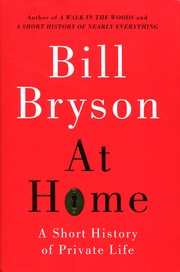
At Home: A Short History of Private Life
Bill Bryson tours his own Norfolk rectory room by room to explain how private life and the modern home got built.
2,334-word summary · 10 min read
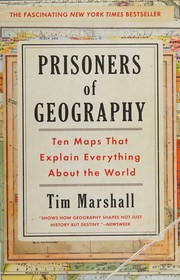
Prisoners of Geography: Ten Maps That Tell You Everything You Need to Know About Global Politics
Tim Marshall explains how mountains, rivers, coasts, and resources shape the choices of nations, from Russia's flat borders to the chokepoints of the South…
2,328-word summary · 10 min read

The Lost City of Z: A Tale of Deadly Obsession in the Amazon
David Grann retraces Percy Fawcett's 1925 disappearance in the Amazon and finds that the lost city he sought was not entirely a fantasy.
2,493-word summary · 11 min read
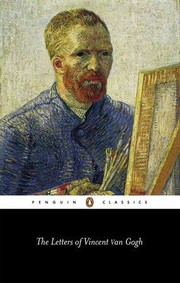
The Letters of Vincent van Gogh
Vincent van Gogh's letters to his brother Theo, in a Penguin Classics selection edited by Ronald de Leeuw, trace a decade of work, faith, and obsession.
2,611-word summary · 12 min read
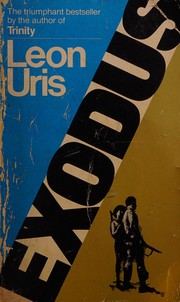
Exodus
Leon Uris's sweeping 1958 novel follows Jewish refugees, Haganah fighters, and Holocaust survivors from Cyprus to the founding of Israel and the 1948 war.
2,529-word summary · 11 min read

The World Is Flat: A Brief History of the Twenty-first Century
Thomas L. Friedman's 2005 bestseller argues that technology, trade, and open borders leveled the global playing field, and it names the ten forces that did it.
2,369-word summary · 11 min read
Catherine the Great: Portrait of a Woman
A German princess survives a miserable marriage and a coup to rule Russia for thirty-four years, torn between Enlightenment ideas and absolute power.
2,065-word summary · 9 min read