
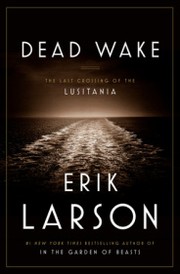
Dead Wake
2,471-word summary 11 min read 464 pages in the book
- First published
- 2015
- Publisher
- Crown
- Pages
- 464
- ISBN
- 9780307408860
Reading options
What's inside (8 sections)
I came to Dead Wake sideways. I had read The Devil in the White City years ago and remembered how Larson could make architecture read like a thriller. A friend told me his Lusitania book pulled the same trick with a ship, a submarine, and a room full of codebreakers. That sounded like three books fighting inside one cover, so I put it off. Then a rainy weekend arrived, and I gave in.
The book is Dead Wake: The Last Crossing of the Lusitania, published by Crown in 2015. The edition I cite runs 464 pages, ISBN 9780307408860. It tells the story of the Cunard liner Lusitania, sunk by a German U-boat off the coast of Ireland on May 7, 1915, with the loss of 1,195 lives. Larson tracks three threads toward that afternoon: the liner and her captain, the submarine and her commander, and the British intelligence room that watched them both.
What surprised me first was the pace. For long stretches nothing explodes. Passengers play cards. A U-boat commander worries about fog. Clerks copy down intercepted signals. Nobody boarding at New York on May 1 believed the ship would be on the seabed within seven days. That gap, between what you know and what they knew, is the whole engine of the book.
This is a full retelling, so I hold nothing back below. I walk through the crossing, the sinking, and the fight over blame in order, and I close with where I think the book wobbles.
The greyhound leaves New York
In 1915 the Lusitania was still one of the marvels of the sea. Built for Cunard with turbine engines, she had taken the Blue Riband for the fastest Atlantic crossing and kept the title for years. She was nearly 790 feet long, with a double bottom, coal bunkers along her sides, and first class rooms paneled like a London hotel. Speed was her pride and, as it turned out, her supposed shield. Many people, from naval officers to ordinary travelers, repeated the same comforting line. She was too fast to catch. A submarine could never touch her.
That comfort was already out of date. Germany had declared the waters around Britain a war zone that February, and U-boats were sinking merchant ships most weeks. The rules of the old sea war, stop the ship, check her papers, let the crew off first, were bending and breaking. Britain armed merchantmen with deck guns and told captains to ram surfaced submarines. Germany answered by treating more and more ships as fair targets. Passengers booking spring crossings read the news and booked anyway. The Atlantic was wide. The ship was fast. The odds felt kind.
She sailed from New York on Saturday, May 1, 1915, bound for Liverpool, with just under 2,000 souls aboard. Her master was Captain William Thomas Turner, fifty eight, a Cunard veteran with decades of Atlantic weather in his bones. Larson paints him as able and blunt, respected by crews, not always loved by owners, a man who trusted his own judgment over distant orders. He had a commodore's confidence and a working sailor's suspicion of desk men. Both traits would matter before the week ended.
The morning of sailing carried its own chill. The German embassy had placed a warning notice in New York newspapers, printed beside the Cunard sailing advertisements, telling travelers that ships flying the British flag in the war zone risked destruction. Some passengers canceled. Most laughed it off or never saw the notice. Vanderbilt's valet reportedly worried. Others treated it as German bluster. The ship pulled away into haze, the band playing, tugs fussing at her sides, and the war felt very far away.
Faces on the passenger list
Larson builds his cast the way he always does, one vivid person at a time, and the Lusitania gives him rich material. The most famous name aboard was Alfred Gwynne Vanderbilt, sportsman, horseman, one of the richest men in America. He traveled with his valet, bound for London on business and pleasure mixed. Fellow passengers gossiped about his money and his easy manners. He spent the crossing the way rich men did, dining well, walking the deck, charming strangers. He did not survive the week, and the stories told about his last minutes became part of the legend.
Then there was Charles Lauriat, a Boston bookseller carrying a shipment any collector would envy. His luggage held rare books and original drawings, including Thackeray material he had crossed the ocean to secure. Larson follows Lauriat's fretting with real affection. The man worried about his cargo the way other men worried about their children, checking and rechecking, imagining damp and thieves. Lauriat lived through the sinking and later wrote his own account of it, which gives Larson one of his best eyewitness sources for the minutes after the torpedo struck.
Theodate Pope Riddle brought a different kind of distinction. She was an architect, a suffragist, a woman used to being the only one of her kind in the room. She traveled with friends, enjoyed the sea air, and kept the sharp observant diary habit that makes her passages some of the book's liveliest. She survived the water and the long wait for rescue. Not everyone in her party did, and Larson handles that grief without milking it.
Mood stayed light deep into the crossing. Concerts, shuffleboard, flirtations. A few passengers held lifeboat drills with the mild embarrassment of people humoring a rule. The German warning faded like a horoscope that failed to come true.
The hunter below
The second thread belongs to Kapitänleutnant Walther Schwieger, thirty years old, commander of U-20. Larson refuses to draw him as a monster, which some readers will admire and others will resent. Schwieger comes across as a professional naval officer doing work he found normal: patrol a box of sea, stop or sink enemy commerce, bring the boat home. He was ambitious, well regarded, decorated, and tired. The war at sea in 1915 was still young enough that U-boat captains made up tactics as they went.
U-20 left port in late April for the waters south and west of Ireland, right across the Lusitania's path, though neither side knew the appointment yet. Larson is good on the texture of the boat, the diesel and sweat, the long blind hours on the surface, the quick dives when smoke appeared. A U-boat of that year was a fragile tube with a deck gun and only a handful of torpedoes. Every shot had to count.
Schwieger spent the first days of May sinking ship after ship, stopping small steamers and, when the sea allowed, giving crews time to take to boats. Each sinking spent shells, fuel, and days. Each report went out by wireless, into air that British listeners were recording.
By the morning of May 7, Schwieger had few torpedoes left and was thinking of home. Fog had dogged him. The sea off southern Ireland was empty one hour and crowded the next. He nearly turned for Germany. Then the fog thinned, a lookout called out masts and funnels, and a big four funneled liner came steaming into his periscope view at exactly the wrong angle for everyone except him. Larson writes the stalking scene with cold patience. The boat crept to firing position. The liner held her course. At just after two in the afternoon, Schwieger fired one torpedo from about 700 yards.
The room that knew too much
The third thread is the strangest and, to me, the most interesting. In a quiet set of rooms in London, a British naval intelligence unit called Room 40 was reading German wireless traffic. The Germans did not know their codes were broken. U-boat positions, sailing orders, sinking reports, all of it arrived on British desks, decoded by scholars and clerks working brutal hours. The head of naval intelligence and the political leadership, including Winston Churchill as First Lord of the Admiralty, saw a picture of the war at sea that no captain afloat could match.
That picture included U-20. Room 40 tracked Schwieger's patrol area and his string of sinkings in the days before May 7. They knew a U-boat was operating exactly where the Lusitania was headed. They also knew the liner's schedule and route. Larson lays this out document by document, and the pile grows damning. Warnings went out to Turner, but they were vague. Submarines reported active off the south coast of Ireland. Take precautions. Avoid headlands. Zigzag. What did not arrive was the sharp specific truth. A U-boat is waiting in your path, here, now, and this is what she has done this week.
Why not? Larson offers a stack of answers instead of one villain. Room 40's secret was so precious that officers watered down everything they passed on, terrified of tipping off the Germans. Messages lost urgency at each desk and arrived as routine. Nobody in London quite believed a U-boat would spend a torpedo on a fast liner, because nobody had done it yet. And the Admiralty offered no destroyer escort, although Larson shows warships sitting idle in nearby ports.
Turner himself made choices that look worse in hindsight. Nearing the coast on the morning of May 7, he slowed in fog to fix his position, steered a straight middle course instead of zigzagging, and stayed closer to shore than his orders advised. Each choice had a seaman's logic, and Larson grants all of it. Still, a faster zigzagging ship farther out would have been a harder target, and Turner knew submarines were about.
Larson rejects the darkest theory, that Churchill or the Admiralty deliberately left the ship exposed to drag America into the war. He finds no document for it and says so plainly. His charge is carelessness and secrecy, not conspiracy. Whether that charge fully holds is the book's live wire, and historians have argued over it since publication. Some say Larson overreads thin signals and judges desk officers with knowledge they never had in one place. Keep that objection in your pocket. It matters for the final section.
Eighteen minutes
Friday, May 7, dawned foggy off southern Ireland and burned off into a fine bright afternoon. Passengers came on deck to enjoy the sun. The coast was visible, green and close. Lunch was served. Children played. Lauriat worried about his books. Vanderbilt walked the deck. Theodate Pope breathed the sea air. At about ten past two, lookouts and passengers alike spotted the white wake of a torpedo racing toward the starboard bow. There was no time to turn, no time to pray. It struck just behind the bridge.
What followed is the most argued minute in the book. The torpedo blast was smaller than expected. Then came a second explosion, far larger, that tore the ship open from inside. Larson walks through the competing theories, bursting boilers, coal dust in the empty bunkers, the munitions in the hold cooking off. He leans toward coal dust and steam lines rather than shells, but admits no theory satisfies every witness. Without that second blast, the ship likely stays afloat long enough to get boats away in order.
Order never arrived. The ship took a sharp list to starboard within a minute, and kept listing. Power failed. The wireless operators tapped out distress calls. Officers shouted. The lifeboats, swung out ready, now hung over a deck tilted the wrong way. Some boats dropped safely and filled. Others crashed down one end first, spilling screaming people into the sea. Others could not be launched at all against the list. Crewmen, many of them new and hastily hired after naval reservists were called up, struggled with ropes and davits. Passengers jumped, or were washed off, or stood frozen at the rail. The water was cold enough to kill almost as fast as drowning.
Lauriat went into the sea and lived to describe it. Vanderbilt never came home. Theodate Pope survived the water and the slow rescue. Around them the liner settled by the head with terrible speed. Eighteen minutes after the torpedo struck, the funnels tipped, the stern rose, and the ship slid under, leaving boats and swimmers where a town had been.
Rescue came from Queenstown, trawlers and tugs racing to the spot. They saved about 760 people and pulled up the dead for days. Of the roughly 1,960 souls aboard, 1,195 died, including more than a hundred Americans. Schwieger logged one torpedo fired and a hit observed, and turned U-20 for home.
Blame, notes, and the weak spots
The aftermath filled newspapers on both sides of the ocean. Germany called the liner an armed transport carrying contraband and said the warning had been plain. Britain called the sinking murder and pointed at the dead children. America, neutral and shocked, waited on President Woodrow Wilson, who answered with three formal notes demanding Germany stop sinking merchant ships without warning. Germany bent, restricted the U-boats, and the crisis passed. The United States stayed out of the war for nearly two more years, entering in April 1917. Larson is careful on this point. The Lusitania did not bring America into the war by itself.
Official inquiries followed, and Larson treats them with open skepticism. The British investigation blamed the German commander and, in passing, Turner, while leaving Admiralty decisions mostly unexamined. Turner carried whispers for the rest of his life. The desk men who sent vague warnings and no escort carried on.
Now the fair criticism, because the book earns some. First, the cast sprawls. Dozens of passengers step forward for a vivid paragraph and then vanish, and the smaller cameos blur beside Vanderbilt, Lauriat, and Pope, who anchor the human story. Second, the hindsight problem is real. Larson judges London and Turner with the full picture in hand, and his coldest sentences sometimes forget how foggy the week looked from inside. Historians who know Room 40's actual paperwork have pushed back on parts of his case, calling some connections thinner than the prose admits. Third, the middle sags. The U-boat routine, a steamer stopped here, a deck gun fired there, grows repetitive before the periscope finally finds the liner.
None of that spoiled the book for me. Readers who enjoy maritime history and patient parallel storytelling will find the slow chapters atmospheric rather than boring, and the sinking sequence alone justifies the price. If you want battle analysis or diplomatic history, look elsewhere. This is a storyteller's book about ordinary people inside an extraordinary week. What stayed with me was not the argument about Room 40. It was the ordinary morning. Sunshine, lunch, children playing, a green coast sliding past, and a thin white wake under the water that nobody on deck could see.
FAQ
When was Dead Wake published, and which edition is cited here?
Crown published it in 2015. The edition cited here runs 464 pages and the ISBN is 9780307408860.
Did the Lusitania carry munitions?
Yes. The manifest listed thousands of cases of rifle cartridges and other war goods. Germany cited the cargo; Britain denied the ship was armed.
Did the sinking bring America into the war?
Not at once. Wilson protested with diplomatic notes and kept the US neutral. America entered the war in April 1917 after Germany resumed unrestricted submarine attacks.
Similar books
The Splendid and the Vile
Larson follows Churchill circle through Blitz year with diaries and bombing nights.
2,038-word summary · 9 min read

The Zookeeper's Wife: A War Story
The directors of the Warsaw Zoo hid roughly three hundred Jews in empty cages and outbuildings after the German invasion, while Jan worked for the resistance.
2,065-word summary · 9 min read
Lone Survivor: The Eyewitness Account of Operation Redwing and the Lost Heroes of SEAL Team 10
Marcus Luttrell's account of the 2005 SEAL mission in Afghanistan that killed three of his team and left him alone.
2,144-word summary · 10 min read

Bury My Heart at Wounded Knee: An Indian History of the American West
Dee Brown's 1970 retelling of the American West from the point of view of the people it destroyed.
2,233-word summary · 10 min read
Killing Lincoln
Booth plots as Lincoln pushes war end and reunion in 1865.
2,486-word summary · 11 min read

Cleopatra: A Life
Pulitzer winner Schiff restores Cleopatra as a capable ruler, from Ptolemy debts and Caesar to Antony, Actium, and her death in 30 BC, built from coins and…
3,586-word summary · 16 min read
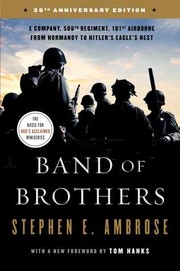
Band of Brothers
Easy Company, 506th Airborne, from Toccoa training through D-Day, Holland, Bastogne, and Hitler's Eagle's Nest.
2,685-word summary · 12 min read
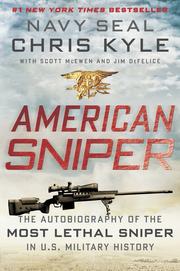
American Sniper: The Autobiography of the Most Lethal Sniper in U.S. Military History
Navy SEAL sniper Chris Kyle recounts Texas roots, SEAL training, four Iraq tours, and the strain combat placed on his marriage and health.
2,011-word summary · 9 min read

Days of Love and Rage
Six Syrians build a short democracy in Manbij, then watch inequality and ISIS undo it.
2,022-word summary · 9 min read

A Long Way Gone: Memoirs of a Boy Soldier
A Sierra Leone boy flees rebels, becomes a child soldier at thirteen, and fights his way back through rehab.
2,434-word summary · 11 min read
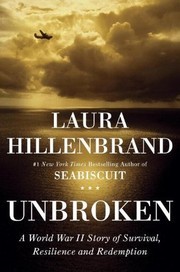
Unbroken
Louis Zamperini survives a Pacific crash, sharks and POW camps after running in the Berlin Olympics.
3,263-word summary · 15 min read

In the Garden of Beasts
Ambassador Dodd takes his family to 1933 Berlin and watches charm curdle into terror.
1,927-word summary · 9 min read

The Devil in the White City
Architect Burnham builds the 1893 Chicago Fair while H.H. Holmes builds his murder hotel nearby.
2,020-word summary · 9 min read

Long Walk to Freedom
Mandela's account of a Thembu childhood, a law practice, a banned movement, twenty-seven years in prison, and the negotiation that ended apartheid.
2,454-word summary · 11 min read

1491: New Revelations of the Americas Before Columbus
Charles C. Mann gathers archaeology, ecology, and demography to argue that the Americas before Columbus were older, fuller, and more deliberately shaped than…
2,712-word summary · 12 min read
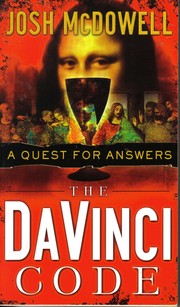
The DaVinci Code: A Quest for Answers
A short 2006 dialogue in which three friends test Dan Brown's claims about Jesus, Mary Magdalene, Nicaea, and the canon.
2,088-word summary · 9 min read

Nothing to Envy
Barbara Demick follows six defectors from Chongjin through the North Korean famine, showing how ordinary people lived, believed, and finally left.
2,068-word summary · 9 min read

Down and Out in Paris and London
Orwell's account of washing dishes in Paris hotels and tramping through London does not ask for pity, only for a clear look at how poverty actually works.
2,282-word summary · 10 min read
The Wright Brothers
David McCullough tells the story of two self-taught Ohio brothers, working largely alone and out of a bicycle shop, who solved the problem of flight before…
2,027-word summary · 9 min read

At Home: A Short History of Private Life
Bill Bryson tours his own Norfolk rectory room by room to explain how private life and the modern home got built.
2,334-word summary · 10 min read

Prisoners of Geography: Ten Maps That Tell You Everything You Need to Know About Global Politics
Tim Marshall explains how mountains, rivers, coasts, and resources shape the choices of nations, from Russia's flat borders to the chokepoints of the South…
2,328-word summary · 10 min read

The Lost City of Z: A Tale of Deadly Obsession in the Amazon
David Grann retraces Percy Fawcett's 1925 disappearance in the Amazon and finds that the lost city he sought was not entirely a fantasy.
2,493-word summary · 11 min read

The Letters of Vincent van Gogh
Vincent van Gogh's letters to his brother Theo, in a Penguin Classics selection edited by Ronald de Leeuw, trace a decade of work, faith, and obsession.
2,611-word summary · 12 min read
Exodus
Leon Uris's sweeping 1958 novel follows Jewish refugees, Haganah fighters, and Holocaust survivors from Cyprus to the founding of Israel and the 1948 war.
2,529-word summary · 11 min read

The World Is Flat: A Brief History of the Twenty-first Century
Thomas L. Friedman's 2005 bestseller argues that technology, trade, and open borders leveled the global playing field, and it names the ten forces that did it.
2,369-word summary · 11 min read
Catherine the Great: Portrait of a Woman
A German princess survives a miserable marriage and a coup to rule Russia for thirty-four years, torn between Enlightenment ideas and absolute power.
2,065-word summary · 9 min read

The Warmth of Other Suns
Three migrants ride north out of Jim Crow toward Chicago and LA.
2,561-word summary · 11 min read

The New Jim Crow: Mass Incarceration in the Age of Colorblindness
How mass incarceration became a racial caste system after civil rights.
2,413-word summary · 11 min read
The History of the Hobbit, Part One: Mr. Baggins
Rateliff traces every draft of Bilbo from 1930 notes to print.
2,410-word summary · 11 min read

The Emperor of All Maladies
A biography of cancer from Galen to chemo through one doctor cases.
2,255-word summary · 10 min read