

Cleopatra: A Life
3,586-word summary 16 min read 384 pages in the book
- First published
- 2010
- Publisher
- Little, Brown and Company
- Pages
- 384
- ISBN
- 9780316001922
Reading options
What's inside (9 sections)
I picked up Cleopatra: A Life because I was tired of the Halloween version of her. You know the one. Kohl eyes, gold headdress, a bored beauty waiting for men to ruin themselves over. Stacy Schiff published this biography in November 2010 with Little, Brown and Company, a 384 page account that carries ISBN 9780316001922, and she spends most of it knocking that poster off the wall. Schiff had already won the Pulitzer Prize for Vera, her life of Vera Nabokov, so she came to Cleopatra with a reputation for patience with difficult women and difficult archives. I read it on a slow week with a pencil, expecting palace gossip. I got tax receipts, ship manifests, and a queen who spoke nine languages and counted grain.
What surprised me first was how little we actually have from Cleopatra herself. One word, Schiff says, is all that survives in her own hand on a papyrus, a single Greek notation. Everything else comes from men who disliked her, feared her, or needed her dead on paper. Plutarch wrote long after. Dio Cassius wrote with a Roman grudge. Cicero met her and could barely stand to write her name. Schiff does not pretend this is fine. She tells you when she is guessing, when a date slips by a year, when a motive has to be stitched from what a Ptolemy usually did. That honesty pulled me in. It also makes the book strange. You are reading a life where the subject keeps stepping out of frame.
Schiff opens not with Cleopatra but with the mess she inherited. That choice matters. If you start with Caesar or Antony, Cleopatra looks like a subplot in their wars. If you start with her father, she looks like what she was. An heir to a broke, frightened kingdom trying to stay out of Rome's pocket.
A bankrupt father and a shared throne
Ptolemy XII Auletes, Cleopatra's father, plays the pipes and begs for loans in about equal measure. The nickname Auletes means flute player, and Romans used it to mock him. He ruled Egypt but owed his crown to Roman money and Roman muscle. To get restored after exile he borrowed huge sums from a Roman banker named Rabirius Postumus, then made Rabirius his finance minister to squeeze Egypt for repayment. Imagine that arrangement. A foreign creditor running your treasury while your farmers pay in grain that already failed once from a low Nile.
Schiff is good on this sort of detail. She explains how Ptolemaic Egypt worked. Alexandria held the library and the court, all marble and talk. The countryside held priests, clerks, and tenants who measured everything in wheat. The king taxed salt, oil, beer, linen. When the Nile ran low, revenue fell and anger rose. Auletes died in 51 BC leaving a will that put Rome in charge of carrying it out and left the throne to eighteen year old Cleopatra and her ten year old brother Ptolemy XIII, who was also supposed to be her husband. Sibling marriage was normal for the Ptolemies, who were Macedonian Greeks, not native Egyptians. It kept power inside the family. It also guaranteed fights.
Cleopatra did not wait to be a figurehead. Early documents name her first. Coins show her. She dropped her brother's name from some decrees. She dealt with a famine by ordering grain released from royal stores to the city, a move Schiff reads as both charity and politics. Feed Alexandria first and the priests and mobs stay quieter. Within months the court split. The boy king had guardians with names you learn to dislike. Pothinus the eunuch regent, Achillas the general, Theodotus the tutor. They pushed Cleopatra out. She fled to Syria, raised an army, and camped across from her brother's forces near Pelusium. Civil war between siblings. She was about twenty one.
I liked this section because Schiff lets administration sit beside drama. Cleopatra could sign in Egyptian as well as Greek. No other Ptolemy bothered to learn Egyptian, or so the tradition says. She issued coins with her own face, strong nose and chin, not a pretty mask but a stamp that said debts would be paid. She visited temples, played the role of Isis in processions, listened to petitions in multiple tongues. This is not the seductress of later plays. This is a manager trying to keep a rich, tired country together while Rome circled.
Caesar, war, and Caesarion
Then Rome arrives in person. Pompey loses to Julius Caesar at Pharsalus in 48 BC and runs to Egypt for help. Ptolemy XIII's men kill him on the beach and hand Caesar his head, thinking to please him. Caesar is disgusted. He sails into Alexandria with a small force and demands the siblings settle their quarrel under his arbitration. He is fifty two, balding, in debt himself, and fresh from winning a civil war. Cleopatra is twenty one and locked out of her own palace.
Here comes the famous carpet story. Plutarch says she had herself carried into Caesar's rooms rolled in a bedding sack or carpet by a servant named Apollodorus. Schiff treats it as likely true in shape if polished in retelling. It was a stunt, but a serious one. She needed a private meeting without her brother's guards stopping her. She got it. She spoke. Caesar listened. He had come for money Egypt owed him from her father's loans. She offered him a stable Egypt that could pay.
What follows is the Alexandrine War, and Schiff tells it street by street. Caesar holds the palace quarter. Achillas and then another commander named Ganymedes cut water and attack by sea. Fires spread near the docks. Later writers blamed Caesar for burning the great Library, but Schiff is careful. Some warehouses with books burned. The main collection likely survived in some form. Caesar sends for help. Reinforcements march from Syria. Ptolemy XIII drowns in the Nile trying to flee after the Battle of the Nile in 47 BC. His gold armor drags him down, or so the story goes. Cleopatra survives. Her younger sister Arsinoe IV, who had been proclaimed queen by the other side, is captured and later paraded in Rome.
Caesar and Cleopatra then cruise up the Nile in a great barge, a slow victory tour past temples. She gives birth to a son she names Ptolemy Caesar, called Caesarion, little Caesar. Caesar does not name him heir in Rome. He could not. He was married in Roman eyes and a Roman could not marry a foreign queen. But he puts a statue of Cleopatra in his temple to Venus. He brings her to Rome with a huge retinue. She lives in his villa across the Tiber for more than a year. Cicero meets her and writes nasty, jealous letters. He calls her proud. He hates needing her.
Schiff asks a plain question here that stayed with me. What did Caesar see in her besides charm. Her answer is unromantic. Money, grain, and a calm eastern border while he fought elsewhere. Egypt fed Rome when harvests failed. Cleopatra could promise ships and cash. Caesar could promise that Rome would let her rule. It was a deal with affection mixed in, not affection with a deal mixed in. When Caesar is stabbed in March 44 BC, Cleopatra is still in Rome. She slips out quickly and sails home. Back in Egypt her younger brother Ptolemy XIV dies, likely poisoned on her order, and she names baby Caesarion as co ruler. Ruthless. Also standard for her family.
The administrator behind the myth
Schiff slows down in the middle to show how Cleopatra actually ruled between 44 and 41 BC, and this is where some readers will get restless. No famous lover on stage. Just drought, plague, and paperwork.
Egypt suffers bad floods, hunger, and disease in these years. Papyri show orders about tax relief, about officials who took bribes, about soldiers who seized grain. Cleopatra signs exemptions. She confirms temple privileges. She mints coins that debase the silver a little because the treasury is thin. She keeps Alexandria building. She keeps the court speaking Greek while she herself can greet Syrians, Medes, Ethiopians, and others in their own speech. Plutarch credits her with nine languages. Even if the number is rounded, the point stands. She could talk without an interpreter when most kings could not order lunch without one.
I found myself admiring this Cleopatra more than the one in movies. She measures. She writes. She remembers which priest helped during the famine. She understands that Isis means faith to people and also a way to be seen. When she dresses as the goddess in rites, poor Egyptians who never enter the palace see their queen as a living promise that the river will rise. That sounds cynical until you remember she also ships real grain. Symbols plus bread. That is rule.
Schiff also takes on the beauty question directly and, to me, settles it. Ancient coins show a hooked nose, a firm chin, a lined face. Roman writers who hated her never call her beautiful. They call her clever, bold, and well spoken. Her voice is praised. Her timing is praised. Her looks are not. Later centuries painted beauty over the gap because they could not accept that two of the most powerful Romans alive lost their heads over a smart voice and a steady hand. Schiff argues Cleopatra's power was attention. She listened, remembered, and answered in your language, in both senses.
The criticism that belongs here is fair to name. Because personal records are missing, Schiff often fills gaps with what might have been. She will write that Cleopatra must have felt, or would have seen, or could not have missed. Sometimes the speculation runs for pages, built on how long a voyage took or what the wind did in October. I marked several spots where I wanted a harder stop. Tell me we do not know and move on. Schiff knows a lot about Alexandria, about Roman money, about Ptolemaic law, and she pours it in. The middle can feel slow if you came for Antony. It felt slow to me on two evenings, then rich on the third when I stopped rushing.
Antony from Tarsus to Alexandria
Mark Antony enters like a man who expects applause. After Caesar's murder, Rome splits again. Octavian, Caesar's young heir, holds the west. Antony holds the east. He needs money and ships for a planned war against Parthia. He summons Cleopatra to Tarsus in 41 BC to explain why she sent little help during the last Roman fight and to test her loyalty.
She keeps him waiting, then arrives up the Cydnus river on a gold sterned barge with purple sails, dressed as Aphrodite with girls as sea nymphs and boys as cupids. Incense drifts. Music plays. Antony invites her to dinner. She refuses and invites him to hers. He comes and finds a hall lit like noon. Schiff quotes the ancient sources with a smile but also points out the planning. Every detail tells Antony that Egypt is rich, organized, and worth courting rather than squeezing. She meets him at dusk for effect. She brings her own food and cooks, a quiet guard against poison. She talks. Antony, who liked drink and praise, is charmed and also outmatched.
They spend the winter of 41 to 40 BC in Alexandria. There is drinking, hunting, late nights in the city dressed as commoners, a club they call the Inimitable Livers. It reads like fun, and Schiff allows the fun. But she keeps the ledger open. Cleopatra gets Antony to order the execution of her sister Arsinoe, who had survived Caesar's parade and taken shelter in a temple at Ephesus. Cold, deliberate, and politically clear. As long as Arsinoe lived, someone could raise her as a rival queen. Antony gets Cleopatra's promise of cash and supplies. He also gets twins fathered that winter, Alexander Helios and Cleopatra Selene.
Then Antony has to leave. His wife Fulvia revolts in Italy. Parthians invade Syria. He marries Octavia, Octavian's sister, to seal a peace. Cleopatra is left pregnant and alone for three years. Schiff does not paint her as weeping. She rules, mints, builds, and waits. When Antony returns east in 37 BC, poorer and embarrassed after early failures against Parthia, she meets him in Antioch with money, clothing, and ships. They marry in Egyptian and perhaps Syrian rites, though Antony is still married to Octavia in Roman law. This double marriage will later give Octavian his best weapon.
I appreciated how Schiff handles the love question. She does not deny attraction. Antony's letters, as reported, are warm and teasing. Cleopatra keeps his portrait, plays dice with him, hunts with him. But Schiff keeps returning to use. Antony needs an eastern base that can pay. Cleopatra needs a Roman shield so Octavian cannot swallow Egypt. Affection made the work easier. It did not replace the work. Anyone who has mixed business with fondness will recognize the blur. It feels good until the bills come.
Donations, Actium, and Octavian
The bills come at the Donations of Alexandria in 34 BC. After a successful campaign in Armenia, Antony holds a grand ceremony in Alexandria. Cleopatra sits on a gold throne dressed as Isis. Antony as Dionysus. He names Caesarion as the true son and heir of Caesar, which cuts directly at Octavian, whose whole claim rests on being Caesar's adopted son. He gives Alexander Helios Armenia and lands beyond, Cleopatra Selene Libya and Cyrene, and baby Ptolemy Philadelphus Syria and Cilicia. The children are small. The map is huge. In Rome, Octavian reads Antony's will, real or edited, and tells the Senate that Antony wants to be buried in Alexandria and leave Roman lands to a foreign queen's brood. Whether every line was true matters less than the effect. Rome turns.
Schiff is sharp on Octavian. Only twenty something for much of this, sickly, ruthless, brilliant at paperwork and slogans. He declares war not on Antony but on Cleopatra, a clever legal dodge that makes the fight about a foreign enemy rather than another Roman civil war. He spreads stories that she has drugged Antony, that she plans to move the capital to Alexandria, that she will make Rome kneel. Some of it sticks because Antony helps it stick. He divorces Octavia while she is caring for his children. He stays in Alexandria through winters. He issues coins with Cleopatra's head beside his.
Actium comes on September 2, 31 BC off the western coast of Greece. Schiff reconstructs the day from conflicting accounts without pretending certainty. Antony's larger, heavier ships face Octavian's commander Agrippa and his lighter, faster fleet. Cleopatra brings sixty Egyptian ships and a war chest. Fighting runs for hours. Then Cleopatra's squadron raises sail and pulls through a gap, heading south. Antony follows with a few ships. His remaining fleet and army, left without orders, surrender or melt away over days. Ancient writers call it flight from love or fear. Modern writers argue it was a planned breakout that failed when the rest did not follow. Schiff leans toward a prearranged escape that looked like desertion and worked like defeat. Either way the result is the same. Sea power lost. Money running. Prestige gone.
The last year reads like a siege in slow motion. Antony and Cleopatra return to Alexandria. They hold parties with a club they rename for those who will die together. They also send offers to Octavian. Cleopatra asks that her children inherit Egypt. Antony asks to live as a private man in Egypt or Athens. Octavian refuses Antony but keeps writing to Cleopatra alone, trying to split them. He promises kindness while planning a parade. Schiff captures how lonely their palace becomes. Friends slip away to Octavian with secrets. Herod of Judea, once dependent on Antony, switches sides. Remaining troops fight bravely near Alexandria in the summer of 30 BC, then desert.
Octavian enters Alexandria on August 1, 30 BC. Antony, told falsely that Cleopatra is dead, stabs himself and dies badly in her arms in her mausoleum where she has shut herself with treasure and two servants, Charmion and Iras. Cleopatra negotiates with Octavian for days. She asks for rites. She asks for her children. She tries charm, tears, and threats to burn the treasure. Octavian is polite and immovable. He plans to march her in his triumph in Rome.
Death in August and the missing voice
Her death on August 10 or 12, 30 BC is the most famous part and the least known. Tradition says an asp, the royal cobra of Egypt, bit her arm, brought in a fig basket. Schiff walks through the problems. No one saw the snake clearly. Two women died with her. A snake that kills three quickly without a fuss is odd. Poison hidden in a hairpin or taken in a cup is possible. Octavian had guards watching, yet they found her dead on a couch, crowned, with Charmion dying as she fixed her queen's diadem. He wanted her alive for Rome. He also benefited from her being dead without his order. Schiff does not solve it. She says the asp story suited everyone. Egyptians saw a royal sign. Romans saw exotic guilt. Octavian saw a problem closed.
What happens to the children is brief and brutal. Caesarion, seventeen and technically a rival as Caesar's blood son, is caught trying to flee and killed on Octavian's order. The famous line reported, too many Caesars is not good, may be invented, but the act is not. The three children by Antony are spared and raised in Rome by Octavia, the same woman Antony divorced. Cleopatra Selene later marries a king in Mauretania and lives. The boys fade from record. Egypt becomes a Roman province. Its grain now feeds Augustus, as Octavian renames himself. Its treasure pays his soldiers.
Schiff ends by returning to sources, and this is the strongest part of the book for me. She shows how Plutarch, writing a life of Antony, needed Cleopatra as a cause of ruin. How Dio, writing under emperors, needed her as a warning about eastern queens. How even friendly papyri only show tax orders, not thoughts. She reminds us that Romans wrote about her banquets and pearls, like the tale that she dissolved a huge pearl in vinegar and drank it to win a bet with Antony over who could host the richer feast, while Egyptians recorded her as a lawgiver who kept temples open. Both can be true. A clever ruler can drink the pearl and sign the grain order in the same week. Myth loves the pearl. Rule needs the grain.
Where Schiff strains and where she wins
I should be plain about what drags. First, the thin archive forces constant maybe language. Must have, likely, perhaps, we can imagine. After a while the hedging tires the eye. One or two stretches could have been cut. A digression on Roman women's dress or on Alexandrian street lighting is interesting once, less so the third time. Second, the middle reign chapters between Caesar's death and Tarsus move slowly because Schiff has little narrative to ride. She fills with context about floods, coin weights, priestly decrees. Worth knowing, but the pace sags before Antony lifts it. Third, the end feels abrupt. After hundreds of pages of buildup, Actium to death passes fast, and Octavian's later settlement of Egypt gets only a glance. I wanted ten more pages on what Roman rule meant for the clerks and farmers Cleopatra had managed.
Still, the wins are larger. Schiff restores a working queen without pretending to have found a diary. She reads coins, inscriptions, and papyri the way a good reporter reads budgets. She keeps Rome's politics clear without drowning you in names. Pothinus, Achillas, Dolabella, Cassius, Canidius. They appear when needed and leave when done. She writes sentences with bite. When Cicero sneers, she sneers back on Cleopatra's behalf, then checks herself and admits what we cannot know. That balance of loyalty and caution feels honest.
Facts to keep straight for citation are simple. First published in November 2010 by Little, Brown and Company. The hardcover runs 384 pages as listed on its Wikipedia page, with ISBN 9780316001922. Author Stacy Schiff, American biographer, Pulitzer winner. No series. It covers Cleopatra VII, who ruled from 51 to 30 BC, her co rule with Ptolemy XIII, her son Caesarion by Julius Caesar, her alliance and marriage rites with Mark Antony, the Donations of Alexandria, defeat at Actium on September 2, 31 BC, and death in Alexandria in August 30 BC. Sources are hostile Roman histories plus papyri, coins, and inscriptions. The asp story remains tradition, not settled proof.
I closed the book thinking less about lovers and more about a desk. A young woman at a desk in Alexandria, reading petitions in several tongues, signing grain orders while her brother's army marched and Roman creditors knocked. The desk survived her by becoming Rome's desk. The grain kept moving. That image will stay longer than any film scene. If you read for gossip, you will find some. If you read for how a woman held power when law, money, and story were all stacked against her, you will find more. Bring patience for the slow middle. You will be repaid at Tarsus and at the end, when two servants straighten a crown and Rome has to look away.
FAQ
When was Cleopatra: A Life published?
Stacy Schiff published it in November 2010 with Little, Brown and Company. The hardcover runs 384 pages with ISBN 9780316001922.
Is Cleopatra: A Life part of a series?
No. It is a standalone biography of Cleopatra VII, covering her rule from 51 to 30 BC through Caesar, Antony, and Actium.
Did Cleopatra die from an asp bite?
Tradition says an asp killed her in August 30 BC with her servants. Schiff notes guards found no clear proof, so poison remains possible.
Similar books

Long Walk to Freedom
Mandela's account of a Thembu childhood, a law practice, a banned movement, twenty-seven years in prison, and the negotiation that ended apartheid.
2,454-word summary · 11 min read

Killing Lincoln
Booth plots as Lincoln pushes war end and reunion in 1865.
2,486-word summary · 11 min read

The Splendid and the Vile
Larson follows Churchill circle through Blitz year with diaries and bombing nights.
2,038-word summary · 9 min read

American Sniper: The Autobiography of the Most Lethal Sniper in U.S. Military History
Navy SEAL sniper Chris Kyle recounts Texas roots, SEAL training, four Iraq tours, and the strain combat placed on his marriage and health.
2,011-word summary · 9 min read
Unbroken
Louis Zamperini survives a Pacific crash, sharks and POW camps after running in the Berlin Olympics.
3,263-word summary · 15 min read

The Zookeeper's Wife: A War Story
The directors of the Warsaw Zoo hid roughly three hundred Jews in empty cages and outbuildings after the German invasion, while Jan worked for the resistance.
2,065-word summary · 9 min read

Nothing to Envy
Barbara Demick follows six defectors from Chongjin through the North Korean famine, showing how ordinary people lived, believed, and finally left.
2,068-word summary · 9 min read

Infidel
Ayaan Hirsi Ali's memoir of a Somali childhood, a forced marriage, a Dutch asylum claim, and the political fight that followed the murder of Theo van Gogh.
2,041-word summary · 9 min read

Down and Out in Paris and London
Orwell's account of washing dishes in Paris hotels and tramping through London does not ask for pity, only for a clear look at how poverty actually works.
2,282-word summary · 10 min read

The Girl with Seven Names: A North Korean Defector's Story
Hyeonseo Lee crossed the frozen Yalu River at seventeen, spent years hidden in China, escaped to South Korea, and later returned to rescue her family.
2,404-word summary · 11 min read
The Wright Brothers
David McCullough tells the story of two self-taught Ohio brothers, working largely alone and out of a bicycle shop, who solved the problem of flight before…
2,027-word summary · 9 min read
Lone Survivor: The Eyewitness Account of Operation Redwing and the Lost Heroes of SEAL Team 10
Marcus Luttrell's account of the 2005 SEAL mission in Afghanistan that killed three of his team and left him alone.
2,144-word summary · 10 min read

Bury My Heart at Wounded Knee: An Indian History of the American West
Dee Brown's 1970 retelling of the American West from the point of view of the people it destroyed.
2,233-word summary · 10 min read

Prisoners of Geography: Ten Maps That Tell You Everything You Need to Know About Global Politics
Tim Marshall explains how mountains, rivers, coasts, and resources shape the choices of nations, from Russia's flat borders to the chokepoints of the South…
2,328-word summary · 10 min read
The Letters of Vincent van Gogh
Vincent van Gogh's letters to his brother Theo, in a Penguin Classics selection edited by Ronald de Leeuw, trace a decade of work, faith, and obsession.
2,611-word summary · 12 min read
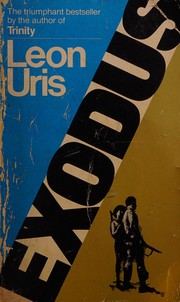
Exodus
Leon Uris's sweeping 1958 novel follows Jewish refugees, Haganah fighters, and Holocaust survivors from Cyprus to the founding of Israel and the 1948 war.
2,529-word summary · 11 min read

The World Is Flat: A Brief History of the Twenty-first Century
Thomas L. Friedman's 2005 bestseller argues that technology, trade, and open borders leveled the global playing field, and it names the ten forces that did it.
2,369-word summary · 11 min read
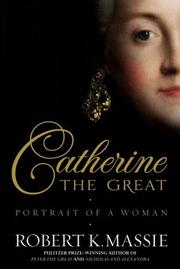
Catherine the Great: Portrait of a Woman
A German princess survives a miserable marriage and a coup to rule Russia for thirty-four years, torn between Enlightenment ideas and absolute power.
2,065-word summary · 9 min read

The Warmth of Other Suns
Three migrants ride north out of Jim Crow toward Chicago and LA.
2,561-word summary · 11 min read

The New Jim Crow: Mass Incarceration in the Age of Colorblindness
How mass incarceration became a racial caste system after civil rights.
2,413-word summary · 11 min read

The Emperor of All Maladies
A biography of cancer from Galen to chemo through one doctor cases.
2,255-word summary · 10 min read
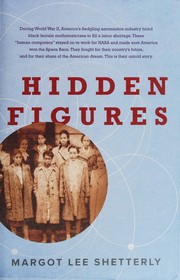
Hidden Figures
Black women computers at Langley launch rockets past Jim Crow.
2,385-word summary · 11 min read

Edge of Eternity
Five families cross civil rights, Cold War and Berlin Wall to the eighties.
2,489-word summary · 11 min read

Wild Swans
Three generations of women survive warlords, revolution, and the Cultural Revolution in Jung Chang's family memoir.
2,356-word summary · 10 min read

How to Be an Antiracist
Kendi blends memoir and history to argue that fair policy, not self fixing, creates an equal society.
2,513-word summary · 11 min read
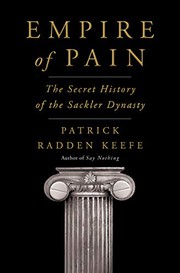
Empire of Pain: The Secret History of the Sackler Dynasty
How the Sackler family sold OxyContin and shaped an overdose crisis while giving to museums.
2,048-word summary · 9 min read

The Surgeon of Crowthorne
James Murray built the Oxford dictionary with Broadmoor inmate William Minor, whose thousands of slips shaped this 1998 HarperCollins story of murder, madness…
2,775-word summary · 12 min read
Say Nothing
Patrick Radden Keefe traces Jean McConville's 1972 disappearance through the Price sisters, Brendan Hughes, and Gerry Adams, using Boston College tapes to…
2,846-word summary · 13 min read
Band of Brothers
Easy Company, 506th Airborne, from Toccoa training through D-Day, Holland, Bastogne, and Hitler's Eagle's Nest.
2,685-word summary · 12 min read

A Beautiful Mind
Mathematician John Nash's brilliant game theory rise, schizophrenia collapse, and Nobel return, with wife Alicia's care.
2,142-word summary · 10 min read