
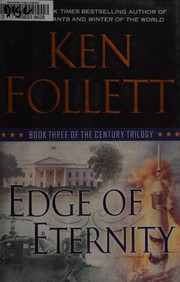
Edge of Eternity
2,489-word summary 11 min read 1098 pages in the book
- First published
- 2014
- Publisher
- Dutton
- Pages
- 1098
- ISBN
- 9780525953098
- Series
- Century Trilogy (#3)
Reading options
What's inside (8 sections)
I came to Edge of Eternity after reading the first two Century books back to back, and I wanted to see if Follett could stick the landing. The Dutton edition from 2014 runs 1098 pages and closes the Century Trilogy that began in 1911, carrying the same five families from the building of the Berlin Wall in 1961 to its fall in 1989, with a short epilogue on election night 2008. That is a lot of history for one novel. Civil rights, the Cuban missile crisis, assassinations, Vietnam, Watergate, rock and roll, the Polish union movement, and the slow collapse of Soviet power all pass through these pages.
The method will feel familiar if you read Fall of Giants and Winter of the World. Short chapters jump between Washington, Berlin, Moscow, and London. Children and grandchildren of earlier characters take the lead. Private choices line up with public dates. Sometimes the fit feels neat. Often it moves fast enough that you forgive it.
Washington, Mississippi, and the Justice Department
George Jakes is the heart of the American story, and for me the strongest reason to keep going. He is the son of Jacky Jakes, a Black singer and actress, and Senator Greg Peshkov, a white son of Russian immigrants who will not acknowledge him in public. George graduates from Harvard Law School, turns down money work, and takes a job in the Justice Department for Robert Kennedy at the start of the Kennedy administration.
Follett puts him on a Greyhound bus in the summer of 1961. George travels with Verena Marquand, who works for Martin Luther King Jr., to join the Freedom Rides through the South. The details here are concrete. Segregated waiting rooms. Local police who look away. White mobs at bus stations in Alabama and Mississippi. Young riders trained not to hit back. George is light skinned enough to confuse some Southerners, which Follett uses to show how arbitrary the color line was.
Back in Washington, George works on voting rights. He sits in meetings where Kennedy aides argue about how far the federal government can go without losing Southern Democrats. He goes south again for voter registration drives. He learns the names of counties, the layout of jails, the way a sheriff can hold you on a false charge over a weekend. Verena is brave and principled, and their romance carries the early chapters. It also breaks, in part because they want different kinds of lives.
Follett keeps George close to power without making him powerful. He is in rooms when wiretaps on King are discussed. He hears the tension between the Kennedys and J. Edgar Hoover. He watches the March on Washington in 1963 from inside the crowd and the administration at once. Later he serves under five more presidents in different legal and White House roles, which lets Follett show civil rights as a long grind rather than one speech.
The assassinations hit him hard. Dallas in November 1963. Memphis and Los Angeles in 1968. Follett does not linger on conspiracy talk. He shows funerals, empty offices, phones that stop ringing. George later marries Maria Summers, a White House staffer with her own views on war and race, and their marriage gives the Washington chapters a steadier center in the seventies. Their daughter eventually brings the story to 2008, when George weeps while watching Barack Obama win. Sentimental, yes. After a thousand pages with him, I accepted it.
Berlin: Rebecca, Hans, and a wall going up overnight
The Berlin story starts with a shock that still stands out. Rebecca Hoffmann teaches in East Berlin. She is the adopted daughter of Carla von Ulrich and Werner Franck, a family with anti Nazi roots and postwar political standing. Her husband Hans works in the East German justice ministry and talks at breakfast about courts serving the people.
Rebecca is called in by the Stasi in the spring of 1961. The officers know small facts about her home life. Meal times. What she said to a colleague. She walks out shaken. Slowly she learns Hans has been reporting on her for years. He married her in part to watch her family. Follett plays this as cold and domestic at once. A missing letter. A neighbor who asks too much. A husband who defends the system a little too smoothly.
Then August 1961 arrives. Barbed wire on a Saturday night. Concrete blocks soon after. Soldiers on corners. Families wake up divided. Follett captures the speed well. Rebecca makes a fast choice and escapes to the West with Bernd Held, another teacher she trusts. They leave with little, cross through confusion and luck, and reach West Berlin. She later marries Bernd. Hans stays behind, exposed as a spy in his own home.
The cost lands on her siblings. Her younger brother Walli Franck is a musical teenager who wants out. Her little sister Lili stays. Their parents remain in the East for years. Rebecca builds a new life in the West as a teacher and later in other school work, but guilt follows her. Follett returns to her often, not as a symbol but as an older sister who left.
What I appreciated here is how ordinary the repression feels. No long speeches about Marx. Just housing applications denied. Travel permits refused. A song lyric flagged. A school lesson plan checked for the wrong tone. Rebecca learns that safety in East Berlin meant silence, and silence ate marriages, friendships, and classrooms.
Moscow and Havana: Dimka and Tanya
In Moscow, twins Dmitri and Tanya Dvorkin carry the Soviet chapters. They are grandchildren of Grigori Peshkov, raised to believe while seeing too much to believe fully. Dimka, called Dimka by family, works as a young aide to Nikita Khrushchev. Tanya reports for TASS, the official news agency, while secretly writing for the illegal press and helping banned manuscripts reach the West.
Dimka is inside the room during the Cuban missile crisis in October 1962, and these are among the best political chapters. Follett shows Khrushchev bluffing, Kennedy blockading, messages crossing, submarines out of contact, and aides sleeping in offices. Dimka admires Khrushchev for denouncing Stalin yet sees his impulsiveness. After Khrushchev falls in 1964, Dimka serves new bosses he respects less. He pushes memos on farm output, factory waste, and military spending. He looks for a reformer and does not find one for twenty years.
Tanya moves more. Moscow apartments shared with other families. A trip to Cuba where she sees revolution up close and the gap between slogans and sugar shortages. Prague in 1968 when Soviet tanks end the spring of reform. She types forbidden articles at night, hides carbon paper, passes pages to contacts, and knows one mistake means prison. Follett gives her friends who vanish into camps and editors who cut truth into nonsense. Her courage feels different from Dimka's. He works the system. She risks it.
Their mother and grandmother add weight. Family dinners turn into arguments about whether the system can be fixed. Dimka marries and has children while trying to protect Tanya without knowing everything she does. When Tanya helps a famous dissident writer smuggle work out, the danger sharpens. Follett keeps the mechanics plain. Who carried the envelope. Which train. Which apartment was watched. That plainness makes the fear real.
One short thread stayed with me. Tanya visits a provincial town and sees lines for bread and shoes alongside posters claiming plenty. She files the official story by day and writes what she saw by night. No speech about truth. Just two versions on her desk.
Guitars, jungles, and wiretaps
Walli Franck, Rebecca's brother, gives the book its music. He plays guitar, writes songs, and hates the East German cultural rules that tell bands what to play and how to look. With his girlfriend Karolin, also a singer, he tries to live like a Western pop kid in a state that fears long hair. His escape to the West is tense and a little lucky, the kind of border crossing that depended on timing, a guard's inattention, and help from strangers.
Freedom brings a new price. Walli reaches Britain and later America, becomes a rock star with a band that tours the world, and falls into the drug and groupie life of the seventies. He leaves Karolin behind pregnant. Karolin is taken in by his family, raises the child, and builds her own singing life in the East under limits Walli no longer faces. Follett does not excuse him. Talent made him free and careless at once.
Dave Williams, son of Lloyd Williams and Daisy Peshkova, follows a parallel path in Britain. He plays in a band with Walli at times, tours Hamburg and America, and sees the British Invasion from the stage rather than the papers. His cousin Jasper Murray becomes a journalist who covers wars and politics, which lets Follett put a reporter in Vietnam, in Washington during Watergate, and in Poland during the strikes.
Cameron Dewar, grandson of American senator Gus Dewar, takes the spy road. Bright, conservative, sure America must fight Communism hard, he does open and secret work that carries him to Vietnam and later to Latin America and Africa. Follett uses him to show the costs of covert action. A source killed. A report twisted to please a boss. A mission that helps no one. Cameron believes for years, then doubts. His shift is slow and believable.
Vietnam itself is present but not endless. Jasper files stories about patrols and body counts. Dave meets drafted Americans on tour. George, back in Washington, watches Lyndon Johnson trap himself. Follett keeps the focus on how the war split families and parties rather than on battle tactics.
Watergate gets a tighter treatment. Break in. Cover up. Tapes. Resignation in August 1974. Follett stages it through staffers and reporters rather than Nixon alone. A couple watches the resignation speech on television and their private relief turns physical, a scene critics mocked for mixing history and sex. That blend is Follett throughout. He insists public events are felt in bedrooms and kitchens.
Prague, Warsaw, and the slow fall
The last third moves east again. Tanya covers dissidents in Moscow, then Czechoslovakia after 1968, then Poland when shipyard workers strike in Gdansk in 1980. Follett writes the rise of Solidarity with care. Lech Walesa with a loud voice and a religious pin. Workers with demands about pay, free unions, and the right to strike. A Communist government that signs agreements and breaks them. Martial law in December 1981. Underground printing presses. Priests hiding paper.
Lili Franck, the youngest sister, stays in East Germany and finds protest through music. She sings songs with lyrics that pass censors but sting those who listen closely. Follett shows Stasi files growing, concerts canceled, friends questioned. Lili will not leave like Walli or Rebecca. Her stand is smaller and, in its way, braver because she accepts the daily pressure.
Dimka finally finds his reformer. After Brezhnev stagnation, Andropov brief rule, and Chernenko illness, Mikhail Gorbachev rises in 1985. Dimka joins his circle, argues for openness and restructuring, and watches old men fight every change. Follett explains grain deals, oil prices, Afghanistan bleeding the army, and Chernobyl in 1986 shaking faith in official news. The history is simplified, but the direction is right. The system could no longer pay for its promises or hide its failures.
Reagan and Gorbachev summits, arms talks, and the decision not to use force in Eastern Europe in 1989 build to the Wall opening on November 9. Follett brings the Francks to that night. Rebecca, now older, Walli returning from the West, Lili singing in the East, Karolin and her child grown. The family meets at the crossing in a crowd with hammers and tears. After twenty eight years apart, they stand together. Follett earns the moment because he tracked the separation year by year.
The epilogue jumps to November 4, 2008. George Jakes, old now, watches Obama elected with his granddaughter. For a series that began with coal miners denied votes and women denied seats, the image closes a circle. Some readers will call it tidy. I found it moving, even if the last pages rush past the eighties to get there.
What holds and what sags across 1098 pages
Length is both the point and the problem. At 1098 pages in the Dutton first edition, Edge of Eternity needs room for six presidencies, five Soviet leaders, and dozens of lives. The payoff is momentum. Once you know the families, a short chapter can carry a crisis. The cost is repetition. Border scares, secret files, hotel rooms, press briefings, and tours blur together around the middle. I checked the page count near the Vietnam stretch and set the book down for two days.
Coincidence also strains belief. The same people turn up in Dallas, Havana, Prague, and Gdansk. A journalist just happens to know a guard. A singer just happens to meet a senator's son. Follett did this in the earlier books too, but here the world is larger and the meetings feel more arranged. If you want strict realism, this habit will annoy you.
The handling of sex drew complaints, and I see why. There are many affairs, often described in plain terms that read more functional than erotic. Some advance character. George and Verena, Rebecca and Bernd, Tanya and her lovers show what freedom meant in private life. Others feel added to keep pages turning. Younger readers should know the book is frank throughout.
Dialogue sometimes turns into briefing. Characters tell each other facts they would already know about missiles, voting laws, or union rules. Follett needs to teach fast, and he uses talk to do it. Historians will also spot compression. Timelines are squeezed. Minor figures are merged. Motives are tidied. That is fair to note, though the big events themselves, from the Freedom Rides to the missile crisis to Solidarity to the Wall falling, are presented in correct order with real dates and outcomes.
Still, the strengths matter. George Jakes stands as one of Follett's best creations, a decent man navigating a country that promised equality and practiced something else. Rebecca and Lili show East German life beyond spies, through schools and songs. Tanya and Dimka show Soviet life beyond evil, through work, family meals, and fear. The book argues that ordinary people, by voting, striking, typing, singing, and refusing to lie, helped end the Cold War. That claim is broad, but Follett supports it with lived detail rather than slogans.
Read it if you finished the first two and want the finish, or if you want Cold War history with faces attached. Read Fall of Giants first if you have not, since relationships and callbacks assume it. Take it in parts. A section a week suits the structure. Keep a list of names at first. By Berlin 1961 you will not need it.
FAQ
When was Edge of Eternity published?
Dutton published Edge of Eternity in 2014. The hardcover runs 1098 pages and the ISBN is 9780525953098.
Is Edge of Eternity part of a series?
Yes. It is book three of the Century Trilogy, after Fall of Giants and Winter of the World, following the children and grandchildren through 1961 to 1989.
Whose stories does it follow?
George Jakes works in the Justice Department, Rebecca Hoffmann teaches in Berlin, Walli Franck plays rock, and twins Dmitri and Tanya Dvorkin work inside Soviet politics and journalism.
Similar books
More from Century Trilogy first, then related titles.
Fall of Giants
Five families from Wales to Russia live through World War I, the Russian Revolution, and the fight for women's votes.
2,255-word summary · 10 min read

Winter of the World
Five families from Berlin to Moscow live through the Nazis, World War II, and the atomic age in Follett's second Century volume.
2,402-word summary · 11 min read
Exodus
Leon Uris's sweeping 1958 novel follows Jewish refugees, Haganah fighters, and Holocaust survivors from Cyprus to the founding of Israel and the 1948 war.
2,529-word summary · 11 min read

Violeta
A woman born in 1920 writes her life story to her grandson, from one pandemic to another, through wealth, ruin, passion, and dictatorship in South America.
2,555-word summary · 11 min read

Cleopatra: A Life
Pulitzer winner Schiff restores Cleopatra as a capable ruler, from Ptolemy debts and Caesar to Antony, Actium, and her death in 30 BC, built from coins and…
3,586-word summary · 16 min read
Shogun
An English pilot wrecked in 1600 Japan becomes a pawn in Lord Toranaga's patient bid for power, and slowly becomes Japanese himself.
2,251-word summary · 10 min read
Wolf Hall
In Mantel's Booker winner, Thomas Cromwell rises from a Putney forge to Henry VIII's council, steering the annulment crisis past Wolsey's fall toward a break…
2,911-word summary · 13 min read
The Evening and the Morning
Edgar, Ragna, and Aldred build a bridge town that becomes Kingsbridge around 997, facing Viking raids, harsh law, and a scheming bishop in Follett's prequel.
2,833-word summary · 13 min read
Eye of the Needle
German spy Faber races D Day photos to a U boat while MI5 hunts and Storm Island Lucy stands last.
2,083-word summary · 9 min read

The Zookeeper's Wife: A War Story
The directors of the Warsaw Zoo hid roughly three hundred Jews in empty cages and outbuildings after the German invasion, while Jan worked for the resistance.
2,065-word summary · 9 min read

The Stationery Shop
Two teenagers fall in love in a Tehran stationery shop in 1953, are separated by the coup and a family deception, and meet again sixty years later.
2,024-word summary · 9 min read

The Orphan's Tale
A Dutch teenager rescues a Jewish baby from a death train and joins a German circus, where a Jewish aerialist teaches her to fly.
2,943-word summary · 13 min read

Long Walk to Freedom
Mandela's account of a Thembu childhood, a law practice, a banned movement, twenty-seven years in prison, and the negotiation that ended apartheid.
2,454-word summary · 11 min read

The Shadow Sister
Star D'Apliese steps out of her sister's shadow and follows a bookshop clue into the Edwardian life of Flora MacNichol, a woman who gave up love for duty.
2,260-word summary · 10 min read

Nothing to Envy
Barbara Demick follows six defectors from Chongjin through the North Korean famine, showing how ordinary people lived, believed, and finally left.
2,068-word summary · 9 min read

Mrs. Everything
Two Jewish sisters in Detroit grow up, apart and together, across seven decades of American life, from the 1950s to the 2016 election.
2,362-word summary · 10 min read

The Boleyn Inheritance
Three women narrate Henry VIII's fourth and fifth marriages: a foreign bride who survives, a teenage queen who does not, and the widow who opens the door.
2,391-word summary · 11 min read

Sophie's Choice
A young Southern writer in 1947 Brooklyn befriends a brilliant, unstable couple and slowly learns the story of the Polish Catholic woman at the center of their…
2,798-word summary · 12 min read
Only Time Will Tell
A Bristol dockworker's son wins a scholarship, falls in love with the daughter of the family that owns the shipyard, and learns that his father's death was not…
2,082-word summary · 9 min read

Down and Out in Paris and London
Orwell's account of washing dishes in Paris hotels and tramping through London does not ask for pity, only for a clear look at how poverty actually works.
2,282-word summary · 10 min read
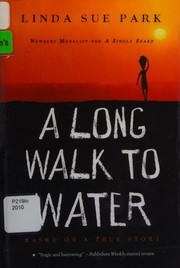
A Long Walk to Water
Two eleven-year-olds in southern Sudan, twenty-three years apart: a Dinka boy fleeing war and a Nuer girl walking hours for water, until their stories meet at…
2,217-word summary · 10 min read

The Lowland
Two brothers grow up beside a marshy lowland in Calcutta, and the choices of the younger one draw the older into a life of duty, distance, and quiet grief that…
2,213-word summary · 10 min read
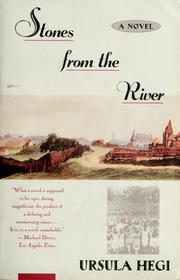
Stones from the River
Trudi Montag is born a dwarf in a small German river town in 1915 and grows up to keep the town's library and its secrets, from the First World War to the…
2,818-word summary · 13 min read
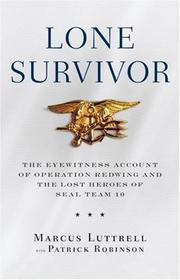
Lone Survivor: The Eyewitness Account of Operation Redwing and the Lost Heroes of SEAL Team 10
Marcus Luttrell's account of the 2005 SEAL mission in Afghanistan that killed three of his team and left him alone.
2,144-word summary · 10 min read

Bury My Heart at Wounded Knee: An Indian History of the American West
Dee Brown's 1970 retelling of the American West from the point of view of the people it destroyed.
2,233-word summary · 10 min read
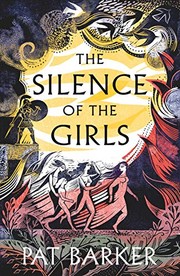
The Silence of the Girls
Briseis, queen of Lyrnessus, is captured by Achilles and narrates the Trojan War from inside the Greek camp, where women are prizes and survival is its own…
2,098-word summary · 9 min read

The Queen's Fool
A young Jewish refugee with second sight becomes a court fool to Edward VI, Mary I, and Elizabeth, and learns what it costs to tell the truth.
2,412-word summary · 11 min read
The Last of the Mohicans
During the French and Indian War, Hawkeye and two Mohican warriors try to save two British sisters from a Huron chief whose revenge will end the Mohican line.
2,017-word summary · 9 min read

Prisoners of Geography: Ten Maps That Tell You Everything You Need to Know About Global Politics
Tim Marshall explains how mountains, rivers, coasts, and resources shape the choices of nations, from Russia's flat borders to the chokepoints of the South…
2,328-word summary · 10 min read

Doctor Zhivago
A doctor and poet lives through revolution, war, and love in Pasternak's novel of private life under the pressure of Russian history.
2,213-word summary · 10 min read