
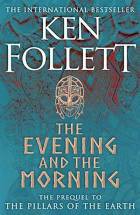
The Evening and the Morning
2,833-word summary 13 min read 912 pages in the book
- First published
- 2020
- Publisher
- Macmillan
- Pages
- 912
- ISBN
- 9781447278788
- Series
- Kingsbridge
Reading options
What's inside (8 sections)
I came to this one with sore wrists in mind. I had read The Pillars of the Earth years ago on a train and I remembered the cathedral going up stone by stone and the way Follett made monks and masons feel like people I knew. When I saw he had written a prequel, published in September 2020 by Macmillan in the UK as the Kingsbridge prequel to The Pillars of the Earth, I bought it thinking it would be a quick return visit. It is not quick. The edition I cite runs to 912 pages in the Pan and Macmillan 2021 paperback, and it took me a full week of evenings. I read most of it on the couch with a blanket, and I kept losing track of time around midnight because some new unfairness would land on Edgar or Ragna and I needed to see how they answered it.
What surprised me was how plain the start feels. No cathedral yet. No Kingsbridge as we know it. Just a small coastal town, a boatbuilder boy, a Norman girl who loves stories, and a monk who wants a better house of prayer. If you like watching a place get built from mud and debt and stubbornness, this gives you all of that. It also tests your patience in places, which I will get to honestly later.
Edgar the boatbuilder in Combe
Edgar is the heart of the early book, and I liked him right away because his skill is so physical. He lives in Combe, a little settlement on the south coast of England around the year 997, with his parents and his two brothers. His father builds boats, and Edgar has grown up breathing wood shavings and tar. He can look at a hull and tell you where it will leak. He loves the water in the way some kids love horses. He is not the eldest, so he does not expect to inherit much, but he has plans to build a better boat of his own design, lighter and faster, and to sell work up and down the coast.
Combe feels real because Follett spends time on work. You see the yard, the tools, the way planks are bent with heat, the way men argue about payment in ale and silver. Edgar has a sweetheart in town and a circle of friends who tease him about his big ideas. His mother worries about money.
Then the Vikings come.
Follett does not make the raid abstract. One morning the lookouts shout, sails appear, and men with axes and shields run up the beach. They burn houses, kill Edgar's father and others who stand up, steal stores, and leave the town smoking. Edgar's family loses almost everything. The boat yard is wrecked. The girl he hoped to marry is gone in the chaos that follows. His mother is left trying to feed three boys with no income. I found these chapters hard to read, not because they are gory for pages, but because the loss is so practical. No boat means no work. No work means hunger by winter.
The family has to move. They go inland to Dreng's Ferry, a rough river crossing owned by a local strongman, where there might be labor and shelter. Edgar arrives angry and grieving, with his tools in a sack and his plans for fine boats suddenly useless in a place with no harbor. That forced restart shapes the rest of his arc. He has to learn to build houses, to repair a tavern, to judge timber for roofs instead of hulls. He hates it at first. He keeps sketching boats in his head while he planes door frames.
Ragna in Normandy and the marriage to Wilwulf
Across the Channel, Ragna is growing up in Cherbourg in Normandy as the daughter of a nobleman with connections and pride. She is clever with accounts, good on a horse, and used to speaking her mind. Her mother died when she was young. She is not presented as a modern woman dropped into the past. She prays, she obeys her father in most things, she knows marriage will be arranged. But she has a clear sense of fairness.
Wilwulf arrives as a visitor and a prospect. He is the ealdorman of Shiring, which in Anglo-Saxon England means something like the chief nobleman of the shire, the man who holds power for the king in that district, keeps order, collects dues, and leads men in war. He is older than Ragna, handsome in a worn way, married already to a woman who has not given him a living son, and looking for a new alliance across the water. He speaks well. He brings gifts. He tells Ragna about England, about his hall, about the river and the woods. She falls for him, partly for love and partly for the idea of a larger life.
Her family negotiates hard, as families did. Dowry, lands, promises about her status and her children's rights. Ragna sails to England with servants, chests, and hopes, expecting to be the lady of Shiring. I liked the sea crossing scenes because Follett knows ships, and you feel the wind and the sickness and the fear of pirates. When she lands, England smells different, smokier and greener, and the hall at Shiring is bigger and darker than she pictured.
The marriage starts with warmth. Wilwulf is kind in private. He listens. He defends her Norman ways when his men mock them. But his household is full of traps. His first wife is still around, bitter and watchful. His sons by her resent a new wife who might bear a rival heir. His brother Wynstan watches everything with cold eyes. Ragna soon learns that being loved by a powerful man is not the same as being safe in his world.
Wynstan, Wilwulf and the power game in Shiring
Wynstan, bishop of Shiring, is the villain you love to hate and sometimes hate to keep reading. He is Wilwulf's half brother, a churchman who acts like a lord. He wants land, silver, and control over who becomes abbot or prior where. He smiles in church and plots after. He keeps a mistress openly, uses confession as intelligence, and treats law as something to bend for friends and break for enemies. Follett does not hide what he is doing. You see Wynstan lie to the king's messengers, forge claims, threaten widows, and punish priests who resist.
Wilwulf is caught in the middle. He is not weak exactly, but he is loyal to family in a way Wynstan exploits. He needs the church on his side to keep Shiring quiet. He tries to balance all of it and often chooses peace over justice. When Wynstan seizes land or fines a farmer into ruin, Wilwulf looks away or tells himself he will fix it later.
The politics get tangled because England around 997 to 1007 is not stable. King Ethelred is on the throne, Danes raid and then demand silver to leave, and local lords fortify where they can. Follett shows councils where men shout and letters carried for days through mud. Ragna tries to use her Norman connections, but letters take weeks and her father has his own troubles.
I found this middle stretch both gripping and heavy. Gripping because every small win for Ragna feels earned. Heavy because Wynstan wins so often through procedure. He does not need to draw a sword. He just needs a witness to disappear or a charter to be read in a certain way.
Dreng's Ferry and the hard years after the raid
Back at Dreng's Ferry, Edgar is learning how rough England can be for a man with no protector. The ferry belongs to Dreng, a hard owner who charges all he can and pays as little as he must. The settlement is a cluster of huts and workshops around a river crossing, muddy in winter, full of travelers and thieves. Edgar's family rents a poor house. His mother takes in washing. Edgar finds work as a carpenter, though he feels each house beam as a small defeat.
He slowly makes a place through craft. He rebuilds a tavern after a fire with better joints and a straighter roof. He fixes the ferry landing so carts do not sink. He argues for a new bridge over the river, saying a bridge would bring more trade than a ferry ever could, since travelers hate waiting for a boat in rain. People laugh at first. Bridges cost money and need permission. Dreng does not want one because the ferry is his income.
Edgar also falls into a complicated love. He is drawn to a woman in the settlement who is married to another man, and Follett handles this without making it tidy. I appreciated that Edgar is not written as a hero who never errs. He is stubborn, he sulks, he says sharp things to his mother. But he keeps showing up to work, and workers notice.
Viking pressure returns in waves. News comes of towns burned to the east, of silver paid to buy peace, of young men called to serve in the fyrd, the local levy. Edgar has to help strengthen a stockade he knows will not hold. There is a stretch where Edgar is accused unfairly over timber and has to clear his name by showing his marks on the wood, a small scene I loved because it treats craft knowledge as evidence.
What kept me with these chapters was the accumulation of small improvements. A better path here. A drainage ditch there. A storehouse with a tight roof. None of it looks like Kingsbridge yet. All of it points toward a town that could be more than a ferry stop if someone with vision and backing ever took charge.
Aldred the monk and the dream of a minster
Aldred is the third point of the triangle, and for me he was the most moving. He is a young monk from a religious house in Shiring, bright and a little too outspoken for his own good. He loves books in the way of someone who has copied pages by hand. He dreams of a minster, a large church with a community around it, that would lift the district out of ignorance and fear.
His path crosses Wynstan's because Wynstan controls appointments and income. Aldred speaks against corruption and defends a prior who is being pushed out. Wynstan punishes him by sending him to a poor, remote cell with leaking roofs and thin soup. Aldred does not break. He cleans, he teaches a local boy to read psalms, he mends manuscripts.
I liked how Follett shows monastic life without romance. Hours are long. Food is plain. Discipline is strict. Aldred doubts. He wonders if his dream is pride. He feels envy when he hears of richer houses. He gets sick in winter and is nursed by lay brothers who have little themselves. Yet he keeps a record of gifts and work, stone by stone in his mind, waiting for a chance.
That chance comes through Ragna and Edgar in different ways. Ragna meets Aldred when she seeks counsel and a confessor she can trust. She is drawn to his honesty after so much flattery. She gives alms, asks questions about law and oath, and later backs his claims when Wynstan tries to strip him. Edgar meets him over building. Aldred needs a builder who understands timber and stone on a tight budget. Edgar needs a patron who will pay fairly and let him try new methods. Their friendship grows over plans scratched in dirt, arguments about arches and roofs, and shared anger at seeing good work undone by greed.
There is a lovely sequence where they walk the ground at Dreng's Ferry and picture where a church could stand, where the market could be, where the bridge could land. It is just talk, but talk matters. For the first time Edgar sees a future that uses his boatbuilder's eye for lines and loads in a town on a river. For the first time Aldred sees a builder who cares whether a roof will still be tight in twenty winters.
How Dreng's Ferry becomes Kingsbridge
The last third moves faster, and I tore through it. Wilwulf's health fails after years of strain and war worry, and his death leaves Ragna exposed. Wynstan moves at once to strip her of lands and rights, claiming her marriage terms were flawed and her sons have no proper claim. Her stepsons press their own cases. Servants she trusted are bribed or frightened. She fights in courts and councils, producing charters, calling witnesses, demanding oaths. Some judges are fair. Many fear Wynstan more than they love law.
Follett does not spare Ragna here. She loses rounds. She is humiliated in public. She has to sell jewels to pay lawyers and scribes. She sends desperate letters to Normandy that go unanswered for months. At one point she has to flee with her children and a few loyal people, traveling by night and hiding in religious houses. I felt sick reading one hearing where Wynstan twists her own words about love and duty into proof she schemed from the start. It rang true in an ugly way.
Edgar's story turns on the bridge. After Dreng's death and shifts in ownership, an opening appears for someone to buy influence and build. Edgar, now respected as a master builder though still far from rich, pushes the bridge plan again. He finds backers, including Ragna with what remains of her resources and Aldred with church support, who see that a bridge would fix trade at the crossing and fund a church. Building it is hard, physical work. Timber must be seasoned. Piers must stand in current. Floods threaten. Men are hurt. Money runs short. Edgar is on site in all weather, shouting, measuring, cajoling. When the bridge finally holds and carts roll across without waiting for a ferry, the settlement changes in weeks. More merchants stop. More stalls appear. A tavern expands. A smith sets up.
The church follows. Aldred gets permission to found a small priory at the new town, with Edgar to build the first church and lodgings. They choose higher ground above flood, lay out a simple cruciform plan, and raise walls with local stone and timber. Monks arrive, a few at first, then more. A market is chartered. The place needs a new name because Dreng is gone and the ferry is past. People start calling it Kingsbridge after the bridge built under the king's peace, and the name sticks.
The ending ties the threads without pretending all wounds heal. Ragna gets a measure of justice, though not all she lost. Wynstan faces a fall, though men like him rarely pay in full, and Follett gives him a reckoning that feels plausible rather than neat. Edgar and Ragna, who have circled each other for years through work and loss, find a way to be together that respects what each has suffered. Aldred sees his minster begun, knowing he will not live to see the great cathedral that readers of Pillars know will rise centuries later. The final pages look over the bridge, the market, the small church on the hill, and you can feel the town breathing.
I closed the book fond of it and annoyed by it in equal parts, which seems honest for a 912 page prequel. The scope is grand and the craft detail about building, law, and daily work is rich. Edgar's timber logic, Ragna's account keeping, Aldred's copying and prayer, all of it made the year 997 feel close. The love stories earn their feeling because they grow through labor and waiting, not just glances.
My complaints are real though. The book is bloated in the middle. Some councils and court scenes repeat the same moves, and a few travel chapters could have been cut without losing sense. The dialogue often sounds modern in a way that pulled me out. People say things like fine, deal, or talk about feelings in flat present day terms that sit oddly beside oaths and dowries. Wynstan, strong at first, turns into pantomime after a while, always sneering, always one step ahead until the plot needs him to slip. The ship sections, usually Follett's strength, drag here because Edgar keeps explaining his designs at length and I started skimming hull talk to get back to people.
Still, when the bridge takes its first cart and Aldred sings the first office in an unfinished church with wind through the gaps, I felt the old Kingsbridge pull. If you loved watching Tom Builder find work in Pillars, you will like watching Edgar measure a river and dare a town to grow. Just give yourself time. This is a slow build by design, and the morning of the title arrives late, but it arrives.
FAQ
Is The Evening and the Morning a prequel to The Pillars of the Earth?
Yes. It is book 0 in the Kingsbridge series, set around 997 to 1007, well before the cathedral building in The Pillars of the Earth.
When was it published and which edition is the page count from?
It was first published in September 2020 by Macmillan. The 912 pages cited here are the Pan and Macmillan 2021 paperback.
Who are the main characters?
Edgar is a boatbuilder turned town builder, Ragna is a Norman noblewoman married into Shiring, Aldred is a monk, and Wynstan is the bishop who opposes them.
Similar books
More from Kingsbridge first, then related titles.

The Pillars of the Earth
A priory, a builder, and a town raise a cathedral through war and fire.
2,068-word summary · 9 min read

World Without End
Four children witness a killing, then plague, war, and church shape builder, healer, peasant, lord.
1,999-word summary · 9 min read
A Column of Fire
Spies and lovers cross Tudor England as Mary and Elizabeth fight for the crown and faith.
2,029-word summary · 9 min read
The Thorn Birds
Meggie loves priest Ralph across decades on Drogheda sheep station.
2,280-word summary · 10 min read
The Stationery Shop
Two teenagers fall in love in a Tehran stationery shop in 1953, are separated by the coup and a family deception, and meet again sixty years later.
2,024-word summary · 9 min read

The Shadow Sister
Star D'Apliese steps out of her sister's shadow and follows a bookshop clue into the Edwardian life of Flora MacNichol, a woman who gave up love for duty.
2,260-word summary · 10 min read
Only Time Will Tell
A Bristol dockworker's son wins a scholarship, falls in love with the daughter of the family that owns the shipyard, and learns that his father's death was not…
2,082-word summary · 9 min read

Ivanhoe
A disinherited Saxon knight, a great tournament, a besieged castle and a trial by combat. Scott's most famous novel, set in England in 1194.
2,834-word summary · 13 min read

Kane and Abel
Boston Kane and Polish Abel, born same day, build empires while hating across decades.
2,016-word summary · 9 min read

Water for Elephants
Water for Elephants retold: Jacob on a circus train, Marlena and Rosie, Prohibition era dust.
1,925-word summary · 9 min read
Edge of Eternity
Five families cross civil rights, Cold War and Berlin Wall to the eighties.
2,489-word summary · 11 min read
Winter of the World
Five families from Berlin to Moscow live through the Nazis, World War II, and the atomic age in Follett's second Century volume.
2,402-word summary · 11 min read
Fall of Giants
Five families from Wales to Russia live through World War I, the Russian Revolution, and the fight for women's votes.
2,255-word summary · 10 min read

Violeta
A woman born in 1920 writes her life story to her grandson, from one pandemic to another, through wealth, ruin, passion, and dictatorship in South America.
2,555-word summary · 11 min read

The Japanese Lover
A Polish refugee and the son of a Japanese gardener fall in love in San Francisco in 1939, then keep the affair secret for nearly seventy years.
2,286-word summary · 10 min read

Anatomy: A Love Story
In 1817 Edinburgh, a noblewoman who wants to be a surgeon disguises herself to study anatomy and falls for the grave robber who supplies her with bodies.
2,031-word summary · 9 min read

Mrs. Everything
Two Jewish sisters in Detroit grow up, apart and together, across seven decades of American life, from the 1950s to the 2016 election.
2,362-word summary · 10 min read

The Valley of Horses
Exiled from the Clan, Ayla survives alone in a hidden valley, tames a horse and a cave lion, and nurses a wounded stranger back to life.
2,311-word summary · 10 min read

Reason to Breathe
Emma Thomas is a star student with a careful, invisible life at home. Evan Mathews notices the cracks, and the novel follows what happens when kindness gets…
2,197-word summary · 10 min read

The Lowland
Two brothers grow up beside a marshy lowland in Calcutta, and the choices of the younger one draw the older into a life of duty, distance, and quiet grief that…
2,213-word summary · 10 min read
Stones from the River
Trudi Montag is born a dwarf in a small German river town in 1915 and grows up to keep the town's library and its secrets, from the First World War to the…
2,818-word summary · 13 min read

Origins
Stefan's diary of 1864 and 1888: how he and Damon fell for Katherine, became vampires, and went looking for a killer in London.
2,056-word summary · 9 min read

Last Night at the Telegraph Club
The 2021 National Book Award winner follows Lily Hu, a Chinese American teenager in 1954 San Francisco, as she falls for Kath and learns what it costs to be…
2,336-word summary · 10 min read
Euphoria
Three anthropologists in 1930s New Guinea turn fieldwork into a love triangle, and a real history breathes behind them.
2,048-word summary · 9 min read

What the Wind Knows
Annie scatters her grandfather's ashes on Lough Gill and is pulled into 1921 Ireland, where she becomes the missing Anne Gallagher and falls for Dr. Thomas…
2,056-word summary · 9 min read
Troubles in Paradise
In the final Paradise novel, Irene Steele rebuilds her life on St. John while the truth about Russ's death and Todd Croft's criminal empire finally surfaces.
2,471-word summary · 11 min read
Loving Frank
Mamah Borthwick Cheney leaves her family for Frank Lloyd Wright, and their affair becomes a public scandal that ends in tragedy at Taliesin.
2,034-word summary · 9 min read

Doctor Zhivago
A doctor and poet lives through revolution, war, and love in Pasternak's novel of private life under the pressure of Russian history.
2,213-word summary · 10 min read
A Voice in the Wind
A young Christian slave in Rome serves a spoiled patrician daughter and catches the eye of her brother, while a captured German gladiator fights for freedom.
2,322-word summary · 10 min read
The Storm Sister
Ally D'Aplièse loses her father and her lover within weeks, then follows a brass frog and a Norwegian biography into Anna Landvik's music and the world of…
2,376-word summary · 11 min read