
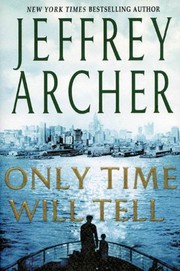
Only Time Will Tell
2,082-word summary 9 min read 400 pages in the book
- First published
- 2011
- Publisher
- St. Martin's Press
- Pages
- 400
- ISBN
- 9780312539559
- Series
- The Clifton Chronicles (#1)
Reading options
What's inside (10 sections)
Harry Clifton grows up believing his father was killed in the war. It is a good story for a boy in Bristol in the 1920s. It explains the absence, the photographs, the way his mother goes quiet when his name comes up. It is also a lie. Arthur Clifton died in the docks, in an accident that was not an accident, and the people who know the truth have decided that Harry is better off without it.
That is the engine of the first Clifton Chronicles novel. Jeffrey Archer published it in 2011, and it covers twenty years of Harry's life, from his birth in 1920 to the eve of the Second World War. It is a family saga, a class story, a mystery, and a romance, and it moves like a thriller. Archer writes short chapters and ends most of them on a hook. You can read a hundred pages before you notice that you have not put the book down.
I picked it up because I wanted to know how Archer handles a long series. The answer is: efficiently. He introduces a large cast, gives each of them a secret, and then lets the secrets collide. Some of the collisions are contrived. Some of them are genuinely satisfying. The book is not subtle, but it is not stupid either.
Bristol, 1920
Maisie Clifton is a young woman who married beneath her station, or so her mother thinks. Arthur Clifton is a stevedore at the Barrington shipyard. He is decent, hardworking, and in love with his wife. When Harry is born, the future looks ordinary. Then Arthur goes to work one night and does not come home.
The official story is that a load of timber shifted and crushed him. The men who were there give statements. The company pays compensation. Maisie is left with a baby and a story she does not believe. She knows Arthur was careful. She knows the docks. She knows that something was wrong that night, and she knows that the Barringtons know more than they are saying.
Archer tells the story from several points of view. Maisie gets chapters. Harry gets chapters. Hugo Barrington, the son of the shipyard's owner, gets chapters. Old Jack Tar, a Boer War veteran who lives in a railway carriage at the yard, gets chapters. The shifting perspective is one of the book's strengths. It lets the reader see the same event from different angles, and it lets Archer withhold information without cheating.
Maisie is the best character in the book. She is proud, stubborn, and willing to work herself to the bone to keep Harry in school. She takes in washing. She waits tables. She refuses charity. She also lies to her son about his father, which is either a act of love or a act of cowardice, depending on the chapter. Archer does not judge her. He lets her make her choices and shows the cost.
The voice
Harry's gift is his voice. He can sing. Not in a cute, school-play way. In a way that makes adults stop and listen. Miss Monday, the choir mistress, notices first. Mr. Holcombe, his elementary school teacher, notices next. They convince Maisie that Harry should audition for a scholarship at St Bede's, an exclusive boys' school that has never taken a dockworker's son.
The audition scene is one of the book's best. Harry is nervous, underdressed, and surrounded by boys who have been groomed for this their whole lives. He sings. The room goes quiet. The headmaster, Mr. Frobisher, is impressed. Hugo Barrington, who is on the board, is not. Hugo does not want Harry at St Bede's. He does not want a Clifton in the same room as his son.
Harry gets in anyway. The scholarship covers the fees, but not the uniform, the books, or the social cost. Maisie finds a way. Old Jack Tar finds a way. Harry arrives at St Bede's with the wrong accent, the wrong clothes, and the wrong father. He is bullied. He is lonely. He is also smarter and more determined than most of the boys around him.
At St Bede's, he meets Giles Barrington, Hugo's son. Giles is everything Harry is not: rich, confident, and comfortable in his own skin. He is also decent. He does not care where Harry comes from. The two boys become best friends, which is convenient for the plot and convincing enough for the reader. Their friendship is the book's warmest relationship.
Emma
Emma Barrington is Giles's sister. She is older than Harry, or at least seems older. She is intelligent, direct, and not interested in the conventions that govern her family. She meets Harry at a party, and she likes him before she knows his name. When she finds out he is a scholarship boy from the docks, she likes him anyway.
The romance is gentle and slightly rushed. Harry and Emma do not have many scenes together. They have a few conversations, a few walks, a few glances across a room. Archer is not a sensual writer. He is a plot writer. The romance matters because it raises the stakes, not because it is deeply explored.
Hugo disapproves. Of course he does. He wants Emma to marry someone of her own class. He also has other reasons, which the book takes its time revealing. The tension between Harry and Hugo is the book's central conflict. Hugo is not a monster. He is a man who has spent his life protecting his position. He is capable of kindness, and he is capable of cruelty. The novel is careful to show both.
Emma's mother, Elizabeth, is more complicated. She is kind to Harry, but she is also loyal to her husband. She knows more than she says. The Barrington household is full of polite silences, and Archer is good at the way those silences press on the people inside them.
The mystery of Arthur Clifton
The question of what happened to Arthur is the book's spine. Harry starts asking questions when he is old enough to understand that the war story does not add up. Old Jack Tar knows something. Maisie knows something. Hugo knows everything.
The truth is revealed slowly, in fragments. There was a theft at the docks. A load of tobacco? Timber? Something valuable. Arthur saw something he should not have seen. Hugo was involved. Stan Tancock, Maisie's brother, was involved. The accident was either a murder or a cover-up that went wrong. The men who were there have kept quiet for twenty years.
Old Jack is the key. He is a Victoria Cross hero who has withdrawn from the world. He lives in a railway carriage, drinks too much, and talks to almost no one. He takes an interest in Harry because Harry reminds him of the boy he used to be. He teaches Harry to read people. He teaches him to be careful. He also carries guilt about Arthur's death, which the book reveals in stages.
The mystery is not a puzzle in the Agatha Christie sense. The reader can guess most of it. The pleasure is in watching Harry assemble the pieces and in watching the adults try to stop him. Archer is good at the moment when a character realizes that the story they have been told is not the story they are living in.
The class problem
The book is about class, even when it is pretending to be about a murder. Harry's whole life is shaped by the accident of his birth. He is smart enough for Oxford, but he cannot afford it. He is good enough for Emma, but he is not good enough for her family. He is loyal to his mother, but her sacrifices are also a kind of pressure. Every step he takes away from the docks is a step away from her.
Archer is not a subtle social critic. He likes clear contrasts: the cold Barrington house versus the warm Clifton kitchen, the polished accents versus the Bristol burr, the boys who inherit versus the boy who earns. But the contrasts work. They give the book its emotional shape. Harry is not trying to become rich. He is trying to become someone who can choose his own life.
The supporting characters carry the theme. Deakins, Harry's friend at St Bede's, is a scholarship boy too, but he is less ambitious and more content. Giles is rich and kind, but he does not understand what Harry has had to do to get there. Maisie is proud and exhausted. Old Jack is a gentleman who has fallen out of the world. Each of them shows a different way of dealing with the English class system, and none of them escapes it.
The ending
The last hundred pages are the best. Harry and Emma decide to marry. Hugo tries to stop them. The wedding is planned. The family gathers. And then, at the worst possible moment, the truth comes out. Harry may be Hugo's son. If he is, then he and Emma share a father, and the marriage cannot happen.
The revelation is a classic Archer cliffhanger. It is also a little cheap. The book has spent twenty years building a relationship, and then it ends it with a paternity twist that feels like a soap opera. The reader does not get to see Harry and Emma deal with the aftermath. The book stops. The next volume starts with Harry in New York, accused of murder, and the story keeps going.
I have mixed feelings about this. On one hand, it is effective. I wanted to read the next book. On the other hand, it is manipulative. Archer withholds the answer to the central question, then uses the withholding as a marketing device. That is the business of serial fiction, but it is not the same as a satisfying novel.
The paternity question is also uncomfortable. If Hugo is Harry's father, then Hugo's treatment of Harry is even more monstrous. If he is not, then the reveal is a lie designed to stop the wedding. The book does not resolve this. It just drops the bomb and walks away.
What works and what does not
The pacing is excellent. Archer knows how to write a page-turner. The chapters are short, the dialogue is clean, and the transitions are smooth. The book is not literary, but it is professional. It does what it sets out to do.
The characters are memorable, if not deep. Maisie is the standout. Old Jack is a close second. Hugo is a good villain because he is plausible. Harry is a little too perfect. He is handsome, talented, brave, and morally upright. His flaws are the kind that make him more sympathetic rather than less. That is a limitation.
The coincidences are frequent. Harry just happens to befriend the son of the man who owns the shipyard. He just happens to fall in love with the daughter. He just happens to be at the right place when the truth comes out. Archer's world is small, and everyone is connected. That is part of the pleasure of a family saga, but it also strains credibility.
The prose is plain. Archer does not write beautiful sentences. He writes clear ones. The book is designed to be read quickly, and it is. If you want lyrical historical fiction, this is not it. If you want a story that pulls you through, it is.
Who should read it
Read this if you like family sagas with secrets, class conflict, and a strong sense of period. Read it if you enjoyed Downton Abbey and want something with more plot and less restraint. Read it if you are looking for a series to start, because there are seven books and this one sets up the whole arc.
Do not read it if you need a self-contained story. Do not read it if you are bothered by coincidences. Do not read it if you want a careful portrait of Edwardian England. The book is a yarn, and it knows it.
What remains is a confident, readable opening to a long series. Harry Clifton is a boy who wants more than the life he was given, and the book follows him with affection and suspense. The mystery of his father is not solved. The mystery of who he is remains open. That is enough to bring the reader back.
FAQ
Is Only Time Will Tell the first Clifton Chronicles book?
Yes. It was published in 2011 and covers Harry Clifton's life from 1920 to 1940.
Does the book end on a cliffhanger?
Yes. It ends with Harry about to marry Emma Barrington and a revelation that throws his parentage into doubt.
Can I read it without the rest of the series?
You can, but the central mystery is not resolved in this volume.
Similar books
More from The Clifton Chronicles first, then related titles.
Kane and Abel
Boston Kane and Polish Abel, born same day, build empires while hating across decades.
2,016-word summary · 9 min read

The Shadow Sister
Star D'Apliese steps out of her sister's shadow and follows a bookshop clue into the Edwardian life of Flora MacNichol, a woman who gave up love for duty.
2,260-word summary · 10 min read
Death Comes to Pemberley
P.D. James drops a murder onto the Pemberley estate and sends Wickham to trial, reading Austen's most famous marriage through the machinery of Georgian justice.
2,318-word summary · 10 min read
Vanishing Acts
A search-and-rescue worker's perfect life cracks when her past and her father catch up.
2,799-word summary · 12 min read
The House at Riverton
In 1999, ninety eight year old maid Grace Bradley tapes the truth about a 1924 shooting at Riverton Manor, poet Robbie Hunter, two sisters and a lie held for…
2,433-word summary · 11 min read
The Evening and the Morning
Edgar, Ragna, and Aldred build a bridge town that becomes Kingsbridge around 997, facing Viking raids, harsh law, and a scheming bishop in Follett's prequel.
2,833-word summary · 13 min read
The Miniaturist
A new bride in 1686 Amsterdam gets a dollhouse replica of her home, and its tiny figures start to reveal what the Brandt family hides.
2,865-word summary · 13 min read
The Secret Keeper
A girl watches her mother kill a stranger in 1961; fifty years later she digs into her mother wartime London past.
2,262-word summary · 10 min read

Snow Falling on Cedars
A Japanese American fisherman stands trial for murder on a snowy island, while a reporter faces lost love and wartime prejudice.
2,224-word summary · 10 min read
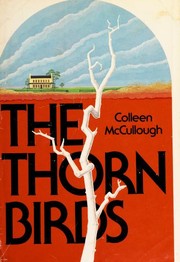
The Thorn Birds
Meggie loves priest Ralph across decades on Drogheda sheep station.
2,280-word summary · 10 min read

Violeta
A woman born in 1920 writes her life story to her grandson, from one pandemic to another, through wealth, ruin, passion, and dictatorship in South America.
2,555-word summary · 11 min read
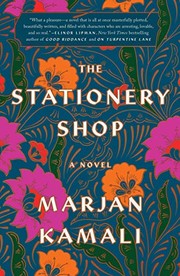
The Stationery Shop
Two teenagers fall in love in a Tehran stationery shop in 1953, are separated by the coup and a family deception, and meet again sixty years later.
2,024-word summary · 9 min read
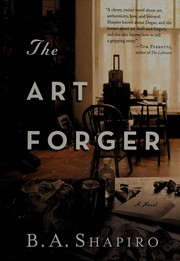
The Art Forger
A disgraced Boston painter agrees to copy a Degas stolen from the Gardner Museum, then begins to suspect the original she is copying is itself a forgery.
2,117-word summary · 9 min read

Six Years
A professor who promised to forget the woman he loved sees her husband's obituary and discovers that the wedding, the marriage, and the woman herself may never…
2,076-word summary · 9 min read

Anatomy: A Love Story
In 1817 Edinburgh, a noblewoman who wants to be a surgeon disguises herself to study anatomy and falls for the grave robber who supplies her with bodies.
2,031-word summary · 9 min read
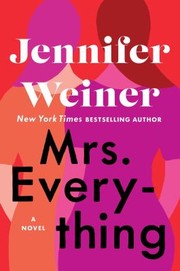
Mrs. Everything
Two Jewish sisters in Detroit grow up, apart and together, across seven decades of American life, from the 1950s to the 2016 election.
2,362-word summary · 10 min read
The Boleyn Inheritance
Three women narrate Henry VIII's fourth and fifth marriages: a foreign bride who survives, a teenage queen who does not, and the widow who opens the door.
2,391-word summary · 11 min read
The Black Dahlia
James Ellroy builds a fiction around the real Black Dahlia murder, following two Los Angeles cops whose partnership and obsessions destroy them.
2,533-word summary · 11 min read
The Lowland
Two brothers grow up beside a marshy lowland in Calcutta, and the choices of the younger one draw the older into a life of duty, distance, and quiet grief that…
2,213-word summary · 10 min read
The Girls in the Garden
Clare moves her daughters to a gated London garden where the community feels safe; at the midsummer party, twelve-year-old Pip finds her sister bleeding in the…
1,973-word summary · 9 min read
Once Upon a River
A wounded man stumbles into a riverside inn carrying what appears to be a drowned child who is not quite dead, and the story braids the guesses of everyone who…
2,173-word summary · 10 min read
The Echo of Old Books
Barbara Davis's 2023 novel sends a rare-book dealer in 1984 New Hampshire hunting for the authors of two unpublished volumes that tell opposite sides of one…
2,491-word summary · 11 min read
Stones from the River
Trudi Montag is born a dwarf in a small German river town in 1915 and grows up to keep the town's library and its secrets, from the First World War to the…
2,818-word summary · 13 min read
Last Night at the Telegraph Club
The 2021 National Book Award winner follows Lily Hu, a Chinese American teenager in 1954 San Francisco, as she falls for Kath and learns what it costs to be…
2,336-word summary · 10 min read
Big Lies in a Small Town
A 22-year-old woman leaves prison to restore a 1940 mural, and Edenton, North Carolina, starts talking.
2,187-word summary · 10 min read

A Spool of Blue Thread
Four generations of the Whitshank family in Baltimore, and the silences, resentments and quiet love they hand down without ever saying so.
2,408-word summary · 11 min read
The Tuscan Child
After her father's death, Joanna follows a returned letter to Tuscany and uncovers his wartime love, a hidden painting and a village secret. A dual-timeline…
2,095-word summary · 9 min read
The Queen's Fool
A young Jewish refugee with second sight becomes a court fool to Edward VI, Mary I, and Elizabeth, and learns what it costs to tell the truth.
2,412-word summary · 11 min read
The Pilot's Wife
Kathryn Lyons's husband dies in a plane crash, and the investigation reveals a secret life that forces her to rethink their marriage.
2,006-word summary · 9 min read
The Diviners
In 1920s New York, Evie O'Neill's ability to read objects pulls her into an occult investigation that awakens something far older and more dangerous.
2,045-word summary · 9 min read