
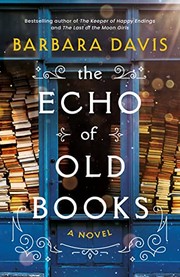
The Echo of Old Books
2,491-word summary 11 min read 443 pages in the book
- First published
- 2023
- Publisher
- Lake Union Publishing
- Pages
- 443
- ISBN
- 9781662511608
Reading options
What's inside (9 sections)
I picked this up expecting a mystery and got a love story wearing a mystery as a coat. Barbara Davis's third novel opens in a rare bookshop in Portsmouth, New Hampshire, in September 1984, and the woman who owns it can do something most booksellers cannot: pick up a volume and feel what its last owner was carrying. It is an unusual premise to hand someone in the first chapter, and it took me a little while to accept that Davis was going to use it gently rather than as a parlor trick.
A shop called An Unlikely Story
Ashlyn Greer owns An Unlikely Story, a rare bookshop on the water, and she has been sorting other people's books since she was twelve. The gift arrived that year, when she picked up a book in the shop and was hit by a grief that belonged to somebody else. She told Frank Atwater, the man who ran the place and who would become the closest thing to a parent she had after her mother died of cancer and her father took his own life. Frank told her that books absorb whatever is in the air around them, and if that includes feelings, well, that is what they absorb. He hired her, gave her an apartment above the shop, and let her make the shop her refuge.
The ability is not a superpower and the book never lets it become one. It is closer to a sense that only works in rooms full of paper. What Ashlyn can do is read the residue of a book: who loved it, who lied about it, who wanted to burn it. That is enough for a business built on judging a volume's condition, but it also means she cannot walk into a shop and sort a box without being handled by the ghosts in it. She keeps a bottle of something strong on hand because the work is not always bearable.
The shop itself is a working rare bookshop, not a set. Trade customers come in wanting something for a birthday. Kevin Petri, who owns the vintage boutique two blocks away, hands over cartons of stock he cannot sell. There is a workbench in the back where Ashlyn rebinds and repairs volumes, which is also how she gets close enough to them to read them. The one thing she will not do is sell on a hunch, which is why a book with no author on it sticks in her mind for weeks.
She is also, by her own account, a person who has had a run of bad luck with people. She was married briefly to Daniel, who wanted to be a novelist and blamed her when he failed at it, who cheated on her, and who died under a bus. Books are the safe thing, and the shop is where she keeps herself safe.
Two volumes with no author
The inciting object is not the shop but a carton. On a Sunday in September, sorting Kevin's donation in the back room, she finds a beautifully bound book with no author, no publisher, and no copyright page. Its title is Regretting Belle, and the inscription on the flyleaf reads, "How, Belle? After everything . . . how could you do it?" When she touches it she gets a wave of bitterness and grief so specific it feels like a bruise.
Kevin's next delivery contains its companion, Forever, and Other Lies, with a matching binding and a matching echo, this one female, this one despairing. The two books are the same story told twice, and they contradict each other. The narrator of the first is a man calling a woman Belle. The narrator of the second is Belle herself, and in her version the man is Hemi. She is engaged to someone called Teddy. He is a stranger who was at her engagement party. They both tell you the other one lied.
A rare book dealer looks at a volume before she reads it, and Ashlyn spends time on these. They are hand-bound in matching bindings, and they carry no publisher's imprint and no copyright page, which for a New York book of 1941 is close to unheard of. Whatever made them, it was not a commercial printing run.
A prologue set in 1954 shows how the books came to the present: a package forwarded by a nephew named Dickey, who had been trusted with delicate messages, and inside it the blue volume. Nobody in 1984 knows who wrote either book or why the pair appeared without a publisher or an author. Ashlyn wants to know, and the wanting becomes the engine of the story.
New York, 1941
The two books narrate the same stretch of New York in the summer of 1941, and the switching between them is where the novel earns its keep. The engagement party is at the St. Regis, and Belle is Marian Manning, daughter of Martin Manning, a wealthy businessman whose money came out of the Depression and whose politics were repellent enough that the novel does not pretend otherwise. Marian's mother was Helene, French, Jewish, and dead: committed to a psychiatric institution on her husband's orders, with a knife left in her room, and driven to suicide. Marian's younger brother drowned as a child. Marian's older sister, Corinne, called Cee-Cee, runs the family like a drill sergeant and resents Marian for being the one who is liked.
Teddy comes from a family of similar standing, and the engagement is a business arrangement dressed as a love match. Marian understands the arrangement perfectly, which is why it suffocates her. She is the family asset who says yes, and she is cut off from anyone who might give her a reason to say no.
Hemi is Hugh Garret, an English writer working in New York for Geraldine Spencer, the newspaper proprietor everybody calls Goldie. Goldie wants him to dig into Martin Manning, and Hugh needs the money, so he says yes and then finds himself at the engagement party as a guest of the family he is investigating. The story of how the two of them end up in bed is told from both sides, with each of them convinced the other is the one doing something devious.
Davis is at her best on the small lies of 1941. A letter passed through a nephew because a sister is monitoring the telephone. A man invited into a family he is researching and then falling for a member of that family, which is bad work in any century. The two narrators disagree about what was said at the party, about who was flirting and who was working, and about the morning after. Read quickly, that looks like a puzzle. Read slowly, it is the sound of two people describing the same night and each hearing a rejection.
The elopement that never happened
They plan to run away to California. Hugh quits his job, and Belle is to meet him at Penn Station. He waits. She does not come.
Both accounts blame the other. Hugh believes he was left standing in a railway station because Belle chose her family, and he takes a job as a war correspondent with Goldie and leaves town. Belle believes Hugh never intended to leave, and that the whole relationship was a way to pump her father for information. What neither of them knows is that Cee-Cee intercepted the letters. The note asking Hugh to wait was swapped for the note Belle wrote to break up with Teddy. One small piece of family malice, and forty years of wreckage.
Then the exposure lands. Goldie's paper runs a story about Martin Manning, written by a journalist named Steven Schwab using Hugh's old notebooks, which Hugh had never intended to publish and had told Goldie he would refuse to run. It reveals the antisemitism and the psychiatric hospital and the knife. The Manning business collapses. Marian, pregnant, leaves New York.
The California chapters are the ones I liked most. Marian befriends Johanna, an Austrian refugee who has lost her husband and her son and who is pregnant herself. Johanna gives birth and dies. Marian takes the baby, Ilese, and keeps the dead boy's birth certificate, which she then uses to make her own son, Zachary, legible as adopted. Two children, one of them Hugh's, raised by a woman who cannot say where either of them came from. She works with war orphans, goes back to France looking for her mother's family, and settles in Massachusetts, where she lives for the rest of the book.
Both books were written years after the fact, which is the detail that turns the whole thing. Thirteen years after they split, Hugh sent Marian an account of what had happened between them, titled Regretting Belle, passed through the nephew who had always carried messages for the family. Marian was so angry at the way he told it that she wrote her own answer, Forever, and Other Lies, and sent it back. Each of them had a reason to want the record to come out its own way.
Ashlyn, Ethan, and the library
The modern investigation runs on the same tools a real one would: newspaper archives, city directories, a phone book. Ashlyn rings up Ruth Truman, a librarian at the Portsmouth Public Library who has spent nearly thirty years doing research for anyone who asks, and Ruth takes the case with an enthusiasm out of proportion to the fact that nobody is paying her. When Ashlyn asks how many women owned newspapers in 1941, Ruth says she will find out.
Ethan Hillard is the other half of the team. He is a political science professor at the University of New Hampshire and a nonfiction author, and he is also the grandson of Corinne Manning and the great-nephew of Marian. His father, Richard, was the Dickey of the prologue, and after his death Ethan cleared out the family house and donated boxes of books, including the two anonymous volumes, to Kevin's boutique. He arrives at Ashlyn's shop wanting nothing to do with sentiment and staying because he cannot stop reading.
What Ashlyn and Ethan piece together, between them, is that Belle was Marian, that Hemi was Hugh Garret, the war novelist, and that the article Marian has hated for forty years was written by Steven Schwab out of Hugh's discarded notes. Hugh and Goldie had already parted ways over it. And there is a photograph. Hugh Garret at sixty and Zachary Manning at thirty-five have the same face.
Ethan has his own version of the story. His father cut off the family over a marriage the family disapproved of. His mother, Catherine, was the one person in that family who wrote to Marian. He has spent years being the reasonable, detached one, and the two anonymous books put him in a room with a great-aunt he has never met and a story he has been told in a version he does not believe.
The romance is quiet and slow. Ethan keeps trying to stay on the research and off the feelings. Ashlyn has been left by everyone she has ever let close, and she has decided in advance that she will not be one of the people who leaves. He calls her Ellie, which nobody else does, and it takes a while for either of them to say why that matters.
The award dinner in Boston
Marian is being honored with a lifetime achievement award for her work with displaced children. Hugh turns up, and they have the conversation they should have had in 1941, with two witnesses and an audience of strangers.
The letter swap comes out. Cee-Cee, by then dying of a brain tumor, admits it: not out of cruelty at first, she says, but because she thought Marian was being foolish and that a clean break would be kinder. Marian and Hugh go to her together, and this is the part of the book that refuses to let anyone off. Cee-Cee did something unforgivable on the best logic she had, and the best logic she had was still unforgivable.
Then Marian tells Hugh about Zachary, and this is the moment the book earns its ending, because Hugh does not respond the way you might hope. He walks out. Forty years of silence and one child, and the reaction is still anger, because anger is the only tool either of them has had for half a century.
He comes back the next morning. Marian finds him on the beach outside her house and asks him inside, and they marry in the end, more than forty years after the elopement that never happened. The epilogue is a Hanukkah dinner with the blended family, Zachary's wife expecting twins, and Ashlyn and Ethan newly engaged. The two old books sit in Marian's office.
Where it drags and what it is really about
The criticism is fair to make. Ashlyn's gift does almost nothing mechanically: the mystery is solved with archives, librarians, and one good guess about a photograph. The two narrators inside the books are less sharply different than the premise wants, and the resolution is generous to the point of being soft, since a dying sister, a stubborn survivor, and forty-three years all get tidied away in about a chapter. The antisemitism in the Manning family is handled as historical texture rather than explored, and the material about Jewish lives in Europe appears at a distance, seen through the wrong end of a telescope.
The secondary plot has the same problem. Zachary, Ilese and the war-orphan work are given a paragraph each rather than a life, and when Ashlyn and Ethan meet the family in Massachusetts it is clear we are meant to feel their warmth without being given the reasons for it.
What the book is actually good at is the thing Davis does better than almost anyone working in this register: two people who loved each other in 1941 and were broken by a silence, and the reader's slow understanding that the story Ashlyn is chasing is her own story with a different name. Ashlyn has been left. Marian left herself. The forgiveness at the end is not a puzzle to be solved but a decision to be made, and Davis gives it more room than the mystery gets.
Read it for the shop, for the 1941 sections, and for the moment when two brothers of a family turn out to be the same man at two ages. Do not read it expecting a second helping of The Keeper of Happy Endings. It is a quieter, sadder book with a much less mechanical mystery at its center, and a bookshop at its heart that is worth the cover price on its own.
FAQ
Who is Ashlyn Greer and what is the bookshop?
She owns An Unlikely Story, a rare bookshop in Portsmouth, New Hampshire, and is the present-day lead of the novel. She can sense the emotional residue that previous owners leave in old books, a gift she discovered as a child in the same shop.
Is The Echo of Old Books part of a series?
No. It is a standalone novel by Barbara Davis, published by Lake Union Publishing on March 28, 2023.
Is there a real mystery to solve in The Echo of Old Books?
Partly. Ashlyn traces the two anonymous volumes through newspaper archives, city directories and a public library, but her ability shapes the atmosphere rather than doing the detecting. What finally cracks the case is a photograph of Hugh Garret and a letter that Marian's sister swapped.
Similar books
The Tuscan Child
After her father's death, Joanna follows a returned letter to Tuscany and uncovers his wartime love, a hidden painting and a village secret. A dual-timeline…
2,095-word summary · 9 min read
The Clockmaker's Daughter
A London archivist finds a Victorian satchel holding a photograph, a sketchbook and a letter, then follows them to Birchwood Manor, where a young woman died in…
2,886-word summary · 13 min read
The Lake House
Detective Sadie reopens 1933 Edevane baby vanishing tied to writer Alice.
2,055-word summary · 9 min read
The Keeper of Happy Endings
Barbara Davis's 2021 standalone braids a Paris dressmaker's wartime losses with a grieving Boston artist who unlocks her family's secrets through an old row…
2,437-word summary · 11 min read
The Storyteller's Secret
A New York journalist goes to India to learn why her grandmother loved a British officer, and why a family servant kept the truth for forty years.
2,270-word summary · 10 min read
Big Lies in a Small Town
A 22-year-old woman leaves prison to restore a 1940 mural, and Edenton, North Carolina, starts talking.
2,187-word summary · 10 min read
Ghosted
After seven perfect days with Eddie, Sarah is ghosted, and her search for answers uncovers a secret tied to the accident that changed both their lives.
2,011-word summary · 9 min read
Those Who Save Us
A Minnesota professor hunts her mother's hidden wartime past in Weimar, where survival came wrapped in an SS officer's protection. A dual timeline about…
2,345-word summary · 10 min read
The Prisoner of Heaven
Fermin Christmas past returns with a stranger and a prison debt.
2,388-word summary · 11 min read
The Paris Library
Odile lands her dream job at the American Library in Paris as war closes in, then hides that past in Montana until teen Lily draws it out.
2,813-word summary · 13 min read
The Secret Keeper
A girl watches her mother kill a stranger in 1961; fifty years later she digs into her mother wartime London past.
2,262-word summary · 10 min read
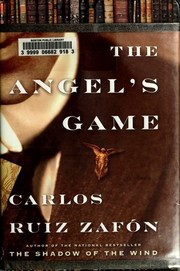
The Angel's Game
In 1920s Barcelona, a young writer accepts a strange publisher's offer to write an impossible book and finds his life turning into a ghost story.
2,699-word summary · 12 min read
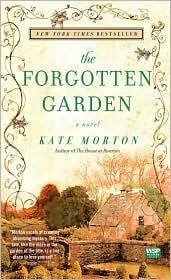
The Forgotten Garden
A Brisbane woman traces a century old abandonment from an English country house to a Cornish cove and a hidden author.
2,056-word summary · 9 min read
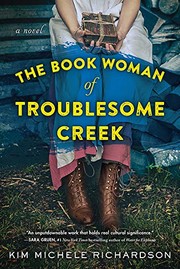
The Book Woman of Troublesome Creek
Blue skinned Cussy rides Kentucky hollers delivering books in the 1930s.
2,184-word summary · 10 min read
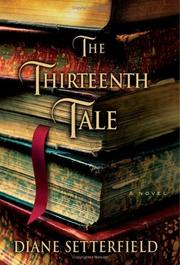
The Thirteenth Tale
A dying novelist tells her true story at last to a bookseller's daughter, and the mystery of the Angelfield twins comes into the open.
2,928-word summary · 13 min read
The Shadow of the Wind
In postwar Barcelona, Daniel finds a cursed novel and hunts its vanished author while a burned man watches.
2,000-word summary · 9 min read

The Beach House
A young valet is beaten to death at a Hamptons party, and his law-student brother spends a year building a case against the family that covered it up.
2,049-word summary · 9 min read
The Art Forger
A disgraced Boston painter agrees to copy a Degas stolen from the Gardner Museum, then begins to suspect the original she is copying is itself a forgery.
2,117-word summary · 9 min read

Anatomy: A Love Story
In 1817 Edinburgh, a noblewoman who wants to be a surgeon disguises herself to study anatomy and falls for the grave robber who supplies her with bodies.
2,031-word summary · 9 min read

The Shadow Sister
Star D'Apliese steps out of her sister's shadow and follows a bookshop clue into the Edwardian life of Flora MacNichol, a woman who gave up love for duty.
2,260-word summary · 10 min read
The Unmaking of June Farrow
A woman in a North Carolina flower-farming family walks through a red door into 1951, where she must solve her mother's disappearance and decide whether to…
2,701-word summary · 12 min read
The Black Dahlia
James Ellroy builds a fiction around the real Black Dahlia murder, following two Los Angeles cops whose partnership and obsessions destroy them.
2,533-word summary · 11 min read
Only Time Will Tell
A Bristol dockworker's son wins a scholarship, falls in love with the daughter of the family that owns the shipyard, and learns that his father's death was not…
2,082-word summary · 9 min read
The Girls in the Garden
Clare moves her daughters to a gated London garden where the community feels safe; at the midsummer party, twelve-year-old Pip finds her sister bleeding in the…
1,973-word summary · 9 min read
Once Upon a River
A wounded man stumbles into a riverside inn carrying what appears to be a drowned child who is not quite dead, and the story braids the guesses of everyone who…
2,173-word summary · 10 min read
Last Night at the Telegraph Club
The 2021 National Book Award winner follows Lily Hu, a Chinese American teenager in 1954 San Francisco, as she falls for Kath and learns what it costs to be…
2,336-word summary · 10 min read
Where We Belong
Marian's orderly New York life cracks when the daughter she gave up for adoption arrives, and the search for the father forces her to tell the truth.
2,056-word summary · 9 min read
Troubles in Paradise
In the final Paradise novel, Irene Steele rebuilds her life on St. John while the truth about Russ's death and Todd Croft's criminal empire finally surfaces.
2,471-word summary · 11 min read
The Overdue Life of Amy Byler
A burned-out school librarian gets a summer to herself when her estranged husband returns, and discovers that being a mother does not have to mean losing…
2,055-word summary · 9 min read
The Diviners
In 1920s New York, Evie O'Neill's ability to read objects pulls her into an occult investigation that awakens something far older and more dangerous.
2,045-word summary · 9 min read