
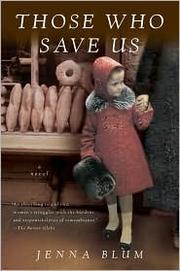
Those Who Save Us
2,345-word summary 10 min read 482 pages in the book
- First published
- 2004
- Publisher
- Harper Perennial
- Pages
- 482
- ISBN
- 9780156031660
Reading options
What's inside (9 sections)
I keep coming back to stories about families that do not talk. My grandmother kept a box of photographs from the war years that nobody was allowed to explain, and every time I asked about the men in the pictures the conversation changed subjects. Jenna Blum wrote a whole novel about that silence, and about the cost of keeping it, and it does not let anyone off the hook, including the reader.
The book was first published in 2004, and I read the Harper Perennial paperback. It moves between two lives: Anna, a German woman surviving the war in Weimar, and her daughter Trudy, a German history professor in Minnesota in the 1990s who has spent her adult life trying to find out what her mother will not say. The chapters alternate, and for a long time you think you know how the two timelines fit together. By the end you understand that you were holding the pieces upside down.
What surprised me is how unsentimental the book is. There are no noble speeches, no easy villains who are easy to hate, and no moment where anyone is washed clean. Blum worked for Steven Spielberg's Shoah Foundation before she wrote fiction, and it shows in the interviews that run through the novel. People say small, evasive, human things. The horror lives in what they leave out.
The photograph in the drawer
Trudy lives in Minnesota with a version of her past that has holes in it she could drive a car through. She was three years old in 1945 when she and her mother were liberated, and they came to America with an American soldier, Jack Schlemmer, who married Anna and raised Trudy as his own daughter. Trudy has no memories of Germany that she trusts. What she has instead is a single photograph that her mother cannot explain and will not discuss: Anna, young and beautiful, Trudy as a toddler on her lap, and standing behind them, smiling for the camera, an officer in the uniform of the SS.
The photograph indexes everything wrong in the house. When Trudy was a child and asked who the man was, her mother said "nobody" and put the picture away. When Trudy was older, Anna took it out again, but never said a word about it. The gap between the image and the silence is the wound the novel circles. Blum treats that silence not as a mystery to be cracked for entertainment but as a kind of weather in the house. It shapes how Anna holds herself, how Trudy flinches around history, and how neither of them manages to love anyone cleanly.
Trudy, for her part, is not an easy heroine. She is prickly, depressive, hungry for approval, and drawn to men who cannot give her what she needs. She teaches German history to American students because she needs to know what her mother lived through, though she also suspects she is doing it as a kind of penance for something she did not do. She has no children, a fact the novel keeps quietly in view, as if the war were still deciding how many people the family would get to have.
A love story in Weimar
The chapters set in the past begin in 1939, when Anna is not yet twenty and Weimar still pretends to be the town of Goethe and music and careful gardens. Anna's family is privileged and cold, and her father Gerhard has already joined the party, mostly, as the novel suggests, because it is the way to keep what is his. Into this world walks Max Stern, a young Jewish doctor who treats Anna's mother and who falls in love with Anna in the slow, careful way of people who do not yet know how short their time is.
The romance is the warmest thing in the book, and Blum uses it deliberately. Anna and Max have coffee, argue about music, touch hands in hallways. It reads like a normal love story for a hundred pages before the world starts closing the doors. Then the walls arrive: Jews are barred from this and that, Max loses his practice, Anna's father grows more open in his cruelty, and the options shrink to hiding or flight. Anna smuggles Max into the house and hides him in a storage room, which is both an act of love and an act of lunacy, because her father would turn him in in a heartbeat. He does.
Gerhard discovers Max and denounces him to the authorities. Max is taken to Buchenwald. And Anna, pregnant with his child, is left to carry a secret that has just become a life sentence. The scenes where she learns what has happened are the first place the novel earns its reputation for directness. Anna does not scream or tear at her clothes. She goes quiet, in the way that will define the next fifty years of her life.
The bakery on the square
Disgraced and pregnant, Anna finds shelter with Mathilde Staudt, who runs a bakery in Weimar and who, it becomes clear, is part of a quiet network of people moving bread and messages to forced laborers and prisoners. Mathilde takes Anna in, teaches her the ovens, and involves her, carefully at first, in the deliveries. Anna gives birth to Trudy in 1940. The bakery becomes the center of the novel's moral universe and of its argument.
Mathilde is the closest thing the book has to a heroic figure, and Blum knows it. She is brave, organized, and willing to die for the work, and she does. When she is caught while transporting bread and weapons to prisoners, she goes to her death without naming anyone, including Anna and the baby. Her execution is reported in the same flat tone the book uses for everything else, which somehow makes it worse. I closed the book for an afternoon after that chapter.
The bakery chapters also contain the novel's best physical writing: the flour, the burn scars on Mathilde's forearms, the smell of the ovens, the ways a loaf of bread can be a weapon or a prayer depending on who is carrying it. Blum is very good on the texture of ordinary life under totalitarianism, on how people keep score in small ways because the big ways are suicidally expensive.
The officer in the photograph
Here is where the book becomes genuinely difficult, in the best sense. Anna carries bread to the camp on the hill outside Weimar, and one day she sees the Obersturmführer, the camp officer, kill a man with his bare hands for reaching for a piece of bread. He sees her see it. From that moment she is in his sights, and he begins to want her, in the possessive way of a man who has never been refused anything.
Anna refuses him as long as she can. But the equation is simple and brutal: she is the mother of a small child, she has no protector now that Mathilde is dead, and there are worse men than this one. So she becomes his mistress. He provides food, medicine, coal, small protections that keep Anna and Trudy alive through the last years of the war. The photograph at the center of the modern story was taken during this period, on some festive day when the officer wanted a picture of his little family.
I have read some criticism of this section, and I understand it. On the page, the arrangement can feel rushed relative to the enormous moral weight it is supposed to carry. But the novel's point is not that Anna made a good choice. The point is that the war had collapsed the distance between survival and collaboration until the line was in the mud, and Blum refuses to let a reader stand on clean ground and pass judgment. Anna survives, and Trudy survives, because Anna paid with the only currency she had.
This is the gray zone the whole book is built around, and it is the same territory later memoirs of the period would map more explicitly. Fifty years later, in Minnesota, Anna still will not explain the photograph, because explaining it would mean admitting that her daughter's life was bought with the officer's gifts, and that there is no answer to the question of whether it was worth it.
The American soldier, and Minnesota
The liberation chapters arrive at the end of the war: the American soldier Jack Schlemmer finds Anna and Trudy in the chaos, marries Anna, and brings them to a small town in Minnesota. For about five pages the book lets you believe in the rescue. Then it becomes a different, quieter kind of horror.
Jack is decent and also limited. He drinks. He cannot understand his wife. Anna, who survived by burying everything, buries everything here too, in a bakery she opens downtown, in the ovens and the payroll and the German lullabies she hums without noticing. The marriage withers in scenes you barely see, which is exactly right for this book. The most devastating line about the marriage comes late, when the novel notes that Jack was the one who put the nail in the coffin, over an argument about the officer that Anna could not explain away.
And so the modern chapters: Trudy at her university, launching what she calls the German Project, a set of interviews with elderly Germans about their wartime lives. On the surface it is scholarship. Underneath it is a woman digging in a graveyard hoping to find her own face. The interviews are the best original material in the book: veterans and farmers and housewives who tell Blum's protagonist sanitized stories in proud voices, who insist they knew nothing, who sometimes let a detail slip and then laugh as if they had told a joke. Trudy takes it all down, and you watch her slowly understand that a whole generation learned to live beside an unexamined past.
One of her interviewees, Rainer, becomes her lover. He is gentle where Trudy is spiky, and their relationship carries most of the present-day tenderness. He also has his own history and his own limits, and Blum does not let him function as a reward for Trudy's healing. There is a scene late in the book where the relationship strains under the weight of everything Trudy is hauling around, and it is handled with a patience I did not expect.
What the interviews finally turn up
The plot engine of the modern sections is a thin envelope of leads that eventually points to Felix Pfeffer, an elderly German businessman whose wartime years touched both Anna and Max. Trudy tracks him down, and his testimony opens the last door in the book.
I will not pretend the revelations are shocking in the way a thriller's are. By the time you get there, you have already guessed much of what Trudy learns: that Max never came out of Buchenwald, that the comfortable Weimar businessman and the bakery network and the Obersturmführer all touched the same small world, and that Trudy's father was the doctor, not the man in the wedding photograph. The book is not interested in the click of a puzzle piece. It is interested in the fact that Anna, given one last chance to tell her daughter the truth to her face, refuses. Pfeffer says what Anna cannot. And even then, the honest thing about this novel is that catching the truth secondhand does not heal anything. Trudy gets the facts and does not get her mother.
The last chapters are quiet and not consoling. Trudy drives Pfeffer home and stops at an overlook on the Mississippi River, and she is left, in the book's own words, in a vacuum between one part of her life ending and another waiting to take its place. She thinks about calling Rainer. That is the whole resolution. It is not very much by the standards of family drama, but it is the amount the war left in the account.
What the book gets right, and where it strains
I think this is a serious first novel with one genuinely important thing to say, and I understand the critics who wanted it to say that thing better. Kirkus called it ambitious but flawed, and the complaint was specific: Anna's long silence seems underexplained for its magnitude. The Independent liked the book and was irritated by what it called formulaic descriptions of Germans as a people. I felt both jabs land at different moments. There are places where the prose reaches for a moral and gets there too smoothly, and a few secondary characters who exist to deliver a theme and then leave.
But the ungainliness of the book is also part of its honesty. The material resists tidiness. Blum refuses to make Anna likable, refuses to make the officer a cartoon, refuses to give Trudy the closure that years of therapy and research are supposed to produce. The novel's twin engines, a mother who will not speak and a daughter who will not stop asking, produce friction on every page, and that friction is the point. Wartime survival was not a meritocracy of the good. People got through on luck, favors, passivity, and, occasionally, the unthinkable.
The book won the Harold U. Ribalow Prize in 2005 and became a New York Times bestseller, and it has stayed in print for two decades for a reason. It sits in a useful middle place between the memoir literature of the camps and the family-saga fiction about the war, and it asks a question that fewer books in either category ask out loud: what does a mother owe her child when the truth of how she kept that child alive is unbearable to both of them? Blum's answer is not comforting. The book leaves Anna in her kitchen and Trudy in her car and the reader holding the photograph. Some doors only open after the people behind them are gone.
FAQ
Why won't Anna talk about her life in Germany?
Anna's silence protects her daughter from the truth that their survival came through an SS officer's protection, and it spares Anna from reliving the compromise. The novel treats the silence as both defense and damage.
Does Those Who Save Us end happily?
Not in a conventional way. Trudy learns the facts of her parentage, that Max Stern was her father, but Anna never confesses to her face, and the ending leaves Trudy between two parts of her life rather than healed.
Is Those Who Save Us based on a true story?
No, it is fiction. Jenna Blum worked for Steven Spielberg's Shoah Foundation, interviewing Holocaust survivors, and that interview work shapes the novel's German Project chapters, but the characters are invented.
Similar books
The Tuscan Child
After her father's death, Joanna follows a returned letter to Tuscany and uncovers his wartime love, a hidden painting and a village secret. A dual-timeline…
2,095-word summary · 9 min read
The Keeper of Happy Endings
Barbara Davis's 2021 standalone braids a Paris dressmaker's wartime losses with a grieving Boston artist who unlocks her family's secrets through an old row…
2,437-word summary · 11 min read
The Orphan's Tale
A Dutch teenager rescues a Jewish baby from a death train and joins a German circus, where a Jewish aerialist teaches her to fly.
2,943-word summary · 13 min read

The Echo of Old Books
Barbara Davis's 2023 novel sends a rare-book dealer in 1984 New Hampshire hunting for the authors of two unpublished volumes that tell opposite sides of one…
2,491-word summary · 11 min read
The Storyteller's Secret
A New York journalist goes to India to learn why her grandmother loved a British officer, and why a family servant kept the truth for forty years.
2,270-word summary · 10 min read
The Clockmaker's Daughter
A London archivist finds a Victorian satchel holding a photograph, a sketchbook and a letter, then follows them to Birchwood Manor, where a young woman died in…
2,886-word summary · 13 min read
The Lake House
Detective Sadie reopens 1933 Edevane baby vanishing tied to writer Alice.
2,055-word summary · 9 min read
We Were the Lucky Ones
Based on her own family, Hunter follows the Kurc family of Radom as war scatters five siblings from Siberia to Brazil and back toward reunion.
2,805-word summary · 12 min read
The Secret Keeper
A girl watches her mother kill a stranger in 1961; fifty years later she digs into her mother wartime London past.
2,262-word summary · 10 min read
Cilka's Journey
After surviving Auschwitz, Cilka Klein is sentenced to a Siberian labor camp, where she trains as a nurse and fights to stay human.
2,365-word summary · 11 min read
Winter Garden
Two sisters keep a deathbed promise: hear their cold mother's Russian fairy tale to the end, and find besieged Leningrad inside it.
2,983-word summary · 13 min read
Lilac Girls
Three women meet across World War II: a New York volunteer, a Polish courier turned prisoner, and a German camp doctor.
2,731-word summary · 12 min read
The Alice Network
Two women, two wars: Eve spied for the Alice Network in 1915 France, Charlie searches for her cousin in 1947, and their road trip pulls both stories together.
2,090-word summary · 9 min read
The Zookeeper's Wife: A War Story
The directors of the Warsaw Zoo hid roughly three hundred Jews in empty cages and outbuildings after the German invasion, while Jan worked for the resistance.
2,065-word summary · 9 min read

The Japanese Lover
A Polish refugee and the son of a Japanese gardener fall in love in San Francisco in 1939, then keep the affair secret for nearly seventy years.
2,286-word summary · 10 min read

The Shadow Sister
Star D'Apliese steps out of her sister's shadow and follows a bookshop clue into the Edwardian life of Flora MacNichol, a woman who gave up love for duty.
2,260-word summary · 10 min read
The Only Woman in the Room
A novel about Hedy Lamarr's escape from an arms-dealer husband, her Hollywood career, and the frequency-hopping patent the Navy ignored.
2,067-word summary · 9 min read
The Happiest Man on Earth
Eddie Jaku's memoir follows a Leipzig childhood, Buchenwald, Auschwitz, a death march, and the slow rebuilding of a life in Australia.
2,597-word summary · 12 min read

Sophie's Choice
A young Southern writer in 1947 Brooklyn befriends a brilliant, unstable couple and slowly learns the story of the Polish Catholic woman at the center of their…
2,798-word summary · 12 min read
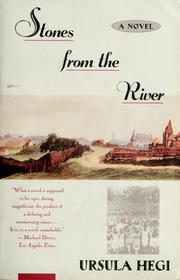
Stones from the River
Trudi Montag is born a dwarf in a small German river town in 1915 and grows up to keep the town's library and its secrets, from the First World War to the…
2,818-word summary · 13 min read
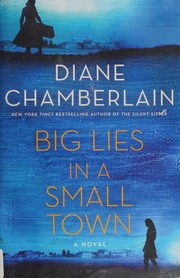
Big Lies in a Small Town
A 22-year-old woman leaves prison to restore a 1940 mural, and Edenton, North Carolina, starts talking.
2,187-word summary · 10 min read
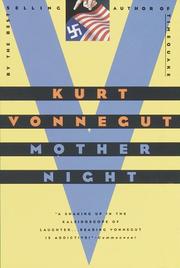
Mother Night
Howard W. Campbell Jr., a Nazi propagandist and American spy, tells the story of his double life from an Israeli prison cell while waiting to be tried for war…
1,988-word summary · 9 min read
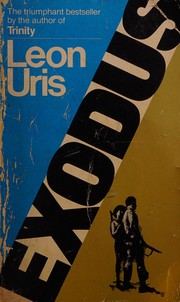
Exodus
Leon Uris's sweeping 1958 novel follows Jewish refugees, Haganah fighters, and Holocaust survivors from Cyprus to the founding of Israel and the 1948 war.
2,529-word summary · 11 min read
The War That Saved My Life
Ten-year-old Ada has never left her London flat, hidden away because of her clubfoot. Wartime evacuation sends her to Kent, where a reluctant guardian and a…
2,252-word summary · 10 min read

The Redbreast
Harry Hole chases an ageing sniper through modern Oslo while two Norwegian volunteers on the Eastern Front carry a fifty-year-old betrayal toward a royal…
2,453-word summary · 11 min read
The Lost Girls of Paris
In 1946, a war widow finds an abandoned suitcase in Grand Central holding photographs of twelve women who vanished in the war, and follows their story back to…
2,668-word summary · 12 min read
The Tea Girl of Hummingbird Lane
A Chinese tea farming mother gives up a daughter who later seeks roots.
2,607-word summary · 12 min read
Code Name Verity
In 1943 France, captured agent Verity writes a confession for von Linden to buy time. Her pilot friend Maddie survives the crash and searches for her by…
2,690-word summary · 12 min read

The Paris Library
Odile lands her dream job at the American Library in Paris as war closes in, then hides that past in Montana until teen Lily draws it out.
2,813-word summary · 13 min read

The Last Letter from Your Lover
A 1960s wife with lost memory and a modern journalist chase the same lost love letters across forty years.
2,506-word summary · 11 min read