
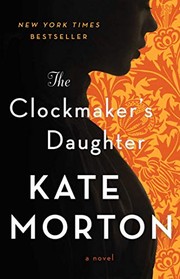
The Clockmaker's Daughter
2,886-word summary 13 min read 485 pages in the book
- First published
- 2018
- Publisher
- Atria Books
- Pages
- 485
- ISBN
- 9781451649390
Reading options
What's inside (10 sections)
The first voice in this novel belongs to a dead woman, and she is good company. She begins by explaining that "we came to Birchwood Manor because Edward said that it was haunted. It wasn't. Not then." Kate Morton knows exactly what she is doing with that sentence. The haunting is the whole book, the timing is a promise, and by the last page the line has turned inside out: the woman saying it has become the ghost of the house she once said was not haunted.
I picked this up expecting another Kate Morton country-house mystery and got something more patient than that. The Clockmaker's Daughter came out in 2018, and it is one of her largest books, close to five hundred pages that braid five timelines around a satchel, a sketchbook, a photograph and a diamond. It is not a thriller in any hurry. It is a book about how long a story can stay buried inside a family and how many different people have to touch an object before the truth of it surfaces.
A Satchel in the Archive
Elodie Winslow is thirty, an archivist, and she spends her working days in London with the papers of James Stratton, a Victorian social reformer whose name is still on doors all over the city. In a box that should not contain anything interesting, she finds a leather satchel holding a sketchbook monogrammed EJR and a photograph of a young woman in a pale dress. On the back of the photograph is a letter addressed to someone called J and signed BB, and as the book goes on, those two letters become the most important initials in the story.
What pulls Elodie in first is not the woman but the house. The sketchbook contains a drawing of a twin-gabled manor sitting on a bend in a river, and Elodie knows that house. She knows it from a bedtime story her mother used to tell her, a story about a house by the water where something happened once. Her mother, Lauren Adler, was a cellist, and she died in a car crash when Elodie was six, and the story came to her from her uncle Tip, who was evacuated to that house during the Second World War. So the novel's present-day detective starts the book already inside the mystery, without knowing it.
The photograph's subject turns out to be Lily Millington, the model and muse of Edward Radcliffe, a celebrated Victorian painter whose career ended in scandal in 1862. That was the summer his fiancee, Frances Brown, known as Fanny, was shot dead during a robbery at his house, Birchwood Manor, and his model disappeared, apparently with a magnificent diamond called the Radcliffe Blue. A biography by a man named Leonard Gilbert tells that story, and almost every character in the novel has read it and believed it. It is the lie the whole book gently takes apart.
Elodie's home life matters more than it first seems. She is engaged to Alastair, who is practical and a little hollow, and she accepted him less out of passion than because being chosen felt good. There is a wedding being planned in the present-day sections, and it never quite stops being a question. Her father Winston still teaches music and still lives in the soft light of Lauren's recordings, and her landlady, old Mrs. Berry, talks about her dead husband like he is on an errand. This is a novel full of people who love the dead carefully, which is exactly the note Morton wants humming under the mystery.
The Summer of 1862
Edward Radcliffe bought Birchwood Manor because of a story. The house sits on the Thames in Oxfordshire, and Lucy, his younger sister, hears the legend of the Eldritch Children, the daughter of the Fairy Queen, a local tale that made Edward decide the place was magical before he ever signed anything. He brings the Magenta Brotherhood with him: the painter Thurston Holmes, who is talented and envious and knows it; Felix, a photographer who argues that his medium is art every time Thurston calls it a gimmick; and Adele Bernard, a former model who likes ghosts and says so. Lucy is thirteen, delighted to be included, and she notices too much, which is what makes her so useful to the plot and so believable as a girl.
The house itself is written like a character. Above the door of the studio Edward claims, someone long ago painted the words Truth, Beauty, Light. There are two hiding holes left over from the days when Catholic priests needed them, one in a hallway wall, the other under the stairs, and the one under the stairs can only be opened from the outside. Hold that detail. Everything in the last third of the book depends on it.
Edward has an engagement and a problem. Fanny Brown is young, wealthy and jealous of the attention he gives his models, and she is right to be jealous. The model he actually loves is Lily, and the painting he believes will be his masterpiece is a portrait of her as the Fairy Queen wearing the Radcliffe Blue, a diamond he has acquired and that everyone seems to have opinions about. Lily and Edward also have two tickets to America, booked as Mr. and Mrs. Radcliffe, because she told him she wanted to find her father. That is the future the summer of 1862 was supposed to deliver, and the reader already knows none of it happened.
Birdie Bell, or Lily Millington
The great reveal of the novel's ghost-story spine is that Lily Millington was not born Lily Millington. Her real name is Birdie Bell, and she grew up under the care of a woman named Mrs. Mack, who ran a den of child thieves in Seven Dials and paid the rent by sending children out to pick pockets. Birdie earned her keep that way. Mrs. Mack's son, Martin, watched her with an attention that made her skin crawl, and life in that house was survivable mostly because of an older girl named Lily Millington, whom Birdie later described as her salvation. Lily taught her the skills of the trade and, apparently, how to keep her soul while doing it. Birdie took Lily's name as her own when she left that life behind, and the borrowed name is the one the world knew.
There was one friend in that world worth having: a sickly, pale boy Birdie called Pale Joe, who liked her and whom she trusted enough to share her nickname with. Pale Joe grows up to be James Stratton, the reformer, whose papers Elodie files away for a living. Once you see that connection, the letter signed BB, addressed to J, stops being a mystery and starts being the kind of quiet heartbreak the book runs on. A Victorian gentleman kept a photograph and a letter from a ghost for the rest of his life and left them in an archive that took a hundred and fifty years to give them back.
Edward met Birdie at a theatre, and, depending on which account you believe, either chose her at first sight or was steered toward her and never stopped being grateful for it. He hired her as a model. She stopped being only a model. By the summer at Birchwood she is the woman he loves, walking through the meadow with him while Lucy wonders where Fanny is. And Birdie, the clockmaker's daughter, still wants to find the father who disappeared from her life, which is why the tickets to America matter so much to her.
The Night the House Closed Its Hand
Fanny Brown arrives at Birchwood uninvited, insisting that Edward cannot simply break an engagement to a woman of her family's standing, and the timing could not be worse, because the people who want something from the Radcliffe Blue have also arrived. Martin, Mrs. Mack's son, comes into the house and, instead of charming his way through, grabs things that do not belong to him: the tickets, the diamond, and the woman he has never stopped wanting. He tells Birdie to bring the diamond. She understands what kind of man has found her address.
Lucy is hiding in Edward's studio at the worst possible moment, and what she does about it is brave and doomed. She sees the painting of Lily as the Fairy Queen, and the tickets to America, and the Radcliffe Blue. When Martin pushes into the room, Lucy strikes him hard enough to put him down, then hides Birdie in the compartment under the stairs, which is designed to keep a person hidden and, by its design, cannot be opened from within. Lucy tells the girl to stay quiet, then runs to hide in the hallway, where something happens that Morton withholds for a long stretch of the book: she takes a blow to the head, or falls, and she wakes with an injury that erases most of that night.
So Birdie is in the wall. She hears Frances Brown come into the house. She hears Martin run in that direction. She hears a gunshot, and then a thump on the stairs, and then Edward calling out. She cannot answer. She cannot breathe. The most careful reading of the book is that she dies there, in the dark, inches from the people searching the house, in a hiding hole that was never opened, and that her body stays inside the house for years while the world builds a story about her running away to America with a diamond and a stolen heart. The novel's ghost has been living at Birchwood since 1862 because that is, in the most literal way, where her life ended.
The official account that reaches the newspapers and, eventually, Leonard Gilbert's biography is that Frances Brown was murdered during a robbery, that Lily Millington was an accomplice, and that the Radcliffe Blue went with her. Edward, who never learned better, leaves Birchwood and never paints at that level again.
What Lucy Carried
Lucy Radcliffe spends twenty years believing the story like everyone else. The truth comes back to her in pieces. In 1882, after Edward dies, she inherits Birchwood, and at some point in those years she finds the Radcliffe Blue where it has been all along: caught in the dress she was wearing that terrible night. Lucy understands then what her injury took from her, and what is waiting in the wall of her brother's house. What she does with the knowledge is one of the strangest, most moving sequences in the novel. She takes the diamond down to the river and throws it in, refusing to let anyone profit from the worst night of her life. Then she recovers what is left of Birdie Bell, buries her in the garden, and plants a young maple tree over the grave. Having already turned her family home into a school for girls, she goes on with her life, carrying a secret the reader does not blame her for keeping.
The House Full of Witnesses
The rest of the book is a chorus, and the chorus is the point. Morton sends a series of guests through Birchwood, each one touching the story and changing it. There is Ada Lovegrove, an eight-year-old girl brought from Bombay by parents who hope a proper English school will flatten her out, bullied by two older girls, hiding in the same secret compartments Birdie knew. When the bullies take her out on the Thames, Ada, who cannot swim, goes over the side and sinks far enough to see a flash of blue down in the water. She grows up to be an archaeologist, which feels like the novel's idea of a joke and also a blessing: the girl who glimpsed the hidden thing spends her life digging for hidden things.
There is Leonard Gilbert, the First World War veteran who takes an art residency at Birchwood in 1928 to write about Edward Radcliffe, interviews the elderly Lucy, and carries a wound of his own. He enlisted with his brother Tom, slept with Tom's fiancee Kitty before they shipped out, and came home while Tom did not, holding a thruppence that was found on his brother's body. One evening he looks out and sees a young woman waking up from a nap beneath the maple tree, and he waves to her. He does not understand what he is seeing. The reader does.
There is Juliet Wright, who arrives in 1940 with three children because the Blitz has made London unlivable, writes a newspaper column about village life to keep herself sane, and learns that her husband Alan has been killed in the war before she can work out how to tell her children. Her youngest son, Tip, collects small objects and talks to an imaginary friend called Birdie who wears a white dress. Ada Lovegrove, now a professor of archaeology and staying nearby, takes a liking to the boy and gives him a blue stone she found. Juliet worries about the imaginary friend and does not understand that Tip is not imagining anything at all. Decades later, in 1962, Juliet returns to Birchwood to meet Leonard, and she brings him a thruppence to return, which is the quietest, kindest scene in the book.
In 1992, Tip learns that his niece Lauren has died in a car crash and has left behind a small daughter. He makes a charm box for the girl, and into the box he puts the blue stone Ada gave him in the summer of 1940. The girl is Elodie. The charm hangs somewhere in her childhood, and by 2017 it is one more object in a novel about objects that refuse to stay lost.
The Storm
The 2017 timeline gives the book its detective plot. Jack Rolands, an Australian former policeman working as a private investigator, has been hired by a client named Rosalind Wheeler to find the Radcliffe Blue, which has been missing since 1862. Jack carries his own weight: a brother named Ben who died in a childhood accident, a marriage that did not survive the guilt, and a habit of trying to save people as penance. He and Elodie meet while she is chasing the photograph and he is chasing the diamond, and their investigations keep crossing in the same churchyard and the same set of archives. Elodie pieces together that James Stratton's BB was Edward Radcliffe's Lily Millington, which means the letter was written to the man whose papers she curates, which means the whole mystery has been sitting in her building the entire time.
The novel ends with weather, which is very Kate Morton. A fierce storm rolls through and uproots the maple tree Lucy planted over Birdie's grave, and in the morning Jack and Elodie find something in the ground beneath it. The body. The confirmation. If you have been reading carefully, the grave is not a surprise, but Morton earns the moment anyway, because it is the one place where the book's many timelines physically touch. Elodie's engagement sits in a different light by then, and her mother's bedtime story finally has a source. The diamond Jack was hired to find turns out to have passed through Ada's hands and into Tip's charm box, which is exactly the kind of ending this book prefers: the treasure gets filed with the family photographs, where it belongs. In the epilogue, Birdie, who has watched everything, reflects that she has become the house itself, and that she is its light. It is a generous ending for a ghost who spent a hundred and fifty years being mistaken for a thief.
The Verdict
The Clockmaker's Daughter is a strong Morton novel, not her tightest, and the two things are related. The five timelines let her do what she loves, which is showing how a single event ripples through a family and a place, and the cost is that a few strands stretch thin. The 1928 sections give Leonard a beautifully sad history that sits somewhat loosely against the main mystery, and readers who want a brisk whodunit will find the book slower and softer than the flap copy suggests. The ghost narrator also removes some tension by design; she tells you up front that something shocking happened and that she stayed, so the suspense is not whether but how and who.
What the novel does beautifully is scale. A diamond worth a fortune gets thrown in a river by a woman who decides it is blood money. A name is borrowed from a dead friend and worn for years. A boy meets a ghost in wartime and thinks she is imaginary. A recluse keeps a photograph and a letter for a lifetime. Morton writes the accumulation of these small decisions the way other writers write action scenes, and the ending lands because by then the reader has been carrying the house and its dead for five hundred pages. If you liked The Forgotten Garden or The House at Riverton, this is the same pleasure at a larger size. If you want a mystery that respects your patience, pick it up, and keep an eye on the maple tree.
FAQ
How many timelines does The Clockmaker's Daughter have?
Five main ones. Birdie's ghost narrates from 1862, Elodie investigates in 2017, and the novel visits Ada Lovegrove's schooldays, Leonard Gilbert's 1928 residency at Birchwood, and Juliet Wright's wartime years there.
Who is the clockmaker's daughter in the title?
Birdie Bell, the ghost attached to Birchwood Manor. She was raised among thieves after her father, a clockmaker, died, and her short life is the thread that ties every timeline together.
Is The Clockmaker's Daughter based on a true story?
No. It borrows real Victorian texture, including the artistic brotherhoods of the 1860s and early debates about photography as art, but Birchwood Manor and the Radcliffe Blue are invented.
Similar books
The Lake House
Detective Sadie reopens 1933 Edevane baby vanishing tied to writer Alice.
2,055-word summary · 9 min read
The Echo of Old Books
Barbara Davis's 2023 novel sends a rare-book dealer in 1984 New Hampshire hunting for the authors of two unpublished volumes that tell opposite sides of one…
2,491-word summary · 11 min read
Big Lies in a Small Town
A 22-year-old woman leaves prison to restore a 1940 mural, and Edenton, North Carolina, starts talking.
2,187-word summary · 10 min read
The Tuscan Child
After her father's death, Joanna follows a returned letter to Tuscany and uncovers his wartime love, a hidden painting and a village secret. A dual-timeline…
2,095-word summary · 9 min read
The Secret Keeper
A girl watches her mother kill a stranger in 1961; fifty years later she digs into her mother wartime London past.
2,262-word summary · 10 min read
The Forgotten Garden
A Brisbane woman traces a century old abandonment from an English country house to a Cornish cove and a hidden author.
2,056-word summary · 9 min read
The Art Forger
A disgraced Boston painter agrees to copy a Degas stolen from the Gardner Museum, then begins to suspect the original she is copying is itself a forgery.
2,117-word summary · 9 min read
The Storyteller's Secret
A New York journalist goes to India to learn why her grandmother loved a British officer, and why a family servant kept the truth for forty years.
2,270-word summary · 10 min read
Family of Liars
The prequel to We Were Liars: Carrie Sinclair finally tells the story of the summer of 1987, the boy who died on Beechwood Island, and the lie her family built…
2,072-word summary · 9 min read
Those Who Save Us
A Minnesota professor hunts her mother's hidden wartime past in Weimar, where survival came wrapped in an SS officer's protection. A dual timeline about…
2,345-word summary · 10 min read
The Keeper of Happy Endings
Barbara Davis's 2021 standalone braids a Paris dressmaker's wartime losses with a grieving Boston artist who unlocks her family's secrets through an old row…
2,437-word summary · 11 min read
Fingersmith
A thief plots to cheat an heiress, then the scheme flips twice in Victorian London.
2,532-word summary · 11 min read
Bleak House
Jarndyce and Jarndyce grinds through Chancery while Esther finds her family.
2,480-word summary · 11 min read
People of the Book
Conservator Hanna traces Sarajevo Haggadah stains back to 1480 Seville.
2,479-word summary · 11 min read
The House at Riverton
In 1999, ninety eight year old maid Grace Bradley tapes the truth about a 1924 shooting at Riverton Manor, poet Robbie Hunter, two sisters and a lie held for…
2,433-word summary · 11 min read

The Beach House
A young valet is beaten to death at a Hamptons party, and his law-student brother spends a year building a case against the family that covered it up.
2,049-word summary · 9 min read

Anatomy: A Love Story
In 1817 Edinburgh, a noblewoman who wants to be a surgeon disguises herself to study anatomy and falls for the grave robber who supplies her with bodies.
2,031-word summary · 9 min read

The Shadow Sister
Star D'Apliese steps out of her sister's shadow and follows a bookshop clue into the Edwardian life of Flora MacNichol, a woman who gave up love for duty.
2,260-word summary · 10 min read
The Unmaking of June Farrow
A woman in a North Carolina flower-farming family walks through a red door into 1951, where she must solve her mother's disappearance and decide whether to…
2,701-word summary · 12 min read
The Black Dahlia
James Ellroy builds a fiction around the real Black Dahlia murder, following two Los Angeles cops whose partnership and obsessions destroy them.
2,533-word summary · 11 min read
The Agony and the Ecstasy
Irving Stone turns Michelangelo's seventy years of carving, painting, and arguing with popes into a novel about the cost of making something that outlives you.
2,260-word summary · 10 min read
Only Time Will Tell
A Bristol dockworker's son wins a scholarship, falls in love with the daughter of the family that owns the shipyard, and learns that his father's death was not…
2,082-word summary · 9 min read
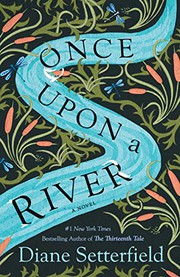
Once Upon a River
A wounded man stumbles into a riverside inn carrying what appears to be a drowned child who is not quite dead, and the story braids the guesses of everyone who…
2,173-word summary · 10 min read
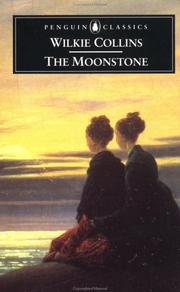
The Moonstone
A cursed yellow diamond vanishes on the night of a birthday party, and eight witnesses tell what they saw.
2,603-word summary · 12 min read
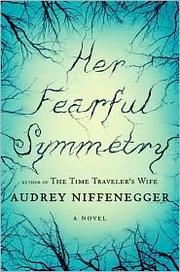
Her Fearful Symmetry
Twins Julia and Valentina inherit a London flat above Highgate Cemetery from an aunt they never met, then find a ghost in it and a family secret.
2,057-word summary · 9 min read
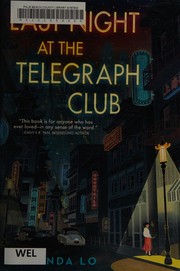
Last Night at the Telegraph Club
The 2021 National Book Award winner follows Lily Hu, a Chinese American teenager in 1954 San Francisco, as she falls for Kath and learns what it costs to be…
2,336-word summary · 10 min read
The Diviners
In 1920s New York, Evie O'Neill's ability to read objects pulls her into an occult investigation that awakens something far older and more dangerous.
2,045-word summary · 9 min read
The Birth of Venus
A Florentine merchant's daughter trains as an artist, marries a man who hides a secret, and survives Savonarola's bonfire of the vanities.
2,404-word summary · 11 min read
Loving Frank
Mamah Borthwick Cheney leaves her family for Frank Lloyd Wright, and their affair becomes a public scandal that ends in tragedy at Taliesin.
2,034-word summary · 9 min read
Ghosted
After seven perfect days with Eddie, Sarah is ghosted, and her search for answers uncovers a secret tied to the accident that changed both their lives.
2,011-word summary · 9 min read