
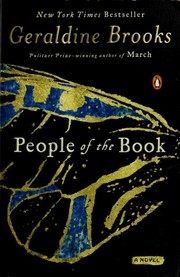
People of the Book
2,479-word summary 11 min read 416 pages in the book
- First published
- 2008
- Publisher
- Penguin Books
- Pages
- 416
- ISBN
- 9780143115007
Reading options
What's inside (7 sections)
I came to People of the Book sideways. A friend who conserves prints told me the best part of her job is the quiet detective work, the moment a stain or a fiber tells you where a piece has been. She lent me Geraldine Brooks 2008 novel, published by Penguin Books at 416 pages in the paperback I read, because it treats a book the way a good biography treats a person. It follows one real manuscript, the Sarajevo Haggadah, across five hundred years by reading the marks left in its binding. I expected something dry and scholarly. What I got was part conservation thriller, part reverse history, and part family story that kept pulling me back even when the structure kept me at arm's length.
The present-day thread opens in Sarajevo in the spring of 1996. The Bosnian war has just ended. The National Museum is cold, short-staffed, and pocked by shelling. Hanna Heath, an Australian rare book conservator in her late twenties, flies in after a midnight phone call. She has built a reputation on skill and bluntness. She works alone by choice, trusts microscopes more than committees, and has a prickly relationship with her brain surgeon mother back in Sydney.
Her job sounds simple. Stabilize and document the Sarajevo Haggadah, a Passover text created in Spain in the fifteenth century, famous because it is illuminated with pictures at a time when many Jewish books were not. In practice the job is delicate and political. The book vanished from view during the siege, saved when head librarian Ozren Karaman carried it out of a shelled building. Now officials want it photographed, insured, and shown. Everyone wants to claim it survived for their reasons. Hanna wants to know how it survived at all.
She starts the way conservators do, slowly. She measures parchment cockling. She notes an earlier rebinding done badly around a century before, with glue where there should be stitching. She photographs clasps that are missing. And then she starts pulling tiny samples from the binding and gutters. An insect wing fragment. Dark wine stains mixed, the lab later suggests, with blood. Crystals that test as salt. A single white hair. Each one becomes a question she cannot leave alone. Why wine in a prayer book. Why salt deep in the spine. Whose hair, and what kind of brush or animal left it there.
Brooks uses those four small things as doors. Each historical chapter explains one of them, stepping further back in time. It is a clever device, and for long stretches it works beautifully because the science feels real. Hanna sends fibers to a friend in Vienna who knows insects. She calls a retired mentor, Werner Heinrich in London, about the clasps. She argues with an Israeli colleague, Amitai Yomtov, about handling and access. She drinks too much plum brandy with Ozren and starts to trust him. I liked these working scenes more than I expected. The talk about humidity, light levels, and handling gloves sounds procedural until you remember snipers were firing at this building months earlier.
Hanna, Ozren, and the trouble around the book
If the novel were only Hanna at a workbench, it would be a calm procedural. Brooks gives her a crowded life instead.
Ozren Karaman is the librarian who rescued the book. He is decent, tired, funny in a dry Bosnian way, and still living inside the war. He lost friends, he drank too much during the siege, and he carried the Haggadah out because someone had to, not because he wanted to be a hero. His affection for Hanna grows in small increments. Shared cigarettes on museum steps. A drive to pick up supplies. A story about his family he does not finish. Hanna, who keeps lovers at a distance, finds herself staying longer in rooms where he is.
Her mother, Sarah Heath, hovers by phone from Sydney. Sarah is brilliant, withholding, and competitive in a way that has frozen Hanna for years. Their calls are short and sharp. Later, when Hanna returns to Australia for a family crisis, we learn more about why Hanna guards herself, including the identity of her father and a long-held silence about it. I found these chapters less vivid than the Sarajevo work, but they explain Hanna's habit of reading objects more easily than people. She can tell you what a stain means in seconds. Asking her mother a direct question takes her the whole book.
The thriller plot comes from two directions. One is forgery. As Hanna prepares the book for exhibition, she notices inconsistencies that make her suspect not every Haggadah story told in Sarajevo is clean. Without giving away the final turn, I will say her mentor Werner, her lover Ozren, and certain officials do not all tell the same story about where the real book is and what visitors will actually see. The other pressure is nationalism. Serb, Croat, and Bosniak figures each want the Haggadah to prove the city belongs to them. A young guard makes remarks. A minister wants a quick unveiling. An Israeli scholar worries the book is safer elsewhere. Hanna, an outsider with an Australian passport and a microscope, has to decide who to believe while handling pages that tear if you breathe wrong.
Some readers find this present-day material melodramatic. I did not, mostly. The forgery talk can feel rushed near the end, and one late revelation about Hanna's family lands hard and fast. But Ozren felt true to me, a man trying to be ordinary after doing one brave thing, and Hanna's slow thaw felt earned rather than romantic in a glossy sense.
Sarajevo 1940 and the insect wing
The first step back takes us to Sarajevo in 1940, and this is where the book won me over.
A young Jewish woman named Lola, full of books and meetings and plans for Palestine, watches her community tighten as war arrives. Her father dies. Her mother, sister, and aunt are rounded up. Through a chain of accidents and choices, Lola flees with another girl and ends up with partisans in the hills. She survives by working, keeping quiet, and carrying the kind of fear you learn to fold into daily chores.
The Haggadah is in Sarajevo at the time, held by the museum. When the Nazis and their local allies start seizing Jewish property, a Muslim librarian named Serif risks his life to hide it. He smuggles it out of the city to a Muslim family in the mountains. The details of who trusts whom, and what papers are forged, matter less than the plain fact Brooks keeps returning to. A man with everything to lose decides a Jewish prayer book is worth protecting because it belongs to the city, not to a regime.
The insect wing comes from those mountain months. The book sits in a stone house, taken out at night, hidden by day. Moths move around lamps. A tiny wing fragment slips into the gutter and stays there for fifty years until Hanna finds it. It is a small explanation, but I loved it. Survival here is not grand. It is a librarian, a village house, a woman who feeds a stranger, and a moth.
This section also carries the saddest pages in the novel. Lola loses almost everyone. A boy she cares about makes a choice that still shocked me when I read it late at night. The war chapters do not soften. Brooks shows how quickly neighbors recalculate, and how much luck matters. If you like war fiction that stays close to kitchens and train platforms rather than battlefields, this part will stay with you.
Vienna 1894 and Venice 1609
The next two steps back move through Central Europe and Italy, and they pair well because both are about censorship in different clothes.
In Vienna in 1894, the book surfaces in the life of Dr. Franz Hirschfeldt, a thoughtful doctor trying to rise in a city turning openly hostile to Jews. Fin de siecle Vienna loved music and coffeehouses and also loved new theories about race. Hirschfeldt wants his son to be safe and accepted. He trims, explains away, stays polite when colleagues say vile things. The Haggadah comes to him for an opinion about its clasps and binding, and his handling of it reveals his compromises. Without spoiling the mechanics, the missing clasps that puzzle Hanna in 1996 trace to this period, to pride and shame and a clumsy repair meant to hide use rather than preserve it. I found Hirschfeldt painful to read. He is not cruel. He is tired and careful, and his carefulness costs him.
Then Venice in 1609, my favorite historical section. Giovanni Domenico Vistorini is a Catholic priest employed as a censor. His job is to read Hebrew books and mark passages the Inquisition finds offensive, then stamp approval or order burning. He drinks heavily. He gambles. He carries a private wound about his own birth and family that Brooks reveals slowly. When the Haggadah is brought before him by Rabbi Judah Aryeh, acting for a wealthy owner who wants it passed, Vistorini refuses at first. The rabbi invites him to drink, talk, and play a game to decide the book's fate.
The wine stains in Hanna's samples come from this night. A glass crushed in a hand. Blood mixing with red wine on parchment. It sounds almost too neat when summarized, but on the page it reads as grief breaking through ritual. Vistorini remembers watching his Jewish parents taken and killed when he was a child, a memory he has buried under vestments and wine. His decision to save the book is not clean or heroic in a poster sense. It is a drunk, frightened man choosing one act of refusal inside a system built to burn.
Brooks writes Venice with texture. Salt air. Ink smell. The ghetto gates locking at night. A Christian servant watching. A wealthy woman, Dona Reyna, trying to protect her property through male intermediaries. The rabbi's shame about his own compromises. If you have ever wondered how books survived censorship, here is one believable answer. Not by argument, but by delay, friendship, bribery, and a censor who cannot sleep.
Tarragona 1492, Seville 1480, and the white hair
The last two historical moves go to Spain, to expulsion and creation.
In Tarragona and Barcelona in 1492, we meet David Ben Shoushan, the scribe who wrote the Haggadah text. The Catholic Monarchs have ordered Jews to convert or leave. Families split. Ships wait. Prices for passage climb. David tries to finish his work while his household falls apart. His sister, his wife, his patrons, all face choices that have no good version. The salt crystals Hanna finds come from this sea edge period, from sweat and sea air and tears on pages carried close to bodies during flight. Brooks does not linger on battles or kings. She stays with packing, with hiding ink, with a scribe trying to keep his hand steady while his street empties.
And then Seville in 1480, the origin point. This is the answer to Hanna's biggest question. Why does this Haggadah have pictures when custom argued against them.
We meet Zahra, a young Black Muslim woman enslaved in the household of a doctor's circle, gifted and moved between powerful people. She has a gift for drawing, learned in fragments while serving an emira who wants portraits. Through a series of coercions and small kindnesses, she ends up in the house of Netanel ha-Levi, a Jewish doctor, helping raise his deaf son Benjamin. Zahra makes brushes from the fine hair of a white cat, the source of Hanna's white hair sample. She begins to paint scenes of Jewish history for a boy who cannot hear the stories, including a Seder table where she paints herself among the guests.
That self portrait, a Black girl at a Jewish feast, is the detail that hooked many real scholars about the actual Sarajevo Haggadah, and Brooks builds her fiction around it with care. Zahra is not a symbol. She is angry, talented, grieving a lost child, hungry for freedom, and aware that her skill both protects her and traps her. Her decision to include her own face is quiet and brave. Later, when David Ben Shoushan needs illuminations for a wedding gift Haggadah, he buys or inherits Zahra's leaves and binds them in. A Muslim slave's pictures end up inside a Jewish prayer book carried across Europe. That is the kind of truth fiction can tell cleanly.
I should note the salt and hair explanations risk sounding like a puzzle box clicking shut. Sometimes they do. But Zahra's chapters earned the device for me. They show a maker, not just a mark.
What strains and what holds
Let me be direct about the weaknesses, because the book invites them.
The reverse chronology keeps you curious but also keeps you distant. Just as you settle with Lola, you are pulled to Vienna. Just as Vistorini becomes interesting, you leave him for Spain. Hanna's lab work in 1996 is the thread meant to hold it together, but Hanna herself can feel cool for long stretches. She notices everything about parchment and little about her own motives until late. Readers who want deep attachment to one character may feel they are starting over every eighty pages.
The present-day forgery and nationalist plot also divides readers. I found the final switch involving the real and displayed Haggadah believable in motive, since people who love fragile things sometimes lie to protect them, but the execution hurries. A late family secret about Hanna's parentage arrives with a jolt and then gets processed quickly before the coda in Arnhem Land in 2002, where Hanna adds her own small mark to the book's history. If you prefer endings that tie every thread, this one may feel loose.
What holds, for me, is the physical sense of the book as a survivor. Brooks never lets you forget weight, smell, and repair. Glue yellowing. Silver tarnishing. Parchment cockling after damp. A conservator's pencil marks in a margin. Those details accumulate into an argument without speeches. Books live because hands carry them, hide them, copy them, and fix them badly and then better.
I would press this on a friend who likes historical fiction built around art and religion, or mysteries where the clues are stains rather than fingerprints, or war stories about rescue rather than combat. Read it slowly. Let each period settle before you chase the next sample. And when you reach Zahra painting herself into a feast she was never invited to, pause. That image is why the novel exists, and why Hanna's cold lab lights in Sarajevo matter. Someone made this. Someone saved it. Someone will need to save it again.
FAQ
Is People of the Book based on a true manuscript?
Yes, the Sarajevo Haggadah is real and held in Sarajevo. Brooks invents Hanna, the forensic clues, and the historical owners around that survival.
Why does the novel move backward in time?
Brooks steps backward from 1996 to 1940, 1894, 1609, 1492, and 1480. Each earlier chapter explains a mark Hanna finds in the binding.
Who painted the illuminations in the story?
Zahra paints the miniatures for a deaf boy, including herself at the feast. The leaves later pass to the scribe who binds them into the Haggadah.
Similar books
The Art Forger
A disgraced Boston painter agrees to copy a Degas stolen from the Gardner Museum, then begins to suspect the original she is copying is itself a forgery.
2,117-word summary · 9 min read
Big Lies in a Small Town
A 22-year-old woman leaves prison to restore a 1940 mural, and Edenton, North Carolina, starts talking.
2,187-word summary · 10 min read
The Birth of Venus
A Florentine merchant's daughter trains as an artist, marries a man who hides a secret, and survives Savonarola's bonfire of the vanities.
2,404-word summary · 11 min read
The Clockmaker's Daughter
A London archivist finds a Victorian satchel holding a photograph, a sketchbook and a letter, then follows them to Birchwood Manor, where a young woman died in…
2,886-word summary · 13 min read
Exodus
Leon Uris's sweeping 1958 novel follows Jewish refugees, Haganah fighters, and Holocaust survivors from Cyprus to the founding of Israel and the 1948 war.
2,529-word summary · 11 min read
The Girl You Left Behind
Two women a century apart fight for what they love, joined by a portrait painted in wartime France and claimed in modern London.
2,613-word summary · 12 min read
Snow Falling on Cedars
A Japanese American fisherman stands trial for murder on a snowy island, while a reporter faces lost love and wartime prejudice.
2,224-word summary · 10 min read
The Orphan's Tale
A Dutch teenager rescues a Jewish baby from a death train and joins a German circus, where a Jewish aerialist teaches her to fly.
2,943-word summary · 13 min read

Anatomy: A Love Story
In 1817 Edinburgh, a noblewoman who wants to be a surgeon disguises herself to study anatomy and falls for the grave robber who supplies her with bodies.
2,031-word summary · 9 min read
The Black Dahlia
James Ellroy builds a fiction around the real Black Dahlia murder, following two Los Angeles cops whose partnership and obsessions destroy them.
2,533-word summary · 11 min read
The Agony and the Ecstasy
Irving Stone turns Michelangelo's seventy years of carving, painting, and arguing with popes into a novel about the cost of making something that outlives you.
2,260-word summary · 10 min read

Sophie's Choice
A young Southern writer in 1947 Brooklyn befriends a brilliant, unstable couple and slowly learns the story of the Polish Catholic woman at the center of their…
2,798-word summary · 12 min read
Only Time Will Tell
A Bristol dockworker's son wins a scholarship, falls in love with the daughter of the family that owns the shipyard, and learns that his father's death was not…
2,082-word summary · 9 min read
A Long Walk to Water
Two eleven-year-olds in southern Sudan, twenty-three years apart: a Dinka boy fleeing war and a Nuer girl walking hours for water, until their stories meet at…
2,217-word summary · 10 min read
Once Upon a River
A wounded man stumbles into a riverside inn carrying what appears to be a drowned child who is not quite dead, and the story braids the guesses of everyone who…
2,173-word summary · 10 min read
The Echo of Old Books
Barbara Davis's 2023 novel sends a rare-book dealer in 1984 New Hampshire hunting for the authors of two unpublished volumes that tell opposite sides of one…
2,491-word summary · 11 min read

Last Night at the Telegraph Club
The 2021 National Book Award winner follows Lily Hu, a Chinese American teenager in 1954 San Francisco, as she falls for Kath and learns what it costs to be…
2,336-word summary · 10 min read
The Tuscan Child
After her father's death, Joanna follows a returned letter to Tuscany and uncovers his wartime love, a hidden painting and a village secret. A dual-timeline…
2,095-word summary · 9 min read
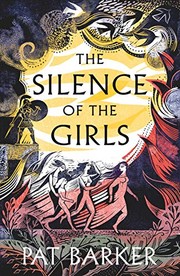
The Silence of the Girls
Briseis, queen of Lyrnessus, is captured by Achilles and narrates the Trojan War from inside the Greek camp, where women are prizes and survival is its own…
2,098-word summary · 9 min read
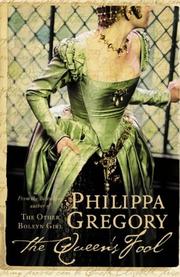
The Queen's Fool
A young Jewish refugee with second sight becomes a court fool to Edward VI, Mary I, and Elizabeth, and learns what it costs to tell the truth.
2,412-word summary · 11 min read
The Last of the Mohicans
During the French and Indian War, Hawkeye and two Mohican warriors try to save two British sisters from a Huron chief whose revenge will end the Mohican line.
2,017-word summary · 9 min read
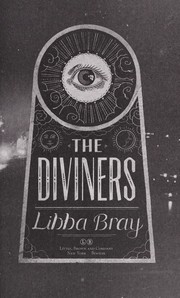
The Diviners
In 1920s New York, Evie O'Neill's ability to read objects pulls her into an occult investigation that awakens something far older and more dangerous.
2,045-word summary · 9 min read
Loving Frank
Mamah Borthwick Cheney leaves her family for Frank Lloyd Wright, and their affair becomes a public scandal that ends in tragedy at Taliesin.
2,034-word summary · 9 min read
Doctor Zhivago
A doctor and poet lives through revolution, war, and love in Pasternak's novel of private life under the pressure of Russian history.
2,213-word summary · 10 min read
Death Comes to Pemberley
P.D. James drops a murder onto the Pemberley estate and sends Wickham to trial, reading Austen's most famous marriage through the machinery of Georgian justice.
2,318-word summary · 10 min read
The Redbreast
Harry Hole chases an ageing sniper through modern Oslo while two Norwegian volunteers on the Eastern Front carry a fifty-year-old betrayal toward a royal…
2,453-word summary · 11 min read
The Lost Girls of Paris
In 1946, a war widow finds an abandoned suitcase in Grand Central holding photographs of twelve women who vanished in the war, and follows their story back to…
2,668-word summary · 12 min read
The Last Kingdom
Kidnapped by Danish raiders as a boy and raised in their halls, Uhtred of Bebbanburg must choose what he is when the fight for England begins.
1,997-word summary · 9 min read
The Red Badge of Courage
Henry Fleming runs at Chancellorsville, then returns to stand.
2,486-word summary · 11 min read
The Prisoner of Heaven
Fermin Christmas past returns with a stranger and a prison debt.
2,388-word summary · 11 min read