
The Diviners
2,045-word summary 9 min read 592 pages in the book
- First published
- 2012
- Publisher
- Little, Brown Books for Young Readers
- Pages
- 592
- ISBN
- 9780316126113
- Series
- The Diviners (#1)
Reading options
What's inside (8 sections)
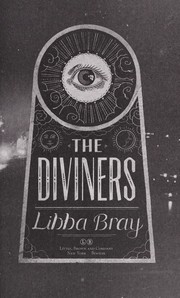
I picked up The Diviners because I wanted a book that felt like October. The cover promised a 1920s New York full of speakeasies, chorus girls, and something nasty in the basement, and that is exactly what it delivers. Libba Bray's novel is long, crowded, and occasionally messy, but it has a voice and a atmosphere that I have not found in many other young adult books.
The novel was published in 2012 by Little, Brown Books for Young Readers. It runs 592 pages in hardcover and is the first book in The Diviners series. The setting is New York City in 1926, a city of jazz, radio, movies, and mass entertainment. It is also a city of poverty, prejudice, and people trying to reinvent themselves. Bray is interested in all of it. The murder mystery is the engine, but the city is the reason to read.
The heroine is Evie O'Neill, seventeen, sharp-tongued, and not nearly as sophisticated as she thinks. She lives in Zenith, Ohio, a small town where everyone knows everyone and nothing interesting is supposed to happen. Evie has a secret. When she touches an object, she can read its history. She can see the owner's memories, their secrets, their shame. It is a power that has caused her nothing but trouble. She uses it at a party to expose the town golden boy, and the scandal is bad enough that her parents send her to Manhattan to live with her uncle.
The Museum of the Creepy Crawlies
Uncle Will Fitzgerald is a curator at the Museum of American Folklore, Superstition, and the Occult. The museum is a dusty, strange place full of masks, bones, and old photographs. New Yorkers call it the Museum of the Creepy Crawlies. Will is a scholar, not a showman. He believes in evidence and skepticism. He is also Evie's guardian, and he is not prepared for a niece who wants to go to speakeasies and flirt with boys.
Evie moves into the Bennington, a faded apartment building where she reunites with her pen pal, Mabel Rose. Mabel is the daughter of communist labor organizers. She is smart, cautious, and in love with Jericho Jones, Will's assistant. Jericho is eighteen, quiet, and physically imposing. He has a secret that the book saves for later. Sam Lloyd is a pickpocket and con man who steals Evie's money and then turns up at the museum. He has a power of his own: he can make people not notice him. Theta Knight is a Ziegfeld chorus girl who lives with her best friend, Henry DuBois. Henry is a songwriter, and he is in love with Theta in a way that is complicated by the era.
The book's cast is large, and Bray gives each character a point of view. That is both the strength and the weakness of the novel. The strength is that New York feels inhabited. The weakness is that the mystery sometimes gets lost in the crowd. I did not mind. I liked spending time with these people, even when the plot was marking time.
Naughty John
The horror plot begins at a party. A group of rich young people use a Ouija board and summon a spirit who calls himself Naughty John. He delivers threatening messages about the Beast, and the hostess fails to close the séance properly. At the same time, in the cellar of a ruined mansion on the Upper West Side, something ancient wakes up.
The first murder victim is Ruta Badowski, a young Polish American woman. She is lured to the mansion by a man calling himself Mr. Hobbes. He performs a ritual and removes her eyes. The body is found with a pentacle branded on it, the word HARLOT on her forehead, and a religious note. The police are baffled. Detective Terrence Malloy asks Will to consult because of the occult symbols. Evie goes to the crime scene and touches the victim's shoe buckle. She sees the murder, hears a whistling tune, and nearly loses control.
The murders follow the Book of the Brethren, a text that prescribes eleven ritual offerings to bring the Beast into the world. The Brethren were a cult that burned to death in 1848 at the command of their leader, Pastor Algoode. The last page of the book, which contains the spell to destroy the Beast, has been torn out. The killer is trying to complete the ritual before Solomon's Comet passes, which happens every fifty years. The comet is due in less than two weeks.
The killer is John Hobbes, also known as Naughty John. He was a grave robber, a medium, and a murderer. He was hanged in the 1870s, but his spirit survived. He is not a ghost in the traditional sense. He is becoming corporeal by consuming body parts. The book is not shy about this. It is gruesome, and Bray writes the horror scenes with relish. The tone is part pulp, part Gothic, part social satire. It should not work, but it does.
The Diviners
The novel's title refers to people with supernatural abilities. Evie is a diviner. So are Sam, Memphis, Theta, Isaiah, and a few others. The word is not used casually. Will explains that diviners have been persecuted throughout history, and that the government has taken an interest in them. That thread leads to Project Buffalo, a secret program that experimented on people with powers. The book only hints at the larger conspiracy. The later volumes develop it.
Memphis Campbell is one of the best characters. He is seventeen, living in Harlem with his younger brother, Isaiah, and their Aunt Octavia. He runs numbers for a crime boss named Papa Charles. He writes poetry in secret. He has a healing power, but he has not used it since he failed to save his dying mother. His guilt is heavy, and it makes him cautious. Isaiah is also a diviner. He can see the future, and he speaks in his sleep. The brothers' relationship is tender and funny, and it gives the book an emotional anchor.
Theta Knight is running from her past. She is a chorus girl, and she is good at her job. She is also a diviner, though she does not fully understand her power. Henry DuBois is her best friend, a songwriter who dreams of Broadway. Their friendship is one of the healthiest relationships in the book. They take care of each other. They also share a recurring dream about a crossroads and a dust storm, which turns out to be connected to the larger mystery.
Bray is interested in the way the 1920s sold itself. The decade was a carnival of advertising, movies, tabloids, and spiritualism. People wanted spectacle, and the book gives it to them. The museum, the séance, the tabloid headlines, the Ziegfeld stage: all of it is part of the same culture. Naughty John is a killer who understands performance. He wants an audience. He wants his murders to mean something. That makes him a very modern monster.
Race, Class, and the City
The Diviners is not just a supernatural thriller. It is a book about who gets to be American in 1926. Memphis and Isaiah are Black, and they live with the daily reality of racism. The Harlem Renaissance is happening around them, but it is not a simple celebration. Memphis has talent, and he has no clear path to use it. Theta is a white chorus girl, but she is also poor and unprotected. Evie is white and middle class, and she has more freedom than the others. The book notices these differences.
The villain's ideology is rooted in a distorted form of Christianity and white supremacy. The Brethren believe they are purifying the world. Their rituals are about control, not faith. Bray connects that history to the eugenics movement and the nativist politics of the 1920s. It is not a subtle connection, but it is an honest one. The book does not pretend that the past was a simpler time.
The depiction of New York is vivid. The speakeasies, the tenements, the subway, the department stores, the newspaper offices: Bray fills the novel with sensory detail. The city is loud and dirty and alive. It is also dangerous. Evie walks home at night and is aware of her vulnerability. The book does not romanticize the freedom of the flapper without showing its limits.
The dialogue is full of 1920s slang. Evie says "pos-i-toot-ly" and "jake" and "the cat's pajamas." Some readers find it overdone. I thought it was fun, and it helps distinguish Evie's voice from the other narrators. Bray is careful not to let the slang become a gimmick. It is part of Evie's performance. She is a girl from Ohio pretending to be a New York sophisticate, and the language is her costume.
The Finale
The last act brings the characters together at Knowles' End, the ruined mansion where the cult once lived. The building is a character in its own right. It has secret rooms, hidden symbols, and a basement full of bones. Evie, Jericho, and the others go there to stop Hobbes before the comet reaches its peak. The climax is chaotic, and not every character gets equal time. The book is setting up a series, and it shows.
Evie's brother, James, died in the Great War. He sent her a half-dollar coin on the day he died. The coin is her talisman, a connection to the brother she adored. In the final confrontation, she uses the coin to trap Hobbes. She recites the missing incantation, and the coin burns to ash. It is a sacrifice, but it is also a victory. She loses the last physical object that tied her to James, and she gains a sense of her own power.
The ending is not tidy. Will and Sam are arrested, then released. Jericho is wounded, and his secret is revealed. He is not fully human. He was rebuilt with machinery after a childhood illness, part of a secret program. Evie kisses him, and then feels guilty because Mabel loves him. The love triangle is not the point, but it is there. The final image is a gray man in a stovepipe hat walking across the country, raising the dead. The sequel is clearly coming.
What Works and What Does Not
The novel is too long. There are subplots that could be cut, and the middle section drags. The mystery is not always well paced. Some clues are repeated, and some characters disappear for long stretches. The prose is occasionally purple. Bray loves a dramatic sentence, and sometimes she overdoes it.
The payoff is worth it. The world is rich, the characters are memorable, and the horror is genuinely creepy. The book also has something to say. It is about memory, both personal and national. It is about the stories we tell to make sense of the past. It is about the danger of forgetting. Naughty John is a monster from the past who returns because people have stopped paying attention. That is a good metaphor for a country that would rather look away.
The ensemble is another reason the book works. Evie is the center, but Memphis, Theta, Sam, Jericho, and Isaiah all get rooms of their own. Bray lets them be wrong, petty, and brave in different ways. The novel is also interested in performance: Evie performs sophistication, Theta performs glamour, and the killer performs righteousness. That theme gives the supernatural plot a social edge. The series format means some threads are left open, and the ending is more of a pause than a conclusion. That is a fair criticism, but it also makes the world feel large enough to return to.
I would recommend The Diviners to readers who like historical fantasy, occult mysteries, and ensemble casts. It is not a quick read, and it is not for everyone. If you want a tight, fast thriller, this will frustrate you. If you want to live in a world for a while, it is worth the time. I finished it wanting to read the sequel, which is the best thing I can say about the first book in a series.
FAQ
Is The Diviners appropriate for young adults?
It is marketed as young adult, but it includes violence, murder, and sexual references. It is darker than many YA fantasies.
Do I need to read the series in order?
Yes. The Diviners is book one, and later books continue the same characters and the overarching conflict.
What is Evie's power?
She can read objects by touching them, which lets her see memories and secrets attached to them.
Similar books
More from The Diviners first, then related titles.
Paranormalcy
A teenage agent who can see through glamour falls for a shape-shifter and learns the agency she works for is hiding her true nature.
2,041-word summary · 9 min read
The Evolution of Mara Dyer
Back in Miami after the asylum collapse, Mara Dyer is treated at Horizons while Jude, who should be dead, stalks her. Noah stays close as the experiments…
2,577-word summary · 11 min read
The Reckoning
Necromancer Chloe Saunders and her gifted friends raid Edison labs in the Darkest Powers finale, chasing rescue and freedom together as hidden powers break…
2,955-word summary · 13 min read
Anatomy: A Love Story
In 1817 Edinburgh, a noblewoman who wants to be a surgeon disguises herself to study anatomy and falls for the grave robber who supplies her with bodies.
2,031-word summary · 9 min read
Born at Midnight
Kylie Galen is sent to a camp for troubled teens and discovers it is a haven for vampires, werewolves, and witches, and that she may be something stranger…
2,310-word summary · 10 min read
Origins
Stefan's diary of 1864 and 1888: how he and Damon fell for Katherine, became vampires, and went looking for a killer in London.
2,056-word summary · 9 min read
Last Night at the Telegraph Club
The 2021 National Book Award winner follows Lily Hu, a Chinese American teenager in 1954 San Francisco, as she falls for Kath and learns what it costs to be…
2,336-word summary · 10 min read
Glass Houses
Claire Danvers moves off campus to escape a bully and lands in a house where the roommates know Morganville's real secret: the town belongs to vampires.
2,345-word summary · 10 min read
The Awakening
Chloe Saunders flees Lyle House with Derek, Simon and friends while her necromancy wakes fully and the Edison Group hunts them.
2,428-word summary · 11 min read
Stalking Jack the Ripper
Lord's daughter Audrey Rose studies corpses in secret while the Ripper works Whitechapel beside Thomas.
2,030-word summary · 9 min read
The Summoning
Chloe Saunders sees ghosts and lands in Lyle House, a group home for troubled teens with hidden powers and a secret tied to the Edison Group.
2,579-word summary · 11 min read
The Unbecoming of Mara Dyer
Sole survivor of a collapse that killed her friends, Mara Dyer moves to Miami, where visions that come true suggest her grief hides something darker.
2,152-word summary · 10 min read
Silence
Nora wakes in a cemetery with five months missing and a stranger called Jev who feels familiar.
3,615-word summary · 16 min read
Crescendo
Nora and Patch survived book one, but distance, Marcie Millar, and a letter about her father's killer pull them apart.
2,980-word summary · 13 min read
Hush, Hush
Nora Grey's new biology partner Patch is gorgeous, infuriating, and hiding wings he was never meant to keep.
2,137-word summary · 9 min read
Rebel Angels
Gemma returns to the realms to bind magic while facing Circe and London season.
2,708-word summary · 12 min read
A Great and Terrible Beauty
Sent to a Victorian boarding school after her mother death, Gemma finds a magic realm tied to it.
2,016-word summary · 9 min read
The Art Forger
A disgraced Boston painter agrees to copy a Degas stolen from the Gardner Museum, then begins to suspect the original she is copying is itself a forgery.
2,117-word summary · 9 min read
First Grave on the Right
Charley Davidson is a private investigator in Albuquerque and the grim reaper. When three murdered lawyers come back as ghosts, her two jobs collide.
2,770-word summary · 12 min read
Ace of Spades
Two Black seniors at an elite academy are celebrated by day and hunted by an anonymous texter in this YA thriller about institutional racism.
2,066-word summary · 9 min read
Masquerade
After Cordelia's death, Schuyler flies to Venice to find her exiled grandfather, then returns to the Blue Bloods as they prepare for a masked ball and a hidden…
2,543-word summary · 11 min read
The Black Dahlia
James Ellroy builds a fiction around the real Black Dahlia murder, following two Los Angeles cops whose partnership and obsessions destroy them.
2,533-word summary · 11 min read
The Awakening / The Struggle
A popular high school girl falls for a vampire, then discovers that his dangerous brother wants her too, in the first two books of the Vampire Diaries series.
2,660-word summary · 12 min read
Only Time Will Tell
A Bristol dockworker's son wins a scholarship, falls in love with the daughter of the family that owns the shipyard, and learns that his father's death was not…
2,082-word summary · 9 min read
Night Film
A disgraced journalist investigates the death of a reclusive horror director's daughter, following a red coat through hospitals, secret clubs, and a family…
2,690-word summary · 12 min read
Cross My Heart and Hope to Spy
Cammie Morgan returns to Gallagher Academy for a second year of spy training, only to fall for a boy from a rival spy school and hunt a mole in her own school.
2,567-word summary · 11 min read

I Kissed Shara Wheeler
Shara Wheeler kisses her rival Chloe Green at prom and disappears, leaving a scavenger hunt that forces Chloe to rethink everything she knew about her.
2,083-word summary · 9 min read
Heist Society
A teenage art thief gets expelled from boarding school, then has two weeks to steal five paintings back from a London museum and clear her father.
2,781-word summary · 12 min read
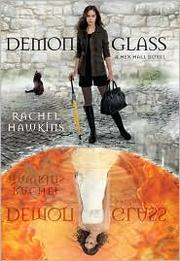
Demonglass
Sophie Mercer spends the summer at the Council's English estate, where two new demons, a suspicious host, and Archer's return complicate her plan to remove her…
2,771-word summary · 12 min read
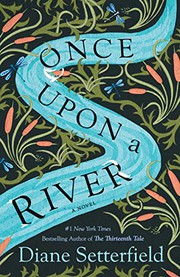
Once Upon a River
A wounded man stumbles into a riverside inn carrying what appears to be a drowned child who is not quite dead, and the story braids the guesses of everyone who…
2,173-word summary · 10 min read