
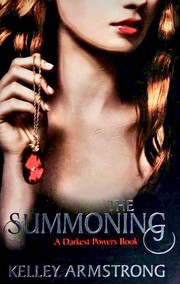
The Summoning
2,579-word summary 11 min read 392 pages in the book
- First published
- 2008
- Publisher
- Atom Books
- Pages
- 392
- ISBN
- 9781907410062
- Series
- Darkest Powers (#1)
Reading options
What's inside (8 sections)
I picked up The Summoning because a friend kept pushing it on me as the rare teen paranormal book that respects its readers. She had read it back in school and remembered the group home setting more than the ghosts. That hooked me. Most supernatural stories for teens start at a normal school and stay there. This one starts with a girl who cannot trust her own eyes and then moves her somewhere worse.
The book came out in 2008 and opens the Darkest Powers series. The edition I am working from is the Atom Books printing listed at 392 pages. Kelley Armstrong had already made her name with adult werewolf novels before trying young adult fiction, and you can feel that background in the way she handles Simon and Derek. She writes teens who sound like teens, at least most of the time, and she lets the scary parts stay scary without winking at the reader.
My first impression was that the opening is quieter than I expected. There is no big mythology dump in chapter one. There is just Chloe Saunders, fifteen, trying to get through a school day while seeing someone who should not be there. I liked that choice. It makes the fear personal before it ever becomes a plot.
The girl who sees dead people
Chloe Saunders narrates the whole book, and her voice is the best thing about the early chapters. She is prickly and bright and embarrassed by everything happening to her. She does not want to be special. She wants to pass her classes and keep her life tidy. When she starts seeing a dead person at school, her first response is to rationalize it. Stress, maybe. Lack of sleep, maybe. Anything except the truth.
Things get worse when she has some kind of breakdown in front of other people. I will keep the details loose here because the exact sequence matters less than the result. Chloe ends up talking about things nobody else can see, and the adults around her decide she is ill. That word, ill, follows her for the rest of the book. Every strange thing she reports gets folded back into a diagnosis. Armstrong is good at showing how lonely that feels. Chloe knows what she saw, but saying so only makes people watch her more closely.
There is an aunt connected to a nursing home in Chloe's backstory, and Armstrong uses that thread to plant an early doubt. Did Chloe see something real there too, or did grief and worry bend her memory? The book never lets this question sit still for long. Right when you start to wonder if Chloe might really be sick, something happens that does not fit any medical chart. A ghost behaves in a way that helps her, or warns her, and Chloe has to decide whether to trust her own senses.
Her family situation is strained and a little distant. The adults love her in the abstract but keep reaching for professional help instead of listening. Chloe notices this and resents it, which felt honest to me. She is not a rebel. She is a kid who keeps being told that the problem is inside her head while the evidence keeps pointing outside it.
The chapters before Lyle House run a little slow, I will admit that now and come back to it later. Armstrong spends a lot of pages on Chloe's school life and her fear. Some readers will love the slow build. I found myself checking how many pages were left before the group home showed up. But the patience pays off in one way. When Chloe is finally sent away, you understand exactly what she is losing. A bedroom. A routine. The thin comfort of being the only one who knows she is not crazy.
Lyle House looks like help
Lyle House is a group home for troubled teens, and Armstrong describes it the way a brochure would. Comfortable rooms. A kindly schedule. Staff who smile and take notes. Chloe arrives expecting something like a hospital and finds something that looks almost normal. That almost is doing a lot of work.
The other residents arrive in a blur at first, and Armstrong introduces them the way Chloe meets them, in fragments. Simon is warm and quick to befriend her. He jokes around and tries to make the place feel less grim. Derek is his brother, or at least the boy who acts like it, and he is the opposite. Big, sullen, watchful. He stares at Chloe like she is a problem he has already solved. Then there is Rae, who talks fast and covers nerves with attitude, and Tori, who is sharp in every sense and does not bother hiding her dislike of new girls.
Chloe tries to sort these kids into boxes. Simon is the nice one. Derek is the threat. Rae is the possible friend. Tori is the rival. Armstrong lets her do this and then slowly breaks the boxes apart. Nobody at Lyle House is only one thing, and the home itself encourages the labeling. The staff hand out diagnoses the way teachers hand out worksheets. Every outburst gets written down. Every odd habit becomes a symptom.
The daily routine chapters are where the book breathes a little. Meals together. Therapy sessions that go nowhere. Walks on the grounds with a staff member trailing behind. Chloe starts to relax in spite of herself, and that relaxation scared me more than any ghost. You know, as a reader of this kind of book, that a place this controlled is hiding something. Chloe knows it too, but part of her wants to believe the help is real. Being believed, even under false terms, feels better than being called a liar at home.
The small details sell the wrongness. Meds given without much explanation. Doors that lock in ways they should not need to. Staff who ask leading questions about dreams and visions and then write down every word. Chloe tells herself this is just how treatment works. I kept wanting to shake her, which I take as a sign the writing was working.
Everyone here is hiding something
The middle of the book is really about powers leaking out under pressure. Chloe's ghost sightings get stronger instead of fading. She sees more figures, and they start interacting with her in ways she cannot dismiss. One scene that stuck with me has her trying to ignore a spirit in a hallway while keeping her face blank for the cameras she suspects are watching. That image, a girl pretending not to see a dead person so the adults will trust her, captures the whole novel in miniature.
Simon starts showing that he is more than a friendly face. There are hints about strength and reflexes that go past normal, and about a temper in his family line that runs deeper than moodiness. Derek is even more obvious once you know what to look for. He hears things too far away. He moves too fast when he thinks nobody is watching. He gets angry in a way that seems physical first and emotional second, like his body reacts before his mind catches up. Armstrong never has a character sit Chloe down and explain werewolves in these chapters. She lets Chloe add it up from scraps, and she lets Chloe get it wrong for a while.
Rae has her own thread, and I liked how Armstrong wrote it. Rae tries little spells when she thinks she is alone, and she plays them off as jokes when caught. But the results stop being funny. Small fires. Objects moving. Moments where the air feels charged. Rae wants her ability to be real and is terrified that it is. That contradiction makes her feel younger than Tori and older than Simon in turns.
Tori took the longest to win me over. She is abrasive on purpose. She needles Chloe about her visions and about Simon's attention. For a stretch she reads like the stock mean girl the story does not need. Then Armstrong gives her a few private moments, fear showing through the bite, and she becomes more interesting. Tori's power, when it surfaces, fits her personality in a way I will not spoil. Let me just say the book suggests her edge is not only attitude.
The friendships form under bad conditions, which makes them feel earned. Chloe and Simon bond over being the newest and the nicest, and yes, there is a pull between them that the book keeps nudging. Derek keeps his distance and then keeps showing up exactly when Chloe is in trouble, which tells you where his arc is going. Rae becomes the friend who will say the scary theory out loud. Even Tori gets folded into the group by necessity rather than affection, and necessity turns out to be a strong glue.
The Edison Group stops pretending
About two thirds in, the book drops the therapy mask. Lyle House is a front. The staff answer to a secret research outfit called the Edison Group, and the teens are not patients. They are subjects. The home exists to collect kids with supernatural traits, study them, and change them. Meds, tests, interviews, all of it feeds a file.
I found this reveal both satisfying and a little deflating. Satisfying because every odd detail clicks into place. The leading questions, the locked doors, the way new kids arrive right when their powers spike. Armstrong plays fair with the clues. A careful reader can guess well before Chloe says it out loud. Deflating because the reveal comes with a lot of explanation. Characters start telling each other things they already know, for the reader's benefit, and the pace sags right when it should sprint.
The Edison Group's goal, as the book presents it, is to engineer and control young supernaturals. Chloe pieces together that the experiments go back years and that some kids did not survive them, or did not survive unchanged. The adults involved have convinced themselves they are helping, or protecting the world, or advancing knowledge. Armstrong does not give them cartoon villain speeches. She gives them calm professional language, which is creepier. A doctor explaining a procedure that happens to ruin lives stayed with me longer than any ghost scene.
Chloe's necromancy turns out to be rare and valuable to the Group, which is why she gets so much attention. I will not lay out the mechanics in full because the book itself doles them out slowly and sometimes contradicts its own early hints. The broad shape is clear enough. Chloe can perceive and reach the dead, and that ability grows when she is frightened. Fear becomes both the trigger and the leash. The Group knows this and arranges conditions to keep her afraid while looking like care.
What I appreciated is that Armstrong keeps the adults' plan a little blurry. You learn enough to feel the danger and not so much that the mystery dies. Some readers may want a full briefing on the Group's history and methods. I was fine without it. The kids are the story, and the Group works best as a cold wall closing in.
Running with powers you barely control
The last stretch is a breakout and a chase, and the book finally moves the way I had wanted it to for a hundred pages. The kids stop theorizing and start acting. Plans get made in whispers and then fall apart on contact with locked doors and adult schedules. Powers get used badly. Someone tries something brave before they are ready and pays for it. Armstrong writes action better than she writes exposition, and these chapters have a ragged energy the middle lacks.
Chloe has to use her ability on purpose for the first time, under real pressure, and Armstrong makes it cost her. Seeing the dead was frightening when it happened by accident. Calling to them, or answering them, is worse. There is a scene late in the book where Chloe must stand her ground among spirits while the living danger closes in, and it works because the book spent so long establishing that she hates this power. Her growth is not about loving her gift. It is about refusing to let fear choose for her.
Simon and Derek get the clearest hero turns here, and the brothers' bond carries several pages that could have felt routine. Derek in particular gets a moment that reframes his earlier hostility. He was never just the scary boy. He was a kid trying to keep something caged, and the cage is breaking. I will leave the specifics alone, but dog lovers and wolf lore fans will find plenty to chew on.
Rae and Tori both get to matter in the escape, which I appreciated. Too many ensemble books forget half the cast during the climax. Here everyone has a beat. Nobody's power solves everything. They get out by combining half controlled abilities with luck and stubbornness, and the ending makes clear that getting out of the building is not the same as getting free. The Group is still out there. The kids are powerful, untrained, and visible in ways they cannot afford.
The final pages set up the sequel without quite ending this story. The immediate danger passes. The larger danger sharpens. Chloe closes the book older than she started it, and warier, but still herself. I closed it wanting book two, which is the main job of a book one.
What I liked and what wore me down
Let me be direct about the flaws, because they are real and they may decide whether you pick this up. The setup is slow. Chloe's pre Lyle House chapters run long, and the group home chapters repeat a cycle of strange event followed by staff explanation a few too many times. Armstrong explains powers through dialogue that sometimes sounds like a manual. Two characters will discuss abilities they both understand, purely so the reader can follow, and those scenes clunk.
The love triangle hints are the other weak spot. Simon is clearly set up as the warm option and Derek as the slow burn grump, and the book keeps nudging Chloe between them without committing. It never takes over the plot, and younger me would probably have enjoyed the tension, but current me found it predictable. You can see the sequel machinery in these scenes. Armstrong is positioning pieces, and the seams show.
Still, the core of the book works. Chloe is a strong narrator with a clear voice. The premise flips the usual script by treating belief itself as the battleground. The scariest sentence in the book is not about a ghost. It is some calm adult telling Chloe that what she saw did not happen. Anyone who has ever been dismissed by an expert will feel that scene in their stomach.
Who should read it? Teens who like ghost stories with real stakes, and adults who enjoy young adult fiction that does not talk down. Readers who need fast pacing from page one may bounce off the first hundred pages. Readers who love ensemble casts, slow trust, and powers that feel like burdens will have a good time. I am glad my friend kept pushing. I have already ordered the second book, and I have opinions about Derek that I am keeping to myself until I finish it.
FAQ
Who is Chloe Saunders in The Summoning?
She is the fifteen year old narrator who sees ghosts, which leads adults to place her in Lyle House, a group home for teens with behavioral labels.
Is The Summoning part of a series?
Yes, it is the first book in the Darkest Powers series by Kelley Armstrong, published in 2008, and it ends with the group on the run.
What is the Edison Group?
A secret research outfit in the novel that watches the Lyle House teens and experiments on supernatural subjects under the cover of therapy.
Similar books
More from Darkest Powers first, then related titles.
The Awakening
Chloe Saunders flees Lyle House with Derek, Simon and friends while her necromancy wakes fully and the Edison Group hunts them.
2,428-word summary · 11 min read
The Reckoning
Necromancer Chloe Saunders and her gifted friends raid Edison labs in the Darkest Powers finale, chasing rescue and freedom together as hidden powers break…
2,955-word summary · 13 min read
Born at Midnight
Kylie Galen is sent to a camp for troubled teens and discovers it is a haven for vampires, werewolves, and witches, and that she may be something stranger…
2,310-word summary · 10 min read
The Hazel Wood
Alice Proserpine has spent her life running from bad luck. When her mother vanishes, she follows a trail of fairy-tale clues to her grandmother's estate and…
2,064-word summary · 9 min read
The Diviners
In 1920s New York, Evie O'Neill's ability to read objects pulls her into an occult investigation that awakens something far older and more dangerous.
2,045-word summary · 9 min read
Paranormalcy
A teenage agent who can see through glamour falls for a shape-shifter and learns the agency she works for is hiding her true nature.
2,041-word summary · 9 min read
Locke & Key, Vol. 1: Welcome to Lovecraft
After their father is murdered, the Locke children move into a haunted family estate where keys unlock doors to ghosts, other places, and dangerous secrets.
2,019-word summary · 9 min read
House of Salt and Sorrows
Annaleigh Thaumas investigates her sister's death in a cursed island manor where the balls are illusions and the sea god is always listening.
2,025-word summary · 9 min read
The Evolution of Mara Dyer
Back in Miami after the asylum collapse, Mara Dyer is treated at Horizons while Jude, who should be dead, stalks her. Noah stays close as the experiments…
2,577-word summary · 11 min read
Ghost Story
Dead but not gone, Harry Dresden returns as a spirit to find his killer, protect the friends he left behind, and learn why the afterlife gave him a second…
1,978-word summary · 9 min read
Family of Liars
The prequel to We Were Liars: Carrie Sinclair finally tells the story of the summer of 1987, the boy who died on Beechwood Island, and the lie her family built…
2,072-word summary · 9 min read
Glass Houses
Claire Danvers moves off campus to escape a bully and lands in a house where the roommates know Morganville's real secret: the town belongs to vampires.
2,345-word summary · 10 min read
Deadlocked
A dead woman on Eric's lawn starts a murder investigation, a vampire queen wants Eric as her consort, and the fairies in Sookie's life close in.
2,885-word summary · 13 min read
Beautiful Chaos
Ethan Wate is losing himself piece by piece as the broken Order of Things demands a sacrifice, and the answer may be the last person anyone expected.
2,068-word summary · 9 min read
Anna Dressed in Blood
Ghost hunter Cas meets Anna, the ghost who kills back.
2,622-word summary · 12 min read
Belladonna
Poison-immune orphan Signa Farrow hunts a gothic killer at Thorn Grove with Death as ally and suitor, while cousin Blythe fades and her ghost mother asks for…
2,868-word summary · 13 min read
Later
Boy Jamie Conklin sees dead people who must answer truthfully, pulling him into NYPD cases and a drug crew's greed.
2,009-word summary · 9 min read
Gallant
Mute Olivia Prior returns to Gallant manor where ghouls walk and a shadow Recommends.
2,081-word summary · 9 min read
Dead Reckoning
Sookie confronts the firebombing of Merlotte's, Sandra Pelt's revenge, and a vampire power struggle while questioning her future with Eric.
2,391-word summary · 11 min read
The Raven King
Gansey's fated death nears as Glendower wakes and the ley wakes hungry.
2,477-word summary · 11 min read
Lord of Shadows
Emma and Julian face faerie war and forbidden love as the Cohort rises.
2,496-word summary · 11 min read
Blue Bloods
At an elite Manhattan school, Schuyler Van Alen learns she is a forbidden half-vampire as someone starts killing her kind.
2,725-word summary · 12 min read
Beautiful Darkness
After Macon's death, Lena pulls away and Ethan follows her into the Tunnels toward a dangerous choice.
2,647-word summary · 12 min read
Grave Peril
Chicago ghosts turn murderous as Harry Dresden faces a vengeful sorcerer and Bianca's vampire trap.
3,484-word summary · 15 min read
Blue Lily, Lily Blue
Blue searches for her missing mother while the Raven Boys wake a sleeper in the caves who is not the king they sought.
2,983-word summary · 13 min read
From Dead to Worse
Sookie mediates a Were war and vampire takeover while learning about her fairy blood.
2,533-word summary · 11 min read
Dead and Gone
Weres reveal themselves as Sookie faces a murder, a Fellowship trap, and a brutal fairy war.
2,798-word summary · 12 min read
Definitely Dead
Sookie heads to New Orleans for her dead cousin estate and finds witches, vamps, and family curses.
2,027-word summary · 9 min read
Lady Midnight
Emma and Julian hunt killer echoing old murders while parabatai love grows.
1,982-word summary · 9 min read
Club Dead
Sookie hunts missing Bill in Jackson, posing with a werewolf at vampire Club Dead.
2,324-word summary · 10 min read