
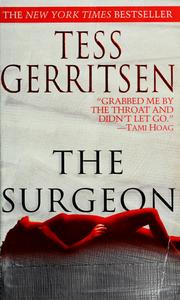
The Surgeon
2,154-word summary 10 min read 359 pages in the book
- First published
- 2001
- Publisher
- Ballantine Books
- Pages
- 359
- ISBN
- 9780345447838
- Series
- Rizzoli & Isles (#1)
Reading options
What's inside (7 sections)
I picked up The Surgeon on a dare from a friend who knows I get squeamish in hospitals. She said this one would fix that or ruin me forever. Tess Gerritsen published it in 2001 with Ballantine Books, and the first hardcover runs 359 pages. It is book one in the Rizzoli and Isles series, though I should say right away that Jane Rizzoli is the one who debuts here. Maura Isles does not show up until the next book. I went in expecting a standard cop thriller and came out thinking about how Gerritsen, herself a former physician, writes bodies like someone who has actually stood over them.
Boston is having a hot summer when the story opens. Elena Ortiz, a young woman living alone, is found dead in her apartment. What was done to her is hard to read about. She was tied down, assaulted, and cut open with a precision that makes the medical examiner go quiet. Her womb was removed. There was almost no mess beyond what the killer intended, which tells the police this man has training.
Thomas Moore catches the case. He is a Boston homicide detective, steady and careful, the kind of man who notices the small things at a scene and carries them home with him. His partner on this one is Jane Rizzoli. She is sharp and blunt and funny in a dry way, and she works twice as hard as anyone around her because she has to. I think a lot of readers will recognize her right away. She walks into rooms full of men who talk past her, and she keeps talking until they listen.
The Ortiz murder looks familiar to Moore for a bad reason. A year earlier, another woman named Diana Sterling was killed in much the same way. No link between the two women ever turned up. Different jobs, different streets, different lives. Now there is a pattern, and patterns mean the man is still out there.
The woman who shot her attacker
The part that hooked me is Catherine Cordell. She is a trauma surgeon in Boston, good under pressure, respected in the operating room. Two years before the main story, she lived in Savannah. A surgery intern at her own hospital stalked her, broke into her home, and tried to do to her exactly what the Boston killer does to his victims. She fought him off and shot him dead. Or that is what she has told herself since, and what the records say.
Cordell moved north to start over. She throws herself into work. Early in the book she saves a man named Herman Gwadowski, and Gerritsen writes the surgery scenes with a confidence that made my hands sweat. Blood pressure numbers, clamps, suction, the way a chest looks open on the table. I have read a lot of thrillers where the hospital stuff feels pasted on. Here it feels lived in.
But the Boston murders follow the details of her Savannah attack too closely. Same kind of bindings. Same kind of blade work. Same removal. Cordell starts to doubt her own memory. Did she really kill him? Did someone watch and learn? Is the dead man somehow alive? She tells herself that is crazy. Then another body drops, and crazy starts to look reasonable.
Moore meets Cordell as part of the investigation, and the two of them get close fast. Maybe too fast, if I am honest. He is drawn to her calm. She is drawn to the fact that he believes her when she says she is scared. They start a romance in the middle of a murder case, with late phone calls and dinners that keep getting cut short by the next crime scene. I get why Gerritsen did it. It raises the stakes for Moore. It also slows the middle of the book in a way I felt.
Two detectives who do not work the same way
What I liked most, and what kept me turning pages past midnight, is the Moore and Rizzoli pairing. They approach everything from opposite sides.
Moore leads with sympathy. He sits with victims on his mind. He worries about Cordell herself, and that worry clouds his judgment on the case. There are scenes where Rizzoli sees what he misses because he is too close. I found myself annoyed with him more than once, in the way you get annoyed with a decent person making a clear mistake.
Rizzoli leads with logic and stubbornness. She pulls the Savannah file. She compares wound photos side by side. She asks the rude questions nobody wants asked, like whether Cordell is telling the whole truth about that night in Savannah. Other cops smirk when she pushes. She pushes anyway. There is a scene where she stands in an autopsy suite arguing about blade angles while everyone else wants lunch, and I thought, that is the whole character in one image.
The friction between them feels real because neither is the comic relief sidekick. Moore has years on her and a steadier rank, but Rizzoli is often right first. She resents that he gets the easy trust of witnesses. He resents that she will not let the Cordell romance stay private when it touches the case. They still watch each others backs at scenes. That mix of respect and irritation carried me through the slower chapters.
Gerritsen also does something smart with the squad room. The other detectives are not villains. They are tired guys with too many cases who make dumb jokes and sometimes talk over Rizzoli without noticing. It stung to read because it felt ordinary rather than staged. One of them leaves dirty dishes in the sink and takes credit in small ways. You know the type from every job you have ever had.
How the Surgeon hunts
I want to be straight about the violence level, since this book is rough. The killer slips into apartments at night. He waits until the woman is asleep or subdued, then binds her wrists with tape or cord. He uses a drug to keep her still. What follows is assault and then surgery, performed while she is alive for at least part of it. He takes the uterus as a trophy. He leaves the body posed.
Gerritsen does not write these scenes to excite. She writes them cold, step by step, which somehow makes them worse. The focus stays on his control: the laid out tools, the quiet, the way he cleans up. The newspapers call him the Surgeon because of that neatness. Cops hate the nickname because it gives him status, but it sticks.
His third target in the book is a woman named Nina Peyton. The sections where he watches her made my skin crawl. He learns her schedule. He notes when her lights go off. He stands outside her building the way you or I might wait for a bus, and that ordinariness is the scary part. When the police finally connect Peyton to the pattern, the clock starts ticking in a way the earlier chapters did not have.
He is also circling Cordell the whole time. He phones her hospital. He gets close to her home. He seems to know details about Savannah that never made the papers. Each murder lands a little nearer to her world, like he is mailing her a message she cannot throw away. Cordell, who saves lives all day with steady hands, starts shaking in her own kitchen. I believed that completely. Courage at work and fear at home can live in the same person.
One detail that stayed with me: the killer understands locks and quiet. No smashed doors. No neighbor hears a thing. Women who live alone will read those passages and check their windows, I promise. I did, and I live on an upper floor.
When the case turns personal
About two thirds in, the book shifts from puzzle to trap. Rizzoli is sure the Boston killer studied the Savannah case file. Someone had access. Someone with medical training and a grudge or an obsession. She starts pulling employment records from hospitals, looking for men who moved from Savannah to Boston in the last two years, who know surgery and know Cordell.
Moore hates this part because every line of it points nearer to the woman he is sleeping with. He warns Cordell, guards her, argues with Rizzoli about how to use her as bait without calling it that. There is a genuinely tense stretch where Cordell stops trusting the police to keep her safe and starts making her own plans. She buys a gun. She changes her routine. She stops answering Moore's calls for a night, and he drives past her building like a worried boyfriend instead of a detective. I winced. It felt true and unprofessional at once, which is probably the point.
The hospital stops being safe, and that shook me more than the apartment break ins. Cordell is in the operating room, gloved and gowned, and realizes the man who wants her could be down the hall in scrubs. Gerritsen knows that world, the locker rooms and on call rooms and parking garages at 2 a.m., and she wrings it out. A surgeon who cannot feel safe in a hospital has nowhere left.
I will not lay out the final confrontation beat by beat, since this is a summary and also because the last fifty pages read fast and deserve to be read fresh. The broad shape is this: the killer gets to Cordell, the police close in, and it is Rizzoli, not Moore, who gets there when it counts. She has been underestimated the whole book, and Gerritsen pays that off without a speech about it. It is just action, fast and messy, very different from the killer's neat tableaus. I finished it standing in my kitchen at one in the morning because I could not sit still.
Afterward, Moore and Cordell end up together. The book closes with a sense that they might make it, though Gerritsen does not pretend the damage is gone. Rizzoli walks away with the respect she earned and a case that will follow her. The next book brings Maura Isles into the picture, and you can feel the series engine turning over in these last pages.
What stayed with me, and what dragged
Let me talk about the flaws first, because they are real and readers should know. The middle sags. The Moore and Cordell romance takes up a lot of room, with long dinners and hospital corridor talks, while Nina Peyton is out there being watched. Every time the pace built, we cut back to another date getting interrupted. I get the purpose, but I skimmed a couple of those scenes.
Cordell herself can feel distant. We spend huge parts of the book inside her fear, which is well written, but I wanted more of her outside the trauma. She operates, she worries, she talks to Moore. Her friendships and family barely register. Rizzoli, who gets fewer pages, somehow feels fuller. That imbalance bugged me.
The science and police work hold up well for a 2001 book, with one footnote. Phones are landlines, files are paper, DNA takes time. If you only read current thrillers, the pace of the lab work will feel slow. I liked it. It forces the detectives to think instead of waiting for a machine to beep.
What works is the medical writing and Rizzoli. Gerritsen writes surgery the way people who have done it write it: tired and physical. The smell of cautery stays with you, along with the gallows humor surgeons use after a bad outcome. And Rizzoli is one of those characters you follow anywhere. Blunt and loyal, funny without trying to be. The scenes where she handles the medical examiner and the crime lab guys are worth the price alone.
Who should read it? If you like crime books with strong procedure and you can handle graphic bodily harm, this is a strong pick. If sexual violence as a plot driver is a hard no for you, skip it, because it is central here and described in clinical detail. It is also a good series starter since the case resolves fully. You do not need anything else before it, and The Apprentice follows directly for anyone who wants more Rizzoli.
One small note on the edition I read. The Ballantine first hardcover is the one collectors cite, with the 2001 date on the copyright page. Later paperbacks paginate differently, so your copy may show another number at the back. The story is the same either way.
I closed the book thinking about Rizzoli in that autopsy suite, refusing lunch, pointing at a photo and saying look again. That image is why I will keep going with the series. The gore fades. The detective stays.
FAQ
When was The Surgeon published?
Ballantine Books published it in 2001. The first hardcover runs 359 pages and the ISBN is 9780345447838.
Is The Surgeon part of a series?
Yes. It is book one in the Rizzoli and Isles series. Jane Rizzoli debuts here, and Maura Isles joins in the next book, The Apprentice.
Who are the main characters?
Boston detectives Jane Rizzoli and Thomas Moore, trauma surgeon Catherine Cordell, and victims Elena Ortiz, Diana Sterling, and Nina Peyton.
Similar books
More from Rizzoli & Isles first, then related titles.

Rules of Prey
Minneapolis detective Lucas Davenport hunts a killer who leaves a new rule at every scene and treats murder as a game of wits.
1,914-word summary · 9 min read

What She Knew
Rachel lets her eight-year-old son run ahead in a Bristol park, and the nine-day search turns her into a suspect in the public eye.
2,952-word summary · 13 min read

The Beach House
A young valet is beaten to death at a Hamptons party, and his law-student brother spends a year building a case against the family that covered it up.
2,049-word summary · 9 min read

Six Years
A professor who promised to forget the woman he loved sees her husband's obituary and discovers that the wedding, the marriage, and the woman herself may never…
2,076-word summary · 9 min read

The Trespasser
A Dublin Murder Squad detective investigates a staged dinner-party killing and finds a cover-up that reaches into her own department.
2,051-word summary · 9 min read

The Late Show
Exiled to the LAPD night shift after accusing her supervisor, Renée Ballard keeps two cases that were meant to be handed off at dawn: a brutal assault and a…
2,563-word summary · 11 min read

4th of July
Lindsay Boxer shoots two armed teenagers in self-defense, faces a wrongful-death trial, and spends her leave chasing a string of throat-slashing murders in…
2,192-word summary · 10 min read

61 Hours
A bus crash strands Jack Reacher in a snowbound South Dakota town where a drug gang, a corrupt police force, and a single witness are on a collision course.
2,227-word summary · 10 min read
The Last Mile
Melvin Mars is hours from execution for his parents' murder when another man confesses, and FBI cold case detective Amos Decker goes looking for the trap.
2,746-word summary · 12 min read

Still Missing
A realtor is abducted at a Vancouver Island open house and held for more than a year. Told through therapy sessions, the novel follows her escape and the hunt…
2,466-word summary · 11 min read

Bad Luck and Trouble
A deposit of $1,030 summons Jack Reacher back to his old army unit, which is being picked off one name at a time.
2,366-word summary · 11 min read

3rd Degree
The third Women's Murder Club novel follows a San Francisco terror cell and a three-day killing schedule, and it costs the club a member.
2,685-word summary · 12 min read

Worth Dying For
Reacher stops for one night in rural Nebraska and finds a family that runs the county, a missing girl and a shipment worth killing for.
2,021-word summary · 9 min read
Tinker, Tailor, Soldier, Spy
Retired spymaster George Smiley is brought back to find a Soviet mole inside British intelligence, and the trail leads through old friends, old betrayals, and…
2,092-word summary · 9 min read

The Best of Friends
Three lifelong friends discover their teenage sons were hiding more than anyone knew after a night that leaves one dead, one in a coma and one silent.
2,040-word summary · 9 min read
See Me
A law student with a violent past falls for a prosecutor whose old case returns as a stalker, in a romance with a thriller at its center.
2,007-word summary · 9 min read

Say You're Sorry
A widowed prosecutor defends the teenager accused of killing her babysitter, uncovering a small town's secrets and a killer hiding in plain sight.
2,116-word summary · 9 min read

Echo Burning
Reacher hitches a ride with a Texas woman who wants her abusive husband killed, then has to prove she did not murder him when he comes home.
2,209-word summary · 10 min read

The End of Her
A sleep-deprived mother of twins faces a stranger's accusation that her husband murdered his first wife in Shari Lapena's domestic suspense novel.
2,383-word summary · 11 min read

Girl, Forgotten
A rookie US marshal guards a judge with a stalker and ends up reopening the 1982 prom-night murder of the judge's pregnant daughter.
2,111-word summary · 9 min read
When No One Is Watching
Sydney Green watches her Brooklyn block's Black residents vanish one by one in Cole's Edgar-winning thriller about gentrification as a crime scene.
2,165-word summary · 10 min read

The Woods
Twenty years after two teenagers were murdered and two vanished at summer camp, prosecutor Paul Copeland identifies a fresh corpse as one of the missing.
2,490-word summary · 11 min read

The Boy from the Woods
Wilde, found feral in a New Jersey forest in 1986, hunts for a missing teenager while a senator's secrets tear a wealthy town apart.
2,270-word summary · 10 min read

Without Fail
Reacher is asked to test vice presidential security by planning to kill.
2,084-word summary · 9 min read
Triptych
A GBI agent with dyslexia hunts a rapist while two Atlanta cops hide pasts.
2,576-word summary · 11 min read

Things We Do in the Dark
A comedian kills her husband, then a podcaster digs up her teen murder past.
2,427-word summary · 11 min read

The Widow
A widow of a suspected criminal faces reporters and police while hiding what her marriage really cost.
2,599-word summary · 12 min read
The Therapist
A couple moves to a gated street where the previous therapist was murdered in their house.
2,437-word summary · 11 min read
The Reappearance of Rachel Price
Bel films a doc when her missing mother walks back after years.
2,254-word summary · 10 min read
The Racketeer
A jailed lawyer trades a judge murder secret for freedom and revenge.
2,434-word summary · 11 min read