
Reading options
What's inside (9 sections)
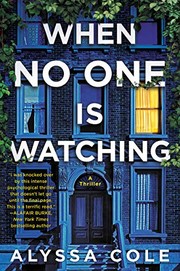
A friend handed me this book with a one-line pitch that turned out to be wrong in an interesting way. She said it was Get Out as a novel. It is not, quite. Get Out is a horror film about a young Black man who discovers what the white people around him are willing to do. When No One Is Watching is a thriller about a neighborhood, told by two people who live in it at different levels of awareness, and its monster is not a family. Its monster is a spreadsheet. It is the math of gentrification, done in public with smiles, and the book's argument is that the smiles are the horror.
Alyssa Cole published it in 2020, with William Morrow, and it was her first thriller after years of writing romance. It won the 2021 Edgar Award for Best Paperback Original. I read it over two evenings in September, in a neighborhood that has been changing under its own tenants for as long as I can remember, and the book kept putting my own street into the frame in ways I did not enjoy and could not argue with.
It runs about 368 pages and moves between two first-person narrators, Sydney Green and Theo, with a creepy chorus in between: posts from a neighborhood app called OurHood, where the new residents debate crime, property values, and who belongs, in the language people use when they think nobody they are talking about can see it.
The tour that erases everyone
The novel opens with a walking tour of Gifford Place, a historically Black brownstone neighborhood in Brooklyn, and the tour is a small masterpiece of quiet insult. The guide, a white transplant, walks a group of newcomers past the picture-book facades and tells charming stories about the street's famous past while skipping every Black family, church, business, and block club that made the place what it is. Sydney Green, standing at the edge of the group, watches her neighbors' history get vacuumed out of the sidewalk and replaced with nothing.
Sydney is thirty, a school administrator, back in the house she grew up in after a marriage she does not talk about that ended badly enough to leave marks. Her plan, hatched on the spot during the tour, is to build her own walking tour, one that tells the real story of Gifford Place, to be ready by the neighborhood's upcoming festival. It is a small, defiant act, and it is also the engine of the plot, because the research she can only do by asking questions is the research the conspiracy cannot afford to have done.
The OurHood posts between chapters do a lot of economy work. They are pitch-perfect: the woman who worries about "the vibe" changing, the man who reports a suspicious person who is just a neighbor, the moderation fights about whether words are violence. Reading them is like holding your hand near a stove. You know before the characters do that the app is a map of intent, and the book lets you feel the dawning dread that the author is not exaggerating, only concentrating.
Sydney and the house her mother left her
The personal stakes arrive early. Sydney's mother, Yolanda, has died, which is the real reason she came home. And in one of the book's boldest early moves, she did not have a funeral or a proper burial, because Yolanda had signed something in her final illness that Sydney cannot untangle: a debt relief arrangement, predatory in the way those things tend to be, that would claim the house upon her death. To stop the machinery, Sydney buried her mother in the community garden her mother started, and told the neighbors Yolanda was in a care facility recovering.
So the house is not just a house. It is a promise, made in a hospital, that Sydney would not lose the family's last piece of ground. Every lawyer and agent who knocks on the door is a threat to the dead, and the book keeps the emotion of that exactly as complicated as it should be: grief, guilt, mortgage math, and rage, all in the same room.
The house is also full of the histories the tour skipped. Sydney's neighbors are a living archive: the Day Club Crew, a group of elderly residents who meet on the block and have been watching this neighborhood change since before some of the newcomers were born, who hold the institutional memory of block parties, floods, blackouts, and who was always first to help. Cole writes them with warmth and teeth.
Theo, the unreliable ally
Theo, the second narrator, is a white man who has just bought a brownstone on the street with his girlfriend Kim, a wealthy and controlling woman whose money made the purchase possible. Theo is unemployed, depressed, and quietly horrified to discover that the life he thought he was buying is a trophy case he does not fit into. He meets Sydney the way the neighborhood meets everything: at tension. When he and Kim witness a scene at the bodega, Kim's response is to threaten to call the police on Sydney for existing too close to her comfort, and Theo watches it happen and hates himself for watching it.
The two of them become reluctant partners in the tour project, and the book uses their working relationship to stage the conversations this country keeps having badly. Theo means well and is still a liability; Sydney needs his help and cannot afford to trust him. They invent a safe word, something ridiculous, for the moments when Theo needs to be told plainly that he is doing the white thing, and the word becomes a strange kind of intimacy between them. It is a smart device: the book cares about allyship as a practical, hourly problem, not a statement, and it never pretends Theo has earned anything just by being nice.
Theo also has secrets, and the book does not spare him. His name is not quite his resume, his past includes things a person would move across the river to forget, and his honesty arrives in one late-night scene where he and Sydney trade their worst secrets like ciphers.
The neighbors start to vanish
The middle of the novel is a careful accumulation of wrongness. Mr. Perkins, an elderly resident, disappears; a white couple moves into his house, and the tiny detail that sinks in is that they have his dog, Count, and a story about the shelter that does not hold together. The young man who runs errands for half the block is arrested on drug charges that smell manufactured, and his family sells to pay lawyers. Every disappearance is followed by a purchase, a renovation, a new family that loves the neighborhood while perfecting the paperwork of who it belongs to.
Cole interleaves the present detective work with research, much of it carried out with Kendra Hill, a church historian who gives Sydney and Theo the actual machinery of American segregation: restrictive covenants, redlining maps, insurance schemes, riots whose property damage was the point, and the particular urban-renewal arithmetic that turns Black ownership into white equity. The book also digs under the neighborhood itself, literally, into the rumored tunnels beneath the old hospital, which has a history as an asylum that nobody downtown wants to discuss.
One by one, the supports under Sydney's life get knocked away. Her housemate and best friend, Drea, disappears, and the last trace she leaves behind is worse than absence: bedbugs in her room, and a check for fifty thousand dollars from a company called VerenTech, a piece of evidence that reads like a price tag for leaving. The community garden, which holds her mother's body, is seized with a doctored deed and bulldozed while the police watch. The bodega gets a new white owner after its longtime proprietor disappears. The threatening messages arrive faster than Sydney can process them, and the book keeps one question at the front of the reader's mind: is this a conspiracy, or just America working as designed? The horror in Cole's answer is that it is both at once.
What is under the hospital
The reveal, when it comes, is the part of the book everyone argues about, and I understand why. Sydney and Theo eventually get access to the old hospital complex through the tunnels under the neighborhood, where the lights still work during a blackout that has turned the rest of Brooklyn dark, and what they find is a scheme with two engines. One engine is plain dispossession: everything circling Gifford Place turns out to be one conglomerate wearing different name badges, buying the block through fear, forged deeds, and forced sales. The other engine is worse in the way that only bureaucratic evil can be: the missing residents, the ones who just walked away and never came back, are in the building. They are being held as test subjects for a pharmaceutical project, an opioid-addiction "cure" marketed against a crisis the neighborhood's own children were jailed for navigating with crack.
That juxtaposition, the crisis that gets policed versus the crisis that gets venture capital, is the sharpest political observation in the novel, and it justifies the whole high-concept apparatus. Set against it, the villainy gets broad. Kim, the girlfriend, turns out to be a full participant with a family in the scheme and a personal vendetta against Sydney, and one of the final confrontations includes a white villain declaring the quiet parts out loud, which some reviewers found cartoonish, and which I found sadly plausible but yes, a little broad.
The night of the blackout
The climax is a good action sequence and a structural problem, both at once. The pieces converge fast: an intruder in the house, Sydney hiding in a secret service passage she has known about since childhood, the discovery of Drea's body in the walls, a gun, a killing in self-defense, and Kim's tablet, which turns out to hold a plan for Sydney's removal so specific it functions as a confession. Then the blackout, the tunnels, the rooftop meeting of the conspirators, and the fire.
The best part of the ending is who saves it. When the conspirators have Sydney and Theo at their mercy, the rescue comes from the Day Club Crew, the elderly residents who have been dismissed as scenery all book long, who arrive loaded with the old guns and the old knowledge from the blackout of 1977, when this block was left to defend itself the last time the city's lights went out. They get the two young people out, the group sets fire to the medical center, and the book ends with most of the villains dead, the complex burned, and an epilogue in which the fire is investigated and written off, VerenTech withdraws from Brooklyn, and the app posts roll on, now with a new neighborhood's worth of wary transplants asking each other about the vibe.
One thing the epilogue gets exactly right: it does not pretend the victory is larger than it is. The mechanism that took Gifford Place is portable, and the last OurHood entries show it running somewhere else with different names. Sydney keeps her mother's gun.
Does the thriller machinery work
The critical reception split along a predictable line, and both sides are right. Publishers Weekly picked it as an outstanding thriller, BookPage gave it a starred review calling it a brilliant first foray into the genre, and the Edgar voters agreed. The pushback, from places like the Berkeley Fiction Review, is that the book works better as a social novel than as a suspense machine: the middle runs long, the villains get only ten pages of comeuppance, and some of the violence is stagey. I found the first objection part of the design. The book's tension does not come from not knowing; it comes from recognizing, and recognition is a slow burn on purpose.
Where I think the criticism genuinely lands is the ending's speed. The resolution arrives all at once, after three hundred pages of patient dread, and the tonal shift from slow horror to action film is abrupt enough to give a reader whiplash. Cole has said the book grew out of her own experience living through neighborhood change, and you can feel the author's impatience in the last act, the need to burn it down before the reader looks away. Fair enough. The other 340 pages are the ones that matter.
Read it if you live in a changing city, which is most cities now. Read it if you liked Get Out and wondered what the same fear looks like at the scale of a block, with mortgages instead of hypnosis. Do not read it for the puzzle; read it for the picture, and for the Day Club Crew, who I would follow into another novel immediately.
FAQ
Is When No One Is Watching based on a true story?
It is fiction, but it draws on real Brooklyn gentrification history, including redlining and property law, and on Alyssa Cole's own experience living in neighborhoods under transformation.
Is When No One Is Watching part of a series?
No. It is a standalone novel and Cole's first thriller after years of writing romance. Sydney and Theo's story closes in the epilogue.
Did When No One Is Watching win any awards?
Yes, the 2021 Edgar Award for Best Paperback Original from the Mystery Writers of America. Publishers Weekly also selected it as an outstanding thriller.
Similar books

Six Years
A professor who promised to forget the woman he loved sees her husband's obituary and discovers that the wedding, the marriage, and the woman herself may never…
2,076-word summary · 9 min read
Before the Fall
A private jet falls off Martha's Vineyard. A painter and a small boy survive, then face grief and the news cycle.
2,185-word summary · 10 min read
Tell No One
Harlan Coben's Tell No One fully retold: Beck, his wife's murder eight years back, a tell no one email, and a run from police. A 2001 Delacorte standalone with…
3,579-word summary · 16 min read
Lock Every Door
Broke Jules apartment sits at the Bartholomew where another sitter vanished.
2,224-word summary · 10 min read
Inferno
Dan Brown's Inferno retold: Robert Langdon wakes in Florence with lost memory, follows Dante's clues with Sienna Brooks from Palazzo Vecchio to Venice and…
2,395-word summary · 11 min read
The Da Vinci Code
Dan Brown's The Da Vinci Code retold: a Louvre murder, Sophie Neveu, the Grail cryptex, and the chase to Rosslyn.
2,590-word summary · 12 min read
Angels & Demons
Dan Brown's Angels & Demons explained: a murdered physicist, the Illuminati, four missing cardinals, and Robert Langdon racing through Rome to stop an…
2,548-word summary · 11 min read

What She Knew
Rachel lets her eight-year-old son run ahead in a Bristol park, and the nine-day search turns her into a suspect in the public eye.
2,952-word summary · 13 min read

The Beach House
A young valet is beaten to death at a Hamptons party, and his law-student brother spends a year building a case against the family that covered it up.
2,049-word summary · 9 min read

Rules of Prey
Minneapolis detective Lucas Davenport hunts a killer who leaves a new rule at every scene and treats murder as a game of wits.
1,914-word summary · 9 min read

Ace of Spades
Two Black seniors at an elite academy are celebrated by day and hunted by an anonymous texter in this YA thriller about institutional racism.
2,066-word summary · 9 min read

Night Film
A disgraced journalist investigates the death of a reclusive horror director's daughter, following a red coat through hospitals, secret clubs, and a family…
2,690-word summary · 12 min read

4th of July
Lindsay Boxer shoots two armed teenagers in self-defense, faces a wrongful-death trial, and spends her leave chasing a string of throat-slashing murders in…
2,192-word summary · 10 min read

The Camel Club
Four Washington misfits witness a murder on Roosevelt Island and stumble into a conspiracy that reaches the Oval Office, with a hostage president and a nuclear…
2,354-word summary · 10 min read

Sleeping Giants
A girl falls into a field and lands in a giant metal hand. Years later a secret team assembles the rest of the machine, and it chooses its own pilots.
2,466-word summary · 11 min read

61 Hours
A bus crash strands Jack Reacher in a snowbound South Dakota town where a drug gang, a corrupt police force, and a single witness are on a collision course.
2,227-word summary · 10 min read
The Rooster Bar
Three law students buried in debt discover their for-profit law school is a scam, and decide the only way out is to con their way into practicing law before…
2,837-word summary · 13 min read

Still Missing
A realtor is abducted at a Vancouver Island open house and held for more than a year. Told through therapy sessions, the novel follows her escape and the hunt…
2,466-word summary · 11 min read

Bad Luck and Trouble
A deposit of $1,030 summons Jack Reacher back to his old army unit, which is being picked off one name at a time.
2,366-word summary · 11 min read

3rd Degree
The third Women's Murder Club novel follows a San Francisco terror cell and a three-day killing schedule, and it costs the club a member.
2,685-word summary · 12 min read

Worth Dying For
Reacher stops for one night in rural Nebraska and finds a family that runs the county, a missing girl and a shipment worth killing for.
2,021-word summary · 9 min read
Tinker, Tailor, Soldier, Spy
Retired spymaster George Smiley is brought back to find a Soviet mole inside British intelligence, and the trail leads through old friends, old betrayals, and…
2,092-word summary · 9 min read
The Best of Friends
Three lifelong friends discover their teenage sons were hiding more than anyone knew after a night that leaves one dead, one in a coma and one silent.
2,040-word summary · 9 min read

Say You're Sorry
A widowed prosecutor defends the teenager accused of killing her babysitter, uncovering a small town's secrets and a killer hiding in plain sight.
2,116-word summary · 9 min read

Echo Burning
Reacher hitches a ride with a Texas woman who wants her abusive husband killed, then has to prove she did not murder him when he comes home.
2,209-word summary · 10 min read
The End of Her
A sleep-deprived mother of twins faces a stranger's accusation that her husband murdered his first wife in Shari Lapena's domestic suspense novel.
2,383-word summary · 11 min read

Girl, Forgotten
A rookie US marshal guards a judge with a stalker and ends up reopening the 1982 prom-night murder of the judge's pregnant daughter.
2,111-word summary · 9 min read

The Woods
Twenty years after two teenagers were murdered and two vanished at summer camp, prosecutor Paul Copeland identifies a fresh corpse as one of the missing.
2,490-word summary · 11 min read

The Boy from the Woods
Wilde, found feral in a New Jersey forest in 1986, hunts for a missing teenager while a senator's secrets tear a wealthy town apart.
2,270-word summary · 10 min read
Razorblade Tears
Two ex-con fathers, one Black and one white, hunt their murdered sons' killers in a Richmond that never gave the boys a fair shake.
2,880-word summary · 13 min read