
The Da Vinci Code
2,590-word summary 12 min read 454 pages in the book
- First published
- 2003
- Publisher
- Doubleday
- Pages
- 454
- ISBN
- 9780385504201
- Series
- Robert Langdon (#2)
Reading options
What's inside (8 sections)
I read The Da Vinci Code years after everyone else seemed to have finished it. It was published in 2003 by Doubleday and turned Dan Brown from a modest thriller writer into a global name. It is the second Robert Langdon book after Angels and Demons. It runs 454 pages in the standard hardcover. I expected a puzzle book and found a chase film on paper.
The setup is famous now, but it still works on the page. A Harvard professor who studies symbols wakes in a Paris hotel to learn that the curator of the Louvre has been murdered. Police want his help reading a strange dying message. A young French code breaker warns him that he is the prime suspect. By dawn the two of them are running. The Louvre murder has opened into a hunt for a secret that powerful men have killed to protect for centuries. Readers who like riddles tied to paintings and secret brotherhoods will find Brown at full speed here.
A murder in the Louvre
The dead man is Jacques Sauniere, the respected curator of the Louvre. In secret he serves as Grand Master of the Priory of Sion. An albino attacker named Silas shoots him late at night inside the museum. Sauniere should die in minutes. Instead he drags himself across the polished floor of the Denon Wing. He strips and arranges his body in the spread shape of the Vitruvian Man. He draws a five pointed star on his stomach with his own blood. He writes numbers and a strange phrase on the floor in marker that glows under black light.
Robert Langdon is asleep at the Ritz when the call comes. He is in Paris to lecture on pagan signs in Christian art. He had been set to meet Sauniere that evening. The curator never showed. Now Captain Bezu Fache of the French police brings him to the Louvre at once. Fache is broad and blunt. He trusts procedure over hunches. He shows Langdon the body and the glowing text. Near the corpse the police find the words P.S. Find Robert Langdon. Fache says the P.S. must mean postscript. He wants Langdon to explain the rest.
The numbers read 13-3-2-21-1-1-8-5. The phrase reads O, Draconian devil, Oh, lame saint. Langdon sees at once that the numbers belong to the Fibonacci count, though thrown out of order. The phrase nags at him as a scrambled message. Before he can settle on an answer, a young woman from the police code office arrives. Her name is Sophie Neveu. She is bright and direct. She tells Fache she has decoded part of the text. Then she finds a way to speak to Langdon alone. She warns him that Fache has placed a tracking dot on him and that his name is being written into the case as the killer. She tells him to play along and trust her.
Langdon and Sophie on the run
Sophie has a personal tie that she keeps back at first. Sauniere was her grandfather. He raised her after her parents died in a car crash. Years ago she came home early one day and saw something that broke that bond. She never spoke to him again. What matters tonight is that she knows her grandfather loved codes and word games built around Leonardo. The floor message is not meant for Fache. It is meant for her.
Langdon and Sophie work the two puzzles while Fache watches from the next room. The numbers are Fibonacci numbers in mixed order. The phrase is an anagram. Reworked, it spells Leonardo da Vinci and The Mona Lisa. That points them to the famous painting, which hangs nearby under heavy guard. Sauniere knew his granddaughter would follow that path while Langdon was in Paris. The P.S. in the message does not mean postscript. It means Princesse Sophie, his private nickname for her. Find Robert Langdon means find the symbols man in town.
At the Mona Lisa they find another note, left where only a careful searcher would look. It speaks of a keystone. It points toward a Leonardo work that deals with a Madonna of the rocks. Sophie recalls a small key her grandfather once showed her, stamped with a cross over a circle. Fache grows restless and orders Langdon held. Sophie breaks protocol and cuts the lights. She pulls Langdon into the maze of the closed museum. They slip out through an exit meant for staff and cross Paris in the dark. They pass the American Embassy and drive to a bank branch where her grandfather kept a box.
Their flight shows what each of them can do. Langdon reads signs. He sees the five pointed star as Venus and the sacred female, not as devil worship. He links the Vitruvian pose to Leonardo and to old ideas about male and female in art. Sophie handles locks and codes. She lies to guards when she must. Fache follows, sure that an American professor killed a French curator. His certainty blinds him to the larger case.
An ancient word of wisdom frees this scroll
That line sits on a small tagged box inside the bank vault. Sauniere left puzzles that open only for those who know old words.
Silas and the men behind him
While Langdon and Sophie puzzle through Leonardo, the killer keeps moving. Silas is an albino man with red eyes and a past full of pain. Bishop Manuel Aringarosa took him in years ago. Aringarosa heads Opus Dei, a strict Catholic group. He gave Silas shelter and schooling in a hard faith. Silas repaid him with total loyalty. He wears a spiked band and strikes his own back when he feels he has failed God. Brown writes him as a weapon who prays after each killing.
Silas does not act alone. A voice he knows only as the Teacher feeds him orders through an aide. The Teacher claims to defend true faith against a hidden lie. On that night the orders are direct. Four leaders of the Priory of Sion must die. Sauniere is last. The others fall in their homes before Paris wakes. Silas takes each life and asks each man where the keystone lies. Each gives the same false answer about a Paris church. Silas does not know the Teacher has a different goal from Aringarosa. He does not know the bishop was promised a great favor in Rome in exchange for money and silence.
Aringarosa is not in Paris. He spends the night in prayer. He believes the Teacher works for the Church and that the night killings will end a long threat. He has paid a large sum for the task. Back in Paris, Silas storms a small church looking for the keystone. He beats a nun who guards it and finds nothing but stone and dust. His rage grows. He calls Aringarosa, whose calm words no longer calm him. The bishop still trusts the plan. The reader can see the plan turning on both of them.
Fache, meanwhile, chases the wrong pair. He is a strong policeman with a record of clean arrests. The evidence points at Langdon. A name lies on the floor and a suspect flees the scene. Fache reads those facts straight. He misses the family grief behind them because Sophie hides who she is. It takes him most of the night to see that Sauniere staged his death scene as a message. By the time Fache turns his men toward the real killers, Langdon and Sophie are far beyond his reach. They ride with a new ally who seems to know every answer before they ask.
Tea with Leigh Teabing
That ally is Leigh Teabing, a rich British historian of the Grail who lives in a chateau outside Paris. Langdon once admired his books. Teabing uses crutches and speaks with bright humor. His rooms hold maps and books about Mary Magdalene. He greets the pair warmly over tea. Then he lays out the claim that drives the rest of the novel. The Holy Grail, he says, is not a cup. It is a person. It is Mary Magdalene. By his account she carried the child of Jesus, a bloodline that the Priory of Sion has guarded ever since.
Teabing builds his case room by room. He points to The Last Supper and says the figure at the right hand of Jesus is not John. He says early church leaders pushed the female out of the story to keep power with men. He says Emperor Constantine backed the male reading at church councils in the fourth century and ordered rival gospels burned. He says Leonardo painted the truth into his work. Sophie listens with anger and hope while Langdon keeps asking for proof. He is a teacher rather than a believer.
The scene works because Teabing is fun. He quizzes Sophie like a tutor while his manservant Remy brings books on cue. But Brown also lets doubt sit in the corner. Langdon notes that much of this case rests on late texts and sharp guesses. Sophie asks why a loving grandfather would hide such a tale from her. Teabing answers that Sauniere meant to tell her soon. Death forced his hand. The warmth of the chateau makes the Grail story feel safe for a few chapters. Then the safety breaks. Police close in and Remy shows a cold side. Silas arrives through the dark with a gun. A calm evening turns into a bound servant and a forced run for the airfield with a boxed secret.
I found this stretch the most readable and the least sound. As a lecture on symbols it clips along. Teabing names paintings and links them fast. As history it bends dates and texts to fit the plot. Readers who know church councils or Leonardo studies will spot the strain. Brown wants the thrill of a hidden bloodline more than the slow work of proof. He gets the thrill, along with the pushback that has followed the book since 2003.
A cryptex leads to London
The secret in the trunk is a cryptex, a small stone cylinder said to follow a design of Leonardo. Five letter rings must spell the right word or a vial of vinegar inside melts the papyrus to pulp. The first riddle points to a tomb and a knight. It asks for an ancient word tied to wisdom. Sophie thinks of word games her grandfather taught her. Together they land on SOFIA, the old Greek word for wisdom. The tube clicks free.
Inside is not the end. It is a second tube with its own verse. It is smaller and darker than the first. This one speaks of London and a knight laid to rest under church stone. It mentions an orb that should rest upon a tomb. Teabing laughs with joy. He knows Temple Church in London, the round church of old knights. He steers them there by car after landing. They search stone faces in the gloom and find a ball shaped mark. But the verse will not yield to that church alone. Langdon feels the answer pulling toward the tomb of Isaac Newton.
The London chapters mix close escapes with close reading. Remy frees Silas from police bonds and the two men shadow the group. Fache follows with quiet help from London officers. The cryptex changes hands in scuffles. A man dies badly after drinking from the wrong cup, in a wild scene that shows how far Teabing will go. Then Brown pulls the cover off. Teabing is the Teacher. He hired killers and paid with church money passed through Aringarosa. His bright tutor act was a mask over rage at a church he thinks buried the female half of faith.
The reveal lands because Brown laid the signs plainly. Teabing knew too much too fast and steered every choice of road. Langdon faces him down not with a gun but with a trick of the cryptex. Fache arrives in time to hear the truth. Aringarosa arrives in time to see his trust used for killing. Silas stumbles away to die alone in a park. The second riddle still waits. Its answer is APPLE, for the falling apple of Newton. It opens the last tube on a note that points north.
Rosslyn Chapel and a quiet ending
The note sends Langdon and Sophie to Rosslyn Chapel in Scotland, a small church packed with carvings of vines and angels. Brown slows his pace here, and the book is better for it. They meet the quiet keepers who have waited long for this night. Sophie learns at last what her grandfather guarded. Years ago she surprised a masked gathering in a cellar rite. It looked strange to a child. Sauniere kept his distance after that night. He was not cold. He was guarding her from men who would use her blood as a prize.
For Sophie is, in the terms of this story, the last known heir of the bloodline Teabing preached about. Her brother, lost long ago in the crash that took her parents, turns out to be alive. Her grandmother was thought dead. She keeps the chapel guest house and greets them with calm eyes. The Grail, in this telling, is not gold in a vault. It is a living family that chose quiet work over thrones. Sophie holds her brother for the first time in years. The chase that began with a body on a museum floor ends with a family meal.
Langdon leaves them to that peace and returns to Paris with a new grasp of the last verse. It speaks of a blade matched with a chalice and a tomb watched by masters. He thinks of the great glass pyramid in the Louvre court. In the last pages he follows the line in his mind and stands at the marked spot. He kneels on the hard stones while tourists drift past. Brown does not show a box or bones. He leaves Langdon on his knees, at rest after a long run.
That soft close cannot hide the faults, and a fair note should name them. The prose is often flat. The talk between shocks leans on stock lines. The history bends more than Teabing admits. The Priory tale rests on papers most scholars call false. Opus Dei, a real group of strict Catholics, reads here as a nest for killers. The reading of The Last Supper as a hidden Magdalene is a guess dressed as fact. The church council scenes press votes and texts into a court speech that real records do not support. Brown prints a page at the front that calls some groups and rites factual. That page has misled many readers into taking the whole plot as research.
Who should skip this one is clear enough. Skip it if you want careful church history or close study of Leonardo, because you will argue with whole chapters. Skip it if flat prose spoils a thriller for you. Skip it if a plot built on attacks against faith will upset you. For others the flaws may not block the fun. The puzzles link well and the pace rarely sags. Paris by night gives way to a bank vault and a chateau study. London gives way to Rosslyn in morning light. I closed the book amused and glad I had read it once. It is a ride rather than a record.
FAQ
Is The Da Vinci Code a sequel to Angels and Demons?
Yes in series order. It is the second Robert Langdon book after Angels and Demons, published in 2003 by Doubleday, and it reads fine on its own.
What opens the cryptex?
The first cryptex opens on SOFIA, the old Greek word for wisdom. The second opens on APPLE, for the falling apple of Newton.
Is Sophie really descended from Jesus and Mary Magdalene?
In the novel she is. The records name her family as kin to that bloodline, and Rosslyn Chapel confirms it for her.
Similar books
More like The Da Vinci Code →More from Robert Langdon first, then related titles.

Angels & Demons
Dan Brown's Angels & Demons explained: a murdered physicist, the Illuminati, four missing cardinals, and Robert Langdon racing through Rome to stop an…
2,548-word summary · 11 min read

The Lost Symbol
Langdon races through Washington to save Solomon from a tattooed killer seeking an ancient Masonic secret.
2,145-word summary · 10 min read

Inferno
Dan Brown's Inferno retold: Robert Langdon wakes in Florence with lost memory, follows Dante's clues with Sienna Brooks from Palazzo Vecchio to Venice and…
2,395-word summary · 11 min read
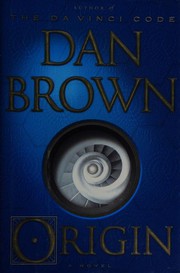
Origin
Robert Langdon chases Edmond Kirsch's lost discovery through Bilbao and Barcelona to answer where we come from and where we are going.
2,604-word summary · 12 min read

The Only One Left
Caregiver Kit tends mute Lenora Hope accused of 1929 family murders.
2,592-word summary · 12 min read
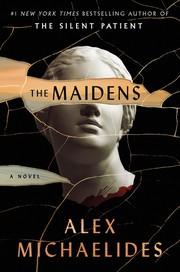
The Maidens
Therapist Mariana hunts Cambridge professor Edward Fosca after a Maidens murder.
2,234-word summary · 10 min read