
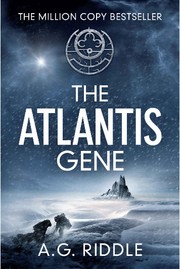
The Atlantis Gene
2,369-word summary 11 min read 445 pages in the book
- First published
- 2013
- Publisher
- AGRiddle.com
- Pages
- 445
- ISBN
- 9781940026015
- Series
- The Origin Mystery (#1)
Reading options
What's inside (8 sections)
I picked this up because it kept surfacing in recommendations as a self-published thriller that outsold books from houses with real marketing budgets. A.G. Riddle put it out himself in 2013 through AGRiddle.com, and only later did a wider print edition appear. It is book one of The Origin Mystery, a trilogy, and the copy I read runs about 445 pages. That backstory made me curious before I opened it. Could a writer working alone really build a conspiracy this big and keep it moving? The short answer is that he can, provided you accept a few things on faith and enjoy being dragged across the globe at speed.
The book announces its ambitions in its first chapters, and it does not aim small. There are secret organizations, an ancient structure under the ice, a device that can wipe out populations, and a argument about who deserves to survive the next stage of human evolution. Riddle writes all of it with the pace of a man who knows exactly what a thriller is supposed to do at the end of each chapter. What he is less interested in is slowing down to let you catch your breath.
A kidnapping in Jakarta
The story starts in Antarctica, where researchers pull a Nazi U-boat out of the ice and find a structure buried underneath it. That image sets the template for the whole book: something old and inexplicable turns up, and a hidden organization moves immediately to control it. The organization is the Immari, a corporation with a private history stretching back a century, and it has spent generations looking for places connected to Atlantis and the origins of humanity.
Then the book cuts to Jakarta. Kate Warner is a geneticist running a research program built around two boys, Adi and Surya. Her work with them, and with autism more broadly, has thrown up results that do not fit the standard picture. The boys seem to respond to her treatment in ways that point toward an unusual genetic change. Before she can understand what she is looking at, armed men raid her facility, take the children, and destroy her records. The local police treat Kate as a suspect rather than a victim, which is a convenient way of making her a target too.
David Vale arrives at this point. He is an operative with the counterterrorism group Clocktower, a former CIA man, and he is in Jakarta investigating a breach inside his own organization. He recognizes the imprint of the Immari on the attack and gets Kate out of custody. Vale is competent with his hands and terrible at staying out of trouble, and Riddle gives him a private wound to explain his instincts: his fiancée died in the September 11 attacks. That detail is doing a lot of work, because it is meant to justify why Vale takes risks that a more careful operative would refuse.
The first hundred pages are the best part of the book. The kidnapping gives the plot a clean engine. Kate wants her boys back, Vale wants to know who compromised his agency, and both of them want to stay alive long enough to find out. Riddle keeps the geography clear and the stakes immediate. When Kate hesitates to carry a gun, it registers as a real choice rather than a genre habit, and by the time she is taking shots and refusing to be left behind, the change feels earned.
The Immari, the Bell, and the Toba Protocol
Once the chase widens, Kate and Vale start collecting explanations. Martin Grey, Kate's stepfather, turns out to be an Immari insider, and he is the one who tells her why her research matters. The boys may carry a genetic anomaly the Immari call the Atlantis Gene. In the organization's thinking, that anomaly marks the people who will survive a weapon known as the Bell. The Bell is the stick; the gene is the quality they claim to be selecting for.
The plan has a name, the Toba Protocol, and it is roughly this: trigger an extinction-level event, let the unfit die, and keep a chosen population alive to inherit the earth. Dorian Sloane runs the program and is the most explicit voice for its logic. He believes the culling is a kindness, a preparation for the return of the Atlanteans whom he considers a threat. Riddle is careful to let Sloane state his case in full, which makes him a more interesting villain than a man who cackles about power. His certainty is the point. He has made a calculation and sleeps fine because of it.
Kate gets close to Adi and Surya once, then loses them again when Sloane takes them back. She survives a test inside a Bell facility while Vale attacks its power plant to create a window for escape. He is badly wounded in the process. This is a pattern that repeats: Vale gets hurt, Kate has to think on her feet, and someone else pays for the delay. The wounds give the action consequences, though after a while you notice that the same injury is used to get the same result.
What troubled me here is how easily the book lets theImmari's eugenic reasoning sit beside genuine scientific questions. Kate's research is meant to help children, and the organization twists it into a test for who deserves to live. That is a serious theme, and Riddle clearly wants it to matter. But the thriller machinery keeps moving so fast that the ethical argument never gets more than a few pages at a time. You are meant to be disturbed and also to turn the page, and those two aims pull against each other.
Patrick Pierce's journal
The book's strongest structural idea arrives in a Tibetan monastery. A monk named Qian hands Kate a journal written by Patrick Pierce, a wounded veteran of the First World War. The journal pulls the story back to the years after 1918 and slowly explains where the Immari came from. Pierce falls in love with Helena Barton while she nurses him, and he agrees to lead an excavation beneath Gibraltar because it will win him permission to marry her. That bargain costs far more than he understands. The dig brings him into contact with Immari secrets and with a device tied to the influenza pandemic of 1918.
Reading the journal, Kate learns that the conspiracy is not a recent invention. It has roots in decisions made a century earlier by people who thought they were serving a greater good. The journal also turns out to be a map as much as a history lesson. When Immari forces close on the monastery, Kate and Vale escape in a hot-air balloon and head for Gibraltar, trying to rally Clocktower agents along the way.
Then the book lands one of its bigger betrayals. Keegan, a colleague Vale trusts, is working with the Immari. He hands Kate over to save Vale's life and sends her toward the Antarctic site. Later we learn that Keegan is really Mallory Craig, a figure from Pierce's old excavation who has been manipulating events from inside the organization for decades. The reveal is tidy in the way that thrillers like this are tidy. Every thread has an owner, and the owner has been hiding in plain sight.
The journal sections are the parts I would have liked more of. Pierce's voice gives the book a different texture, quieter and sadder than the gunfights. His story is about a man who makes one deal to get married and ends up responsible, in some part, for a catastrophe. Riddle hints at the weight of that without dwelling on it, and the restraint works better than the explosions that surround it.
The people around the chase
For all its machinery, the book is carried by a small set of people, and Riddle is at his best when he lets them be contradictory. Kate starts as a careful scientist, the sort of person who wants more data before she draws a conclusion, and the kidnapping forces her into a role she never asked for. Her progression from a woman who flinches at a gun to one who insists on going into the cavern herself is the most convincing arc in the novel. She is not suddenly fearless. She simply decides that standing still is worse.
Vale is a more familiar figure, the damaged operative who uses work to avoid thinking about a private loss. The fiancée he lost on September 11 explains why he keeps putting himself between Kate and danger, but Riddle mostly lets his actions speak. His instincts are good and his body keeps failing him, which makes him more than the invulnerable action hero the setup suggests. When he is wounded and has to rely on Kate and on strangers, the book quietly argues that competence is not the same as being untouchable.
Martin Grey is the interesting one. As Kate's stepfather he is family, and as an Immari insider he is part of the machine that took her boys. He explains the organization to her early, then reappears at the end to help her escape through the bay. That choice puts him at odds with the people he served, and the book never fully resolves what it cost him. Sloane, meanwhile, gets the clearest statement of the villain's case, and his later identity as Dieter Kane ties him back to the original excavation in a way that makes the conspiracy feel inherited rather than invented. Even Qian, the monk who hands over the journal, has the function of a gatekeeper who decides when the truth is ready to be seen. None of these people are especially subtle, but each has a recognizable job in the story, and that is enough to keep the long middle moving.
There is also a romance thread between Kate and Vale that surfaces in small moments rather than big declarations. It never takes over, which is a mercy. The book knows the rescue is the main event, and the attraction stays in the background where it belongs.
Under the ice and under the Rock
In the Antarctic cavern, Sloane shows Kate the opening into the structure. He explains his final plan in plain terms. The boys' genes may let them pass through the Bell, so he intends to strap portable nuclear warheads to them and send them inside. The blast would destroy the structure and kill the Atlanteans he believes threaten humanity. Using two kidnapped children as delivery systems is monstrous, and the book does not soften it. Sloane has simply stopped seeing them as children.
The structure itself is where the science fiction takes over. The chambers hold hibernation tubes, human subspecies, and people in suspended animation. Time passes far more slowly inside than outside, which explains how Pierce could still be alive and how a man from 1918 can walk into the present. Vale discovers in Gibraltar that the journal's past is not past at all. Pierce survived in the structure, and the portal connecting the two sites brings the timelines together. Kate finds Adi and Surya among the tubes, still wearing the bombs. She also learns that Pierce is her biological father, a revelation the journal had been quietly preparing.
The climax is a scramble. Pierce removes the warheads from the boys and sends Kate and them through the portal toward Gibraltar while he carries the bombs after them. Vale confronts Sloane and the soldiers, and the two men appear to kill each other in the shootout. Pierce detonates the warheads inside the structure, and the Rock of Gibraltar is destroyed. Martin Grey helps Kate, Adi, and Surya escape through the bay in a small submersible. It is a satisfying sequence in the moment, all motion and narrow margins, even though the physics of the portal and the time displacement are waved through rather than explained.
What the ending leaves open
Kate gets the boys out, and Pierce dies stopping the plot at the Gibraltar site. That is the rescue story resolved. The larger story is not. While Kate was inside the structure, the world outside has moved on. A new pandemic is spreading, and the Toba Protocol is already under way. The explosion stopped one plan but did not stop what the plan set in motion. This is a deliberate choice to leave the door open for book two, and it works as a hook, though it can feel like the book refuses to finish its own argument.
The epilogue then pulls a second reversal. Vale wakes in a hibernation tube, healed of wounds that looked fatal, and sees Sloane preserved in another tube nearby. Both enemies are alive. Their rivalry continues into the next volume, and the questions about the Atlanteans and their intentions remain unanswered. I admire the nerve of it. Most writers would have killed off at least one of them. Riddle keeps both, which tells you exactly what kind of story this is: the first instalment of a machine built to keep running.
The book is strongest when it trusts the rescue mission and the converging timelines. It is weaker when it piles on revelations, because each new twist asks you to accept another coincidence. The autism research as a clue to human evolution may also sit badly with readers who know how ethically loaded that framing is. And the science, while dressed in laboratory language, is speculation wearing a lab coat. None of that stops the thing from working as a page turner, but it is worth keeping in mind while you read.
I closed it wanting the next book, which is the only real test for a thriller like this. Riddle is not writing literature and does not seem to want to. He is writing a fast, wide, slightly absurd adventure about a woman who will not abandon two children and a world that keeps trying to end itself. If you can accept the conceits, there is a good time in these pages. If you cannot, no amount of nuclear warheads in hibernation chambers is going to win you over.
FAQ
Is The Atlantis Gene part of a series?
Yes. It is book one of The Origin Mystery, followed by The Atlantis Plague and The Atlantis World. A.G. Riddle first published it in 2013.
Who are the two boys in the story?
Adi and Surya are the children in Kate Warner's Jakarta research program. The Immari kidnap them because their genetic responses may relate to the Atlantis Gene.
Does the book have a satisfying ending?
It resolves the rescue but leaves the larger crisis open. A pandemic is already spreading, and the epilogue shows Vale and Sloane alive in hibernation tubes, setting up book two.
Similar books
More from The Origin Mystery first, then related titles.
Inferno
Dan Brown's Inferno retold: Robert Langdon wakes in Florence with lost memory, follows Dante's clues with Sienna Brooks from Palazzo Vecchio to Venice and…
2,395-word summary · 11 min read
The Da Vinci Code
Dan Brown's The Da Vinci Code retold: a Louvre murder, Sophie Neveu, the Grail cryptex, and the chase to Rosslyn.
2,590-word summary · 12 min read

Angels & Demons
Dan Brown's Angels & Demons explained: a murdered physicist, the Illuminati, four missing cardinals, and Robert Langdon racing through Rome to stop an…
2,548-word summary · 11 min read
Wayward
With Ethan Burke now sheriff, Wayward Pines runs on cameras, fear and a founder's private plan, until a murder forces him to choose between order and the truth.
2,252-word summary · 10 min read

State of Terror
A new secretary of state and her team unpick a web of attacks across Pakistan, Afghanistan, and Iran in this 2021 political thriller.
2,307-word summary · 10 min read
Zero Day
Army investigator John Puller is sent alone to a West Virginia coal town to solve a colonel's murder, and finds a much larger secret buried nearby.
3,434-word summary · 15 min read
Gone Before Goodbye
Reese Witherspoon's first novel, written with Harlan Coben, follows a bereaved surgeon whose griefbot guides her into a medical conspiracy stretching from…
2,648-word summary · 12 min read

Six Years
A professor who promised to forget the woman he loved sees her husband's obituary and discovers that the wedding, the marriage, and the woman herself may never…
2,076-word summary · 9 min read
Sleeping Giants
A girl falls into a field and lands in a giant metal hand. Years later a secret team assembles the rest of the machine, and it chooses its own pilots.
2,466-word summary · 11 min read
When No One Is Watching
Sydney Green watches her Brooklyn block's Black residents vanish one by one in Cole's Edgar-winning thriller about gentrification as a crime scene.
2,165-word summary · 10 min read
Before the Fall
A private jet falls off Martha's Vineyard. A painter and a small boy survive, then face grief and the news cycle.
2,185-word summary · 10 min read
Pines
A Secret Service agent wakes hurt in Wayward Pines, Idaho, hunting two missing agents, and finds a town that will not let him leave.
2,452-word summary · 11 min read
Tell No One
Harlan Coben's Tell No One fully retold: Beck, his wife's murder eight years back, a tell no one email, and a run from police. A 2001 Delacorte standalone with…
3,579-word summary · 16 min read
Sphere
A Navy team finds a centuries-old spacecraft on the Pacific floor, and psychologist Norman Johnson faces what its sphere wakes in minds.
2,275-word summary · 10 min read

Leviathan Wakes
A destroyed ice hauler, a missing heiress, and an alien growth pull a crew and a tired detective toward war across the solar system.
3,653-word summary · 16 min read
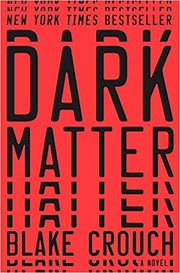
Dark Matter
Abducted from his Chicago family, Jason Dessen wakes in a life he never chose and fights through worlds to return.
2,707-word summary · 12 min read
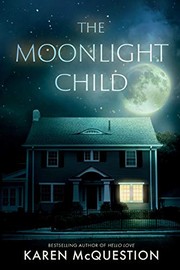
The Moonlight Child
On a cold January night, Sharon Lemke sees a child washing dishes in a neighbour's kitchen and decides she cannot ignore it.
2,169-word summary · 10 min read
The 5th Horseman
Two linked cases pull Lindsay Boxer and the Women's Murder Club into a hospital full of strange deaths and a luxury-car murder spree.
2,609-word summary · 12 min read
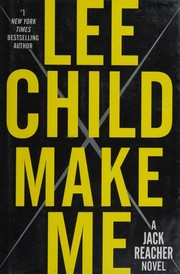
Make Me
Reacher drifts into a quiet Midwestern town and finds a missing investigator, a trail of killers, and a deep web secret.
2,352-word summary · 10 min read

You Are Not Alone
A lonely New Yorker witnesses a subway suicide and falls in with the dead woman's friends, where a makeover and a framed murder hide a hidden mastermind.
2,588-word summary · 12 min read
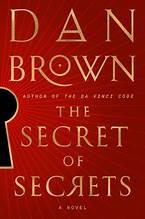
The Secret of Secrets
Robert Langdon travels to Prague with Katherine Solomon, a scientist whose work on consciousness has made her a target. A dream, a bomb and a killer called the…
2,251-word summary · 10 min read
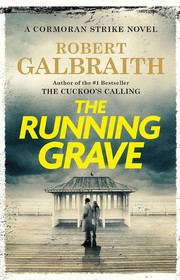
The Running Grave
In the seventh Cormoran Strike novel, Robin goes undercover inside a Norfolk cult while Strike digs into a child's death from decades earlier.
2,615-word summary · 12 min read
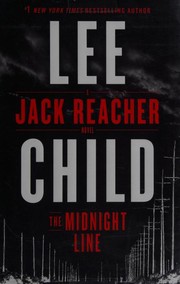
The Midnight Line
A West Point class ring in a Wisconsin pawnshop sends Jack Reacher across the Midwest, from a biker's lie to a wounded veteran hiding from the opioid trade.
2,590-word summary · 12 min read
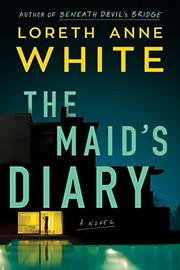
The Maid's Diary
A cleaner who snoops through her wealthy clients' lives finds a secret that could destroy them, while a detective investigates a bloody waterfront house with…
3,459-word summary · 15 min read
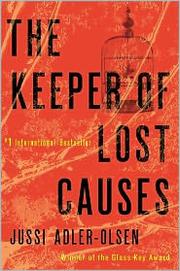
The Keeper of Lost Causes
Jussi Adler-Olsen introduces Carl Mørck and Department Q, a Copenhagen cold-case unit in a basement, and a missing politician whose file refuses to stay closed.
2,759-word summary · 12 min read
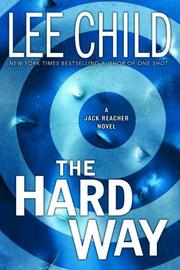
The Hard Way
A man Reacher sees drive a ransom-laden Mercedes pulls him into a retired colonel's hunt for his missing wife and stepdaughter.
2,637-word summary · 12 min read

The Cellar
Abducted in her small English town, sixteen-year-old Summer is locked in a cellar with three other girls. Their captor calls himself Clover and wants a perfect…
2,551-word summary · 11 min read
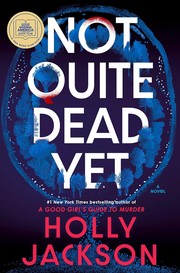
Not Quite Dead Yet
A drifting twenty-seven-year-old is told she will die within a week and decides to solve her own attempted murder instead of taking surgery with a ten percent…
2,010-word summary · 9 min read
Never Go Back
Reacher returns to his old military unit to find Major Susan Turner jailed and two invented cases hiding an opium smuggling ring.
2,245-word summary · 10 min read
Jack & Jill
A senator is killed with a nursery-rhyme calling card as a child is murdered near Alex Cross's home. The third Alex Cross novel pulls him toward two cases, one…
2,646-word summary · 12 min read