
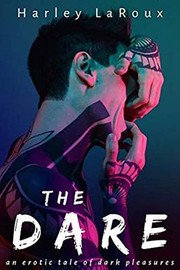
The Dare
2,152-word summary 10 min read 150 pages in the book
- First published
- 2019
- Publisher
- Harley Laroux Publications
- Pages
- 150
- ISBN
- 9780578909141
- Series
- Losers (#0.5)
Reading options
What's inside (9 sections)
I came to The Dare with a warning from a friend, which is usually the best way to arrive at a BookTok phenomenon. She told me it was short, shameless, and had a reputation for getting under people's skin. She was right on all three counts. The Dare by Harley Laroux was first published in 2019 and is the prequel novella to the Losers duology, numbered 0.5 in that series. The edition I read is the 150-page paperback from Harley Laroux Publications, published in 2021. It is a dark romance that reads more like a single, long, charged scene than a conventional novel, and it works best if you understand what kind of book it is before you start.
One house, one party, one night
The whole novella takes place over a single Halloween night at a house party in an affluent gated community. Daniel Peters, the host, has set up a beer pong table in a room lit by black lights, and he has a version of the game he calls Drink or Dare. Jessica Martin arrives with her best friend Ashley Garcia, and both are dressed as angels. Jessica is four days out of a breakup with her ex-boyfriend Kyle, the school's former star quarterback, and she is determined to have a good time.
Across the room she spots Manson Reed. He is a goth, an outcast, and the boy she used to torment in high school. The sight of him is enough to sour the evening, because their history is not a neutral one. In high school Jessica was prom queen and captain of the cheer squad, and she ruled the school with the kind of casual cruelty that never needs to raise its voice. Manson was her favorite target. The last time she saw him, she kissed him in the boys' bathroom to spite Kyle, and Manson pulled a knife on her. He was expelled. Now he is standing at Daniel's party, looking entirely at home.
Daniel's mother, Mrs. Peters, is a former social worker who took Manson into her home after he turned eighteen. That detail quietly reframes the gathering. This is not a random group of strangers; it is a reunion with an audience that has been keeping score for years. Manson has been living in the orbit of these people, and the Peters house is his ground as much as Daniel's. When Jessica walks in dressed as an angel and acting as though nothing happened, she is stepping onto a stage that was set for her without her knowing it.
The girl who used to rule the school
Laroux does not give us a long backstory, and she does not need to. Jessica's social position is established in a handful of details: the cheer squad, the crown, the way she looked down her nose at anyone she decided was unworthy. She is the kind of girl whose power depended on an audience, and the party gives her one. Ashley, her best friend since freshman year, is her teammate and her sounding board, and she is the one who keeps telling Jessica to walk away from Manson.
What makes the setup interesting is that Jessica is not an innocent. She was a bully, and the book never asks us to forget it. The people Manson brings into the story later were also targets of hers, and their grudges have had years to ripen. That matters, because the power dynamic in the novella is not simple. Jessica is being humiliated, but she is also being made to face what she did to other people. The book is at its sharpest when those two things are happening at once.
Manson, for his part, has the patient anger of someone who has waited a long time for a rematch. He is not interested in a conversation. He wants a game.
Kyle Baggins, Jessica's ex, is somewhere in the house too, and his presence sharpens everything. He was the quarterback whose approval once organized her social world, and the bathroom kiss was an act of spite aimed directly at him. Four days after the breakup, Jessica is surrounded by the people who used to define her status, including the boy she tried to hurt and the boy she actually hurt. Laroux keeps those details light, but the tension they create is steady.
Drink or Dare
Manson challenges Jessica to a one-on-one match of beer pong, and he takes control of the early rounds. His dares are designed to strip away the image she arrived with. She kisses his boots for a timed sixty seconds. She hands over her thong. Each time, Ashley warns her to stop, and each time Jessica's pride keeps her at the table. This is the engine of the book: Jessica could leave, and she chooses not to, because walking away would mean admitting that he still has power over her.
The drinking game gives the novella its structure. A dare is a small transfer of control, and each round makes the next one easier to accept. Laroux understands how that works. The escalation feels inevitable rather than forced, because the reader can see Jessica making the same calculation over and over: one more round, then she will go. By the time the final cup is on the table, she has already agreed to far more than she would have admitted to at the start of the night.
The real-time structure does a lot of work here. Because the novella never leaves the house, there is no room for a subplot or a change of scene to relieve the pressure. Every dare lands in the same room, with the same small audience watching, and Jessica's options shrink as the night goes on. That closeness is why the book feels more intense than its page count suggests. There is nowhere to put the awkwardness down.
I should be direct about the content here. This is an erotic novella with explicit BDSM scenes, including bondage, spanking, sensory deprivation, wax, and knife play. It is not a book that fades to black. Readers who want their romances restrained will not find that here. What is worth noting is that the book is careful about the mechanics of consent. A safe word, Red, is established before the serious play begins, and the terms are spoken aloud. That does not make the scenario comfortable for everyone, but it does separate this from stories that treat coercion as a shortcut.
Laroux also lets the boundaries be tested in ways that matter to the characters. The safe word is spoken and it is honored, and the knowledge that Manson will stop is part of what allows Jessica to keep going. I would not call the situation healthy, and the ending does not try to pass it off as a normal courtship. What it does is show two people moving into a space where an old hierarchy can be turned inside out, even if only for one night. The consent framework is what keeps that from feeling like a cheap power fantasy.
The final dare, and the rules of the game
Tied at the last cup, Manson raises the stakes. If Jessica misses her shot, she becomes his for the rest of the night, obeying any order without avoiding him. She misses. She agrees. What follows is a long sequence in which she calls him Master, fights him at every step, and discovers that she is aroused by the very things she says she hates. That contradiction is the point of the book. The popular girl persona she has worn for years starts to come apart, and what is underneath is more complicated than the image.
The novella is divided into four parts, The Game, The Dare, The Clowns, and The Knife, with an epilogue. That structure gives the story a clean shape. Each section has its own escalation, and the title of each part tells you exactly what kind of trouble is coming. In an entertainment room, Manson establishes the safe word and begins the physical play. There is a striking moment when the control is made explicit rather than assumed, and it is the most important scene in the book for understanding what follows.
The clowns and the knife
Manson's three friends arrive in jester-clown makeup: Vincent, Jason, and Lucas. They are former targets of Jessica's high school bullying, and Lucas in particular has a grudge. They join them in Manson's bedroom for a group scene involving restraint and edge play. This is the part of the novella that most reader warnings are about, and it is also the part that connects the erotic material back to the high school cruelty. The people Jessica used to look down on are now the ones with the power, and the book makes sure we know why.
Lucas is the one who carries the sharpest resentment, and his presence keeps the scene from reading as a simple fantasy. Jessica's cruelty had consequences for these boys, and the party forces her to be in a room with people she once dismissed. Laroux does not give them long speeches. Their resentment is mostly in the way they look at her and in the eagerness with which they follow Manson's lead. That restraint suits the novella, which is more interested in the atmosphere of a score being settled than in the arguments behind it.
After the friends leave, the story narrows back to Jessica and Manson. The play moves through sensory deprivation, wax, spanking, and finally his butterfly knife, the same weapon from the bathroom fight that ended his schooling. That callback is the neatest piece of construction in the novella. The object that once marked his expulsion becomes the thing he uses to strip away her defenses, and the scene reads as a kind of reckoning. By the end, the mask Jessica wore at the party is gone. She is not a queen and she is not pretending to be one.
I want to be fair about the limits of this. The emotional arc is thin next to the physical one. We get very little of Jessica's interior life beyond her arousal and her pride, and Manson remains more of a force than a person. The group scene, in particular, moves fast enough that the characters' motivations are mostly asserted rather than shown. If you are looking for a slow burn or a romance with psychological depth, this is the wrong book. It knows what it is and stays inside its lane.
The morning after, and why the story exists
The next morning, Jessica and Manson walk downstairs holding hands. They agree to go on a date the following weekend, still trading barbs, and the dynamic of the previous night is still there in their banter. There is no cliffhanger. The novella closes on a note of playful, unfinished business rather than a grand declaration.
That ending tells you what the book is for. The Dare is a prequel to The Losers, the why choose bully duology that made Laroux a BookTok name, and it is designed to introduce the world and the tone before the main story begins. It explains where the hostility between these people comes from and why the group calls themselves the Losers. Read on its own, it is a short, intense erotic story with a satisfying complete arc. Read as an introduction, it does its job well.
The book also has a strange second life as a mass-market paperback. Kensington published a trade edition in 2026, which brought the story to a much wider audience than its self-published origins. The 150-page paperback I read is the earlier one, and the difference in presentation is a reminder of how far this novella traveled from its original release.
Who should read it
This is a book for readers who already know they like dark romance, BDSM with explicit consent negotiations, and the enemies to lovers and bully revenge tropes. The single night structure keeps the pacing fast, and the explicit scenes are written with unusual attention to the rules the characters set for themselves. Readers who prefer fade-to-black romance, graphic-free storytelling, or a slow build will be unhappy here. The sex is the story, and the story is quite short.
The thing I keep coming back to is the image of Jessica at the beer pong table, dressed as an angel and kissing a boy's boots because she refuses to lose face. That image tells you almost everything the novella is about. It is about what people will risk to keep an image, and what happens when the image finally cracks. For roughly 150 pages, Laroux holds that idea up to the light and lets it burn. It is not subtle, and it is not trying to be.
FAQ
Is The Dare by Harley Laroux the same book as The Dare by Elle Kennedy?
No. This is a different novella by Harley Laroux, a prequel to her Losers duology. Elle Kennedy's The Dare belongs to the Briar U series.
Do I need to read The Losers first?
No. The Dare is a prequel and works on its own as a complete story, though it was written to introduce the world and tone of the Losers duology.
How explicit is The Dare?
Very. It contains frequent explicit BDSM scenes, including bondage, knife play and group activity, with a safe word established on the page.
Similar books
More from Losers first, then related titles.

Her Soul to Take
A paranormal vlogger in a cult-run town summons a bound demon, and the only way to survive the god beneath the mine is to give him her soul.
2,089-word summary · 9 min read
Steel Princess
After a near drowning, Elsa Quinn starts recovering the memories that explain her fear of water and the boy who promised to destroy her.
2,204-word summary · 10 min read
The Sacrifice
On her wedding day Laikyn Minson is handed to Tyson Crawford, a Lord who wants her family's ruin, in a dark revenge romance set inside a brutal secret society.
2,603-word summary · 12 min read
Nightfall
Emory Scott wakes in Blackchurch, a remote house for the sons of the powerful, where the boy she once loved is imprisoned and the story she told about him…
2,339-word summary · 10 min read
Deviant King
A scholarship student at an elite boarding school is targeted by the king of the Four Horsemen, who seems to know her forgotten past.
2,384-word summary · 11 min read

Kill Switch
Out of prison, Damon moves into Winter's house with keys and a plan, and old lies about that night crack open.
2,732-word summary · 12 min read
Hideaway
Ex-con Kai hunts a hotel secret while Banks hides who she really is.
2,481-word summary · 11 min read
Corrupt
College student Rika Fane faces Michael Crist and his friends three years after Devil's Night put them in prison.
2,870-word summary · 13 min read
One with You
The final Crossfire novel finds Eva Tramell and Gideon Cross secretly married and fighting to stay that way, as old trauma, a tell-all book, and a dangerous…
2,344-word summary · 10 min read
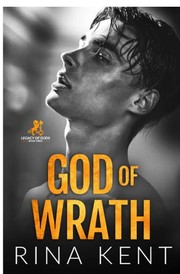
God of Wrath
Rina Kent's God of Wrath pairs a quiet REU student who spies on a rival club with the ruthless leader who catches her. A dark college romance of obsession,…
2,740-word summary · 12 min read
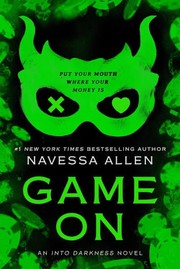
Game On
Tyler Neumann blackmails tattoo artist Stella McCormick into fake dating as a route to his father, and this trilogy closer turns revenge into something harder…
2,395-word summary · 11 min read

Six Scorched Roses
A dying scholar bargains with a reclusive vampire for blood, and six roses turn a transaction into a slow, dangerous romance.
2,663-word summary · 12 min read

Beneath This Man
Ava returns to Jesse after five days apart and finds his drinking, jealousy, and a hidden deception that changes what she can forgive.
2,341-word summary · 10 min read

There Are No Saints
Two rival artists circle a struggling San Francisco painter. Cole Blackwell wants her, Alastor Shaw wants her dead. Book one of the Sinners duet.
2,190-word summary · 10 min read
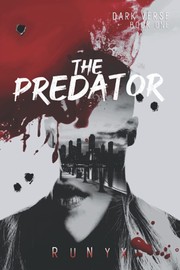
The Predator
Coder Morana Vitalio and mob enforcer Tristan Caine chase stolen software while a case of missing girls from twenty years back catches up with them both.
2,296-word summary · 10 min read
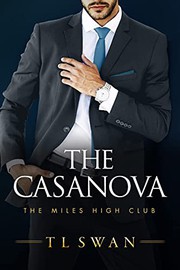
The Casanova
Kate Landon's boss is also the pen pal she falls for online, hiding behind fake names, until family secrets and a trip to Paris get in the way.
2,274-word summary · 10 min read
Savage Bonds
Oli's deadly gift is out in the open, her Bond runs the show, and the Resistance is closer than ever in the second Bonds that Tie novel.
2,431-word summary · 11 min read

The Sinner
Sin, a Lord at Barrington, rigs his secret society's rules to claim Elli, the girl he has protected since killing her abuser, while the conspiracy around her…
2,059-word summary · 9 min read

This Man
Ava O Shea meets Jesse Ward while designing The Manor House, and their obsessive affair tests her work and limits.
2,209-word summary · 10 min read
Gabriel's Rapture
A professor faces a hearing while Julia fights for her own name in Florence, testing love through distance and work.
2,480-word summary · 11 min read
Captivated by You
Eva and Gideon hide a secret Caribbean marriage while planning a Monterey wedding as Gideon arrest, press threats, and Corinne strain test them in Crossfire…
3,016-word summary · 13 min read
God of Malice
Rina Kent's God of Malice fully retold: Glyndon King, Killian Carson's fixation, secret societies, and the Devlin twist that resets everything.
2,849-word summary · 13 min read
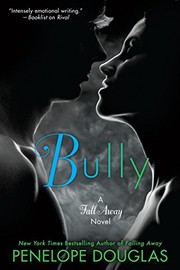
Bully
Tate returns from France to face Jared, the boy who bullied her for years and still will not leave her alone.
1,934-word summary · 9 min read
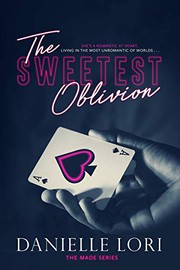
The Sweetest Oblivion
Sheltered Elena Abelli catches the eye of feared made man Nicolas Russo after her sister flees an arranged match.
3,342-word summary · 15 min read
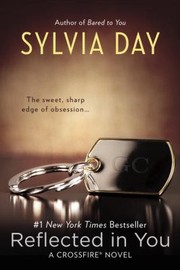
Reflected in You
Eva and Gideon deepen their obsessive love while facing past abuse and public exposure.
2,587-word summary · 11 min read
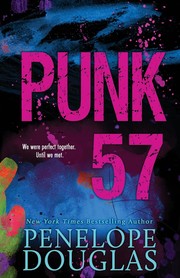
Punk 57
Pen pals Misha and Ryen turn cruel at school while hiding who writes the letters and who takes the hits.
2,909-word summary · 13 min read
Reckless
Kiera and Kellan marry in secret as the D-Bags explode onto the charts, then fight to keep their private life from becoming the band's best publicity.
2,231-word summary · 10 min read

Kiss the Sky
Rose Calloway signs her family up for a reality show to save her fashion line, and her old rival Connor Cobalt keeps pace.
2,178-word summary · 10 min read

In Flight
A first class flight attendant loses her composure over a billionaire hotel owner with turquoise eyes, and neither of them is as unbroken as they look.
2,187-word summary · 10 min read